
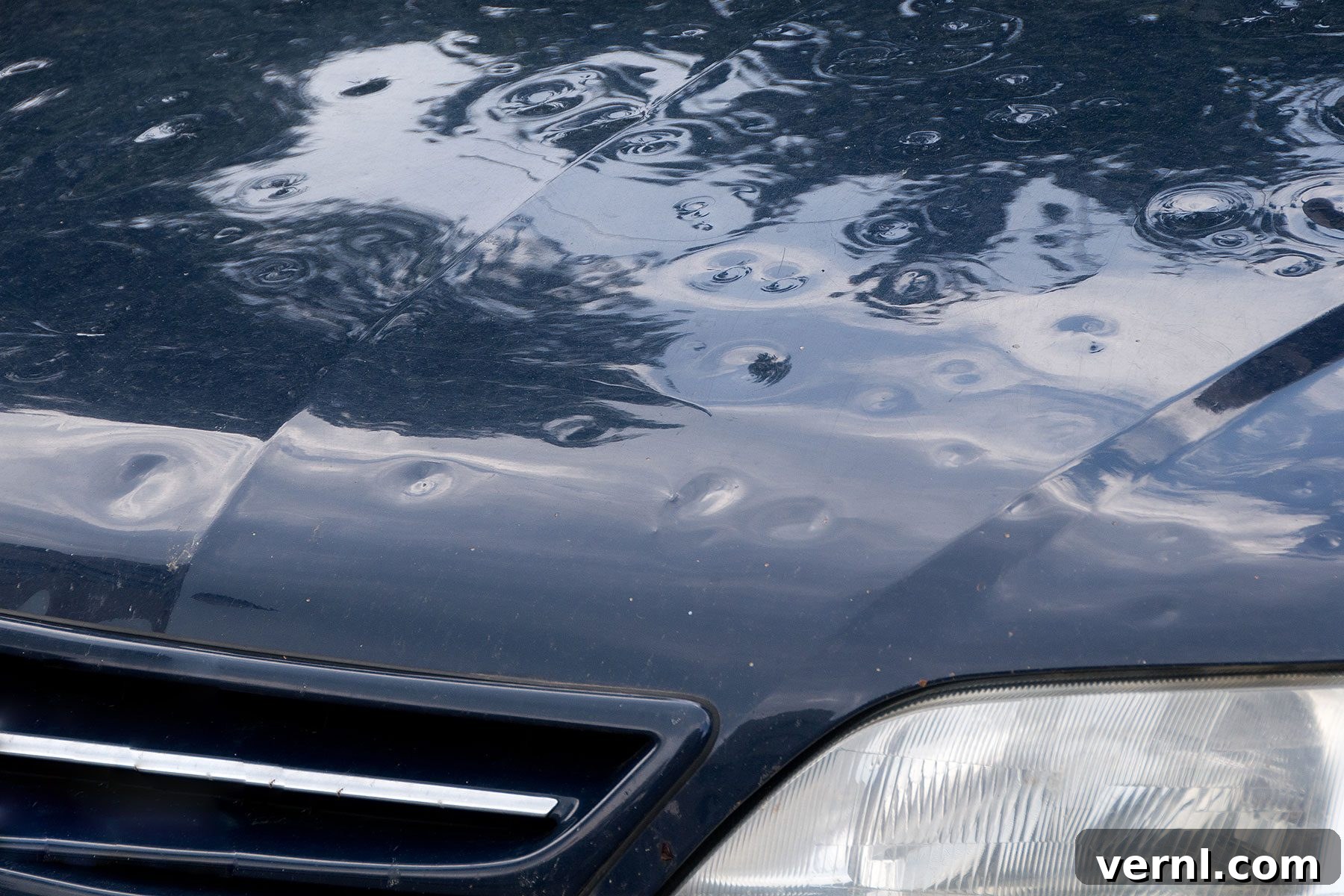
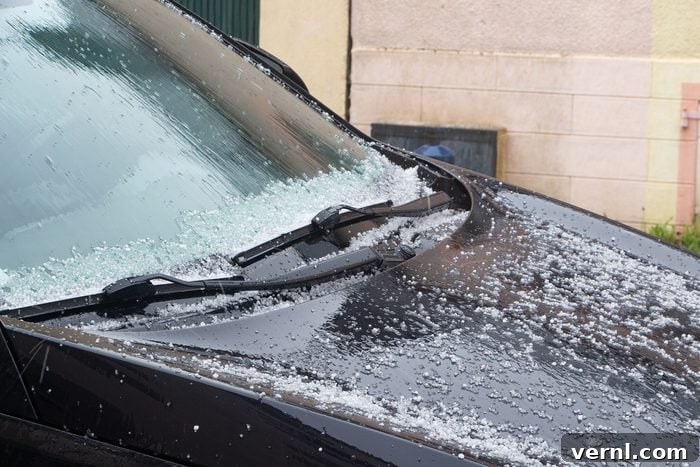
The first time I witnessed a vehicle ravaged by hailstones, the sight was striking. It appeared as if the car had been used for an intense batting practice, with countless dents of varying sizes haphazardly marring the hood, roof, and trunk lid. The sheer force of nature’s impact was undeniable.
According to the NOAA National Severe Storms Laboratory, a hailstone the size of a golf ball can descend at speeds up to 40 mph. It’s no wonder the front windshield was utterly destroyed, and the side-view mirror housings were severely cracked. In that moment, I was convinced the vehicle was beyond repair, destined to be declared a total loss.
However, I learned an important lesson: not so fast! While devastating, vehicles damaged by hail, when properly assessed and repaired, can often be restored to their former glory. Understanding the nuances of hail damage, from its appearance to insurance implications and repair methods, is crucial for any car owner. This comprehensive guide will walk you through everything you need to know to navigate the aftermath of a hailstorm.
What is Considered Hail Damage to a Vehicle?
Hail damage to a vehicle typically refers to the physical deformities caused by hailstones impacting its surface. While the most obvious sign is often a multitude of dents, the severity and type of damage can vary significantly. State Farm Insurance accurately describes hail damage as “large or small dents in the hood, doors, side panels or trunk; these dings typically aren’t uniform, may not damage the paint and may not cover the entire vehicle.”
These dents range from tiny dimples, sometimes only visible under specific lighting conditions, to large, deep indentations. The number and size of the dents are key indicators of the storm’s intensity and the potential repair costs, but any visible dent or ding caused by hail is considered legitimate hail damage. Importantly, these impacts often don’t break the paint, which opens the door for specific repair techniques. However, the absence of paint damage doesn’t diminish the impact on the vehicle’s appearance and potential resale value.
Identifying Hail Damage on Your Car
Spotting hail damage can sometimes be tricky, especially with smaller dents. Here are a few tips:
- Park in the Shade: Dents are often more visible in indirect light or shade, where shadows can highlight imperfections.
- Walk Around Your Car: Inspect every panel meticulously, including the roof, hood, trunk, and all side panels.
- Look at an Angle: Viewing your car’s surface from various angles can help catch subtle dimples that might be missed head-on.
- Check the Glass: Don’t forget to inspect all windows, mirrors, and even headlights/taillights for cracks or chips.
Beyond Dents: The Full Scope of Hail Damage
While dents are the most common and visible signs, hail can inflict a broader range of damage that extends beyond mere cosmetic imperfections. The kinetic energy of fast-moving hailstones can compromise various components of your vehicle, leading to significant safety and functional concerns.
- Chipped, Cracked, or Shattered Glass: This is a critical concern. Hail can cause extensive damage to your windshield, rear window, side-view windows, and even the glass on your headlights and taillights. A broken windshield or rear window glass is not only a safety hazard but also compromises the structural integrity of your vehicle.
- Compromised Windshield Safety: Your windshield is more than just a barrier against the elements; it’s a central component of your vehicle’s structural integrity, working in tandem with airbags to safeguard passengers. During a collision, the windshield provides crucial support for the front airbags as they deploy. If a compromised windshield fails due to existing hail damage, the airbags cannot effectively protect passengers from hard interior surfaces or prevent ejection from the vehicle. Therefore, driving with a damaged windshield is incredibly unsafe and should be addressed immediately. While you can repair minor chips yourself, any chip or crack that extends more than halfway through the glass, or reaches the edge, necessitates professional replacement.
- Interior Damage from Water Intrusion: If hail breaks windows or punctures sunroofs, water can quickly enter the vehicle’s interior. This can lead to soaked upholstery, carpets, and headliners, creating an environment ripe for mold and mildew growth. Beyond the unpleasant odor, water damage can also affect electronic components, causing costly electrical issues that may not surface until much later.
- Damaged, Loose, or Missing Exterior Components: Hail can impact and dislodge various exterior parts. This includes body trim, antennas, side-view mirrors (both the housing and the glass itself), and the lenses of tail lamps and headlights. These components are not just aesthetic; they play roles in visibility, aerodynamics, and overall vehicle function.
- Jammed or Stuck Doors and Side-View Mirrors: In severe cases, the force of hail can slightly deform door frames or mirror mechanisms, leading to difficulties in opening or closing doors, or adjusting side-view mirrors. This type of damage, though less common than dents, can significantly impair the usability of your vehicle.
Does Car Insurance Cover Hail Damage?
Understanding your car insurance policy is paramount when a hailstorm strikes. The good news is that if you possess full comprehensive coverage, you are generally covered for hail damage. However, if your policy only includes collision insurance, you will unfortunately be out of luck. It’s critical to know the distinction between these two primary types of auto insurance coverage.
- Comprehensive Coverage (Optional): This type of coverage is designed to protect your vehicle from damages that are not caused by a collision with another vehicle or object while driving. It encompasses a wide range of perils, including natural disasters like hail, wind, and floods, as well as theft, vandalism, fire, and impacts with animals. Comprehensive coverage is your safeguard against the unpredictable forces of nature and other non-collision incidents.
- Collision Coverage (Often Required by Lenders): In contrast, collision coverage specifically addresses damage to your vehicle resulting from an accident where your car collides with another vehicle or object, or if it rolls over. For instance, if you were to drive off the road and hit a tree, collision coverage would typically cover the repairs to your car.
- Prevalence of Hail Claims: The frequency of severe weather events highlights the importance of comprehensive coverage. According to the Insurance Information Institute, wind and hail damage together were responsible for the most insurance claims between 2014 and 2018, underscoring the significant financial risk these events pose to vehicle owners.
The Insurance Claim Process for Hail Damage
If your vehicle sustains hail damage and you have comprehensive coverage, filing a claim involves a few key steps:
- Contact Your Insurer: Notify your insurance company as soon as possible after the storm.
- Schedule an Inspection: Your insurer will arrange for an adjuster to inspect the damage and provide an estimate for repairs.
- Get Repair Estimates: While the insurance adjuster provides an estimate, it’s often advisable to get at least one or two additional estimates from reputable repair shops. This can help ensure all damage is identified and fairly priced.
- Choose a Repair Shop: You typically have the right to choose your preferred repair shop. Your insurer may have a network of approved shops, but you are not usually obligated to use them.
- Pay Your Deductible: Once repairs are complete, you will pay your deductible directly to the repair shop. The insurance company then pays the remainder of the repair costs.
Should I Claim Hail Damage on My Car?
Deciding whether to file an insurance claim for hail damage isn’t always straightforward. It primarily depends on whether the damage is covered by your policy and, more importantly, the financial implications relative to your deductible.
Even if you possess full comprehensive coverage, it might not always be in your best financial interest to file a claim. If the estimated cost to repair the hail damage is less than your deductible, or only marginally ($100 or $200) more than it, it’s often more sensible to pay for the repairs out of pocket. Filing a claim for a small amount might result in an insurance claim appearing on your record, which could potentially influence future premium rates, although hail damage claims (which are “act of God” claims) typically have less impact than collision claims.
However, if you’re looking at several thousand dollars in repairs, especially if the damage is extensive and might involve costly components like windshield replacement, body panel work, or even a rental car while your vehicle is being fixed, then absolutely, it’s a claim worth making. In such scenarios, the financial protection offered by your comprehensive policy far outweighs the minor impact of having a claim on your record. Always weigh the repair cost against your deductible and the potential long-term effects on your insurance premiums.
Is It Worth Fixing Hail Damage on a Car?
For most vehicle owners, fixing hail damage is a sound financial and practical decision, assuming the repair costs don’t significantly exceed the car’s overall value. While it’s ultimately a personal financial decision, there are compelling reasons to undertake repairs.
Firstly, many modern hail damage repairs, particularly for cosmetic dents, can be incredibly effective and often don’t require costly paintwork. Specialized techniques like Paintless Dent Repair (PDR) can make it look as though the damage never occurred, preserving the vehicle’s original finish. Plus, you can even attempt some DIY fixes for very minor dents, though professional PDR is usually recommended for optimal results.
Understanding Hail Damage Repair Methods
Paintless Dent Repair (PDR)
PDR is a revolutionary technique that has transformed the auto body industry, especially for hail damage. It involves using specialized tools to gently massage and push the dents out from the underside of the panel, restoring the metal to its original shape. The key advantage of PDR is that it doesn’t require sanding, body filler, or repainting, which significantly reduces repair time and cost.
- Suitability: PDR is ideal for dents where the paint is not chipped, cracked, or otherwise damaged. The metal must not be excessively stretched or creased.
- Cost-Effectiveness: Many companies offer affordable at-home paintless dent removal services. These generally run from $30 to $40 for smaller, simpler dents and $75 or more for larger, more complex repairs per dent, or a total package for hail damage.
- Benefits: Preserves the original factory paint finish, quicker repair time, environmentally friendly (no chemicals or paint waste), and more affordable than traditional bodywork.
Traditional Body Repair
When the hail damage is severe—involving chipped or cracked paint, sharp creases, or deeply stretched metal—traditional bodywork becomes necessary. This process typically involves:
- Panel Replacement or Repair: Heavily damaged panels might need to be replaced entirely, or extensively reshaped.
- Filling and Sanding: Dents are filled with body filler, then meticulously sanded smooth.
- Priming and Painting: The repaired area is primed and then repainted, often requiring blending with adjacent panels to ensure a seamless color match.
This method is more expensive and time-consuming than PDR, given the labor-intensive nature of sanding, painting, and drying. However, it’s the only viable solution for extensive damage or when the paint integrity has been compromised. For those inclined towards hands-on projects, more extensive professional or DIY dent/body repairs can be considered, but major paint repairs typically require professional expertise for a quality finish.
Does Hail Damage Devalue a Vehicle?
Unfortunately, yes, unrepaired hail damage almost universally devalues a vehicle. This loss of value, often referred to as “diminished value,” can be substantial, depending on the severity of the damage and whether it’s repaired. Unrepaired hail damage can decrease a car’s resale value by an amount equivalent to 100% or even more of the repair costs, essentially making the car almost unsellable to a discerning buyer.
According to CarFax, repairing hail damage can still lower the retail value of a vehicle by $500 to $2,100. This is a common consequence after any significant collision or body repair. Unless a potential buyer is specifically seeking a bargain and is willing to overlook cosmetic flaws, hail damage simply makes a vehicle less appealing and harder to sell at market value.
“Hail Damage” Titles and Their Implications
In cases where an insurance company deems a vehicle a “total loss” due to hail, some states will issue a special “Hail Damage” title. This specific branding is crucial because it differentiates the vehicle’s history from more extreme circumstances, such as a Certificate of Destruction, Flood/Water Damage Title, or a Junk Title. While a “Hail Damage” title indicates significant damage, it often implies the vehicle is still roadworthy and can be safely repaired, unlike a salvage title from a severe accident or flood. However, it will undoubtedly impact the car’s resale value, and future buyers will be fully aware of its past. Transparency is key when selling a vehicle with a “Hail Damage” title, as it requires disclosure to potential buyers.
Preventing Hail Damage: Proactive Measures
While hailstorms can be sudden and unpredictable, there are proactive steps you can take to minimize the risk of damage to your vehicle.
- Use a Garage or Carport: The most effective protection is parking your car in a sheltered area, such as a garage, carport, or even a covered parking structure.
- Monitor Weather Forecasts: Stay informed about local weather alerts, especially during seasons prone to severe storms. If hail is predicted, try to move your car to a safe location.
- Invest in a Car Cover: For those without access to covered parking, a padded car cover can offer a layer of protection against smaller hailstones. While not foolproof for large hail, it can significantly reduce damage.
- Seek Immediate Shelter: If you are driving and a hailstorm begins, pull over to a safe location, such as under an overpass (if safe and not blocking traffic), a gas station canopy, or a large public garage.
- Avoid Parking Under Trees: While tempting for shade, trees can drop branches during strong winds that often accompany hailstorms, causing additional damage.
Understanding and preparing for hail damage is an essential part of responsible car ownership. By knowing what constitutes damage, how your insurance works, the available repair options, and preventative measures, you can better protect your investment and maintain your vehicle’s value.