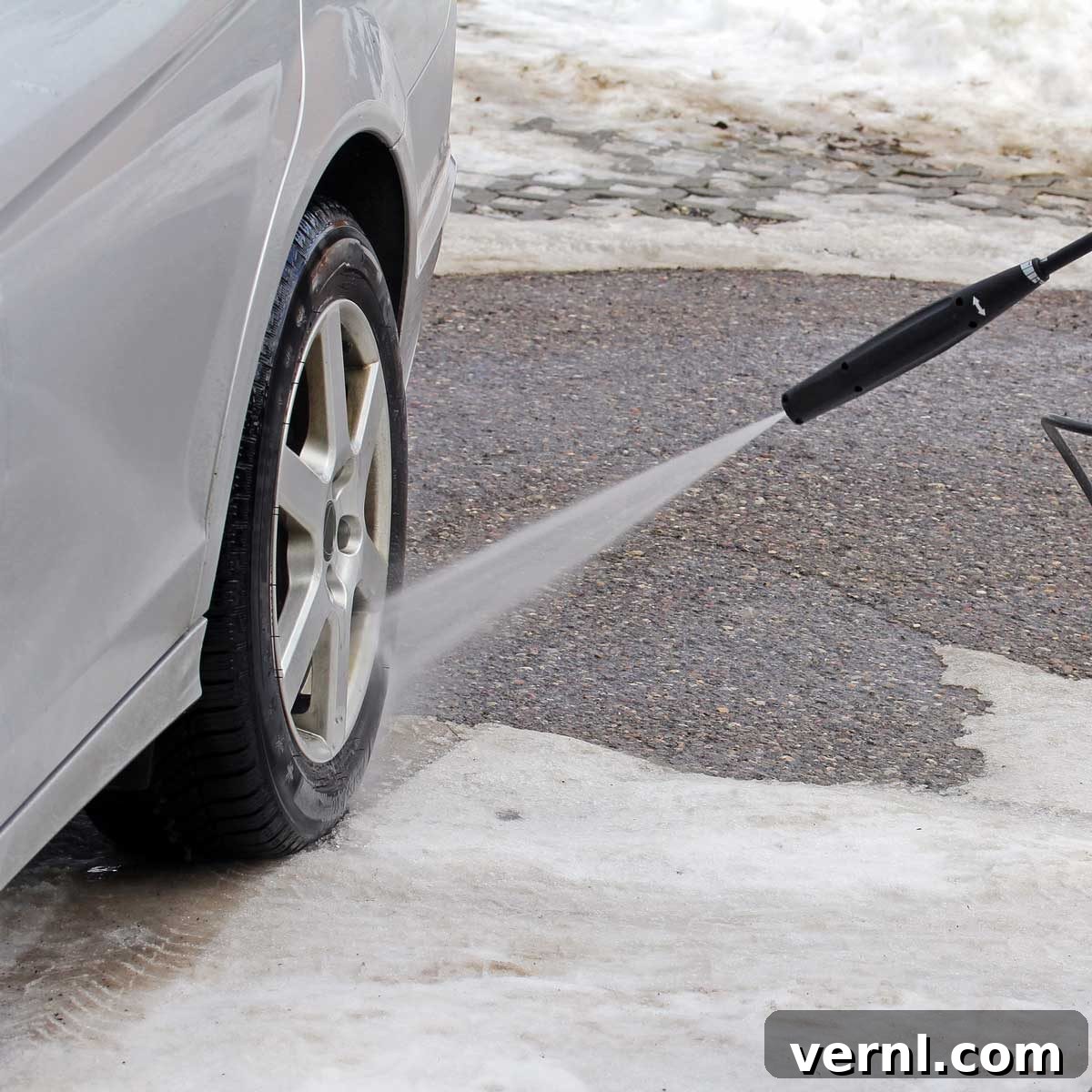
In many regions across the country, especially those with harsh winters, road surfaces are frequently treated with salt to help
prevent ice accumulation.
While this vital practice significantly enhances
winter driving safety,
it unfortunately comes with a notable drawback: road salt is highly corrosive and can inflict
significant damage to your vehicle.
Rust and corrosion, if left unchecked, can compromise your car’s aesthetics, structural integrity, and resale value.
Fortunately, you can effectively combat this corrosive threat by regularly
washing your car,
meticulously removing accumulated salt, particularly from the vulnerable undercarriage.
However, the very conditions that necessitate road salting—freezing temperatures—also present unique challenges for car washing.
The risk of water freezing on surfaces, leading to inoperable door locks or creating hazardous ice patches, is a real concern.
But don’t let the cold deter you. With the right strategies and techniques, you can successfully perform a
winter car wash
right at home, safeguarding your investment against the ravages of salt and ice.
How Often Should You Wash Your Car in Winter to Prevent Rust?
The frequency of winter car washes is a critical factor in mitigating salt-induced corrosion.
Automotive experts generally recommend washing your vehicle every 10 to 14 days if you routinely drive in areas where road salt
is applied. This schedule helps ensure that salt buildup, which begins to corrode metal upon contact, is consistently removed before it can cause significant damage.
Several factors can influence this recommended frequency. If winter conditions are particularly severe, with frequent snowstorms
and heavy salt applications, you might consider washing more often. Similarly, if you drive frequently or cover long distances,
your car will be exposed to more salt, warranting more frequent washes. Conversely, if you drive less often or primarily on roads
that are less heavily salted, you might be able to extend the interval slightly.
The most crucial time to wash your car is immediately following a major snow or ice storm, or any period of heavy salting.
Freshly applied salt is often easier to remove than salt that has had time to bake onto surfaces and crystallize. Prioritizing
a wash after these events can significantly reduce the risk of salt stains and long-term corrosion. Pay attention to visual cues
as well; if you can see white, powdery salt streaks on your car’s exterior, it’s definitely time for a wash.
Mastering the At-Home Winter Car Wash: Step-by-Step Techniques
Washing your car at home during the colder months requires a thoughtful approach to ensure effectiveness and safety. Here’s how to do it right:
Choose the Ideal Day and Time for Your Winter Wash
One of the most important considerations is the weather itself. Aim to
wash your car on days when the temperature is above 40 degrees Fahrenheit (4 degrees Celsius).
On warmer winter days, the likelihood of water freezing on your car’s surfaces or your driveway is significantly reduced. This prevents issues like frozen door locks,
windows becoming inoperable, or icy slip hazards forming.
Richard Reina, product training director at
CARiD.com,
suggests a clever trick: after washing, slightly lower all car windows to allow you to thoroughly wipe water from the edges of the glass. This simple step can prevent windows from freezing shut.
Additionally, if a prolonged period of sub-freezing temperatures is forecasted, it’s wise to start your car and drive it for a while before washing.
Warming up the engine, brakes, and other components can help prevent water from freezing instantly upon contact.
Always wash during daylight hours; the sun’s natural warmth can assist in drying surfaces, further reducing freezing risks.
Thorough Pre-Rinse and Undercarriage Focus
Before you even think about soap, a comprehensive pre-rinse is essential.
Be sure to use plenty of clean water, ideally with a pressure washer or a strong garden hose nozzle, to spray off all loose dirt, grime, and, most importantly, salt.
Concentrate this initial spray on the undercarriage of the car. This is where road salt collects most heavily and can cause the most hidden damage.
By dislodging the majority of the salt at this stage, you prevent it from being spread around and scratching your paint during the manual wash.
For optimal undercarriage cleaning, consider investing in a dedicated undercarriage sprayer attachment for your pressure washer or a specialized wand for your garden hose.
These tools are designed to reach tight spaces and deliver a powerful spray where it’s needed most. If you’re comfortable and skilled,
jacking up your car safely
to gain better access to the undercarriage can be highly effective. However, always prioritize safety: use a sturdy jack on level ground and secure the vehicle with reliable jack stands before working underneath.
Employ the Two-Bucket Method with Quality Detergent
When it comes to the actual washing, the two-bucket method is highly recommended, especially in winter when grit is prevalent.
Designate one bucket for your soapy water solution and the other for rinsing your wash mitt. After each section of your car is wiped,
rinse your dirty sponge or
microfiber wash mitt
thoroughly in the rinse water. This technique helps remove all the abrasive grit and salt particles, preventing them from being
transferred back to your paint and causing swirl marks or scratches.
Crucially, always choose a high-quality
car wash detergent.
Never use household dish soap, as its harsh degreasing agents can strip away protective wax layers, dry out rubber and plastic components, and significantly shorten the lifespan of your car’s paint and clear coat.
A dedicated car wash soap is pH-balanced and designed to safely clean without damaging your vehicle’s finish.
Rinsing and Drying to Prevent Freezing
After the soap application, perform a final, thorough rinse to remove all soap residue. Any leftover soap can leave streaks or attract dirt.
The drying stage is particularly critical in winter. Water left on the car can quickly freeze, leading to issues with door seals, locks, windows, and even the fuel cap.
Use soft, absorbent microfiber drying towels to quickly wick away water. For optimal results, consider using a car-specific leaf blower or air dryer to force water out of crevices, mirrors, and door jambs.
As mentioned, following Richard Reina’s advice to wipe window edges is key. You might also want to briefly drive the car after drying to shake loose any remaining droplets.
The Advantage of Washing Inside Your Garage
If feasible,
wash your car inside your garage.
This provides a controlled environment, shielding you and your car from the biting wind and allowing for a more thorough job without the immediate threat of freezing water.
Reina highlights a significant benefit: any water you spray outside could easily
freeze on your driveway,
creating a dangerous slip hazard for you and others. While you could apply salt to minimize driveway ice, this defeats the purpose of removing salt from your car in the first place.
If washing in a garage, ensure proper ventilation and manage water runoff with floor mats or containment barriers.
Washing Your Car Without a Hose: Winter Alternatives
Access to running water outside can be a genuine challenge in winter. Many homes lack hose bibs protected from freezing temperatures, meaning running a garden hose could potentially lead to
frozen and burst pipes
inside the house—a costly and inconvenient problem. Fortunately, there are effective alternatives.
Waterless and Rinseless Car Wash Products
The market offers several products specifically formulated for
car washing without a traditional hose and buckets.
One highly-regarded product type is the waterless car wash. These products, such as
Swift Wipe Waterless Car Wash from Chemical Guys,
are typically sprayed directly onto a dirty surface and then wiped off with a clean microfiber towel.
They contain special lubricants and encapsulating agents that lift dirt, dust, and light salt residue from painted surfaces without scratching.
They are generally safe to use on glass and chrome, though for streak-free windows, you’ll want to finish with a
dedicated glass cleaner.
For slightly dirtier cars, rinseless wash products offer a middle ground. These are concentrated solutions that you dilute in a bucket of water. You then saturate microfiber towels in the solution, wipe down car panels, and dry them. No rinsing with a hose is required. Both waterless and rinseless washes are excellent for maintaining a clean exterior in winter, especially for light dust and surface salt.
The Limitations and the Role of Self-Serve Car Washes
It’s important to note that waterless and rinseless products won’t be effective for heavy, caked-on salt or significant grime, particularly on the undercarriage.
In such cases, when home washing with a hose isn’t an option, visiting a self-serve car wash becomes a valuable solution. These facilities typically offer heated bays and high-pressure spray wands, perfect for blasting away stubborn salt from the entire vehicle, especially the crucial undercarriage.
When using a self-serve wash in winter, arrive prepared. Bring your own clean microfiber towels for drying, and work quickly to dry your car thoroughly after the wash. This swift drying is essential to prevent your doors, trunk, windows, or fuel cap from
freezing shut
before you can get home. Consider applying a quick detailer or spray wax after drying for an extra layer of protection.
Protecting Your Car Beyond Washing: Winter Waxing and Coatings
While regular washing removes salt, a protective layer on your car’s paint offers a vital defense.
Waxing your car
is an excellent way to shield it from road salt, grime, and environmental contaminants. However, applying most traditional
car waxes
can be challenging when temperatures drop below 55 degrees Fahrenheit (13 degrees Celsius).
Most waxes require specific temperature ranges to cure properly and bond effectively to the paint, and colder temperatures can prevent them from doing so, resulting in poor durability and streaky application.
For this reason, it is highly recommended to perform a thorough job of cleaning, decontaminating, and waxing (or applying a more robust protectant) your car
before the winter weather truly sets in. This proactive approach ensures your paint has a strong, resilient barrier ready to face the harsh months ahead.
Alternatives for Cold Weather Protection
If a pre-winter wax wasn’t possible or you need to reapply protection during colder spells, consider modern alternatives:
- Synthetic Paint Sealants: These offer superior durability and chemical resistance compared to traditional carnauba waxes, often lasting several months. Many sealants are more forgiving in cooler temperatures than natural waxes.
- Ceramic Coatings: For the ultimate in long-term protection, ceramic coatings provide an incredibly durable, hydrophobic layer that actively repels water, dirt, and salt. While they require meticulous application, often best done by professionals, their longevity and protective qualities are unmatched, making them an excellent pre-winter investment.
- Spray Waxes or Sealants: These quick-detailer style products can be used as a quick top-up between washes or when temperatures are too low for traditional waxes. While not as durable as paste waxes or sealants, they provide a temporary boost in gloss and protection, and are generally easier to apply in cooler conditions.
Regardless of the product you choose, always ensure your car’s surface is impeccably clean and dry before application for optimal bonding and performance. A protected finish not only looks better but also makes future winter washes easier and more effective at preventing corrosion.