
Choosing the Best Hammer Head: A Comprehensive Guide for Professionals and DIYers
The humble hammer is an indispensable tool in any toolkit, yet selecting the right one can significantly impact your efficiency, comfort, and the quality of your work. From framing a house to hanging a picture, the type of hammer head you choose makes all the difference. This detailed guide explores the critical factors in selecting the ideal hammer head, ensuring you make an informed decision for your next project.
Understanding Hammer Head Weight: Finding Your Perfect Balance
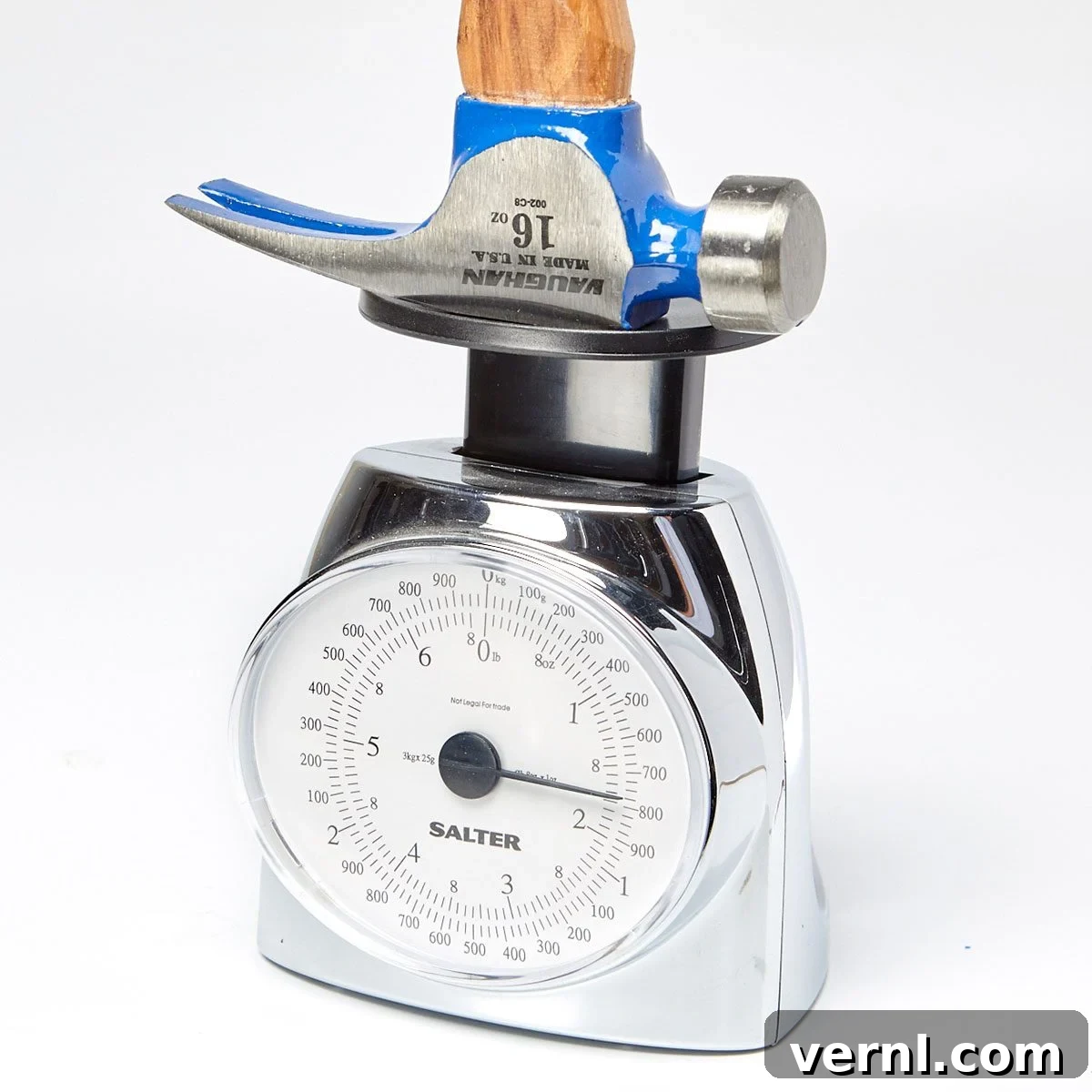
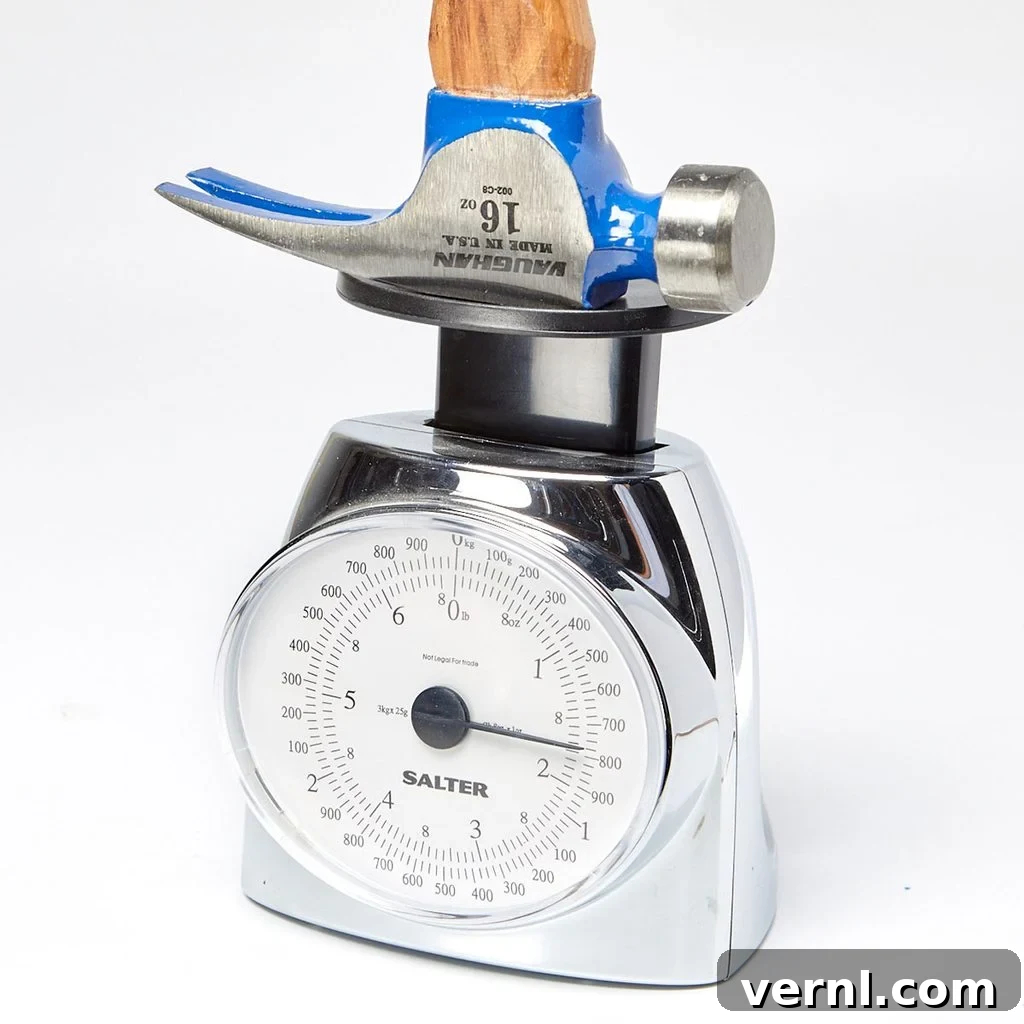
One of the first considerations when choosing a hammer is its weight. Most hammer heads, particularly for general carpentry and framing, fall within the 16 to 22-ounce range. However, this seemingly straightforward measurement can be deceptive. There isn’t a universal industry standard for how a hammer head’s weight is measured, especially when considering different handle types.
For hammers with traditional wooden or fiberglass handles, weighing the head is simple: detach it from the handle and measure. However, modern hammers often feature integrated steel handles or elaborate strike guards, creating a “gray area” where the advertised head weight might include portions of the handle or protective features. This distinction is crucial as the overall weight distribution, not just the head’s mass, dictates the hammer’s feel and performance.
Several factors should influence your decision regarding hammer head weight:
- How You Use It: The application dictates the optimal weight. If your tasks frequently involve overhead hammering, working in tight spaces, or prolonged periods of swinging at chest height, a lighter hammer head (e.g., 16-18 ounces) will minimize fatigue and improve control. Conversely, for heavy-duty demolition, driving large nails, or tasks requiring downward force like masonry form building, a heavier head (e.g., 20-22 ounces or more) can deliver greater impact with less effort per swing.
- How Often You Use It: Professionals who carry a hammer on their pouch all day, every day, will prioritize different aspects than a weekend warrior. If your hammer is a constant companion but used infrequently, a lighter model is a smart choice to reduce strain on your body. Constant use, however, might lead you to seek a balance of power and ergonomics, potentially justifying a specialized, lighter-but-powerful titanium hammer, which we’ll discuss later.
- Your Physical Strength and Stamina: Recall the basic principle of physics: Force = Mass x Acceleration. A heavier hammer head inherently possesses more potential force due to its greater mass. However, this advantage is only realized if you can swing that “beast” effectively and consistently. There’s a critical point where a hammer becomes too heavy to swing quickly and accurately. Beyond this point, a lighter hammer swung with greater acceleration will actually generate more effective force, reducing missed strikes and improving overall efficiency. The ideal weight, therefore, is highly personal and depends directly on the user’s strength and endurance.
- Hammer Balance and Ergonomics: The overall balance of a hammer is arguably as important as its weight. Some craftsmen prefer a hammer with a heavy head and a lightweight handle, which provides a strong forward momentum. Others lean towards hammers with a lower center of gravity, common in integrated steel handle designs, which can offer a different kind of control and feel.
As Charlie Vaughan, President of Vaughan Manufacturing, sagely puts it: “The idea of balance means that weight is evenly distributed between top and bottom AND forward and backward. A well-balanced hammer will HELP swing itself. If you have an unbalanced hammer you might have less work hitting the nail but MORE work bringing it back up…unbalanced hammers cause muscles to ache after use!” This highlights the importance of trying out hammers before purchasing. Ask colleagues, friends, or even shop assistants if you can swing various models to get a feel for their balance and comfort. A well-balanced hammer minimizes muscle strain and maximizes control, making your work more enjoyable and less fatiguing over time.
For additional practical advice and innovative uses for your hammer, explore various hammer hacks that can enhance your toolbox versatility.
Milled-faced or Smooth-faced: The Surface That Defines Your Finish
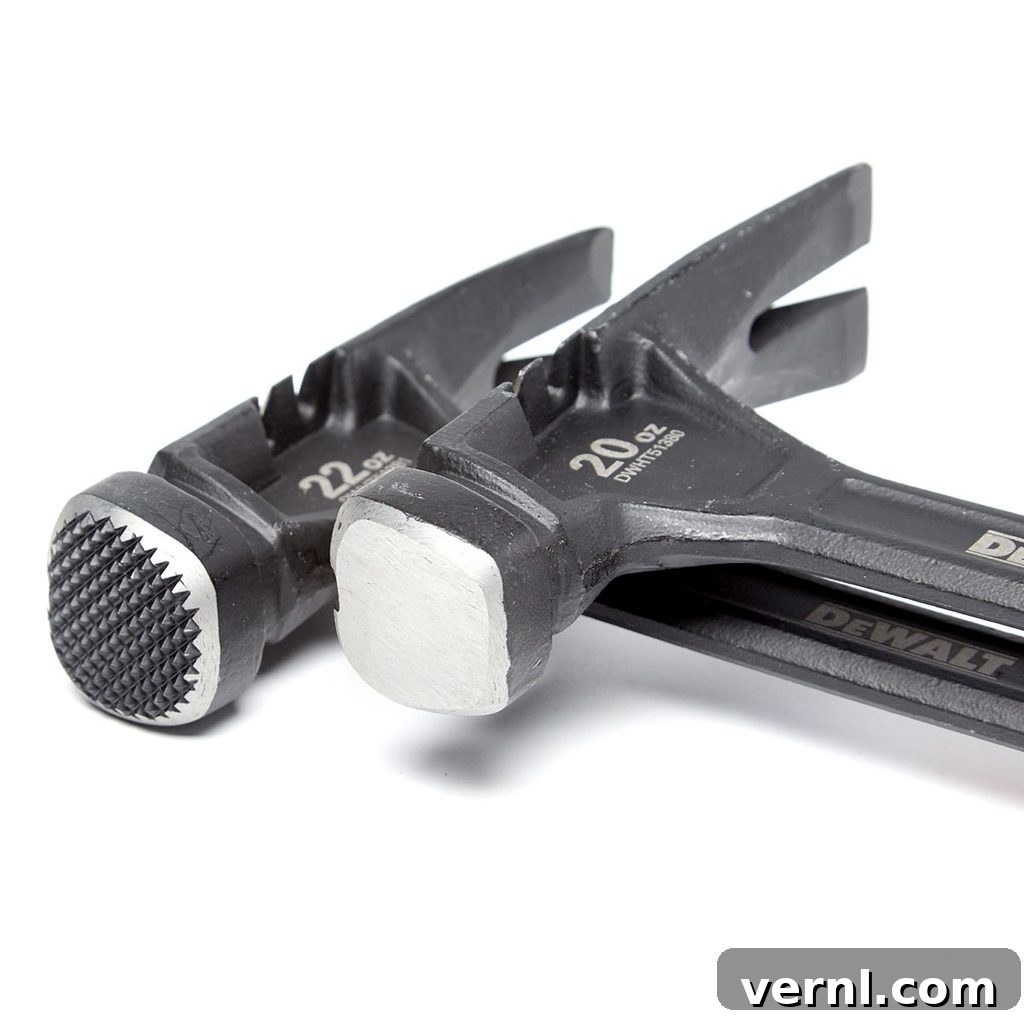
The decision between a milled-faced (often called waffle-head) and a smooth-faced hammer is relatively straightforward, dictated by the desired finish of your project. Each face type serves a distinct purpose in carpentry and construction.
A **milled-faced hammer** features a textured, waffle-like pattern on its striking surface. This design provides superior traction, helping to grip the nail head firmly and prevent it from bending or glancing off during the initial blows. This aggressive grip is invaluable when driving large framing nails quickly and efficiently, especially in rough carpentry applications where speed and strong fastening are prioritized over aesthetic finish. The textured face reduces the chances of a nail slipping, making it easier to drive nails straight and true. However, the trade-off is that the final strike will leave a distinctive waffle-shaped mark on the wood surface. This mark is perfectly acceptable for framing walls, sheathing, or any concealed work where the surface will eventually be covered.
In contrast, a **smooth-faced hammer** is essential for any project where the cosmetic appearance of the wood surface is critical. This includes tasks like installing interior trim, finishing carpentry, cabinetry, or any application where a pristine, unmarked finish is desired. The smooth face delivers a clean strike that won’t leave impressions on the material, allowing you to drive nails flush or set them below the surface without marring the surrounding wood. While it requires slightly more precision to avoid glancing blows, especially with smaller finish nails, the resulting clean finish is indispensable for high-quality work.
Stu Cushman, a general contractor with over 25 years of experience, emphasizes the importance of having both types: “I use three different DeWalt hammers. The 22oz framing hammer, the 14oz finish hammer, and the 22oz demo hammer. I swear by all of them for the comfort of handles, longer necks, and oversized faces. I can swing them all day and not get fatigued, the balance is awesome. I’ve been a carpenter/general carpenter for over 25 years and use a hammer for almost everything I do. I have found that the DeWalt line works best for me.” Stu’s recommendation underscores the need for a versatile toolkit, allowing you to switch between a heavy-duty milled-face hammer for framing and a lighter, smooth-face hammer for precise finishing work, ensuring the right tool is always at hand for the job.
Titanium Hammer Heads: An Investment in Performance and Longevity
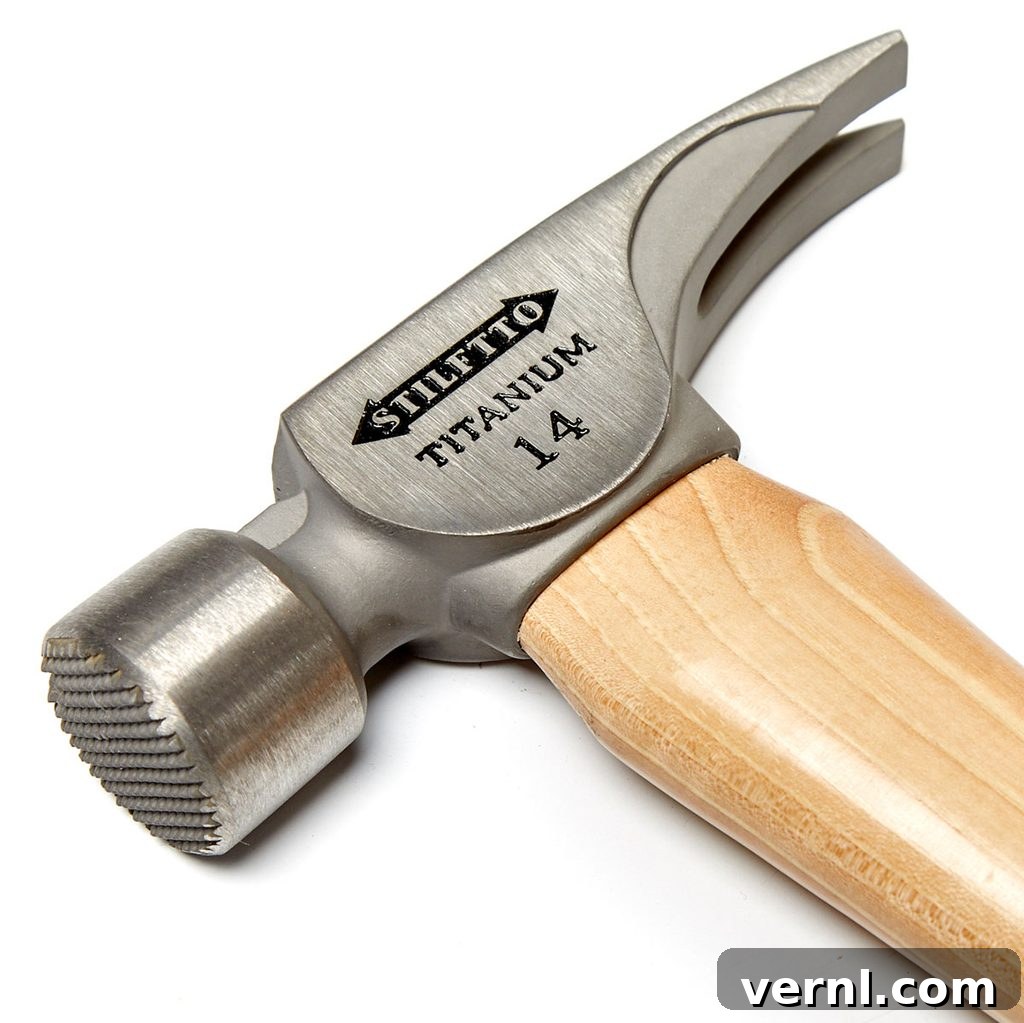
Titanium hammer heads represent a significant leap in tool technology, often carrying a premium price tag, typically ranging from $75 to $200, and sometimes even exceeding $300 for specialized models. The question many ask is, “Are they truly worth the investment?” For professionals who spend countless hours driving nails, the answer is often a resounding yes, due to a combination of superior performance and long-term health benefits.
The primary advantage of titanium lies in its unique energy transfer properties. When a traditional steel hammer head strikes a nail, approximately 30% of the energy from the blow is recoiled back into the hammer and, subsequently, into the user’s arm. In stark contrast, a titanium hammer head transfers nearly all its kinetic energy to the nail, with only about 3% bouncing back. This means a titanium hammer can achieve the same driving force as a much heavier steel hammer, allowing for faster, more efficient work with less physical exertion. Imagine swinging a lighter hammer that hits like a much heavier one—that’s the titanium advantage.
Beyond raw power, this reduced recoil has profound ergonomic benefits. The energy that “bounces back” from a steel hammer doesn’t simply dissipate; a significant portion manifests as vibrations that travel up the handle and into the joints of the person swinging the hammer. Over years of repetitive use, these cumulative vibrations can contribute to chronic pain, tendonitis, and other musculoskeletal issues in the wrists, elbows, and shoulders. Investing in a titanium hammer head is, in essence, an investment in your long-term health and career longevity. If you envision properly functioning joints a decade from now, especially if you pound in dozens or hundreds of nails daily, the higher upfront cost of a titanium hammer becomes a wise preventive measure.
Jonah Jardine, a framing carpenter, attests to this advantage: “All day, every day I swing a 14-oz. Stiletto with an 18-in. wooden handle. It doesn’t weigh hardly anything, but it swings like a 24-oz. monster.” This sentiment perfectly captures the core benefit: lightweight design coupled with heavy-hitting power, reducing fatigue while maintaining effectiveness.
While titanium hammers are genuinely remarkable tools for driving nails, it’s crucial to understand their limitations. Titanium, despite its strength-to-weight ratio, is not as hard as hardened steel. For heavy-duty demolition work, prying, or striking other metal objects (like steel nail pullers or concrete stakes), a steel hammer is generally more robust and resistant to wear and damage. Many professionals, therefore, keep a traditional steel hammer on hand specifically for demolition tasks.
Alternatively, some manufacturers offer a “best of both worlds” solution: hammers with a durable steel striking face (or head) combined with a lightweight titanium handle. This design capitalizes on titanium’s vibration-dampening qualities for the handle while retaining steel’s superior hardness for the striking surface, offering an excellent compromise for versatility and durability.
As a Product Manager for Stiletto Tools advises: “We do not recommend excessively beating on hardened Steel objects such as steel nail pullers, pry & crow bars, concrete stakes, foundation bolts, scaffolding pins & cup-locks, etc., as these objects will cause the milling on the solid Stiletto, Ti hammer face to wear down faster, just as they would on a steel milled face. The wear is typically just faster when used [titanium] in these applications, but usually no chipping or spalling (mushrooming) occurs.” This expert advice reinforces the importance of using titanium hammers for their intended purpose – efficient nail driving – and having steel alternatives for more abrasive tasks. For those considering this premium option, the Stiletto Titanium Framing Hammer is a popular and highly regarded choice.
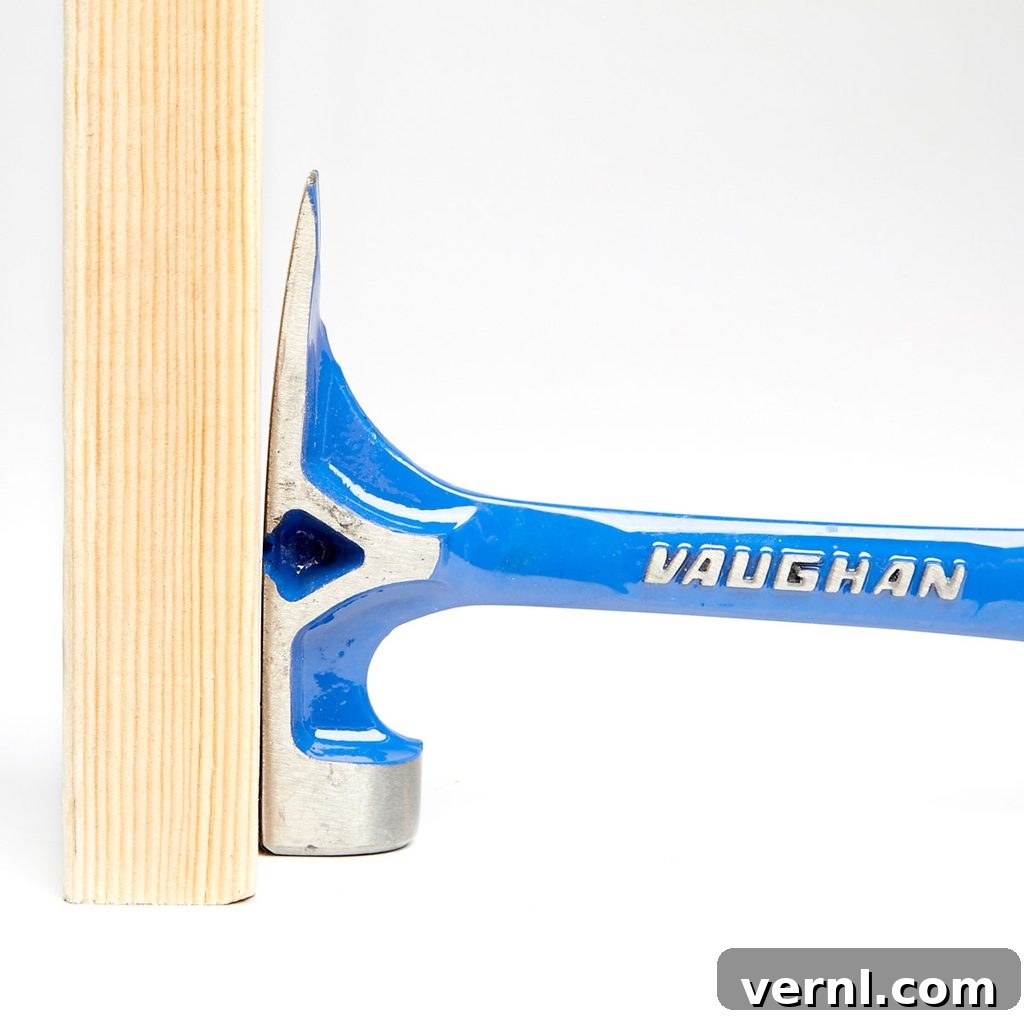
Flat-Top Hammers: Precision in Tight Spaces
Flat-top hammers, a design gaining increasing traction among carpenters and remodelers, offer a unique advantage, particularly in confined working environments. Unlike traditional hammers with rounded or pointed crowns, the flat-top design features a broad, flat surface at the very top of the hammer head.
The primary benefit of this design is its ability to access and operate in exceptionally tight spots where the curvature of a conventional hammer head would hinder movement. Whether you’re working between studs, close to an adjacent wall, or under an obstruction, the flat-top allows for precise strikes and adjustments in angles that would otherwise be impossible without damaging surrounding surfaces. This feature is particularly useful for tasks like toe-nailing in confined spaces, adjusting framing members, or even prying small components without marring the work.
Beyond their practical utility, many users appreciate the modern, clean aesthetic of flat-top hammers. Brands like Vaughan have popularized this design, blending functionality with a contemporary look. Their growing popularity reflects a demand for tools that not only perform well but also offer specialized advantages for the evolving challenges of modern construction and woodworking.
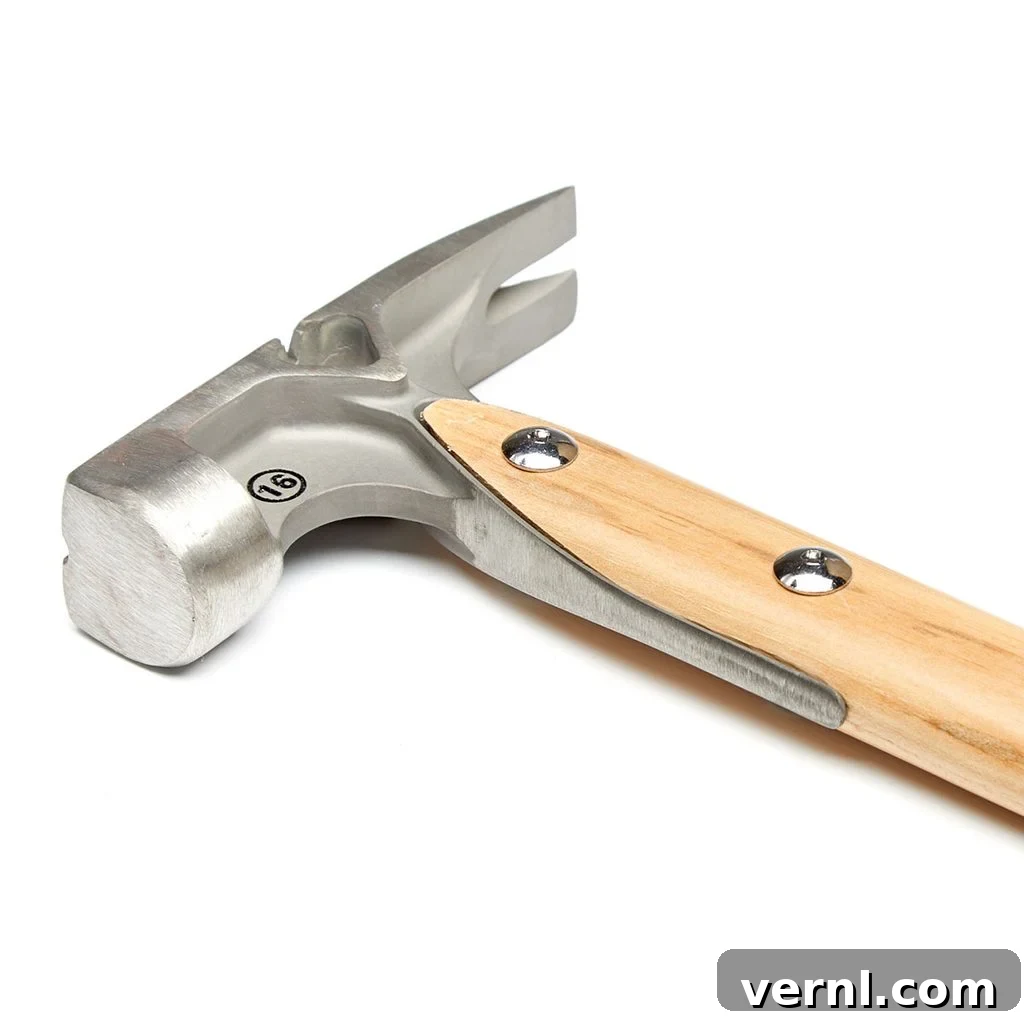
Strike Guard Protection: Safeguarding Your Hammer’s Handle
Hammer handles, especially those made from traditional materials like wood or even fiberglass, are susceptible to damage from “overstrikes” – those accidental misses where the hammer head doesn’t connect squarely with the nail, and the handle smashes against the workpiece or surrounding surface. These mishaps can quickly lead to splintered wood, cracked fiberglass, and ultimately, a compromised or broken handle, forcing you to repair or replace an otherwise perfectly good hammer.
This is where a strike guard becomes an invaluable feature. Designed to protect the handle from the immediate impact zone below the head, a strike guard typically consists of a reinforced section, often made of steel or a durable composite material, that extends down the neck of the hammer. This protective collar absorbs the shock and prevents direct contact between the vulnerable handle material and the object being struck during a mis-hit.
For those who prefer the classic feel and shock absorption of a wooden handle but want to prolong its lifespan, a hammer with overstrike protection is a smart investment. It significantly reduces the wear and tear caused by inevitable misses, especially common with less experienced users or in challenging working conditions. The image above clearly illustrates a hammer equipped with such a protective feature, demonstrating how it shields the handle from damage.
Lee Nelson, a remodeler and tree service professional from Shell Lake, WI, highlights the real-world benefits: “I’m a wood handle guy, but when my guys get their hands on them (especially the newbies), they tend to beat up the handles pretty good. I started buying the Vaughan Dalluge 16-oz. hammers with the strike guard. They work awesome, and no more shredded handles.” This anecdote perfectly encapsulates the practical value of strike guards, especially in professional settings where tools are subjected to rigorous and sometimes unforgiving use. It’s a simple feature that adds substantial durability and cost savings by extending the life of your hammer.
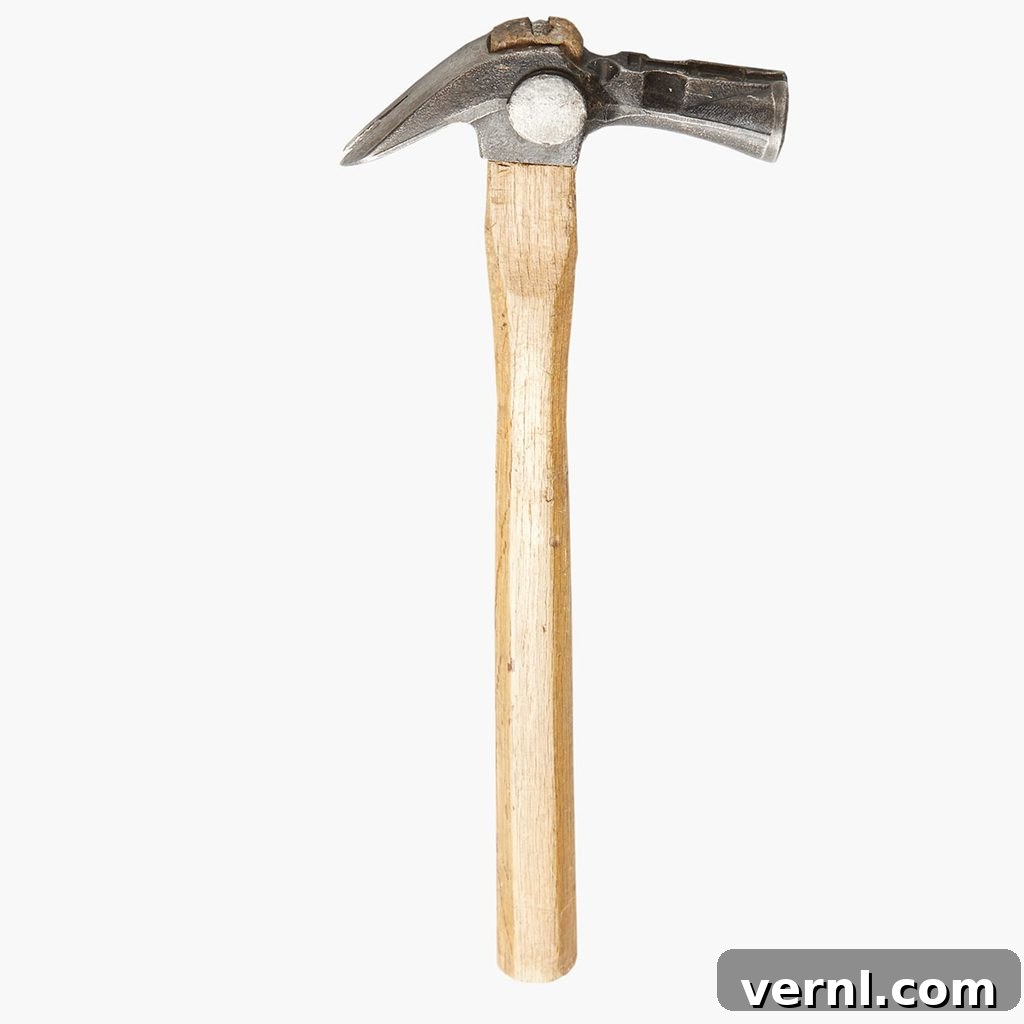
To Each Their Own: The World of Specialty Hammer Heads and Personal Preference
Beyond the common framing and finish hammers, the world of hammer heads is vast and diverse, with dozens of specialty designs tailored for highly specific tasks. From brick hammers for masonry to dry-wall hammers with scoring blades, tack hammers for upholstery, and even specialized soft-face mallets for delicate work, the market offers a tool for virtually every niche application. The key to finding the right hammer, particularly in these specialized categories, ultimately boils down to how you intend to use it and, crucially, how it feels in your hand.
Personal preference plays an enormous role in hammer selection. What feels perfectly balanced and comfortable to one person might feel awkward or unwieldy to another. This is especially true for unique designs. The hammer pictured here, for instance, is a distinctive Japanese hammer, which might appear unconventional to those accustomed to Western designs, yet it’s a highly effective and cherished tool for many. Its unique profile and balance are optimized for traditional Japanese woodworking techniques, demonstrating that innovation in hammer design is global and deeply rooted in cultural craftsmanship.
Brad Holden, a seasoned woodworker and editor at The Family Handyman, beautifully articulates this sentiment: “Once you’ve found a favorite, nothing else compares. About 20 years ago, I took a chance on this odd-looking hammer. I was relieved to find the balance and feel exactly to my liking. Besides the perfect feel, there are some nice extras. The steep claw angle gives ample leverage for pulling nails. Also, the claw’s tips are pointed to aid in digging out nails that are sunk below the surface. A milled face on the side of the head allows ‘sideways’ hammering in tight quarters. I don’t use it often, but it has saved me more than once.” Brad’s experience underscores that the “best” hammer is often the one that perfectly aligns with an individual’s working style, physical build, and specific task requirements, even if it’s an unconventional choice. His Japanese hammer, with its specialized claw and side-milled face, offers functionalities that a standard hammer simply cannot.
In conclusion, choosing the right hammer head is a blend of understanding fundamental principles and honoring personal feel. Consider the weight and balance for your strength and task, select the face type appropriate for your finish, weigh the benefits of advanced materials like titanium, and explore specialized designs that cater to unique needs. By taking the time to make an informed choice, you’ll not only enhance your productivity but also ensure comfort and satisfaction with every swing.
Disclosure: This post is brought to you by The Construction Pro Tips editors, who aim to highlight products and services you might find interesting. If you buy them, we get a small share of the revenue from the sale from our commerce partners. We frequently receive products free of charge from manufacturers to test. This does not drive our decision as to whether or not a product is featured or recommended. We welcome your feedback. Have something you think we should know about? Contact us, here.