

Cool-Season Grasses: Your Guide to a Lush, Green Lawn
Long before manicured lawns graced suburban landscapes, cool-season grasses played a vital role. Archaeological discoveries in the Southwestern United States reveal that early Native Americans relied on these grasses as a crucial food source, particularly during late spring and early summer, before other crops were ready for harvest.
Today, many homeowners depend on cool-season grasses to maintain a beautiful, healthy lawn throughout the year. This comprehensive guide provides everything you need to know about cool-season grasses, helping you achieve a vibrant and thriving lawn.
What is a Cool-Season Grass?
While there are technical definitions, the simplest explanation for homeowners is that cool-season grasses thrive in the cooler temperatures of fall and spring. According to Kris Kiser, president of The TurfMutt Foundation, an organization dedicated to promoting green spaces, these grasses “stay green until the temperatures drop below freezing and can survive colder temperatures.” They flourish best in the Northern U.S. and climates that experience all four seasons.
What’s the Difference Between Warm- and Cool-Season Grasses?
Cool-season grasses have different optimal growing conditions compared to warm-season grasses. Warm-season grasses prefer warmer weather, actively growing in late spring and going dormant in early to mid-fall. In contrast, cool-season grasses are better adapted to cooler temperatures, allowing them to stay green for a longer period.
A significant advantage of cool-season grasses, appreciated even by early Native Americans, is their ability to “green up” much earlier in the growing season compared to their warm-season counterparts. “Cool-season grasses grow the most in the spring and fall when soil temperatures are 65°F or lower,” explains Kiser.
Types of Cool-Season Grasses
Numerous cool-season grass varieties exist. Joe Churchill, a senior turf specialist with Reinders, Inc., has identified various types. The following are the most commonly found in residential lawns:
- Kentucky bluegrass
- Perennial ryegrass
- Creeping red fescue
- Chewings fescue
- Hard fescue
- Tall fescue
How to Identify Cool-Season Grasses
Identifying the type of grass in your existing lawn is beneficial if you’re planning to supplement it with more sod or seed. Here are some key characteristics of the most common cool-season grasses:
- Kentucky bluegrass: Known for its dark green color and good wear tolerance. It has a medium texture and boat-shaped leaf tips. It forms a dense sod and can be grown from seed or sod.
- Perennial ryegrass: Often found in seed mixes with Kentucky bluegrass, it has a medium-green color and a glossy underside to its blades. Freshly mowed perennial ryegrass often displays a whitish cast at the top of the blades.
- Tall fescue: Distinguished by its coarser texture, tall fescue has wider blades that tend to bunch up. Thin, needle-like leaves are more likely to be fine fescue. Tall fescue is dark green with a medium texture.
Cool-season grasses are often available in seed mixes. The packaging should indicate the different grass types included, their percentages, and the climate zones they are best suited for.
How to Choose the Best Cool-Season Grass for Your Yard
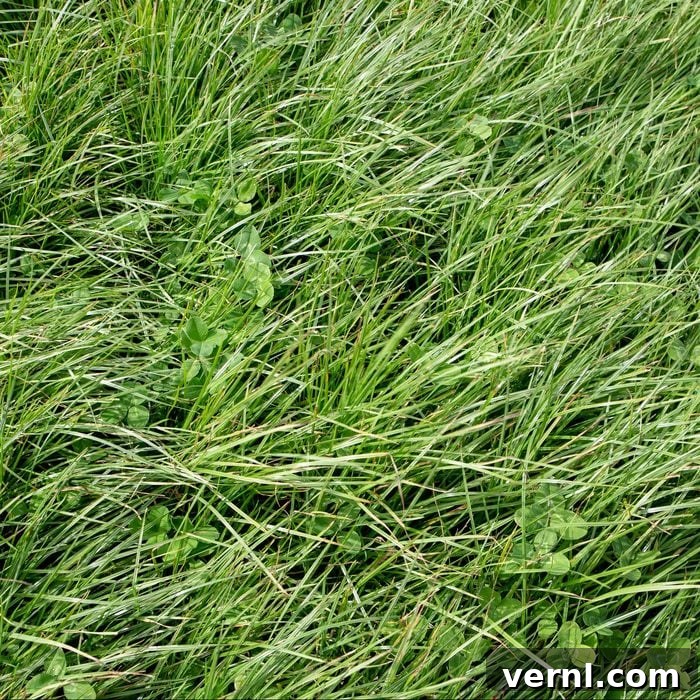
The first consideration when selecting a cool-season grass is your geographical location. While most cool-season grasses can withstand cold winters, some varieties may struggle in extremely low temperatures. They generally don’t thrive in the intense heat of summer.
“Cool-season grasses are more commonly planted in the upper tier of the U.S.,” says Kiser. “If you live in the transition zone between warm and cool zones, such as in the middle section of the country, consider using a blend that mixes warm- and cool-season grass seeds.”
Even within the cool-season grass category, performance varies depending on the specific location. “You should always consider your climate zone and yard conditions,” advises Kiser. Consulting with your local home and garden store is a good starting point. You can also get advice from your county extension office to determine which varieties are best suited for your community.
When Is the Best Time To Plant Cool-Season Grass?
According to Churchill, the ideal time to plant cool-season grasses is from late summer through early fall. “This is when ambient and soil temperatures are both optimum, and weed pressure is the lowest,” he explains. “This translates into a higher success rate of getting seeds out of the ground and fully established.” This makes cool-season grasses an excellent choice for fall grass seed planting.
Can Cool-Season Grass Survive a Hot Summer?
While cool-season grasses thrive in cooler weather, some varieties demonstrate a better ability to withstand the challenges of a hot summer.
“Kentucky bluegrass is rated medium for drought and heat tolerance,” Kiser notes. “It may turn brown during a hot summer and enter dormancy due to high heat. But it will often green up again once the temperatures go down.” Other varieties, such as perennial ryegrass and fescues, have a lower tolerance for heat and drought.
“All of these species are perennials, meaning they will come back year-after-year in the right climate,” Churchill says. “That is, unless something kills them, like high foot or equipment traffic, severe heat, drought, disease or insect infestation.”