Ultimate Guide to Window Insulation: Boost Comfort & Save Energy
When you think about insulation, materials like fiberglass, cellulose, or foam probably come to mind. But what’s the most common insulator in your home, working silently to keep you warm? The answer may surprise you: Air!
That’s right. The fundamental principle behind effective home insulation materials lies in their ability to trap small pockets of air, keeping them separated from each other. Air is a remarkably poor thermal conductor, meaning these trapped air pockets significantly impede the transfer of heat through walls, ceilings, and other building components. This principle is universally applied across various insulation types, including fiberglass, cellulose, mineral wool, and foam.
The very same principle is critically important for your windows. On its own, a single pane of glass offers minimal insulating properties. You can easily test this yourself: simply touch the inside surface of a single-pane window on a cold day, and you’ll immediately feel its chill. In stark contrast, a double- or triple-pane window will feel much closer to room temperature, thanks to the ingenious application of air or inert gas.
Insulated glass units (IGUs) consist of two or more panes of glass meticulously sealed together with a precisely engineered gap in between. This gap is typically filled with air or, for enhanced performance, an inert gas such as argon or krypton. It is this trapped layer of air or gas that acts as the primary insulator, dramatically reducing heat transfer.
“Insulated windows act as effective barriers against the cold, preventing unwanted drafts and significant heat loss,” explains Jeramy Sibley, president of Glass Doctor. “This not only results in substantial reductions in heating costs by improving energy efficiency, but it also profoundly enhances overall indoor comfort by helping to maintain a consistent and warmer temperature throughout your living space.”
Jeff Palla, president of Mr. Handyman, further emphasizes the financial benefits: “Properly insulating windows for the winter season is a smart, forward-thinking investment that can save a homeowner a considerable amount of money on heating costs, providing tangible returns both in the short term and over the long life of the home.” According to Energy Star, these savings can amount to an impressive $583 per year, highlighting the significant economic impact of effective window insulation.
What Exactly Is Window Insulation and Why Is It Crucial?
At its core, window insulation is any barrier or method designed to prevent heat loss or gain through your windows. While insulated glass units are the most sophisticated and visually seamless example, offering insulation across the entire window while preserving transparency, not all insulation methods function in the same way or achieve the same level of performance.
Sometimes, the most significant problems aren’t with the glass itself, but with unseen gaps and cracks around the window frame. These small openings can allow cold air to infiltrate your home and warm air to escape, creating uncomfortable drafts and driving up energy bills. Barriers that effectively prevent airflow through these gaps are just as vital as the glass itself in “enhancing overall indoor comfort by maintaining a consistent and warmer temperature,” as Sibley points out.
The Science Behind Insulated Glass Units (IGUs)
Insulated windows are meticulously crafted, often utilizing tempered or safety glass for added durability and security. The magic happens within the sealed space between the panes. Gas molecules within this confined gap are significantly farther apart than in solid materials like glass. This greater distance means they interact less frequently, dramatically reducing the rate at which they transmit heat energy. This fundamental principle of reduced molecular interaction is precisely why insulated windows are so effective at preventing heat transference, whether it’s keeping heat inside during winter or outside during summer.
Modern insulated windows often go beyond just two panes. Double-pane and triple-pane windows act as highly effective barriers against the cold. They are specifically engineered to prevent drafts and significantly reduce heat transfer. However, the number of panes isn’t the only factor influencing heat loss. The type of window style also plays a crucial role in its overall insulating performance and suitability for different applications.
Sibley highlights four of the most effective window styles for maximizing thermal efficiency:
- Single-Hung Windows: These windows feature one moveable framed pane, known as a sash, which opens vertically, and one fixed pane. The moveable sash, when properly sealed, does a commendable job of preventing drafts, though it may benefit from additional weatherstripping at the bottom. Single-hung windows are effective for climate control, allowing for strategic ventilation to balance internal temperatures. Sibley notes, “They also provide robust resistance to strong winds in freezing temperatures, making them a reliable choice.”
- Double-Hung Windows: Offering enhanced versatility, double-hung windows come with two vertically moveable sashes. This design allows for superior airflow management and ventilation compared to single-hung windows, while maintaining similar thermal performance when properly sealed.
- Casement Windows: Often considered among the best for cold weather, a casement window opens and closes like a door, typically operated by a crank. Its design, often incorporating one or two multi-point locks, creates an exceptionally tight seal when closed. Sibley states, “Many consider this the best window for cold weather due to its tight seal, which significantly minimizes air infiltration.”
- Sliding Windows: These windows operate by opening horizontally. While often perceived as less airtight than casement windows, modern sliding windows, especially when combined with double- or triple-pane glass, offer excellent insulation. Sibley confirms, “The sliding window’s seal, combined with double- or triple-glass panes, is more than sufficient for guarding you and your family from the cold and ensuring comfort.”
Comprehensive Strategies for Insulating Windows for Winter
While replacing all your single-pane windows with modern double- or triple-pane units is undoubtedly the most effective long-term solution, it represents a significant financial investment that isn’t always practical for every homeowner. Fortunately, there are numerous other strategies, both simple and sophisticated, to enhance your window’s thermal performance and keep your home cozy this winter. Even if you have modern windows, supplemental insulation can further boost comfort and savings.
Drafty windows are a common culprit for uncomfortable chills, turning your favorite reading nook or even entire rooms into unpleasant cold zones. Learning to winterize your windows is a proactive step that will significantly contribute to your home’s warmth and your family’s comfort throughout the colder months.
Effective DIY Window Insulation Methods
Jeff Palla provides excellent advice for four key window insulation strategies that don’t necessitate replacing your window glass:
- Draft Stoppers: These incredibly simple yet effective fabric tubes are designed to sit snugly at the bottom of your window sills. Their primary function is to block cold air from leaking inside and warm air from escaping. Palla notes, “They are most effective when used with double-hung windows, which are particularly prone to leaking along the bottom sash where it meets the sill.” They are a quick, inexpensive fix for immediate draft issues.
- Insulating Curtains and Blinds: The right window treatments can act as a crucial layer of insulation. “Think of them as a thermal blanket for your windows,” Palla advises, “covering the glass to keep the cold out and warmth in.” He specifically recommends cellular or honeycomb shades, which feature unique pocket designs that trap air for superior insulation. Additionally, fleece-lined and blackout curtains are excellent choices, as their thicker, denser fabrics provide an extra barrier against thermal transfer.
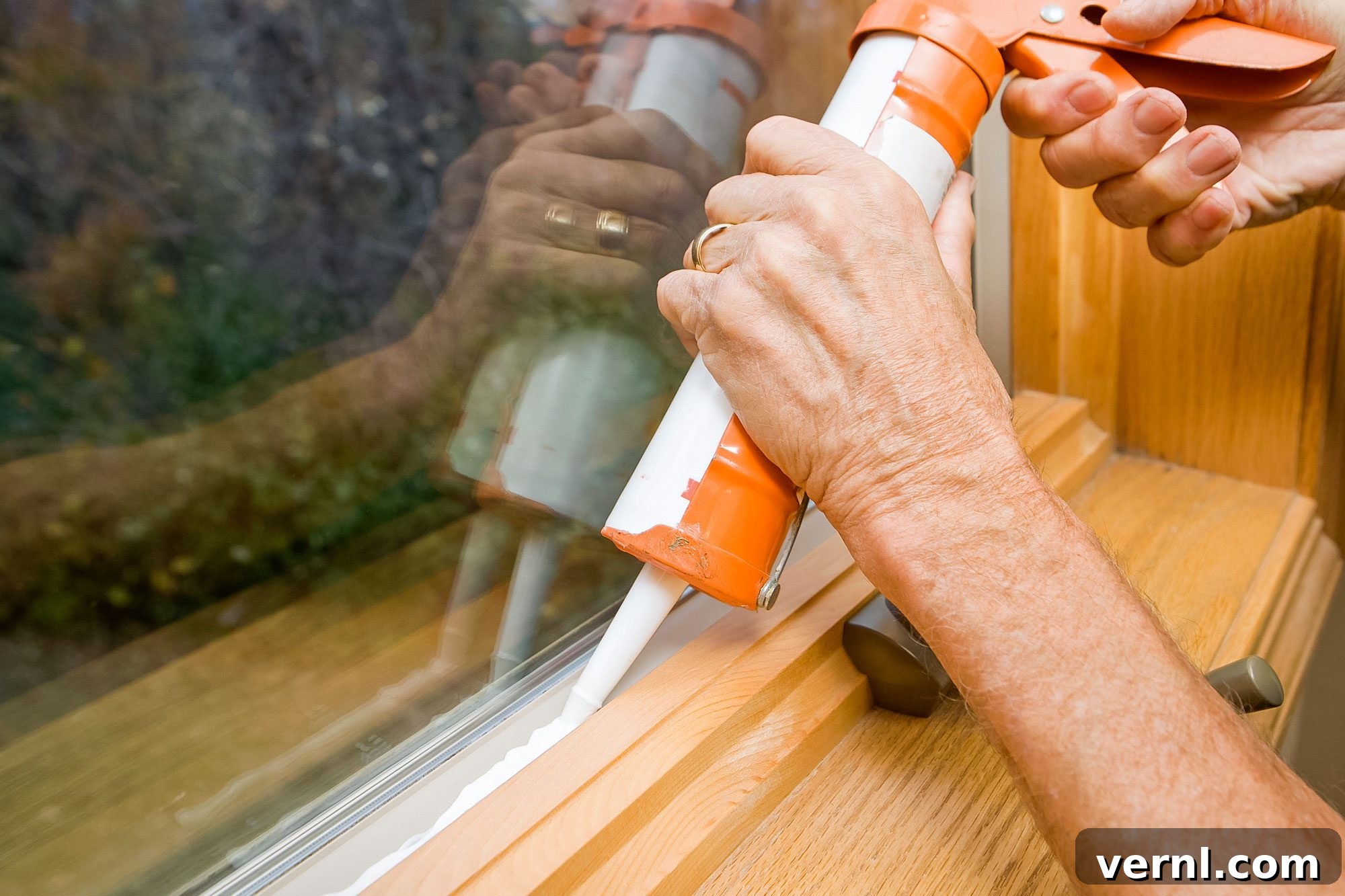
- Caulk and Weatherstripping: These are indispensable tools for sealing air leaks. Use high-quality exterior caulk to seal any visible gaps or cracks between the window glass and the frame, as well as where the window frame meets the wall. For moving parts of the window, like sashes and jambs, “Help your windows and doors close more tightly by installing weatherstripping inside the jams and sashes,” Palla suggests. Weatherstripping creates a compressible seal that prevents air infiltration without impeding window operation.
- Window Film Installation: Installing window film, often referred to as shrink film, is an extremely popular and cost-effective DIY method. Whether you tackle the installation yourself or hire a professional, this clear plastic film is applied to the interior window frame and then heated with a hairdryer, causing it to shrink taut. As Palla explains, this process “effectively seals off drafts and creates an insulating buffer of air between the film and the glass,” dramatically improving the window’s U-value. It’s generally inexpensive and widely available at hardware stores or online.
Innovative and Budget-Friendly Insulation: Bubble Wrap
For a surprisingly effective, albeit slightly less elegant, temporary insulation solution, Jeramy Sibley offers a creative idea: bubble wrap. This method is incredibly low-cost and can provide immediate relief from cold windows. Here’s how to implement it:
- Measure and Cut: Measure each window pane precisely and use scissors to cut the bubble wrap to fit the dimensions perfectly. Ensure the bubble side faces the glass for maximum effectiveness.
- Moisten the Glass: Lightly moisten the entire glass surface by spraying it with water. A fine mist is all you need; avoid oversaturating the window.
- Apply Bubble Wrap: Carefully press the bubble wrap onto the moistened glass, bubble side against the glass. The water creates an electrostatic attraction that should make the bubble wrap adhere firmly to the pane.
- Secure (If Needed): If the bubble wrap fails to stick consistently to the wet surface, you can reinforce its hold by using small pieces of double-sided tape along the edges.
- Easy Removal: When you no longer need the insulation, simply grasp a corner of the bubble wrap and gently pull it off. It typically leaves no residue, making it ideal for temporary applications.
The Long-Term Benefits of Superior Window Insulation
Beyond immediate comfort and energy bill reductions, investing in effective window insulation offers a range of long-term benefits:
- Reduced HVAC Strain: When your windows are well-insulated, your heating and cooling systems don’t have to work as hard to maintain desired temperatures. This reduces wear and tear on your HVAC equipment, extending its lifespan and potentially delaying costly repairs or replacements.
- Noise Reduction: Multi-pane windows, especially those filled with inert gases, also act as excellent sound barriers. This can significantly reduce outdoor noise pollution, creating a quieter and more peaceful indoor environment.
- UV Protection: Many modern insulated windows, particularly those with Low-E (low-emissivity) coatings, also help block harmful ultraviolet (UV) rays. This protects your furniture, flooring, and artwork from fading and degradation over time.
- Increased Home Value: Energy-efficient windows are a highly desirable feature for prospective homebuyers. Upgrading your windows can enhance your home’s market value and appeal, making it a wise investment for the future.
- Environmental Impact: By reducing your home’s energy consumption, you also shrink your carbon footprint, contributing to a more sustainable environment. This aligns with broader efforts to combat climate change and conserve natural resources.
About the Experts Shaping Our Understanding of Window Insulation
Our insights are enriched by the knowledge and experience of leading professionals in the home services industry:
- Jeff Palla is the distinguished president of Mr. Handyman, a valued Neighborly company. With an impressive 25 years of experience in management, his background includes impactful roles such as district manager for Bridge Street Accommodations and multi-unit general manager for Red Roof Inn, bringing a wealth of operational expertise to the home services sector.
- Jeramy Sibley serves as the respected president of Glass Doctor, another prominent Neighborly company. Glass Doctor operates as a nationwide franchise renowned for its specialized services in window installation and repair, with Jeramy at the helm of its expansive operations and commitment to quality.
Making the Smart Choice for Your Home
Ultimately, whether you opt for a full window replacement with state-of-the-art insulated glass or implement a combination of effective DIY winterization strategies, addressing your home’s window insulation is a critical step towards creating a more comfortable, energy-efficient, and cost-effective living space. Evaluate your budget, assess your needs, and choose the methods that best suit your home to enjoy a warmer, quieter, and more sustainable environment for years to come.