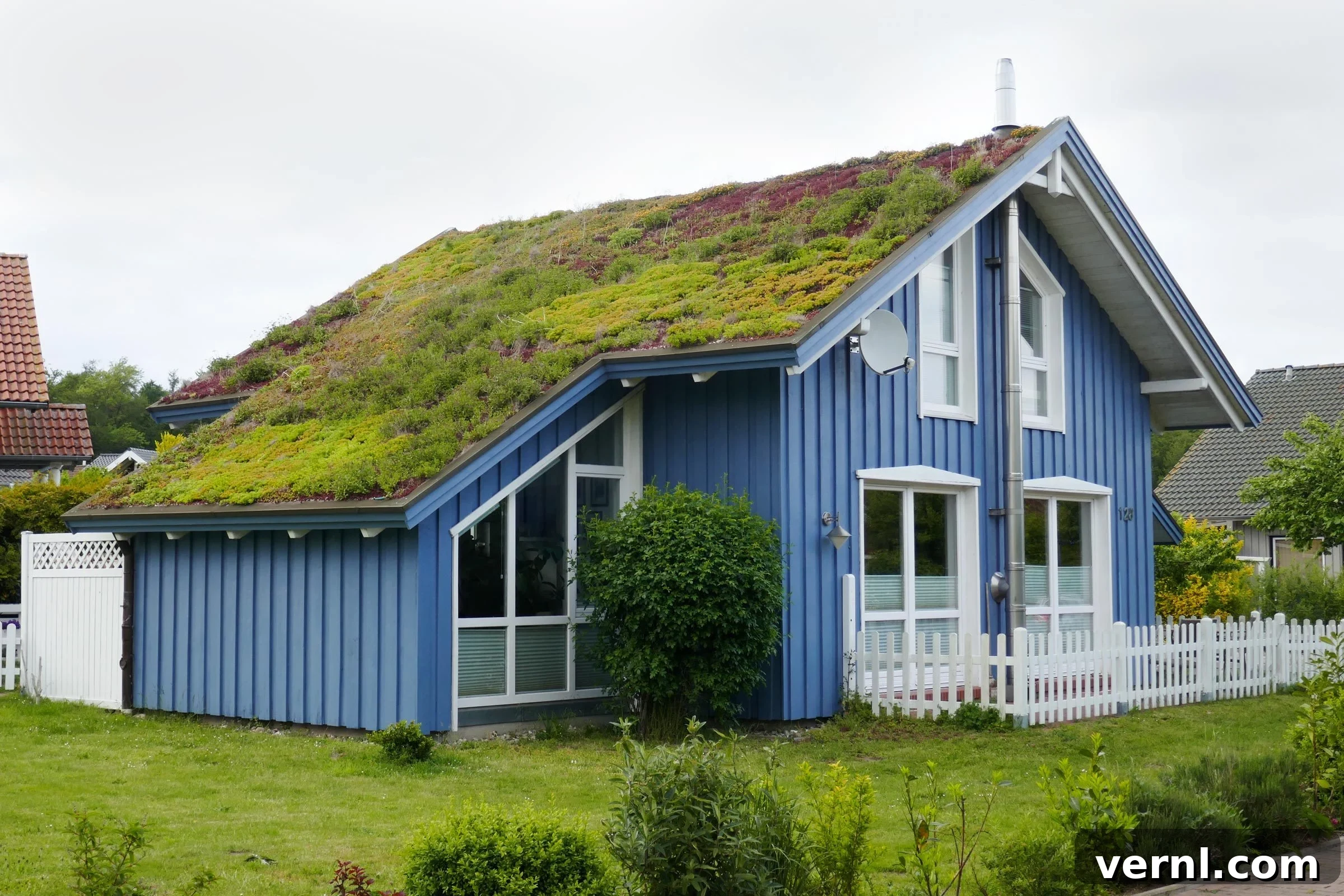
Green Roofs: Your Comprehensive Guide to Sustainable Rooftops
Green roofs, also known as living roofs, have a rich history, dating back to Viking times when they used sod and birch bark for insulation. Today, they’re a popular sustainable choice, offering numerous benefits for homeowners and the environment alike.
This guide will explore everything you need to know about green roofs: their advantages, costs, how they work, and whether they’re the right choice for your home.
What Exactly is a Green Roof?
A green roof is essentially a rooftop that’s been transformed into a garden. Also called living roofs, eco-roofs, or vegetative roofs, they consist of a layered system designed to support plant life on top of a building. This system typically includes:
- A robust waterproofing membrane to protect the building structure.
- A root barrier to prevent plant roots from damaging the waterproofing.
- A drainage system to manage water runoff.
- A growing medium (soil or other substrate) to support plant growth.
- The plants themselves, often selected for their hardiness and suitability for the local climate.
Jim Mumford, president and resident horticulturist at Good Earth Plant Company, describes the eco-roofs they build as having “four to six inches of soil and native plants, to use as little water as possible.”
The Numerous Advantages of Green Roofs
Green roofs offer a wide array of benefits, making them an attractive option for homeowners seeking sustainable solutions.
- Energy Savings: Expect heating and cooling savings of around 20-25% due to the insulating properties of the plants.
- Enhanced Durability: Green roofs can significantly extend the lifespan of your roof, often lasting 45 years or more, two to three times longer than traditional roofs. They protect the waterproofing layer from UV radiation, wind-blown debris, and expansion/contraction cycles.
- Wildlife Habitat: Green roofs create habitats for wildlife, attracting pollinators, birds, and increasing biodiversity in your neighborhood.
- Stormwater Management: They can capture 60-80% of rainfall, releasing it slowly while filtering and cleaning the water, reducing stormwater runoff and pollution.
- Reduced Community Costs: Less runoff means reduced strain on water treatment plants.
- Improved Air and Water Quality: Green roofs naturally filter pollutants, contributing to cleaner air and water.
- Noise Reduction: They can also reduce sound reflection and transmission, improving the acoustic environment.
- Fire Resistance: Green roofs can help to reduce the spread of wildfires.
- Mitigation of Urban Heat Island Effect: They cool the air, mitigating the urban heat island effect, particularly in densely populated areas.
- Solar Panel Performance Boost: Green roofs can enhance the performance of solar panels by cooling the panels while the panels shade the plants, reducing the need for watering.
- Health Benefits: The presence of nature on your roof can contribute to mental and physical well-being.
- Reduced Landfill Waste: Because they last longer, green roofs generate less waste over time.
- Potential for Food Production and Recreation: In some cases, green roofs can even provide space for growing food or creating a recreational area.
Developers and contractors also benefit. Green roofs can fulfill green space requirements, potentially allowing for more surface area for parking and other necessities, and assisting in compliance with stormwater retention regulations.
Potential Drawbacks to Consider
While green roofs are advantageous, it’s essential to be aware of the potential drawbacks:
- Maintenance Requirements: Green roofs require regular upkeep, typically performed by the installation company. This includes checking drains and removing weeds. Mumford’s company, for example, performs maintenance four times a year.
However, Mumford adds, “I think a homeowner actually has better roof maintenance as a result of us being up there on a semi-frequent basis.”
Where Can You Install a Green Roof?
Green roofs are surprisingly versatile.
Mumford notes, “Pretty much anywhere but Antarctica,” Green roofs are popular in the Northwest U.S. and Canada.
Depending on your location, some considerations apply: Irrigation is often needed in drier climates, while in hurricane-prone regions like Florida, the design must withstand strong winds.
Do Green Roofs Need to Be Flat?
Not necessarily.
Green roofs need a slight slope to prevent water from pooling. They can be installed on pitched roofs, with retention systems in place. However, they are typically not suitable for roofs with slopes exceeding 40 percent. Mumford points out, “At some point, once the angle rises enough, it becomes a living wall instead.”
Can You Convert an Existing Roof?
Yes, you can convert a traditional roof to a green roof.
However, it is likely to be a costly undertaking. Conversion typically involves assessing and possibly reinforcing your home’s structural load capacity. A green roof with four inches of soil can add approximately 30 pounds per square foot when saturated. In addition to the cost of the green roof components, factor in the expenses of professional waterproofing installation, structural engineering fees, and the installation itself.
What to Expect in Terms of Cost
The cost of a green roof can fluctuate significantly.
If your structure is already prepared for a green roof, expect to pay between $30 and $50 per square foot for professional installation. Prices can range widely, from $20 to $200 per square foot, with the high end likely for an apartment rooftop park featuring trees, walkways, and seating areas.
Often, homeowners choose to install a green roof on a portion of their roof, such as a garage. Mumford estimates that a two-car garage could cost around $25,000. For a larger 2,500-square-foot house, costs could range from $75,000 to $100,000.
Can You DIY a Green Roof?
DIY green roofs are possible, especially for smaller structures like sheds.
This path requires significant research, detailed planning, and solid construction and gardening skills. DIY projects typically cost around $30 per square foot. Mumford suggests the total cost for an 8-foot-by-10-foot shed would be approximately $2,500.
Mumford adds, “If you go for it, call me, maybe I can coach you through it.”
When considering a DIY project, keep the following crucial factors in mind:
- Building’s Structural Integrity: Ensure your building can bear the extra weight.
- Waterproofing: A high-quality waterproofing layer is essential.
- Root Barrier: Protection against root damage is a must.
- Drainage System: An effective drainage and filter system.
- Parapet: A low wall to contain the soil without allowing water to pool.
- Irrigation System: Adequate irrigation based on your climate and plant needs.
- Growing Media: Use the right type of growing media to suit your plants.
- Plant Selection: Choose hardy, low-growing plants appropriate for your microclimate.
- Safety Measures: Implement scaffolding and other safety precautions when accessing and transporting materials.
Mumford strongly recommends against DIYing a green roof on a structure as large as a garage, emphasizing the potential risks.
“You really don’t want to risk your roof caving in,” he says. “It’s just too catastrophic. And you don’t want a leak. Fixing a leak on a green roof is pretty easy, but finding the leak is another story.”
Final Thoughts
Green roofs offer a compelling combination of environmental benefits, aesthetic appeal, and long-term savings. By carefully considering the costs, requirements, and maintenance, you can determine if a green roof is the right choice for your home and lifestyle.