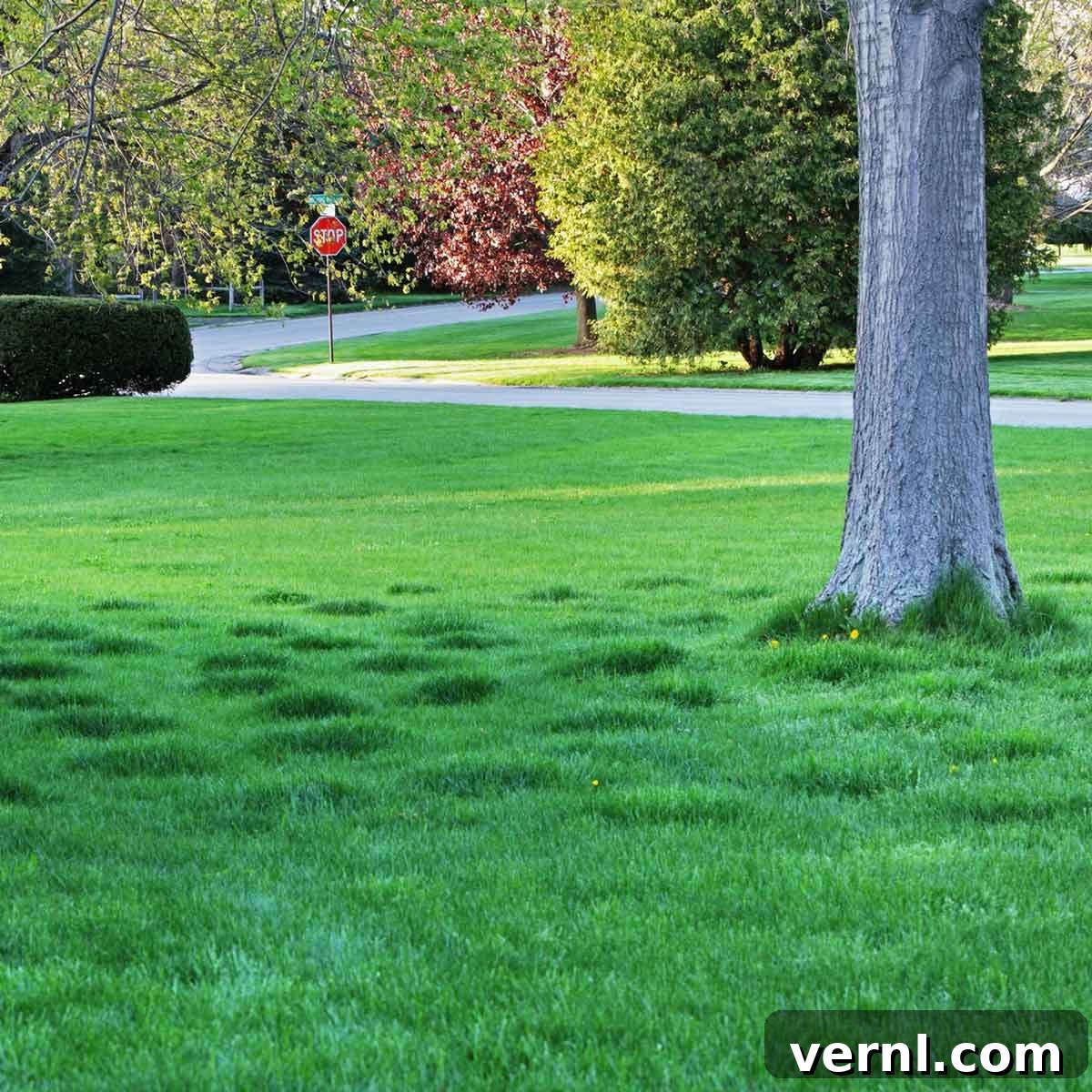
Thick Patches in Your Lawn: Causes and Solutions for a Lush, Uniform Look
A healthy lawn is a source of pride, showcasing a vibrant, uniform dark green color. But what happens when unsightly thick patches of grass disrupt that perfect appearance? These dense areas can be a nuisance, detracting from your lawn’s beauty. This comprehensive guide will explore the common causes of thick grass patches and provide practical, effective solutions to restore your lawn to its pristine condition.
Let’s dive into the details of diagnosing and addressing these issues, ensuring your lawn remains a lush, green oasis.
Identifying Thick Patches in Your Lawn
Recognizing thick patches is the first step in addressing the problem. These areas typically stand out due to several visual characteristics:
- Color Variations: Thick patches may appear significantly darker or lighter green than the surrounding grass.
- Texture Differences: The grass blades within the patches can have a different texture. They may be finer or coarser (thicker) than the rest of your lawn.
- Blade Feel: The leaves of the grass in the affected areas might feel softer or stiffer to the touch compared to the surrounding grass.
Careful observation is key to identifying these visual cues and pinpointing the areas requiring attention.
Common Causes of Thick Grass Patches
Several factors can contribute to the formation of thick patches in your lawn. Understanding these causes is crucial for implementing the correct solutions. Here are the most prevalent culprits:
- Out-of-Place Lawn Grasses: Certain grass types can invade your lawn and grow in clumps, creating unevenness.
- Grassy Weeds: Bunch-type grassy weeds can form dense, unsightly patches.
- Dog Urine: The high nitrogen content in dog urine can lead to localized thickening and darkening of the grass.
- Decomposing Organic Matter: Accumulation of decaying organic matter in the soil can create favorable conditions for certain grass growth, often in circular patterns.
- Leaky Sprinkler Heads: Excess water from leaking sprinkler heads can cause localized overgrowth.
Now, let’s explore each cause in detail and discuss how to tackle them effectively.
Solutions for Eliminating Thick Grass Patches
The approach to addressing thick grass patches depends on the underlying cause. Here’s a breakdown of effective solutions for each common culprit:
Out-of-Place Lawn Grasses
Certain grass varieties, particularly those that don’t readily blend with the established grass in your lawn, can invade and form unsightly clumps. These often include tall fescue, and other unwanted varieties such as Poa trivialis (rough bluegrass), annual bluegrass, and creeping bentgrass.
Non-Chemical Solutions:
- Manual Removal: For smaller patches, you can manually remove the unwanted grass using a spade or sod cutter. Ensure you remove as much of the root system as possible to prevent regrowth.
- Re-seeding/Sodding: After removing the unwanted grass, reseed or install sod to fill in the bare spots and restore a uniform appearance.
Chemical Solutions:
- Non-Selective Herbicide: Apply a non-selective herbicide, such as glyphosate, to kill the unwanted grass. This method provides a total kill with minimal regrowth. Follow the product’s instructions carefully. After the grass has died, remove it and reseed or sod the area.
Bunch-Type Grassy Weeds
Grassy weeds, particularly those that grow in clumps (bunch-type weeds), can quickly create dense patches that mar the beauty of your lawn. Crabgrass is a common example, often appearing as yellowish-green clumps, especially during mid-summer. These weeds frequently thrive in warmer, drier areas, such as along driveways, curbs, and sidewalks.
Solutions:
- Manual Removal: Dig out and remove the grassy weeds by hand. This is most practical for small infestations.
- Non-Selective Herbicide: Apply a non-selective herbicide to eliminate the weeds. Be precise to avoid damaging surrounding desirable grass.
- Natural Weed Killers: Explore natural weed killer options for a more environmentally friendly approach.
- Reseeding: After removing the weeds, reseed the affected areas to fill the gaps and prevent future weed growth.
Dog Urine
Dog urine contains high levels of nitrogen, which acts as a fertilizer. In concentrated doses, this can lead to the grass turning dark green and thickening. However, excessive amounts can also burn the grass, resulting in yellow or brown patches.
Solutions:
- Watering: Immediately flush the affected areas with water to dilute the urine and minimize its impact.
- Fertilizing: Apply a balanced fertilizer to the entire lawn to help even out the color differences. This will encourage the surrounding grass to catch up, masking the affected areas.
Decomposing Organic Matter (Fairy Rings)
The formation of dark, thick patches in a circular pattern may indicate the presence of a fairy ring. This phenomenon is caused by decomposing organic matter beneath the soil surface. Mushrooms often appear within or around these rings.
Solutions:
- Break Up Mushrooms: Simply break up any mushrooms with a leaf rake. This doesn’t eliminate the underlying cause, but it removes the visible evidence.
- Fertilizing: Apply fertilizer to the lawn. This helps to mask the dark-green circular pattern by encouraging growth and evening out the color.
Leaky Sprinkler Heads
Leaky sprinkler heads can cause localized areas of overwatering, leading to thicker, greener patches of grass immediately around the leak.
Solutions:
- Inspection: Regularly inspect your sprinkler heads and pipe joints for leaks.
- Repair/Replacement: Fix any leaks promptly by tightening connections or replacing faulty sprinkler heads.
By addressing these common causes and implementing the appropriate solutions, you can effectively eliminate thick grass patches and maintain a healthy, beautiful lawn.
Preventive Measures for a Healthy Lawn
Prevention is always the best approach. Here are some key practices to help prevent thick grass patches and maintain a thriving lawn:
- Proper Mowing: Mow your lawn at the appropriate height for your grass type. Avoid cutting more than one-third of the grass blade at a time.
- Regular Watering: Water deeply and infrequently to encourage deep root growth. Avoid frequent, shallow watering.
- Fertilization: Fertilize your lawn according to a soil test and the specific needs of your grass type.
- Weed Control: Implement a proactive weed control strategy, including pre-emergent and post-emergent herbicides or natural weed control methods.
- Aeration: Aerate your lawn annually to improve soil aeration and reduce soil compaction.
- Overseeding: Overseed your lawn regularly to fill in thin areas and introduce new grass varieties.
By following these preventive measures, you can create a healthier, more resilient lawn that is less susceptible to thick patches and other issues.
Maintaining a lush, uniform lawn takes effort, but the rewards are well worth it. By understanding the causes of thick patches and implementing the right solutions, you can enjoy a beautiful, healthy lawn for years to come. Remember to observe your lawn regularly, identify any problems early, and act promptly to address them. Happy lawn care!