My first home was an American Foursquare, rich with Craftsman-era details that captivated us from the moment we moved in. It featured intricate built-ins, generously oversized trim, and, most notably, stunning coffered ceilings in both the dining and living rooms. Among all these meticulously crafted elements, the coffered ceilings held a special place in our hearts. They introduced an incredible sense of depth and undeniable elegance to the spaces, all without ever feeling overly formal or imposing. This unique blend of sophistication and comfort made them a standout feature we cherished daily.
Historically, coffered ceilings have been a hallmark of traditional architecture in homes and grand buildings alike. While their roots are deeply embedded in classical design, they have gracefully undergone a modern transformation, ensuring their continued relevance and appeal in contemporary residences. If you’re contemplating adding this architectural marvel to your own home, you’re likely wondering about their value and impact. Join us as we explore the world of coffered ceilings to determine if they are truly a worthwhile investment for your property.
What Exactly Is a Coffered Ceiling?
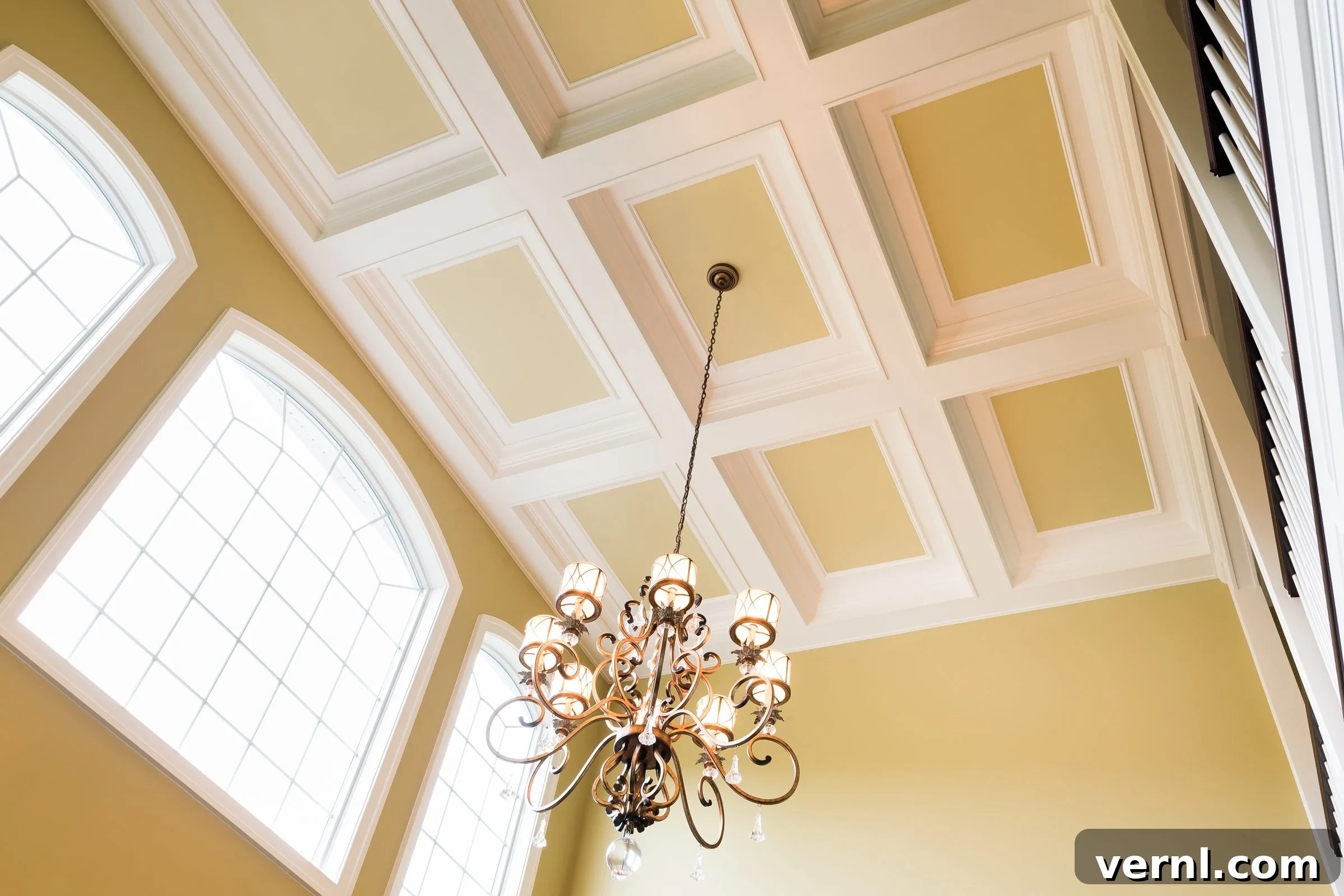
A coffered ceiling is a distinctive architectural feature characterized by a series of recessed panels set within a grid pattern. This intricate design is created by a framework of extended cross pieces, typically beams, that project downward from the ceiling plane, making the areas between them appear sunken or “coffered.”
The concept of incorporating coffers, or these sunken panels, into ceilings is far from new. Its origins can be traced back to Ancient Greek and Roman architecture, where they served a dual purpose. Beyond their undeniable decorative appeal, coffers ingeniously lightened the structural loads of massive stone roofs and domes, showcasing an early blend of aesthetics and engineering. This ingenious design element has since permeated architectural history across the globe, gracing iconic structures from the opulent Palace of Versailles in France to the revered Library of Congress in the United States, cementing its status as a timeless symbol of architectural sophistication.
Often referred to as cross-beam or beam-and-panel ceilings, coffered designs became a prominent staple in the lavish homes of the wealthy elite during the 19th and 20th centuries. These stately ceilings typically featured crisscrossed beams and ornate wood trim arranged in precise square or rectangular patterns, telegraphing luxury and status. Today, coffered ceilings continue to be incorporated into residential projects, demonstrating remarkable versatility across a spectrum of design styles. Their ability to adapt makes them suitable for nearly any home, with the final aesthetic heavily influenced by the chosen materials and the specific design details.
Typically, coffered ceilings are best suited for larger rooms with generous ceiling heights, as the protruding beams do consume some vertical space. They are frequently integrated into primary bedrooms, gourmet kitchens, sophisticated libraries, and elegant dining rooms. In these spaces, they don’t just add a sense of three-dimensional depth and captivating visual interest; they also elevate the room’s character, transforming a flat, often overlooked surface into a powerful architectural statement. Whether aiming for a grand, traditional look or a sleek, modern touch, coffered ceilings offer an unparalleled opportunity to infuse a space with character and refined elegance.
How Are Coffered Ceilings Constructed?
Modern coffered ceilings are most commonly constructed by carefully adding a decorative framework of beams, often referred to as faux beams or a roof beam system, directly to an existing flat drywall ceiling. This method creates the illusion of a recessed design without requiring major structural changes to the home, making it a popular choice for renovations and new builds alike.
The installation of these protruding beams naturally causes the space between them to appear sunken, thereby creating the signature coffered effect. However, this also means that the overall perceived ceiling height is slightly reduced. For this crucial reason, an existing ceiling should ideally be a minimum of nine feet high to be considered a good candidate for a coffered ceiling installation. Chris Adams of Chris Adams Architect in Vermont emphasizes this point, stating, “Nine feet is the bare minimum because the components you’re adding are lowering the perceived ceiling height.” Going below this height can make a room feel cramped or visually heavy.
Beyond height, the condition of the existing ceiling is paramount. It must be perfectly flat and entirely free of any irregularities or imperfections. Coffered elements, by their very nature, tend to highlight and even exaggerate any unevenness, making flaws far more pronounced. Therefore, thorough preparation, including leveling and smoothing, is essential for a flawless finish.
Once you’ve determined that your ceiling meets these critical criteria, you can begin planning your project. For those inclined towards a DIY approach, this how-to guide provides a comprehensive roadmap for building a coffered ceiling. Alternatively, coffered ceilings can be seamlessly integrated into the initial design and construction phases of a new home build, often resulting in a more streamlined and cost-effective installation as part of the overall architectural plan.
The construction process typically involves several key stages. First, precise measurements and layout planning are crucial to ensure a symmetrical and aesthetically pleasing grid. Next, the beam framework is carefully assembled and securely attached to the ceiling joists or blocking. These beams can be solid wood, which offers authenticity but adds significant weight, or hollow box beams, which are lighter and often more practical. The “panels” between the beams can be the existing drywall, or they can be enhanced with additional decorative elements like wallpaper, painted finishes, or even custom millwork inserts.
Materials for the beams themselves vary widely. Traditional options include solid hardwoods like oak, maple, or cherry, which can be stained to showcase their natural beauty. More budget-friendly and versatile alternatives include medium-density fiberboard (MDF), PVC, or polyurethane. MDF is excellent for painting, offering a smooth finish, while PVC and polyurethane are lightweight, moisture-resistant, and ideal for creating intricate profiles that mimic real wood without the associated weight or cost. The choice of material impacts not only the cost but also the final aesthetic and durability of your coffered ceiling. Proper finishing, whether through painting, staining, or other decorative techniques, is the final step in bringing this sophisticated architectural detail to life, often involving multiple coats and meticulous attention to detail to achieve a professional-grade appearance.
How Much Does a Coffered Ceiling Cost?
The investment required for a coffered ceiling can vary significantly depending on several factors, but generally, you can expect to pay between $22 to $60 per square foot for both labor and materials. This range reflects the diverse choices available in design complexity, materials, and installation expertise.
Breaking down the costs, labor alone for a basic coffered ceiling build typically ranges from $20 to $30 per square foot. However, this figure can escalate considerably for more elaborate designs, intricate detailing, or custom additions that demand specialized skills and more time-consuming work. Material costs also present a broad spectrum, from as low as $2 per square foot to as high as $30 per square foot. For instance, using existing drywall as the panel base or adding basic drywall will run approximately $2 to $3 per square foot. In contrast, premium materials like PVC or high-grade hardwoods such as mahogany can push material costs into the $20 to $30 per square foot range, reflecting their quality, durability, and aesthetic appeal. While regional variations in labor rates and material availability will influence these numbers, they provide a solid starting point for budgeting your project.
To put this into perspective, consider the cost of installing and finishing a standard drywall ceiling, which typically ranges from $2 to $4 per square foot. This stark comparison immediately highlights that coffered ceilings represent a significantly more substantial investment, due to the specialized craftsmanship and additional materials involved.
Chris Bonanno, owner of Northeast Custom Carpentry and Custom Picture Frames, provides a tangible example: “For a 12- by 12-foot room, I would charge about $750 in materials and labor to put the drywall up, tape it and mud.” When considering coffered ceilings for the same space, he notes, “You could at least triple the price because it’s very labor-intensive. You could be looking at $2,200 at least to install a coffered ceiling in the same room, depending on the design and what materials are used.” This illustrates how the intricate nature of coffered ceilings dramatically increases both material requirements and, more significantly, the labor hours involved.
For those contemplating a DIY coffered ceiling, these costs can be dramatically reduced, primarily by eliminating labor expenses. John Zieminski, a retired contractor from South Carolina, successfully installed coffered ceilings in two of his own homes, enjoying considerable savings. “It’s a lot of work, but it was in my own house, so labor was no object because I did them on weekends,” Zieminski recounts. He also shares valuable tips for efficiency: “I saved time by having rolling staging [scaffolding on wheels] and pre-staining the boards before installing them.” While DIY offers significant financial benefits, it demands a high level of skill, patience, and access to the right tools, making it a project best suited for experienced homeowners or those willing to invest significant time in learning and execution. The complexity of the design, the chosen materials, and the overall finish quality will ultimately determine the total expense, whether professionally installed or tackled as a personal project.
Are Coffered Ceilings a Worthwhile Investment?
The question of whether coffered ceilings are “worth it” truly depends on a blend of financial considerations, personal enjoyment, and the specific context of your home and local real estate market.
Paul Torville, a licensed Realtor in Massachusetts, offers a real estate perspective, suggesting that the substantial cost of installing a coffered ceiling could indeed be recouped, but often only if your home is situated in the right geographical area. “We typically see coffered ceilings in higher-end homes, as a luxury detail signaling high-quality design,” Torville explains. “So if you live in an expensive neighborhood, there’s a good chance you will get some of that money back at resale.” In such markets, sophisticated architectural details are expected and often contribute positively to a home’s perceived value and desirability, attracting discerning buyers who appreciate custom craftsmanship.
However, even if the strict financial return on investment isn’t guaranteed or fully realized, there can still be immense value in installing coffered ceilings simply because they bring you joy and enhance your living experience. John Zieminski, the retired contractor who DIYed his ceilings, perfectly encapsulates this sentiment. “I liked doing it, and it allowed me to get creative and build something really beautiful that I could enjoy,” he says. For him, the motivation was not resale value but the satisfaction of creation and the enduring beauty it brought to his home. “I wasn’t thinking about resale. They were a labor of love.”
The Benefits of Coffered Ceilings:
- Aesthetic Appeal: Coffered ceilings instantly elevate the sophistication and visual interest of any room. They transform a bland, flat surface into a captivating architectural statement, adding character and a sense of grandeur.
- Increased Depth and Dimension: The recessed panels and protruding beams create an engaging play of light and shadow, adding noticeable depth and three-dimensionality to a space.
- Architectural Distinction: They are a unique and often luxurious architectural feature that sets a home apart, signaling quality craftsmanship and attention to detail.
- Potential for Increased Home Value: In upscale markets and homes, coffered ceilings are seen as a premium upgrade that can enhance perceived value and attract buyers looking for high-end finishes.
- Sound Dampening: The varying surfaces and materials can help to absorb sound, reducing echoes and making large rooms feel more intimate and acoustically pleasing.
- Conceals Imperfections or Wiring: The beam structure can effectively hide minor ceiling imperfections or serve as a clever way to run electrical wiring for integrated lighting without extensive drywall work.
- Customizability: Coffered ceilings can be designed in numerous patterns (square, rectangular, octagonal), depths, and finishes (paint, stain, wallpaper, decorative inserts) to complement any interior style, from traditional to modern.
- Lighting Integration: They offer excellent opportunities for integrating recessed lighting, creating a layered and sophisticated lighting scheme that enhances the ceiling’s features.
Considerations and Potential Drawbacks:
- Significant Cost: As discussed, coffered ceilings are a considerable investment in terms of both materials and specialized labor.
- Loss of Ceiling Height: The beams project downwards, reducing the effective ceiling height. This makes them unsuitable for rooms with ceilings lower than 9 feet, where they can make the space feel cramped.
- Installation Complexity: Precise measurements, skilled carpentry, and often multiple trades (carpentry, painting) are required, making professional installation highly recommended for the best results.
- Maintenance: The many nooks and crannies of coffered ceilings can collect dust more readily than a flat ceiling, requiring more frequent or careful cleaning.
- Can Overwhelm Small Spaces: While elegant in large rooms, coffered ceilings can make smaller rooms feel even more confined and visually busy.
- Style Specificity: While versatile, certain intricate designs might feel out of place in overly minimalist or ultra-modern homes if not carefully designed.
Ultimately, the decision to install coffered ceilings should weigh both the potential financial return and the intangible benefits of living in a beautiful, custom-designed space. If you appreciate fine craftsmanship, desire a distinctive architectural element, and your home’s scale and style can accommodate them gracefully, coffered ceilings are undoubtedly a “labor of love” that can bring enduring satisfaction and a touch of timeless elegance to your home.