
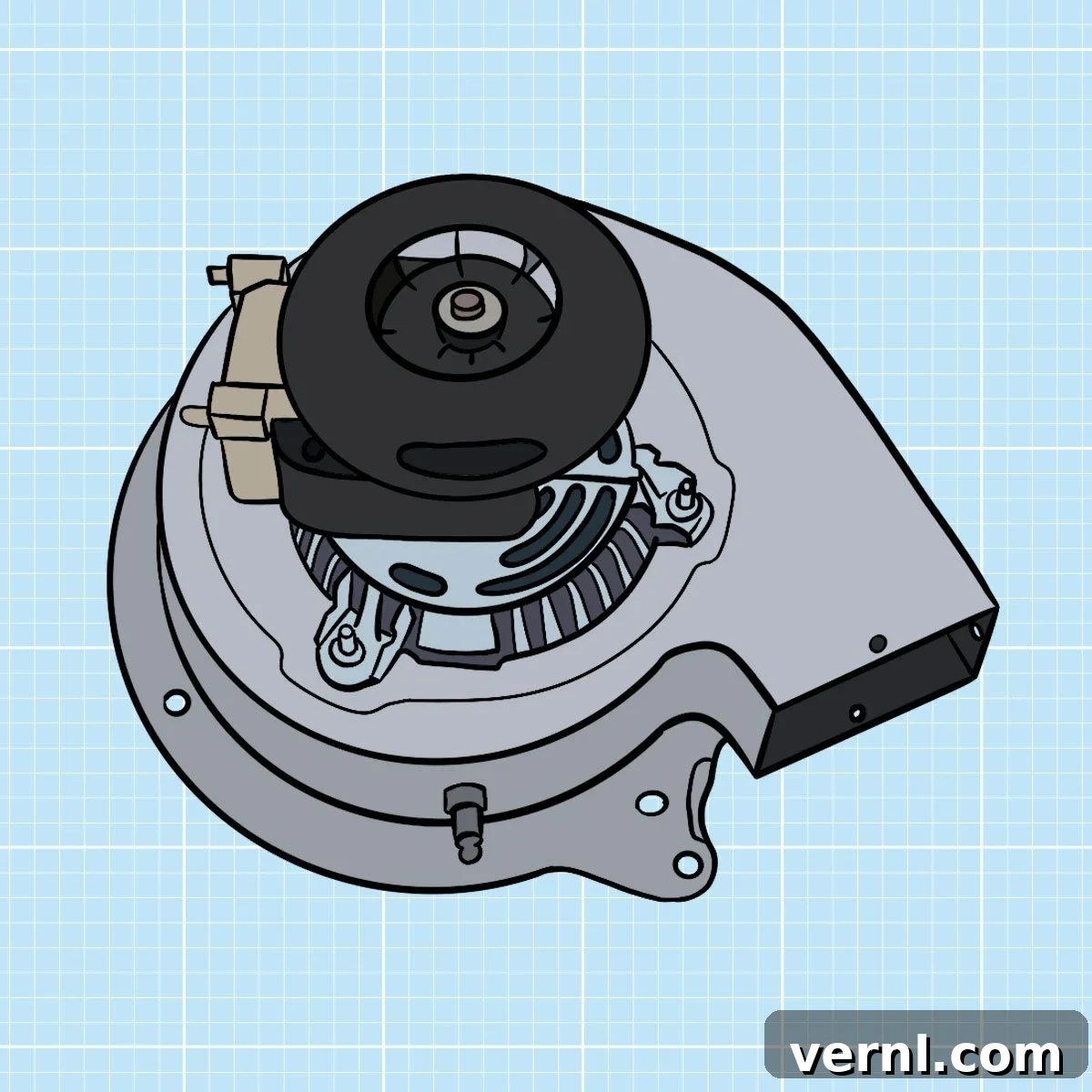
Understanding the Furnace Inducer Motor: Function, Failure, and Repair
The inducer motor, a relatively recent addition to modern gas furnaces, plays a critical role in their efficient and safe operation. Many homeowners may not be fully aware of its purpose or how it functions. However, understanding the inducer motor is essential, as its malfunction can lead to significant problems, potentially shutting down your entire heating system.
As John Gabrielli, owner of Air Temp Solutions, points out, “Since a modern furnace cannot run without an inducer motor, it will usually shut itself down if the inducer motor fails.”
Furnaces have undergone substantial advancements over the last half-century, driven by concerns about emissions and energy efficiency. These improvements have led to more sophisticated and effective heating systems.
Modern high-efficiency gas furnaces can now convert nearly 100% of the fuel’s energy potential into heat while minimizing toxic gas emissions. This is a significant improvement compared to mid-20th-century furnaces, which were far less efficient and often released substantial amounts of pollutants. Older furnaces could waste up to 40% of their energy.
The introduction of inducer motors was a direct result of government mandates for minimum furnace efficiency ratings, which began in 1992. Today, these motors are standard components in most new furnaces.
What Exactly Does a Furnace Inducer Motor Do?
The inducer motor’s primary function is to facilitate the combustion process and exhaust waste gases. “The inducer motor runs a fan which provides air for combustion within a furnace and also pushes the exhaust gases out of the flue,” explains Gabrielli. HVAC professionals often refer to it as a “draft inducer” for this reason.
It’s important not to confuse the inducer motor with the blower motor, which circulates warm air throughout your home’s ductwork. These are separate components with distinct roles.
Combustion in a gas furnace occurs within a sealed chamber. Standard-efficiency models, typically with an Annual Fuel Utilization Efficiency (AFUE) of around 80%, often rely on natural airflow and a chimney-like vent to exhaust combustion gases. However, this is not the case for high-efficiency, or condensing, furnaces.
As Gabrielli notes, “Modern high-efficiency condensing furnaces tend to take more heat out of the exhaust gases. Because the gases are cooler, they won’t rise, so an inducer motor is necessary to push them out.”
In addition to removing exhaust gases, the draft inducer also draws air into the combustion chamber. This provides the necessary oxygen for the burner and promotes more complete fuel combustion, further enhancing efficiency.
Identifying a Failing Furnace Inducer Motor
Several telltale signs can indicate that your furnace inducer motor is experiencing problems. Being aware of these symptoms can help you address issues promptly, preventing further complications.
Common early warning signs include unusual noises, such as tapping, humming, or whirring sounds emanating from the inducer motor. As the motor’s condition deteriorates, the blower may fail to activate, ultimately leading to the complete shutdown of the furnace.
If your furnace isn’t starting, you can perform a couple of simple tests to determine if the inducer motor is the cause:
- Safety First: Turn off the power to the furnace and use a voltage tester to confirm that the power is off before proceeding.
- Check for Heat: Remove the furnace access door and carefully touch the inducer motor. If it feels hot, it indicates that the motor likely attempted to start but was unsuccessful.
- Inspect the Blower Wheel: Try to spin the blower wheel (often called the “birdcage” by HVAC technicians). If it doesn’t spin freely, this is another strong indication of a faulty inducer motor.
What Happens When the Furnace Inducer Motor Fails?
The furnace’s control board is programmed to activate the inducer motor approximately one minute before the burners ignite and the blower starts. The inducer motor’s primary task is to generate the necessary draft for combustion. When it fails to operate, the furnace will not receive the signals needed to ignite the burners and activate the blower, preventing it from starting altogether.
Common Causes of Furnace Inducer Motor Failure
Several factors can lead to the failure of a furnace inducer motor. These can include mechanical problems, electrical issues, or obstructions within the motor housing. It’s generally best to start by checking for mechanical problems before delving into electrical diagnostics.
If your inducer motor has stopped working, consider these potential causes:
- Debris Buildup: Debris, such as dust, dirt, or even a small animal nest, can accumulate inside the motor housing and obstruct the fan blades, preventing them from spinning freely.
- Mechanical Component Failure: The motor’s bearings or other internal mechanical components can wear out over time. This can cause the motor to seize up or operate erratically.
- Electrical Issues: Various electrical problems can cause the motor to fail. For example, the start capacitor for the motor may wear out, preventing the motor from starting. There could also be a malfunction in the control board.
To investigate a potential failure, follow these steps:
- Safety First: Turn off the furnace power switch or the circuit breaker in your electrical panel.
- Access the Motor: Remove the furnace cover and locate the inducer motor (consult your owner’s manual if needed).
- Inspect the Fan Blades: Put on protective gloves and try to spin the fan blades manually. If they don’t turn freely, check for any obstructions. A simple blockage may be the cause. If the fan blades are stuck, try applying gentle pressure to see if they break free.
- Electrical Testing: If the fan blades spin freely but the motor does not start, the problem is most likely electrical. You might need to contact a qualified HVAC technician to diagnose and resolve these types of issues.
How Much Does It Cost to Replace a Furnace Inducer Motor?
The cost to replace a furnace inducer motor can vary significantly depending on several factors, including the furnace model, the availability of parts, and the service provider you choose. As Gabrielli indicates, the repair cost can range anywhere from $300 to $1,800.
Here’s a general cost breakdown:
- If the capacitor is the culprit, the repair might cost around $250.
- A control board malfunction can cost between $500 and $900.
Furnace FAQs: Frequently Asked Questions and Component Explanations
Whether you’re trying to understand how your furnace works or troubleshoot potential issues, here are the answers to some of the most common furnace questions:
- What Is a Furnace?
- How Does a Gas Furnace Work?
- What Are Furnace Energy Efficiency Ratings?
- Understanding the Different Parts of a Furnace
- This Is What That Furnace Switch Is For
- What Is a Furnace Heat Exchanger?
- What Does a Furnace Pressure Switch Do?
- How Much Will It Cost to Replace a Furnace Blower Motor?
- Boilers vs. Furnaces: What’s the Difference?
- How to Choose Between a Heat Pump vs. a Furnace
About the Expert
John Gabrielli’s father was an HVAC technician, instilling a passion and mastery of the trade in John. He is the owner of Air Temp Solutions, based in Delaware.