
For many, the mention of epoxy floors evokes a sense of robust utility, perhaps even a nostalgic glance back at childhood memories. My own mind immediately drifts to the exhilarating, albeit makeshift, hockey games played in the basements of friends. In countless Canadian homes, young aspirants learn the foundational skills of stick-handling and shooting long before they ever lace up skates on actual ice. These formative years of basement hockey, fueled by an undeniable passion for the sport, often relied on a surface that could withstand enthusiastic play.
Among the ragtag pick-up teams of my youth, no playing surface was quite as revered as the epoxy floor in our team captain’s basement – a fact that, in retrospect, might have contributed significantly to his leadership status! This floor offered an exceptional combination of smoothness without the treacherous slipperiness often associated with polished concrete or laminate. It delivered just the right amount of traction, mimicking the glide of real ice while ensuring we could play safely and confidently. What’s more, the inherent indestructibility of epoxy meant our spirited games were never cut short by unsightly holes, frustrating cracks, or crumbling concrete. The bright, cream-colored surface not only added to the fun but also lent a surprisingly cheerful ambiance to the underground arena.
While an epoxy basement floor certainly offers unparalleled benefits for energetic youngsters, its advantages extend far beyond a makeshift hockey rink. For adults, whether their basement serves as a utilitarian space, a vibrant recreation zone, or an integral part of their living area, epoxy presents a myriad of compelling reasons for consideration. It stands out as one of the most practical and beneficial flooring types to install, effectively addressing many of the prevalent humidity problems commonly encountered in basements. Crucially, it promises remarkable longevity, a quality that appeals to any homeowner seeking a lasting solution.
If you’re contemplating an upgrade to your basement flooring, allow us to present seven undeniable reasons why epoxy should be at the top of your list.
Locks Out Moisture, Creating a Drier Basement Environment
Basements are notoriously susceptible to dampness, a direct consequence of their subterranean construction and proximity to the water table. A significant portion of this moisture infiltrates through the floor itself, often via hydrostatic pressure and capillary action. When it comes to blocking this persistent moisture, few materials perform as effectively as an epoxy coating.
Unlike a conventional waterproofing sealer, which primarily increases the concrete’s resistance to water seepage, epoxy operates by forming a robust, impermeable plastic film. This solid barrier physically prevents water molecules from penetrating the concrete surface and rising into your living space. This is a critical distinction; while sealers absorb into the concrete pores, epoxy creates a continuous, non-porous layer that acts as a true moisture deterrent.
While waterproofing your basement floor with an epoxy coating is a foundational step, it’s important to understand that it may not entirely resolve all moisture issues. Water can still find its way in through other avenues, such as cracks in basement walls, faulty window seals, or even plumbing leaks. However, addressing the floor first provides an excellent starting point. By effectively eliminating moisture ingress from below, you simplify the process of identifying and tackling other potential sources of dampness, making the overall basement waterproofing project more manageable and effective. A dry basement prevents mold growth, protects stored items, and contributes to a healthier indoor air quality throughout your home.
Unparalleled Durability: Built to Last for Decades
The resilience of epoxy flooring is one of its most celebrated attributes. While an epoxy floor in a high-traffic industrial environment, such as a factory or warehouse, might require recoating every two to three years due to extreme wear and tear, its lifespan in a residential basement setting is dramatically extended. Homeowners can realistically expect their epoxy basement floor to last anywhere from 10 to 20 years, and with diligent maintenance, it can easily endure for even longer periods, often outlasting the home’s original owners.
Commonly chosen as a coating for garage floors due to its incredible toughness, epoxy is engineered to resist a wide range of stresses. It stands up remarkably well to impacts, meaning accidental drops of tools, toys, or heavy objects are far less likely to cause chips or cracks. Its inherent strength also makes it highly resistant to scratching and abrasion, so you can confidently drag furniture, move appliances, or let pets roam without constantly worrying about surface damage. This level of durability means less time spent on repairs and more time enjoying your space.
Even after years of use, when the floor might begin to show minor signs of wear or a dulling of its original luster, a simple refresher coat of fresh epoxy is often all that’s needed to restore its pristine appearance and protective qualities. This ability to easily renew the surface further extends its already impressive lifespan, making epoxy an incredibly cost-effective and low-maintenance long-term flooring solution for your basement.
Greener Than You Think: An Eco-Conscious Choice
When considering “green” flooring options, epoxy might not be the first material that comes to mind, but its environmental benefits are surprisingly significant. Traditional two-part epoxy systems consist of a resin and a hardener. In their liquid, uncured state, some older or industrial-grade products can indeed release volatile organic compounds (VOCs) that produce seriously noxious fumes. This necessitates proper ventilation and personal protective equipment during application.
However, modern epoxy formulations have significantly improved, with many low-VOC options available. Furthermore, the hardener acts as a catalyst, initiating a chemical reaction that transforms the individual resin molecules (monomers) into long, stable chains (polymers). Once this curing process is complete, the California Department of Health Services, a leading authority on indoor air quality, characterizes the cured epoxy as “almost non-toxic.” While it’s crucial to wear a respirator, ensure excellent ventilation by opening windows, and turn off your home’s HVAC system during application to prevent fumes from circulating, rest assured that once the epoxy coating fully cures, it becomes a safe and inert surface for your entire family, including children and pets.
Beyond its cured-state safety, epoxy is eco-friendly in another profound way: its exceptional longevity. Unlike vinyl tiles, laminates, or even carpets that may need frequent replacement due to wear, staining, or moisture damage, epoxy floors are designed to last for decades. This means you won’t contribute to landfill waste from discarded flooring materials every few years, significantly reducing your home’s environmental footprint. Choosing epoxy is an investment in a durable, long-lasting surface that minimizes resource consumption and waste over time.
Effortless Cleaning: Maintaining a Pristine Surface
One of the most appreciated qualities of epoxy flooring, especially in a basement setting, is its remarkable ease of cleaning. Its seamless, non-porous surface makes it inherently resistant to dirt, dust, and grime accumulation. Unlike porous materials like concrete, which can absorb spills and trap allergens, epoxy prevents anything from seeping beneath the surface.
Maintaining an epoxy floor requires minimal effort. Regular sweeping or vacuuming is usually sufficient to keep it free of loose debris. For everyday spills, scuffs, and skid marks, a simple mixture of mild soap – such as Simple Green or a similar pH-neutral cleaner – and water is typically all you need. A damp mop or cloth will effortlessly lift away most blemishes, leaving your floor sparkling clean. Its hard plastic coating is also highly resistant to a wide range of chemical spills, including oil, grease, paint, and various household cleaners, ensuring that accidental mishaps seldom result in permanent stains. This makes epoxy an ideal choice for utility areas, workshops, or any space where spills are a possibility.
The hygienic benefits are equally compelling. Because there are no grout lines, seams, or pores for bacteria and allergens to hide, epoxy floors are easy to sanitize, contributing to a healthier indoor environment. This feature is particularly valuable in basements, which can be prone to dampness and the growth of microorganisms. With epoxy, keeping your basement floor immaculately clean is a quick and simple task, allowing you more time to enjoy your newly transformed space.
Mold Resistant: A Barrier Against Unwanted Growth
Basements are, by their very nature, often cool, damp, and can be poorly ventilated. These conditions create an ideal breeding ground for mold and mildew, which thrive in moist environments. Condensation frequently collects on surfaces, providing the necessary moisture for mold growth. However, for mold spores to proliferate, they first need a porous surface to take root and draw nutrients from.
This is where epoxy flooring offers a significant advantage. Its completely non-porous, seamless surface provides no such opportunity for mold spores to embed themselves or grow. Unlike raw concrete, wood, or even some types of tile with porous grout lines, an epoxy coating creates an impenetrable barrier that mold simply cannot penetrate or adhere to for sustained growth. This inherent resistance makes an epoxy floor a virtually mold-free zone, dramatically improving the air quality and overall health of your basement environment.
It’s important to note, however, that while the epoxy itself is mold-resistant, mold can still potentially grow *under* other items, such as rugs or mats placed on the floor. If moisture gets trapped between a rug and the epoxy, and there’s a source of organic material (like dust or dirt), mold can still form on the rug itself or on any trapped debris. To mitigate this, if you choose to use rugs in your basement, ensure they are periodically lifted, and both the rug and the floor underneath are thoroughly cleaned and allowed to dry completely. Taking rugs outside to air out and dry in the sun occasionally can also help prevent moisture build-up and inhibit mold formation, ensuring your basement remains a healthy and pristine space.
Aesthetically Pleasing: Elevating Your Basement’s Style
Beyond its practical advantages, an epoxy floor profoundly enhances the aesthetic appeal of any basement. The smooth, sleek, and often shiny finish of an epoxy coating instantly transforms a typically dark and utilitarian underground space into a bright, inviting, and modern area. The reflective qualities of epoxy help to bounce light around the room, effectively brightening what can often be a dimly lit environment, making it feel larger and more open.
One of the most exciting aspects of epoxy flooring is the sheer breadth of aesthetic options available. Products come in a wide range of hues, from classic neutrals to vibrant custom colors, making color-matching with your existing decor or new design scheme incredibly easy. But the customization doesn’t stop there. For those seeking to unleash their creativity, epoxy allows for intricate designs and patterns. You can paint geometric shapes, stripes, or even custom murals onto the floor using two or three complementary colors of epoxy, creating a truly unique and personalized look.
Furthermore, decorative flakes (also known as chips) can be broadcast into the wet epoxy layer, offering a speckled, granite-like appearance that adds depth, texture, and an anti-slip quality. Metallic pigments can be incorporated to create stunning, marbled, three-dimensional effects that mimic natural stone or flowing water, turning your basement floor into a true work of art. Whether you desire a minimalist, high-gloss finish or a dynamic, textured pattern, epoxy offers the versatility to elevate your basement from a dreary storage space to a sophisticated living area, a vibrant home gym, or an inviting entertainment zone, significantly increasing your home’s overall appeal and value.
Installation is DIY-able: A Rewarding Home Improvement Project
While applying an epoxy floor coating might involve a bit more effort and attention to detail than simply rolling paint onto a floor, it is by no means an exclusive task for professional contractors. With careful preparation and adherence to instructions, many homeowners find the installation of an epoxy floor to be a highly rewarding DIY project, saving significantly on labor costs.
The key to a successful epoxy application lies in thorough surface preparation. This involves cleaning the concrete floor meticulously to remove all dirt, grease, oil, and old paint. Any large cracks or holes in the existing concrete must be patched using appropriate materials; hydraulic cement is excellent for larger structural repairs, while smaller imperfections can be addressed with concrete-specific caulk. Crucially, if the concrete surface is smooth or previously sealed, it will need to be properly etched or mechanically ground to create a profile that allows the epoxy to adhere firmly. This can often be achieved with a floor buffer equipped with a diamond-grit sanding screen, or for optimal results, a concrete grinder. This step creates a porous surface, enabling a strong mechanical bond between the epoxy and the concrete.
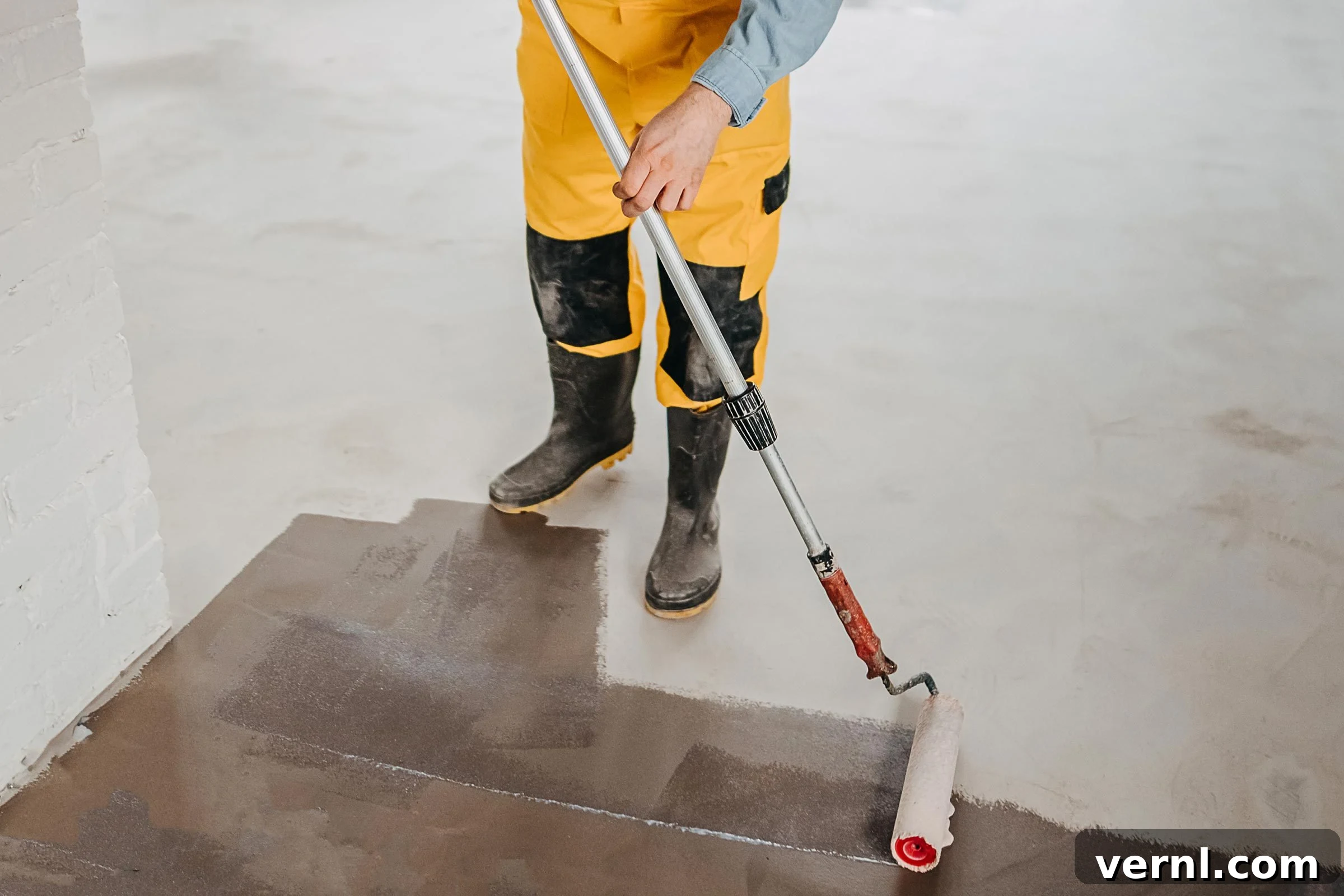
Once the preparation is complete, the application process itself is straightforward. While traditional two-part epoxy products require precise mixing of the resin and hardener, modern advancements have introduced convenient water-based epoxy floor coatings that can be applied directly from the can without any mixing, simplifying the process for the novice DIYer. Regardless of the product type, careful application with rollers and brushes, working in sections, will yield a professional-looking finish. Allowing adequate drying and curing time, as specified by the manufacturer, is essential to ensure the longevity and durability of your new basement floor. With a bit of patience and attention to detail, you can transform your basement with a durable, beautiful epoxy floor and enjoy the satisfaction of a job well done.