
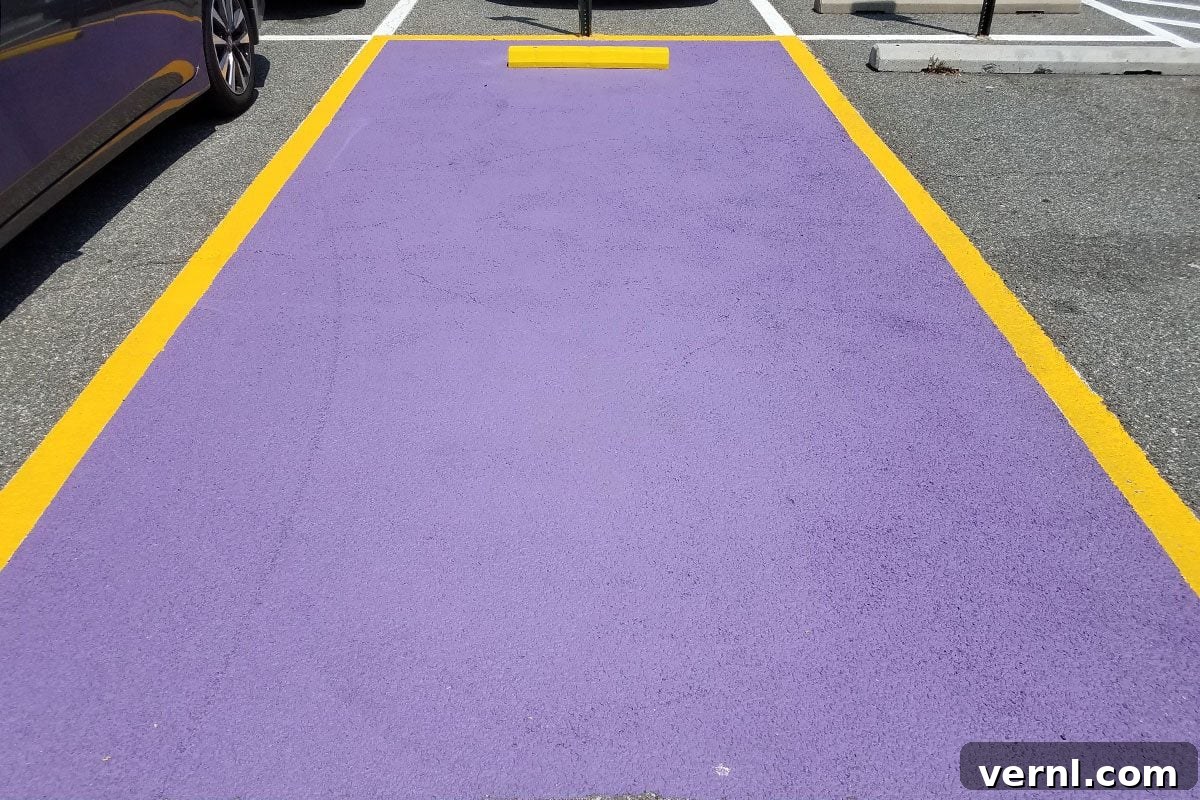
Decoding the Mystery: Can You Park in a Purple Parking Space?
Navigating the labyrinth of modern parking lots can often feel like a frustrating quest. Whether you’re rushing to grab groceries, embarking on a retail therapy spree, or simply trying to find a spot at a bustling event, the search for an available space is a universal experience fraught with minor disappointments. We’ve all encountered the classic scenarios: spotting what appears to be a vacant spot, only to discover a compact car or motorcycle neatly tucked into a corner, making it unavailable. Or perhaps even more vexing, pulling up to a promising opening only to be greeted by a sign unequivocally declaring it reserved. Familiar blue accessible parking spaces are instantly recognizable and understood to be off-limits unless you possess the appropriate permit. Similarly, other reserved parking areas typically display clear signage delineating who can park there and during what hours. But what happens when you encounter a vibrant, unfamiliar purple parking space? Does this color signal another exclusive zone, or is it open for general use?
What Do Purple Parking Spaces Signify? Unveiling Their Purpose
The emergence of purple parking spaces across the United States marks a poignant and growing initiative to honor a very specific group of individuals: combat-injured veterans. These distinctive spots are a relatively recent development, gaining traction at state and local levels as communities seek tangible ways to express gratitude and provide a small convenience to those who have made profound sacrifices in service to their nation.
The Legislative Foundation: Florida’s Pioneering Role
One of the earliest and most influential legislative efforts to formalize these spaces came from the Florida State House of Representatives. According to CS/HB 1029, which went into effect on July 1, 2021, “around the United States parking spaces are being created in parking lots, which are reserved for combat injured veterans.” This bill not only acknowledged the existing movement but also encouraged its broader adoption, providing a framework for other municipalities to consider similar measures.
The Symbolic Choice of Purple: Honoring the Purple Heart
The selection of the color purple for these dedicated parking spaces is deeply symbolic and intentionally chosen. As the Florida bill articulates, it serves as a direct “nod to the Purple Heart medal.” The Purple Heart is one of the most distinguished and solemn military decorations in the United States, awarded to service members who have been wounded or killed as a direct result of enemy action while serving in the U.S. military. By designating these parking spots with the color purple, communities establish an immediate visual connection to the profound bravery, sacrifice, and injury endured by these veterans. It transforms a simple parking space into a highly visible tribute, reminding the public of the debt owed to those who have shed blood for their country.
The Critical Question: Can You Park in a Purple Space? Navigating the Rules
Understanding whether you can park in a purple parking space requires a nuanced approach, as the rules and enforcement surrounding these spots can vary significantly depending on the specific state, city, or even private property where they are located. Unlike federally mandated accessible parking spaces, the regulatory framework for purple veteran parking is primarily decentralized, reflecting a patchwork of local ordinances and state initiatives rather than a uniform national standard.
The “Honor System” Approach: Courtesy and Respect
In many jurisdictions, including the one outlined in Florida’s initial legislation, purple parking spaces are designed to honor combat-wounded veterans but are not always officially reserved or legally protected in the same way accessible parking spots are. The Florida bill explicitly states that “while not officially reserved or protected, these spaces are designed to honor those who were wounded in combat.” What this implies is that, technically, you might be able to park in one of these spaces without facing immediate legal repercussions such as a ticket or tow, even if you are not a Purple Heart medal recipient or a combat-wounded veteran.
However, this technical legality comes with a strong ethical caveat. In these areas, the use of purple spaces operates largely on an “honor system.” Politeness, respect, and a sense of community responsibility dictate that you should leave these spaces available for their intended beneficiaries whenever possible. Choosing to park in a purple space when you do not qualify, even if technically permissible, can be seen as disrespectful to the veterans these spaces aim to honor. It’s a question of courtesy and appreciation, rather than strict legality.
Strictly Enforced Zones: Legal Consequences for Misuse
The landscape shifts considerably in other areas where local governments have chosen to implement stricter enforcement mechanisms for purple parking spaces. These jurisdictions have passed specific ordinances that legally reserve these spaces for combat-wounded veterans or Purple Heart recipients, complete with penalties for misuse. The Berkeley Heights Township of New Jersey provides a clear example of this more stringent approach. In Berkeley Heights, if you do not possess the proper identifying stickers or placards designating you as a combat-wounded veteran or a Purple Heart medal recipient, you will face significant penalties.
The fines can be substantial: a first offense could result in a $253 fine, with subsequent offenses incurring the same fine along with 90 days of community service. This demonstrates a clear intent to protect these spaces legally and ensure they are utilized exclusively by those they are meant to serve. The enforcement in such areas mirrors the strictness applied to accessible parking violations, emphasizing the legal weight given to these dedicated spots.
Identifying the Rules: Always Check Local Signage
Given the inconsistency in enforcement, the most critical advice for any driver encountering a purple parking space is to always scrutinize the accompanying signage. Look for specific language that indicates whether the space is “reserved,” “enforced,” or simply “preferred.” Signs that cite specific local ordinances or state laws typically imply legal enforceability. If the signage is ambiguous or if there’s no clear indication of legal reservation, it’s prudent to default to the “honor system” and, out of respect, seek an alternative parking spot if you do not qualify. When in doubt, it is always safer and more respectful to err on the side of caution and leave the space open.
The Broader Context of Reserved Parking and Community Respect
Purple parking spaces exist within a larger ecosystem of designated parking, each with its own set of rules and social implications. Understanding the differences between these categories can help drivers navigate parking lots responsibly and respectfully.
Purple Spaces vs. Accessible (Handicap) Parking
It’s crucial not to conflate purple veteran parking spaces with blue accessible (handicap) parking spaces. Accessible parking is a federally regulated mandate under the Americans with Disabilities Act (ADA), with strict, uniform laws and severe penalties for misuse across the country. These spaces are legally reserved for individuals with disabilities who display a valid, state-issued placard or license plate. Misuse of an accessible space can result in hefty fines, vehicle towing, and even jail time in some jurisdictions. While purple spaces share the goal of providing convenience to a specific group, their legal framework and enforcement vary, making it important to distinguish between the two.
Other Forms of Reserved Parking
Beyond accessible and purple veteran spaces, parking lots often feature a variety of other reserved spots: electric vehicle (EV) charging stations, carpool-only spaces, compact car spots, employee parking, and commercial loading zones, among others. Each of these categories comes with specific criteria for use, and disregarding them can lead to tickets, fines, or towing. The common thread among all reserved parking is the expectation that drivers will adhere to the stated rules, demonstrating awareness and respect for the diverse needs within a community.
Fostering Awareness and Encouraging Respect for Veterans
The movement to establish purple parking spaces is more than just about convenience; it’s a powerful symbol of a community’s appreciation for the extraordinary sacrifices made by combat-wounded veterans. These spaces serve as a constant, visible reminder of their service and the physical and emotional tolls of war. By understanding what these spaces represent and adhering to the varying rules of their use, the public plays a vital role in upholding this respect.
Promoting awareness about purple parking spaces is essential. As this initiative grows, educating drivers about their meaning and appropriate use—whether by legal mandate or the honor system—helps to ensure that the intended message of gratitude is consistently delivered and respected. It encourages a culture of thoughtfulness and civic responsibility, where every driver considers the needs and sacrifices of others, particularly those who have served.
The Future of Purple Parking: Standardization and Expansion
As more states and municipalities adopt purple parking initiatives, there is a growing discussion about potential standardization. While the decentralized nature allows for local communities to tailor their tributes, a more unified approach could help eliminate confusion regarding enforcement and ensure consistent recognition for veterans nationwide. Future legislative efforts might aim to provide clearer guidelines or even federal recognition, further solidifying the status of these crucial spaces.
Navigating Parking with Courtesy and Responsibility
Ultimately, the challenge of finding parking requires not just skill, but also mindfulness and consideration for others. Whether it’s a bustling downtown garage or a quiet suburban strip mall, every driver has a role to play in fostering an orderly and respectful parking environment. Here are a few tips for responsible parking:
- Always read signage carefully: This is your primary guide to understanding the specific rules of any parking spot.
- Understand local regulations: Parking laws can vary significantly from one town or city to another. A quick online search for local parking ordinances can save you from penalties.
- When in doubt, find another spot: If a parking space’s designation is unclear, or if you don’t meet the criteria for a reserved spot, it’s always best to find an alternative.
- Be mindful and courteous: Parking is a shared resource. Considering others, especially those with special needs or who have made great sacrifices, contributes to a more harmonious community.
Conclusion: A Place of Honor, A Call for Respect
Purple parking spaces are a profound and evolving symbol of national gratitude towards combat-wounded veterans and Purple Heart recipients. While their legal enforceability may differ from one location to another, their purpose remains universally consistent: to honor those who have served and sacrificed. Whether you encounter a purple space governed by strict fines or one operating purely on the honor system, the underlying message is clear. By understanding the meaning behind these vibrant spots, checking local regulations, and always acting with respect and courtesy, we can collectively ensure that these dedicated spaces serve their intended purpose, providing a small measure of convenience and a powerful symbol of appreciation for our nation’s heroes.
Source References
- CS/HB 1029 Purple Heart Recipient Parking Spaces, House of Representatives Staff Analysis, April 1, 2021.
- An Ordinance Reserving Certain Parking Spaces at the Berkeley Heights Municipal Building for Combat Wounded/Purple Heart Military Veterans, Berkeley Heights Township, NJ, April 2022.
Related Parking Insights
- If You See a Blue Stop Sign, Here’s What It Means
- If You Spot This Yellow Device on Your Windshield, You’ve Been Barnacled
- What Do Shoes on Power Lines Mean?