
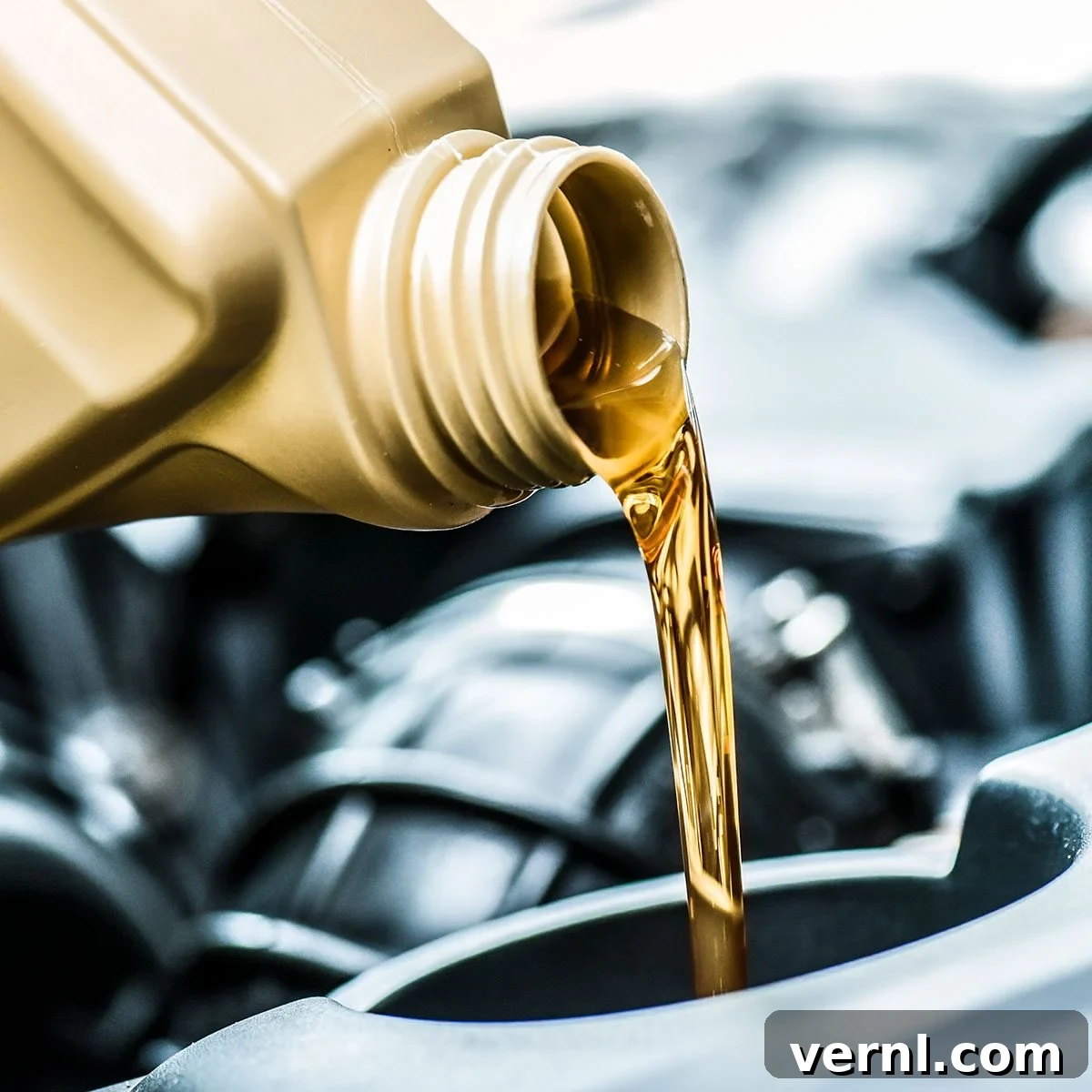
Understanding Engine Oil Grades: The Essential Guide for Car Owners
In the evolving world of automotive technology, the seemingly simple act of choosing engine oil has become a nuanced decision. What began in the 1950s with basic oil grades for different temperatures has transformed into a critical choice affecting engine performance, efficiency, and longevity. Today, with increasingly sophisticated and finely tuned engines, selecting the correct grade of motor oil is more vital than ever to prevent costly damage and ensure your vehicle runs smoothly for years to come.
Modern engines are engineering marvels, designed with precise tolerances and specific lubrication requirements. As Alan Gelfand, owner of German Car Depot, emphasizes, “The people who built your engine created it to run with a specific oil, and tested it rigorously before confirming it had the appropriate viscosity and additives.” This rigorous testing means that every vehicle manufacturer specifies a particular oil grade tailored to their engine’s unique design and operational demands. Ignoring this recommendation can lead to severe consequences. Therefore, understanding engine oil grades and knowing which one your car requires is a fundamental aspect of responsible vehicle ownership.
This comprehensive guide will demystify engine oil grades, explain their significance, and provide you with the knowledge needed to make informed decisions about your vehicle’s most vital fluid.
What Exactly Is an Engine Oil Grade?
At its core, an engine oil grade is a classification that describes the oil’s resistance to flow, commonly known as its viscosity. Imagine the difference in how honey pours versus how water flows; honey is more viscous. In the context of motor oil, viscosity is numerically designated, appearing as labels like “5W-30” or “10W-40.”
Viscosity is paramount because engine oil performs several critical functions: it lubricates moving parts to reduce friction and wear, dissipates heat generated by friction, helps seal the combustion chambers, and cleans internal components by suspending contaminants. The ideal engine oil must be viscous enough to form a robust lubrication barrier between metal engine components, preventing direct metal-on-metal contact. Simultaneously, it must be thin enough to flow freely and rapidly through narrow passages and channels, reaching all critical areas without the engine having to expend excessive energy to pump it. An oil that is too thick might not circulate effectively, especially during cold starts, while an oil that is too thin might not provide sufficient protection at high operating temperatures.
Deciphering the “W” in Engine Oil Grades
One of the most common misconceptions regarding engine oil grades is the meaning of the “W.” Many mistakenly believe it stands for “weight.” In reality, the “W” stands for “winter.” This letter is a crucial indicator of how well the oil performs in cold temperatures.
The number preceding the “W” (e.g., the ‘5’ in 5W-30) quantifies the oil’s viscosity at lower temperatures. A lower number indicates that the oil will remain thinner and flow more easily when it’s cold. This property is vital for several reasons. During a cold start, an engine needs immediate lubrication. Thinner oil reaches critical engine components faster, significantly reducing wear and tear that occurs during the initial moments of operation. As Alan Gelfand explains, “Smaller numbers mean your oil won’t turn into molasses when it’s cold out. If you leave a bottle of 15W-40 outside in the winter, which is a very thick engine oil, and go to pour it out, it barely comes out. If the same thing happens in your engine, that’s bad news for your engine components.” An oil that is too thick in cold weather can strain the starter motor, deplete the battery, and most importantly, starve engine parts of lubrication until it warms up and thins out, leading to accelerated wear and potential damage.
How to Read and Interpret an Engine Oil Grade
Understanding the two numbers in a multi-grade oil designation like 5W-30 or 10W-40 is key to knowing how your oil will perform under varying conditions:
- The First Number (e.g., 5W): As discussed, this is the cold-weather specification. The lower this number, the less viscous (thinner) the oil will remain when the engine is cold. This ensures easier starting and quicker lubrication in freezing temperatures, which is critical for minimizing engine wear during start-up.
- The Second Number (e.g., -30): This number represents the oil’s viscosity when your engine is running at its normal operating temperature, typically around 212°F (100°C), after you’ve been driving for a while. The larger this number, the thicker the oil will stay at high temperatures. A higher hot viscosity number indicates that the oil will maintain a more robust lubricating film under intense heat and pressure, providing superior protection for engine components in demanding conditions, such as high-performance driving, heavy loads, or hot climates. This number is often enhanced by “viscosity index improvers,” additives that help the oil maintain its protective properties across a wider temperature range.
Beyond Viscosity: Understanding Additives and Oil Types
While viscosity is a primary factor, modern engine oils are far more complex than just their thickness. They are sophisticated chemical formulations containing various additives and base oil types, each playing a crucial role in engine protection and performance:
- Conventional Oil: Derived from crude oil, it’s the most basic type, suitable for older engines and moderate driving conditions. It offers standard protection and typically requires more frequent changes.
- Synthetic Blend Oil: A mixture of conventional and synthetic base oils, offering improved performance over conventional oil, especially in terms of temperature stability and wear protection, at a more affordable price than full synthetic.
- Full Synthetic Oil: Chemically engineered from purified base stocks, full synthetic oil provides superior performance, protection, and longevity. It offers excellent temperature stability, better flow in cold weather, enhanced protection against deposits, and can often extend oil drain intervals. It’s ideal for high-performance engines, severe driving conditions, and modern vehicles that explicitly recommend it.
Engine oils also contain a blend of additives, which typically constitute 15-30% of the oil’s volume. These additives perform vital functions: detergents clean engine surfaces, dispersants prevent sludge formation, anti-wear agents protect metal surfaces under extreme pressure, rust inhibitors prevent corrosion, and friction modifiers improve fuel efficiency.
FAQ: Your Questions About Engine Oil Answered
What’s the Difference Between SAE and API Ratings?
- SAE (Society of Automotive Engineers): This organization developed the standardized classification system that defines the viscosity of oil. When you see “5W-30” or “10W-40,” these are SAE viscosity grades. They establish the rules for those thickness numbers.
- API (American Petroleum Institute): API is responsible for evaluating oil quality and performance standards. When oil manufacturers formulate their products to meet specific performance criteria and regulations, API certifies them with designation letters, such as ‘SN’ or ‘SP’. These letters indicate the oil’s performance in areas like engine wear protection, sludge control, and fuel economy for gasoline engines. The latest API service categories offer improved protection for modern gasoline engines.
How Do I Know Which Oil Grade My Car Needs?
Your vehicle’s owner’s manual is the definitive source for this information. It will precisely specify the required SAE viscosity grade (e.g., 5W-30) and the API service category (e.g., SP). The manual may also suggest alternative oil grades for specific conditions, such as extremely hot or cold climates, or for severe driving (e.g., towing). “Unfortunately, most people tend to ignore the owner’s manual unless they absolutely have to read it as a last resort,” notes Gelfand. “But there’s a reason why the manufacturer spends the time and money to make them.” This manual contains manufacturer-specific recommendations that are critical for your engine’s health and to maintain your vehicle’s warranty.
What Happens If You Use the Wrong Engine Oil?
Using the incorrect engine oil can lead to a cascade of problems, ultimately resulting in severe and costly engine damage. The consequences vary depending on whether the oil is too thick or too thin for the operating conditions:
- If the oil is too thick for cold weather: Your engine might struggle to start, or it will take an extended period for the oil to circulate and reach all vital components. This delay causes critical internal parts to grind without lubrication, leading to accelerated wear, heat scoring, excessive valve-train noise, reduced fuel efficiency, and even complete engine failure over time.
- If the oil is too thin when hot: The lubricating film between moving parts can break down, effectively stopping the oil from performing its job. “If it’s too thin when hot, it basically stops doing its job, and your engine parts start grinding against each other; neither of those scenarios ends well for your wallet,” says Gelfand. This leads to increased friction, overheating, premature wear of bearings and camshafts, and can significantly shorten your engine’s lifespan.
In both scenarios, the improper lubrication increases friction, generates more heat, and can lead to sludge formation, decreased fuel efficiency, and even void your vehicle’s warranty.
Can You Mix Engine Oil Grades or Types?
While you technically “can” mix different oil grades or even conventional and synthetic oils, it’s generally not recommended and should be avoided whenever possible. “It’s like mixing different types of paint; you might get something that works, or you might get a mess,” cautions Gelfand. Mixing oils can lead to unpredictable viscosity characteristics, dilute the effectiveness of crucial additives, cause foaming, or even lead to chemical incompatibilities that degrade the oil’s protective qualities. The resulting mixture might not offer the specified protection your engine needs.
In an emergency, if you are significantly low on oil and have no other option, adding a small amount of a different, but generally compatible, oil to reach a safe level is unlikely to cause immediate catastrophic damage. However, this should only be a temporary solution until a proper oil change with the correct type and grade can be performed. Do not make it a habit.
For certain high-performance and luxury vehicles, such as BMWs and Mercedes, the issue is even more critical. These engines are engineered to operate with specific oil formulations that include a precise concoction of additives designed to interact chemically with the engine’s materials and design. “In this case, mixing generic engine oil, even if it is the appropriate grade according to your manual, can still cause catastrophic damage because the oil doesn’t behave like the one they formulated for that particular engine; an even more important reason you should be reading the owner’s manual very carefully,” Gelfand emphasizes. Always adhere strictly to your vehicle manufacturer’s recommendations to safeguard your engine and avoid expensive repairs.
Choosing the Right Oil for Your Vehicle: A Summary
Making the right choice for your engine oil is straightforward if you follow these steps:
- Consult Your Owner’s Manual: This is the most crucial step. It will specify the exact SAE viscosity grade (e.g., 0W-20, 5W-30) and the API service category (e.g., SP) or OEM specific certification (e.g., Dexos, VW 504 00/507 00) required for your engine.
- Consider Driving Conditions: While the manual is primary, if you regularly drive in extreme temperatures (very hot or very cold) or under severe conditions (towing, heavy loads, frequent short trips), you might consider using a full synthetic oil that meets your manual’s specifications for enhanced protection.
- Understand Oil Types: Choose between conventional, synthetic blend, or full synthetic based on your manual’s recommendation, your driving habits, and your budget, always prioritizing the manufacturer’s specification.
- Check for Certifications: Ensure the oil you purchase carries the appropriate API “starburst” (for gasoline engines) or “donut” (for heavy-duty diesel engines) certification, and any specific OEM approvals mentioned in your manual.
- Regularly Check Oil Levels: Regardless of the oil type or grade, regularly checking your oil level and performing oil changes according to your vehicle’s service schedule are vital for engine health.
About the Expert
- Alan Gelfand has been the owner of German Car Depot for more than 30 years. His business is an independent automotive service center in Hollywood, Florida, specializing in the service and repair of German vehicles, bringing decades of hands-on experience and expertise to this critical topic.
Related Automotive Insights
- Do You Know What That Little Button on Your Seat Belt Is For?
- What Those Lines on Your Backup Camera Really Tell You
- Here’s What The Small Panel On Your Car’s Front Bumper Is For