
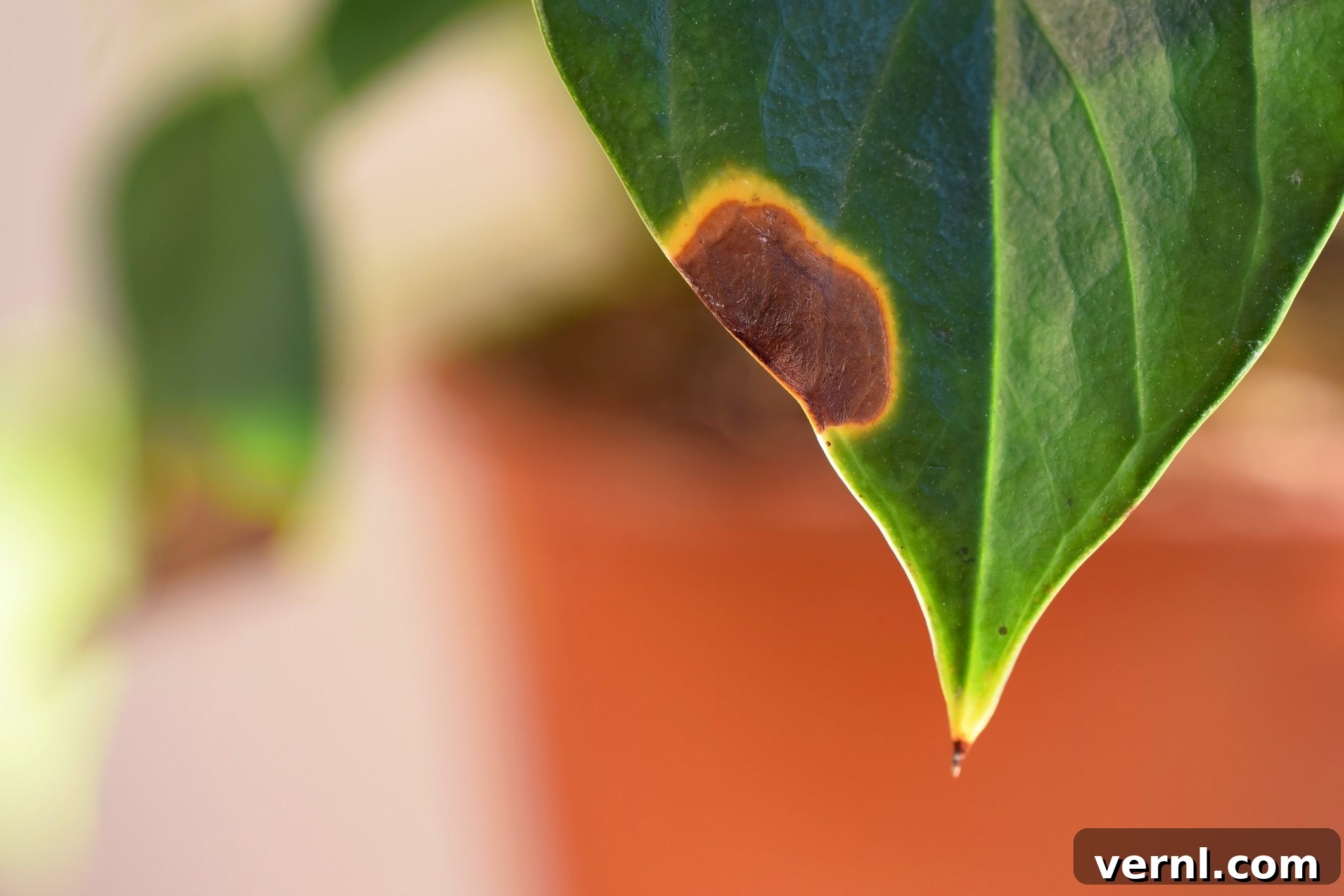
Decoding Brown Leaf Tips: Your Comprehensive Guide to Rescuing Houseplants
Observing crispy, dark, or brown tips on your houseplant’s leaves can be disheartening for any plant parent. More than just a cosmetic flaw, these discolored edges are crucial signals from your plant, indicating that its current care routine might need a significant adjustment. Understanding the underlying causes of these brown tips is the first step towards nurturing your plant back to vibrant health. Given the multitude of potential culprits, pinpointing the exact issue often requires a systematic approach of trial and error. To effectively diagnose and treat the problem, it’s best to alter one aspect of your plant care at a time and then patiently observe the plant’s response over a couple of weeks before making further changes.
I vividly recall facing this very challenge with my beloved philodendron. Initially, I suspected underwatering was the cause of its browning leaves, so I increased its watering frequency. When that adjustment failed to bring improvement, I then considered the possibility of nutrient deficiency and tried incorporating a balanced fertilizer into its routine. To my relief, this proved to be precisely what my plant needed, and soon its leaves began to regain their lush green color. In this detailed guide, we will explore the most common reasons behind brown leaves on your cherished houseplants and provide straightforward, actionable solutions to help your green companions thrive once more.
Water-Related Issues: Finding the Right Balance
Water is fundamental to plant life, yet both too little and too much can manifest as brown leaf tips. Achieving the perfect watering balance is often the trickiest part of houseplant care.
Underwatering: The Dry and Crispy Culprit
One of the most frequent reasons for brown, crispy leaf tips is inadequate watering. When a plant doesn’t receive enough water, it cannot transport sufficient moisture and nutrients to the furthest parts of its leaves, leading to the drying out and browning of the tips and edges. This symptom is often accompanied by the entire leaf feeling dry and brittle to the touch, and sometimes the plant may show signs of wilting or drooping foliage.
**Why it Happens:** Forgetting to water regularly, not watering deeply enough to saturate the entire root ball, using a fast-draining potting mix that doesn’t retain enough moisture, or a plant that has become root-bound in its pot and dries out too quickly. In winter, with heating systems active, plants can dry out much faster than anticipated.
**Simple Solutions:**
- Establish a Routine: Develop a consistent watering schedule, but always check the soil moisture before watering. A simple finger test – sticking your finger about an inch or two into the soil – can tell you if the top layer is dry. For most plants, water when the top inch or two of soil feels dry.
- Water Deeply: When you water, ensure you soak the soil until water drains out of the pot’s drainage holes. This encourages roots to grow downwards and ensures the entire root ball receives moisture.
- Consider Bottom Watering: For plants prone to drying out or those with sensitive foliage, placing the pot in a tray of water for 20-30 minutes allows the plant to absorb water from the bottom up, promoting even moisture distribution.
- Check Drainage: Ensure your pot has adequate drainage holes to prevent waterlogging, which can lead to other issues.
Overwatering: The Soft and Mushy Sign
While the symptoms might seem similar, brown tips caused by overwatering differ significantly in texture. Instead of being dry and crispy, leaves affected by overwatering will often feel soft, mushy, or even swollen. This happens because excessive water suffocates the roots, preventing them from absorbing oxygen and nutrients, leading to root rot. As the roots struggle, the plant cannot properly hydrate its leaves, resulting in browning that can spread from the tips inwards.
**Why it Happens:** Watering too frequently before the soil has a chance to dry out, using a potting mix that retains too much moisture, or pots without sufficient drainage. Cold, wet soil further exacerbates the problem, especially during dormant periods.
**Simple Solutions:**
- Improve Drainage: Always use pots with drainage holes. If your current pot lacks them, consider repotting into one that does.
- Use Appropriate Soil: Choose a well-draining potting mix suitable for your specific plant type. Many houseplants thrive in a mix that includes perlite or bark for aeration.
- Let Soil Dry Out: Allow the top layer of soil to dry out completely before watering again. For many common houseplants, this means the top 1-2 inches should be dry. For succulents, it might mean allowing the soil to dry out almost entirely.
- Inspect Roots: If you suspect severe overwatering and root rot, gently unpot your plant and inspect the roots. Healthy roots are typically white or light tan and firm. Rotted roots are black, brown, and mushy. Trim away any diseased roots with sterile scissors and repot in fresh, well-draining soil.
Humidity Imbalance: When the Air is Too Dry
Many popular houseplants, such as philodendrons, ferns, and calatheas, originate from tropical rainforests where humidity levels are consistently high. The average indoor environment, especially during winter when central heating is active or in dry climates, offers significantly lower humidity than these plants are accustomed to. This lack of moisture in the air causes the plant’s leaves to transpire (lose water) more rapidly than their roots can absorb it, leading to the tips drying out and turning brown.
**Why it Happens:** Low ambient humidity, especially during winter months when indoor heating systems dry out the air, or in naturally arid climates. Drafts from open windows or air conditioning units can also contribute to localized dry air.
**Simple Solutions:**
- Group Plants Together: Plants release moisture into the air through transpiration. By grouping several plants close together, you create a localized microclimate with higher humidity benefiting all the plants in the cluster. As one loses moisture through its leaves, the neighbors benefit from the increased ambient humidity.
- Use Pebble Trays: This classic method effectively increases humidity directly around your plant. Fill a shallow tray with a layer of pebbles and add water, ensuring the water level is below the top of the pebbles. Place your potted plant on top of the pebbles, making sure the bottom of the pot does not sit directly in the water, as this can lead to overwatering. As the water evaporates, it creates a more humid environment around the foliage.
- Invest in a Humidifier: For serious humidity lovers or a large collection of tropical plants, an electric humidifier is the most effective solution. Small tabletop models can sufficiently raise humidity in a specific area, while larger units can cover an entire room.
- Misting (with caution): While misting can provide a temporary boost of humidity, its effects are often short-lived. Furthermore, frequent misting can sometimes encourage fungal diseases if water sits on leaves for too long without proper air circulation. If you do mist, ensure good airflow and use distilled or filtered water to prevent mineral spots on leaves.
Nutrient Imbalances: Deficiency vs. Excess
Just like any living organism, plants require a balanced diet of essential nutrients to grow and thrive. An imbalance – whether a deficiency or an excess – can manifest as brown leaf tips and other signs of distress.
Nutrient Deficiency: A Hungry Plant
When a plant lacks specific nutrients, its growth can be stunted, and its foliage can show various discoloration patterns, including browning. A burned look on leaf tips, or older leaves turning dark green with reddish-purplish hues, often indicates a phosphorus deficiency. When phosphorus is scarce, you might observe yellow or brown discoloration along older leaf tips and edges, yellowing between veins (interveinal chlorosis), curling leaves, or overall spotting.
**Why it Happens:** The potting mix is old and depleted of nutrients, the plant is root-bound and has exhausted available resources, or you haven’t fertilized regularly, especially during the active growing season.
**Simple Solutions:**
- Fertilize Regularly: During the active growing season (typically spring and summer), most houseplants benefit from regular fertilization. For potted plants, incorporating a slow-release granular fertilizer into the potting soil mix before planting is an excellent strategy. Every time you water, a small amount of fertilizer is released, providing a steady and consistent flow of nutrients over several months.
- Liquid Fertilizers for a Boost: Depending on growing conditions and the plant’s needs, a mid-season boost with a diluted liquid fertilizer may be beneficial. Always follow the product’s instructions for dilution to avoid over-fertilization.
- Keep a Schedule: Stay on top of your fertilizer applications by making notes on a calendar or using a plant care app. This prevents both under-fertilization and accidental over-fertilization.
- Repotting: If your plant hasn’t been repotted in a few years, its soil might be completely depleted. Repotting with fresh potting mix can replenish essential nutrients.
Fertilizer Burn / Nutrient Excess: Too Much of a Good Thing
Paradoxically, too much fertilizer can cause symptoms very similar to nutrient deficiency, specifically brown and crispy leaf tips. This is known as “fertilizer burn.” Excess salts from concentrated fertilizers draw moisture out of the plant’s roots and leaves, essentially dehydrating them. You might also notice a white crust on the soil surface, stunted growth, or wilting despite adequate watering.
**Why it Happens:** Over-fertilizing, using a fertilizer that is too strong or not properly diluted, or infrequent watering that allows fertilizer salts to accumulate in the soil.
**Simple Solutions:**
- Flush the Soil: If you suspect fertilizer burn, take your plant to a sink or outdoors and thoroughly drench the soil with plain water, allowing it to drain freely for several minutes. Repeat this process a couple of times to wash out excess salts.
- Reduce Frequency and Concentration: Ease up on fertilizing. If using liquid fertilizer, dilute it to half or even quarter strength, especially for sensitive plants. Fertilize less frequently than recommended if your plant shows signs of stress.
- Repot if Severe: In severe cases of salt buildup, repotting the plant into fresh, uncontaminated soil may be necessary.
Water Quality: The Hidden Culprit
The quality of the water you use can significantly impact your plant’s health, particularly for sensitive species. Tap water often contains chlorine, fluoride, and various minerals that can accumulate in the soil and affect plant health, leading to brown tips.
Chlorine and Fluoride Sensitivity
Many municipal water supplies are treated with chlorine to kill bacteria and fluoride to promote dental health. While safe for humans, these chemicals can be toxic to certain plants, leading to brown or yellow leaf tips, especially on species like Dracaenas, Spider Plants, and Marantas.
**Simple Solutions:**
- Let Water Sit Out: Fill your watering can and let the water sit uncovered for 24 hours. This allows chlorine to dissipate into the air. (Note: This doesn’t remove fluoride).
- Use Filtered or Distilled Water: For highly sensitive plants, using a water filter or purchasing distilled water can prevent chemical buildup.
- Collect Rainwater: Rainwater is naturally soft and free of chemicals, making it an excellent choice for all houseplants.
Mineral Salt Buildup
Over time, minerals from tap water and residual fertilizer salts can accumulate in the soil, creating a white crust on the surface of the potting mix or around the pot’s rim. This buildup can burn root tips and impede water absorption, resulting in brown leaf tips and overall plant stress.
**Simple Solutions:**
- Regular Flushing: Periodically (every few months), flush the soil thoroughly as described in the “Fertilizer Burn” section to wash away accumulated salts.
- Repotting: If the salt buildup is severe, repotting into fresh soil will provide a clean slate for your plant.
Environmental Stressors: Light and Temperature
Beyond water and nutrients, the ambient environment plays a critical role in your plant’s well-being. Extreme light or temperature conditions can also cause leaf tips to brown.
Light Issues: Too Much or Too Little
**Too Much Light (Sunburn):** Direct, intense sunlight, especially through a window, can scorch plant leaves, leading to brown, crispy patches or edges that look burned. This is particularly common for plants that prefer indirect or low light.
- Solution: Move the plant to a location with filtered light or further away from a bright window.
**Too Little Light:** While less common for direct browning of tips, insufficient light can stress a plant, making it weaker and more susceptible to other problems that can lead to leaf discoloration.
- Solution: Relocate the plant to a brighter spot or supplement with a grow light.
Temperature Stress: Cold Drafts and Heat Waves
Houseplants prefer stable temperatures. Sudden changes or extremes can shock them.
**Cold Drafts:** Exposure to cold drafts from windows, doors, or air conditioning vents can cause leaves to turn brown or black, often starting at the tips or edges, and can lead to overall wilting.
- Solution: Position plants away from drafty areas and ensure they are not touching cold window panes during winter.
**Extreme Heat:** Overly high temperatures can cause plants to transpire excessively, leading to rapid water loss and symptoms similar to underwatering, including brown, crispy tips.
- Solution: Provide shade, increase humidity, and ensure good air circulation to help the plant cope with heat.
Potting Mix and Root Health
The foundation of a healthy houseplant lies in its roots and the medium they grow in. Issues with either can directly cause brown leaf tips.
Poor Drainage and Root Rot
A heavy, poorly draining potting mix can lead to waterlogging, creating anaerobic conditions that starve roots of oxygen and promote fungal diseases like root rot. As roots decay, they cannot absorb water and nutrients, leading to brown, mushy leaves, often starting at the tips.
- Solution: Use a well-aerated, fast-draining potting mix. Always ensure pots have sufficient drainage holes. If root rot is suspected, repot into fresh soil after trimming affected roots.
Root Bound Plants
When a plant outgrows its pot, its roots become tightly packed, forming a dense ball. This “root-bound” condition makes it difficult for the soil to retain moisture and for roots to absorb water and nutrients effectively, often resulting in the plant drying out quickly and exhibiting brown, crispy leaf tips.
- Solution: Repot the plant into a slightly larger pot (typically 1-2 inches wider in diameter) with fresh potting mix. Gently loosen the root ball before repotting.
Pests and Diseases: Less Common, but Possible
While brown tips are most often linked to environmental or cultural issues, severe infestations of certain pests or the presence of some diseases can contribute to leaf browning.
**Pests:** Sucking pests like spider mites or thrips, in large numbers, can damage leaf cells, causing discoloration that might include browning. Always inspect the undersides of leaves and stems for signs of pests.
**Diseases:** Fungal or bacterial infections can sometimes cause spots or lesions that eventually turn brown and necrotize, although this is usually accompanied by other specific disease symptoms.
- Solution: Regular inspection is key. If pests are present, treat with appropriate organic insecticides or horticultural oil. For diseases, isolate the plant, remove affected parts, and improve air circulation.
FAQs: Your Brown Tip Questions Answered
Can plant diseases be unsafe for humans?
Generally, plant diseases do not pose direct health concerns for humans. The pathogens that affect plants are typically specific to plant hosts and cannot infect humans. However, severely immunocompromised individuals could potentially be affected by certain molds or fungi that might develop on a diseased plant, especially if inhaled. This is considered an unusual occurrence, but it’s always wise for those with compromised immune systems to handle diseased plants with extra caution or avoid direct contact.
How do I know if overwatering is the cause of my brown plant tips?
Distinguishing between overwatering and underwatering is crucial, as their symptoms can sometimes appear similar. The key difference lies in the texture of the affected leaves. If your plant’s brown tips are due to **overwatering**, the leaves will typically be soft, mushy, or even swollen to the touch. The browning might also be accompanied by yellowing of the entire leaf, black spots, or a general limpness despite the soil being wet. In contrast, brown tips caused by **underwatering** result in leaves that are dry, crispy, and brittle, often accompanied by wilting or drooping foliage and very dry soil.
Should I cut off the brown tips on my plant’s leaves?
Yes, you can prune off the brown tips or edges of your plant’s leaves. While it won’t reverse the damage, it can improve the plant’s aesthetic appearance and help it focus energy on new, healthy growth rather than trying to sustain damaged tissue. Use clean, sharp scissors or pruners and follow the natural shape of the leaf to make a clean cut, avoiding cutting into the healthy green tissue as much as possible.
Which houseplants are most susceptible to brown leaf tips?
Several houseplants are notoriously sensitive and prone to developing brown leaf tips due to environmental factors. These often include tropical plants with thin leaves that are highly susceptible to low humidity. Common examples include Calatheas, Marantas (Prayer Plants), Spider Plants, Dracaenas, Ferns (especially Maidenhair and Boston Ferns), and peace lilies. These plants require consistent moisture, high humidity, and stable conditions to prevent browning.