
The right kind of lawn mower oil is the lifeblood of your mower’s engine. Imagine it as the smooth, protective barrier keeping every piston and gear moving flawlessly, even under the fiercest sun or hardest turf. Understanding which oil your mower needs is crucial; it determines whether your engine starts quickly or breaks down prematurely, whether it hums along efficiently or struggles to perform. Choosing the proper lawn mower oil ensures optimal performance and extends the lifespan of your valuable gardening equipment.
Why Lawn Mower Engine Oil is Indispensable
As an internal combustion engine, your lawn mower relies heavily on high-quality oil for its proper functioning. Even the smallest gas engines house numerous moving components that operate at high speeds and generate significant heat. This demanding environment is precisely why the correct lawn mower engine oil is essential for both lubrication and cooling.
Oil provides a critical film between metal parts, reducing friction and preventing wear and tear that can lead to costly repairs. Simultaneously, it helps to dissipate heat generated during combustion, protecting sensitive engine components from thermal damage. Without adequate lubrication and cooling, your mower’s motor can quickly overheat, seize up, and suffer severe, often irreversible, damage. Regular checks and timely oil changes are not just recommendations; they are vital practices for maintaining your mower’s health and ensuring reliable operation season after season.
Understanding Lawn Mower Oil Types and Viscosity
Motor oil comes in various grades, each exhibiting different viscosity characteristics and behaviors across a range of temperatures. Viscosity, essentially the oil’s resistance to flow, is a critical factor. It’s measured by the Society of Automotive Engineers (SAE) with ratings like “10W-30” or “SAE 30.” The “W” indicates “Winter” and refers to the oil’s flow capabilities at colder temperatures, while the second number (e.g., “30”) denotes its viscosity at higher operating temperatures.
Oil for Four-Stroke Engines
Most modern lawn mowers are equipped with four-stroke engines. These engines burn straight gasoline, which is added to a separate fuel tank, and require motor oil to be added independently to the engine’s crankcase. For a vast majority of models, 10W-30 is a common and highly reliable oil grade, offering good performance in a wide range of temperatures. While your owner’s manual remains the ultimate authority for specific recommendations, 10W-30 is generally a safe and effective choice for 4-stroke engines.
A common misconception is that small engines require specialized, expensive “small engine oil.” In reality, high-quality standard motor oil designed for cars or trucks will work perfectly in your four-stroke lawn mower. These automotive oils meet rigorous industry standards and often contain advanced additive packages that provide superior protection. Look for oil designated with a service rating of SF, SG, SH, SJ, or higher, as these ratings indicate modern formulations suitable for your engine’s needs.
Common Oil Grades for 4-Stroke Mowers:
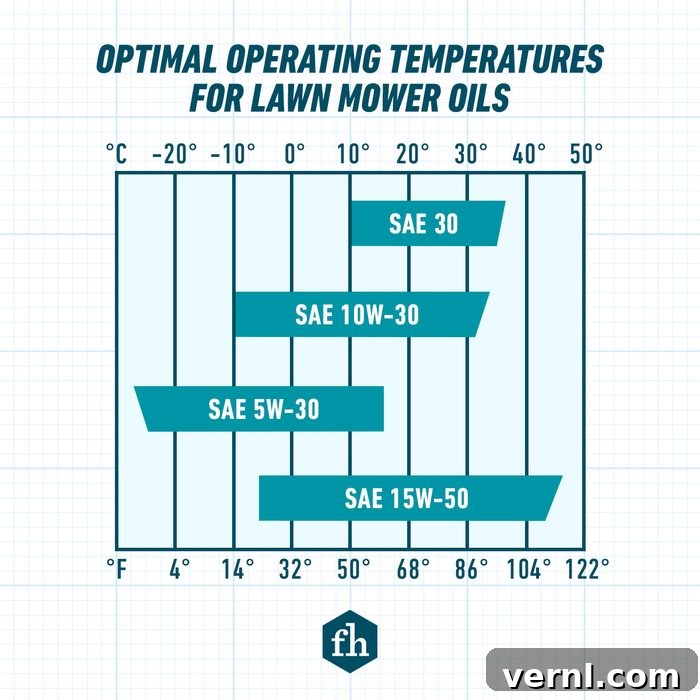
- SAE 30 Oil: This single-grade engine oil is best suited for warmer climates and consistent operating temperatures, typically above 40°F (4°C). It offers robust protection when temperatures are high but can be too thick in colder conditions, making starting difficult.
- SAE 10W-30 Oil: A popular multi-grade choice, 10W-30 offers excellent versatility. The “10W” ensures good flow for easier starting in cold weather, while the “30” provides adequate protection when the engine reaches its operating temperature. This is often the default recommendation for many residential mowers.
- SAE 5W-30 Oil: Similar to 10W-30 but offering even better cold-weather performance. This grade is ideal for users who operate their mowers in very cold conditions or desire easier starting during chilly mornings.
- SAE 15W-50 Oil: Typically used for high-performance, commercial-grade, or heavily used engines, especially in hot climates. Its higher viscosity at operating temperatures provides extra protection under extreme load and heat.
Types of Oil Based on Composition:
- Single Grade Oil: These oils typically lack viscosity-improving additives and their viscosity is rated primarily at higher temperatures (e.g., SAE 30 at 100°C). They are straightforward but less versatile across temperature ranges.
- Multi-Grade Oil: These oils utilize advanced additives to provide consistent viscosity across a broader temperature range, making them suitable for year-round use. Examples include 10W-30 and 5W-30.
- Synthetic Blend Oil: A cost-effective compromise, synthetic blend oil is a mixture of conventional (mineral) and synthetic oils, often including specialized additives. It offers enhanced performance at colder temperatures and improved engine protection compared to conventional oil, without the full cost of a purely synthetic product.
- Full Synthetic Oil: An artificially created lubricant, full synthetic oil is engineered at a molecular level to provide superior performance. It offers exceptional engine protection, outstanding temperature stability (both hot and cold), reduced friction, and can extend drain intervals. It’s often recommended for high-performance, commercial, or heavily used engines where maximum protection and efficiency are desired.
Oil for Two-Stroke Engines
Unlike four-stroke engines, two-stroke engines operate differently and require oil to be mixed directly with the gasoline before it enters the fuel tank. This means the oil burns along with the fuel during combustion, providing lubrication as it passes through the engine. While two-stroke models are becoming less common in lawn mowers due to stricter emissions regulations, they are still prevalent in smaller equipment like string trimmers, chainsaws, and some older mowers.
The mixing ratio of gas to oil is critical and varies significantly between engines. Common ratios range from 30:1 (approximately 4-1/4 ounces of oil per gallon of gas) to 50:1 (around 2-1/2 ounces of oil per gallon of gas). Always consult your lawn mower’s owner’s manual for the precise mixing ratio. Using the wrong ratio can lead to engine damage, either from lack of lubrication (too little oil) or excessive carbon buildup and smoking (too much oil).
For two-stroke engines, any two-stroke motor oil specifically formulated for air-cooled engines—like those used in chainsaws, water pumps, or string trimmers—will work just as effectively in your mower. These oils are designed to burn cleanly and provide the necessary lubrication for their specific engine types.
To ensure proper mixing, it’s best to add the required amount of two-stroke oil to an empty, clean gas can first, then fill it with gasoline. Gently shake the can before use to ensure the oil and gas are thoroughly blended. Never mix oil directly in the mower’s fuel tank, as this can lead to improper ratios and poor lubrication.
How to Choose the Best Lawn Mower Oil for Your Needs
Selecting the ideal lawn mower oil ultimately depends on your specific engine type, the climate you operate in, and your personal preferences regarding performance and cost. Consulting your owner’s manual is always the most reliable first step, as it provides manufacturer-recommended specifications tailored to your particular model.
Factors to Consider:
- Engine Type (4-Stroke vs. 2-Stroke): This is the fundamental distinction. Four-stroke engines require separate crankcase oil, while two-stroke engines need oil mixed with fuel. Never use 4-stroke oil in a 2-stroke engine or vice versa, as this will lead to immediate and severe engine damage.
- Climate and Temperature Range:
- Hot Climates: A higher viscosity oil like SAE 30 or SAE 15W-40/50 might be preferred for consistent high temperatures to maintain lubrication film strength.
- Cold Climates: Multi-grade oils like 10W-30 or 5W-30 are essential for easier starting and proper oil circulation in chilly conditions. Synthetic oils excel here.
- Moderate/Year-Round: 10W-30 is a versatile choice for many regions that experience both warm and cool seasons.
- Engine Age and Condition: Older engines with some wear might benefit from slightly thicker oil to maintain oil pressure and lubrication, though sticking to manufacturer recommendations is generally best. Newer engines often perform optimally with lower viscosity oils.
- Usage Frequency and Intensity: If you use your mower frequently, for long periods, or in demanding conditions (e.g., thick grass, hilly terrain), a synthetic or high-quality conventional oil with good additive packages can offer enhanced protection and stability. Commercial users almost exclusively benefit from full synthetic oils.
- Budget: Conventional oils are the most affordable, followed by synthetic blends, and then full synthetics. While synthetic oils cost more upfront, their superior protection and potential for extended drain intervals can offer long-term value by extending engine life and reducing maintenance frequency.
Synthetic Oil for Your Lawn Mower: Is It Worth It?
Many owners ask: “Should I use synthetic oil in my mower?” The answer is often a resounding yes, especially if you aim to maximize performance, engine longevity, and fuel efficiency. Unlike traditional lubricants derived from crude oil, synthetic oils are meticulously engineered from chemical components. This advanced formulation provides several distinct advantages:
- Superior Engine Protection: Synthetic oils maintain their viscosity and lubricating properties better across extreme temperature ranges, offering enhanced protection during cold starts and under high operating temperatures.
- Reduced Engine Wear: Their consistent film strength and lower friction properties minimize metal-to-metal contact, significantly reducing wear on vital engine components.
- Improved Temperature Resistance: Synthetics resist thermal breakdown much better than conventional oils, preventing sludge and deposit formation, which can clog oil passages and starve the engine of lubrication.
- Smoother Operation and Fuel Efficiency: Reduced friction can lead to a slightly smoother running engine and potentially improved fuel economy.
Synthetic Oil Change Intervals
While synthetic oils offer superior performance and protection, it’s important to note that they typically do not alter the advised oil change intervals for most residential lawn mowers. Manufacturers like Briggs & Stratton, a leading small engine maker, often state that synthetic oil might provide more consistent performance between changes but you should still adhere to the frequency recommended in your owner’s manual. This is because engine manufacturers base their recommendations on a blend of factors including engine design, operating conditions, and general maintenance practices, not solely on the oil type. For instance, in dusty conditions, even synthetic oil will accumulate contaminants and need replacement.
How Often to Check and Change Your Lawn Mower Oil
Oil checks and changes are primarily relevant for lawn mowers with four-stroke engines, as two-stroke engines consume oil with their fuel. Regular maintenance, including timely oil changes, is paramount for maximizing fuel economy, ensuring consistent performance, and significantly extending the life of your engine. These practices are among the most important lawn mower oil change tips to follow for long-term reliability.
Initial Oil Change for New Mowers:
If your four-stroke engine lawn mower is new, it is crucial to perform an initial oil change after the first three to five hours of use. During the break-in period, internal engine parts experience initial wear, releasing tiny metal filings into the oil. Leaving these metallic particles in the oil can cause accelerated wear to other components. This early oil change removes these contaminants, allowing the engine to operate cleanly for its long life.
Routine Oil Change Schedule:
- Walk-Behind Mowers: For most push or self-propelled walk-behind mowers, change the engine oil at least once per season (typically at the start or end of the mowing season) or every 50 hours of use, whichever comes first.
- Riding Mowers and Lawn Tractors: Due to their larger engines and often more demanding use, riding mowers typically require an oil change at least once per season or every 100 hours of use, whichever comes first.
Always refer to your lawn mower’s owner’s manual for the precise amount and type of oil required. When refilling, the engine’s dipstick or oil level mark is your ultimate guide, ensuring you fill it to the recommended level without overfilling.
Checking Your Lawn Mower Oil Level: A Quick Guide
Before each mowing session, it’s a good practice to check your lawn mower’s oil level and top it off if necessary. This simple routine can prevent serious engine damage due to low oil. Here’s how to do it correctly:
- Position the Mower: Place your lawn mower on a level surface. This ensures an accurate reading on the dipstick. Let the engine sit idle for a few minutes if it has just been running, allowing the engine oil to settle back into the crankcase.
- Remove and Clean Dipstick: Locate and remove the oil cap/dipstick. Use a clean, lint-free cloth or paper towel to wipe the dipstick completely clean.
- Reinsert and Check: Fully reinsert the dipstick into its opening and tighten the cap securely. Wait a few seconds, then remove the cap again.
- Read the Level: Check the oil level on the dipstick. The level should fall between the “full” and “add” marks. These marks may vary in appearance depending on your mower’s brand; some dipsticks have two holes, while others have a cross-hatched pattern or specific lines. Regardless of the design, the oil level should always be within the indicated range, ideally as close to the “full” mark as possible without exceeding it.
- Add Oil if Needed: If more oil is required, add it in small increments (e.g., a few ounces at a time). Repeat the process of reinserting the dipstick, removing it, and checking the level between each addition to prevent overfilling. Overfilling can be just as detrimental as underfilling, potentially causing excessive pressure, oil leaks, and engine damage.
Key Indicators Your Lawn Mower Needs an Oil Change
While adhering to the manufacturer’s advised timetable for oil changes is crucial, recognizing the signs that your mower might need new oil sooner can prevent engine problems. Proactive monitoring helps you address issues before they become severe. Here are some common indicators to watch out for:
- Dark or Dirty Oil: Fresh, clean oil typically has a golden or amber color and a clear consistency. If, upon inspection, the oil on your dipstick appears dark brown or black, thick, sludgy, or gritty, it’s a strong sign that it’s laden with contaminants and has lost its lubricating properties. It’s definitely time for a change.
- Increased Engine Noise: Oil that has degraded or is low in quantity can no longer effectively lubricate moving engine parts. This lack of lubrication leads to increased friction, causing the engine to sound louder, rougher, or develop unusual knocking or ticking noises. A quiet engine is a happy engine.
- Overheating: Old or insufficient oil loses its ability to dissipate heat efficiently. If your lawnmower feels abnormally hot during or after use, or if the engine consistently runs hotter than usual, it could be a symptom of poor oil cooling.
- Poor Performance or Stalling: Dirty or inadequate oil can interfere with proper engine function. If your lawnmower begins to struggle, loses power, frequently stalls, or requires more effort to start, it’s a clear signal that the engine is not getting the lubrication it needs.
- Excessive Exhaust Smoke: While a small puff of smoke upon startup can be normal, excessive blue or white smoke coming from the exhaust during operation often indicates that oil is burning in the combustion chamber. This can be due to critically low oil levels, worn engine components, or using the wrong type of oil for a 2-stroke engine (too much oil in the mix).
Monitoring these indicators and adhering to fundamental lawn mower oil change advice significantly contributes to preserving engine life and maintaining optimal performance. If you use your mower frequently, in dusty conditions, or for commercial purposes, consider more frequent checks and stick to a consistent maintenance schedule, even if you are unsure.
A Step-by-Step Guide to Changing Your Lawn Mower Oil
Changing the oil in your lawn mower is a fundamental maintenance task that can be easily accomplished with a few basic tools. While the exact procedure may vary slightly by model, the general steps remain consistent for four-stroke engines. For a comprehensive visual guide, many online tutorials and your owner’s manual can provide specific instructions tailored to your equipment.
Tools You’ll Need:
- Wrench (for drain plug)
- Oil drain pan
- Funnel
- New lawn mower oil (correct type and grade)
- Clean rags or paper towels
- Gloves (optional, but recommended for cleanliness)
- Oil extractor pump (optional, for mowers without a drain plug)
Procedure:
- Warm Up the Engine: Run your mower for 5-10 minutes. Warm oil drains more completely and carries away more contaminants.
- Disconnect Spark Plug: For safety, disconnect the spark plug wire to prevent accidental starting.
- Position Drain Pan: Place your oil drain pan beneath the oil drain plug (usually located at the bottom of the engine or on the side). If your mower lacks a drain plug, you might need an oil extractor pump or tilt the mower (with the air filter side facing up) to drain oil from the fill tube.
- Remove Drain Plug: Use a wrench to carefully remove the drain plug. Allow all the old oil to drain completely into the pan. This may take several minutes.
- Replace Drain Plug: Once drained, replace the drain plug and tighten it securely. Do not overtighten.
- Refill with New Oil: Using a funnel, slowly pour the new, recommended oil into the oil fill tube. Refer to your owner’s manual for the exact capacity.
- Check Level: Use the dipstick to check the oil level, adding small amounts until it reaches the “full” mark.
- Reconnect Spark Plug: Reconnect the spark plug wire.
- Dispose of Old Oil: Properly dispose of the used oil at an authorized recycling center. Never pour it down drains or onto the ground.
Frequently Asked Questions About Lawn Mower Oil
How much oil does a lawn mower take?
The oil capacity varies significantly depending on the make, model, and engine size. As a general guide, push lawn mowers typically hold between 13.5 and 22 ounces of oil, while larger riding mowers or lawn tractors can have a capacity between 48 and 64 ounces (1.5 to 2 quarts). Always refer to your mower’s operator’s manual for the precise recommended oil amount specific to your engine to avoid under-filling or over-filling.
What does SAE stand for in oil ratings?
SAE is the acronym for the Society of Automotive Engineers. This organization sets global standards for motor oil viscosity, which indicates how easily oil flows at different temperatures. For example, in an SAE 10W-30 rating, “10W” refers to the oil’s viscosity at cold temperatures (Winter), and “30” refers to its viscosity at higher operating temperatures. These ratings help consumers choose the appropriate oil for their specific climate and engine requirements.
Can I use car oil in a lawn mower?
Yes, in most cases, you can use car oil in a four-stroke lawn mower. As previously noted, modern engine oil made for cars and trucks meets stringent quality standards and is often the highest-quality conventional oil on the market. These oils work optimally with nearly all four-stroke lawn mower engines. The key is to ensure the viscosity grade (e.g., 10W-30) and the API service rating (e.g., SJ, SL, SM, SN, SP) match or exceed the recommendations in your mower’s owner’s manual. Do not use automotive oil in two-stroke engines unless explicitly stated by the manufacturer, as 2-stroke oils have different additive packages designed for burning with fuel.
What happens if I put the wrong oil in my lawn mower?
Using the wrong type or grade of oil in your mower can lead to several serious problems, depending on the mismatch:
- Too Thick (High-Viscosity) Oil: If the oil is too thick, especially in cold weather, it may not circulate properly through the engine. This can result in inadequate lubrication, increased friction, more engine wear during startup, and potentially higher fuel consumption.
- Too Thin (Low-Viscosity) Oil: If the oil is too thin, it might not provide sufficient protection at higher operating temperatures, leading to a breakdown of the oil film. This can cause excessive metal-to-metal contact, overheating, premature engine wear, and even catastrophic engine failure over time.
- Incompatible Oil Types (e.g., 2-stroke oil in a 4-stroke engine): Using 2-stroke oil in a 4-stroke engine (or vice versa) is highly detrimental. 2-stroke oil is designed to burn with fuel and lacks the detergent and anti-wear additives needed for a 4-stroke crankcase. Conversely, 4-stroke oil in a 2-stroke engine will not burn properly and will lead to severe carbon buildup, fouling spark plugs, and engine seizure.
- Incorrect Additive Packages: Oils formulated for specific applications have distinct additive packages. Using an oil without the correct detergents, dispersants, anti-wear agents, or anti-corrosion inhibitors can lead to harmful deposits, premature oil degradation, and reduced engine protection.
Always consult your owner’s manual and use the exact oil type and grade recommended to ensure the longevity and optimal performance of your lawn mower engine.