
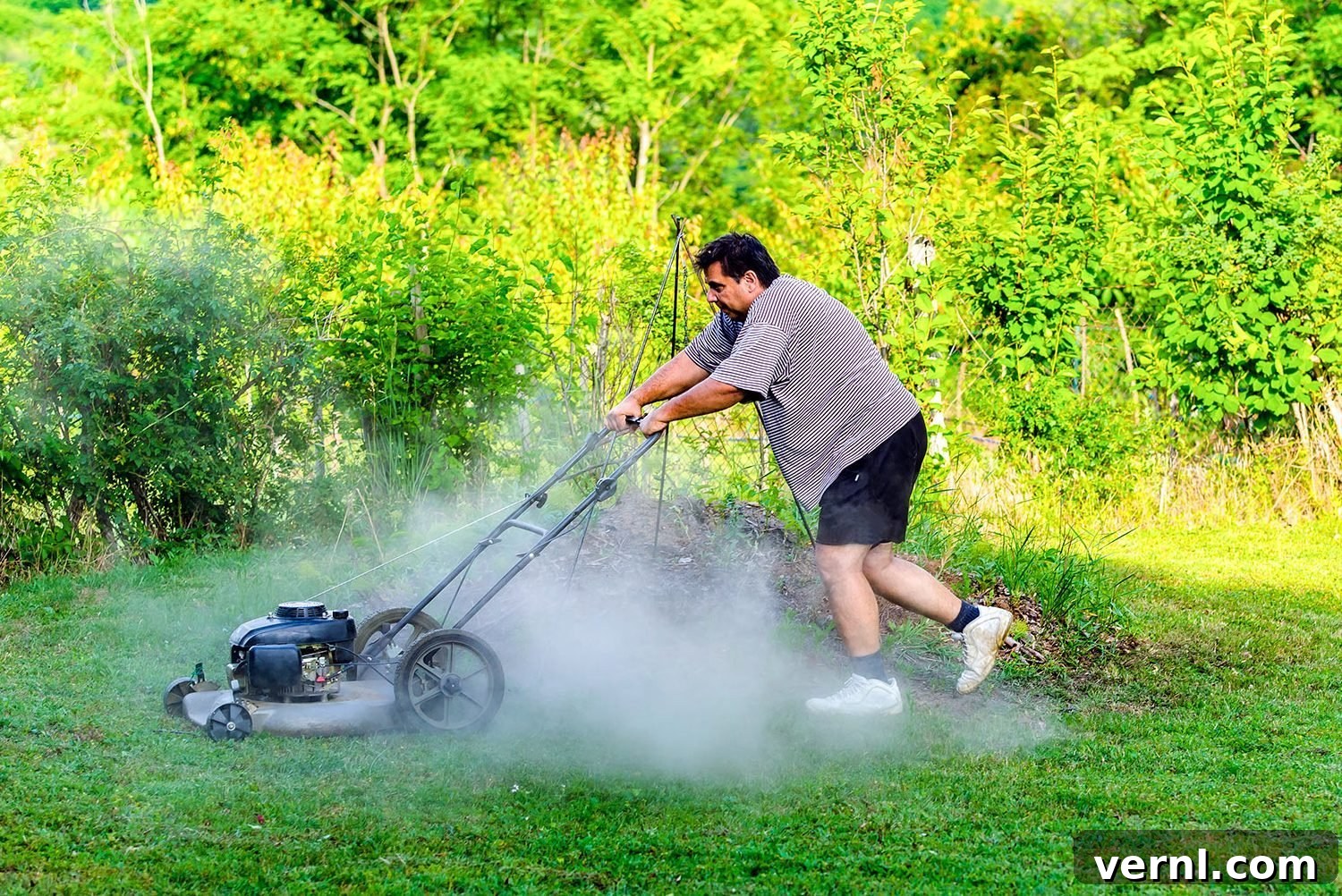
Troubleshooting a Smoking Lawnmower: Your Comprehensive Guide
Few things are as frustrating as a lawnmower that starts smoking just when you’re ready to tackle the yard. It’s easy to feel discouraged when your trusty machine sputters out, but the good news is that a smoking lawnmower often points to a problem that’s relatively simple to diagnose and fix. Understanding the root cause can save you time, money, and the hassle of a dead lawnmower.
Safety is paramount when dealing with a smoking engine. “First and foremost, if your mower begins smoking after starting, turn it off immediately,” advises Shawn Carothers, a manager at Toro. “While seeing smoke can be alarming, taking immediate action to diagnose the issue will help you avoid any serious problems and potential damage to the machine.”
This comprehensive guide will walk you through the most common reasons why your lawnmower might be smoking, how to effectively troubleshoot the issue, and the essential steps to take to get your lawnmower back in prime condition.
Why Is My Lawnmower Smoking? Uncovering the Causes
Before you can fix the problem, you need to understand what’s causing it. Lawnmower smoke is usually a symptom of a deeper issue, ranging from minor maintenance needs to more serious engine problems. Here are the most common culprits behind a smoking lawnmower:
1. Blocked Air Filter: A Common Choke Point
One of the most frequent reasons for a lawnmower to smoke is a dirty or clogged air filter. The air filter’s job is to prevent dirt and debris from entering the engine while allowing sufficient airflow for proper combustion. When it becomes caked with grass clippings, dust, and other particles, the engine struggles to pull in enough air. This leads to an overly rich fuel mixture, meaning there’s too much fuel for the available air.
“You’ll know that this is the cause if your mower is smoking black, which means that it has too much fuel and not enough air is getting in,” explains Ionel Giuran, a lawn care expert with Fantastic Gardeners. Beyond smoke, a clogged air filter can also cause your mower to run roughly, lose power, or even stall. Regular inspection and cleaning of your air filter are crucial for preventing this common issue.
2. Leaking Oil: White or Blue Smoke Alerts
If your mower is emitting white or blue smoke, it’s a strong indicator that engine oil has found its way into a place it doesn’t belong, typically the combustion chamber or hot exhaust components. This burning oil produces the distinct color of smoke.
There are several ways oil can leak or enter these areas. “This can happen because you’ve recently turned it to its side to change the blades or because you’ve overfilled it,” says Giuran. Tipping a four-stroke engine on its side can cause oil to seep past the piston rings or into the muffler, where it then burns off. Overfilling the oil reservoir creates excessive pressure, which can force oil past seals or into the air filter housing, eventually making its way to areas where it will burn.
More serious causes of oil leaks include worn piston rings, valve seals, or a cracked engine block, which allow oil to enter the combustion chamber and burn with the fuel. These issues typically lead to persistent blue smoke and a noticeable consumption of oil.
3. Larger Issues: When Internal Components Fail
While external issues like clogged filters or oil overfills are common, a smoking lawnmower can also signal more significant internal engine problems. These often require more advanced diagnostic skills and professional intervention.
- Carburetor Maladjustment: A carburetor that is improperly adjusted can lead to an incorrect fuel-to-air ratio, similar to a clogged air filter. If the carburetor is set to deliver too much fuel, it will result in black smoke and inefficient combustion.
- Worn Engine Components and Seals: Over time, parts like piston rings, valve guides, and various gaskets and seals can wear out or become brittle. Worn piston rings allow oil to bypass the piston and enter the combustion chamber, burning off as blue smoke. Deteriorated head gaskets can allow coolant or oil to mix with fuel or escape, leading to smoke.
- Blown Head Gasket: A more severe issue, a blown head gasket can cause oil or coolant to leak into the combustion chamber or exhaust system, leading to thick white or blue smoke, often accompanied by a loss of engine power and overheating.
4. Electric Motor Issues: Specific to Electric Mowers
If you own an electric lawnmower and it starts smoking, the causes differ significantly from gasoline-powered models. Electric mower smoke almost always indicates an electrical problem or overheating components. “If your electric lawnmower is smoking, it could be that the motor has burned out or the belt or another element is overheating,” notes Giuran.
Potential issues include:
- Burned-Out Motor: Continuous overloading, internal short circuits, or prolonged use can cause the electric motor to overheat and burn out, often producing acrid-smelling smoke.
- Overheating Belt or Bearings: Friction from a worn or misaligned belt, or seized bearings, can generate excessive heat, leading to smoke from burning rubber or grease.
- Electrical Short Circuits: Damaged wiring, faulty switches, or worn insulation can lead to short circuits, causing components to overheat and smoke.
For electric mowers, it’s often safest to seek professional help immediately if you observe smoke, as electrical issues can pose fire hazards. “If you’re not exactly sure which one’s the reason for the smoke after careful examination, it’ll be safest to call and consult with a repair specialist.”
5. Other Potential Causes: Don’t Overlook
- Clogged Exhaust System: A muffler packed with carbon deposits or other debris can restrict exhaust flow, causing back pressure and incomplete combustion, leading to black smoke.
- Incorrect or Stale Fuel: Using old, stale gasoline or fuel with the wrong octane rating can lead to inefficient burning and excessive smoke. Modern gasoline containing ethanol can also degrade fuel lines and carburetor components over time.
- Engine Overheating: While not a direct cause of smoke, an engine that consistently runs too hot due to a lack of cooling (e.g., clogged cooling fins) can exacerbate other issues, leading to oil burning or component failure.
How to Fix a Smoking Lawnmower: Step-by-Step Solutions
Addressing a smoking lawnmower requires a systematic approach. Always prioritize safety first. Turn off the engine immediately when you see smoke, disconnect the spark plug wire (for gasoline mowers) to prevent accidental starting, and let the machine cool down completely before attempting any troubleshooting or repairs.
1. Check and Service the Air Filter
Given that a clogged air filter is a common culprit for black smoke, this should be your first point of inspection. Locate your mower’s air filter (consult your owner’s manual if unsure). Remove it and inspect for dirt, dust, and grass clippings. If it’s merely dirty, you might be able to clean it:
- Foam filters: Wash gently with warm, soapy water, rinse thoroughly, and let it air dry completely before lightly oiling it with specific air filter oil.
- Paper filters: Tap it gently against a hard surface to dislodge loose debris. If it’s heavily soiled, torn, or saturated with oil, it’s best to replace it with a new one.
A clean air filter ensures proper air intake, optimizing the fuel-air mixture and potentially eliminating black smoke.
2. Inspect Oil Levels and Quality
For white or blue smoke, your next step is to examine the oil. First, ensure the mower is on a level surface. Check the oil dipstick. If the oil reservoir is overfilled, you will need to drain out a bit of the excess oil until it reaches the correct level mark. Overfilling is a very common cause of oil seeping into places it shouldn’t be.
Also, consult your owner’s manual to verify that you are using the correct type and viscosity of oil for your specific mower model and operating temperature. Using the wrong oil can lead to poor lubrication, excessive heat, and premature engine wear, contributing to smoke.
If you recently tipped your mower, give it time for any oil that might have migrated to drain back into the crankcase. Wipe away any oil residue you find on the outside of the engine, particularly around the muffler or exhaust port, as this could also be burning off and causing smoke.
3. Check for Leaky Gaskets and Seals
Persistent blue or white smoke, especially if accompanied by a noticeable drop in oil levels, could indicate leaky gaskets and seals. Inspect around the engine block, valve cover, and head gasket area for any visible signs of oil seepage or drips. While some minor leaks might be manageable, replacing significant engine seals or gaskets is often a more complex repair.
“This may be the hardest to fix yourself,” says Carothers. “Some worn-out engine parts can be replaced at home, but Toro recommends seeking out a dealer to determine the extent of the engine concerns and ensure proper repair.”
4. Examine the Fuel System
For black smoke, beyond the air filter, consider your fuel. Drain any old or stale fuel from the tank and replace it with fresh, high-quality gasoline. Ensure your fuel filter (if equipped) is clean and free of blockages. Clogged fuel filters can also lead to an incorrect fuel-air mixture.
5. Inspect the Spark Plug
A fouled or damaged spark plug can also contribute to inefficient combustion and smoke. Remove the spark plug and inspect its condition. If it’s black and oily (common with oil burning), or coated with carbon (common with rich fuel mixture), clean it with a wire brush or replace it if necessary. A properly gapped and clean spark plug is essential for efficient engine operation.
6. For Electric Mowers: Safety First
If your electric mower is smoking, immediately unplug it. Do not attempt to use it again until the cause is identified. Inspect for obvious signs of overheating components, burnt wires, or a jammed cutting deck that could be straining the motor. If the issue isn’t readily apparent, or if you suspect motor damage or an electrical fault, it’s always best to consult a qualified technician.
Troubleshooting By Smoke Color: A Diagnostic Guide
The color of the smoke your lawnmower produces is a critical diagnostic tool. “In most cases, the color of the smoke can help you start diagnosing the underlying issue,” says Shawn Carothers. Here’s what different smoke colors typically indicate:
Colors of Lawnmower Smoke & What They Mean
- White Smoke: This usually indicates that oil is burning off in the muffler or exhaust system. This is most commonly caused by overfilling the oil reservoir or tipping the mower on its side. It can also occur if a small amount of oil has leaked onto a hot engine component. If it’s thin and dissipates quickly, it might be water vapor, especially in cold weather, which is normal. However, if it’s thick and persistent, it’s burning oil.
- Blue Smoke: Blue smoke is a definitive sign of oil burning within the engine’s combustion chamber. This is more serious than white smoke and suggests that oil is getting past worn internal engine components, such as compromised piston rings, worn valve guides, or damaged cylinder walls. If you see blue smoke, your engine is actively consuming oil, which can lead to significant internal damage if not addressed. The smell of burning oil is also typically quite noticeable with blue smoke.
- Black Smoke: Black smoke signals an issue with the fuel-air mixture – specifically, too much fuel and not enough air (a “rich” mixture). This leads to incomplete combustion and excessive carbon deposits. Common causes include a dirty or clogged air filter, a maladjusted carburetor, or poor-quality/stale fuel. Black smoke often comes with a strong smell of raw gasoline and can reduce engine power.
“Black is the worst of the smokes,” says Kody Ketterling, lawn expert and founder of K-IT Products. “A lot of times, the black smoke means you need to take it to a mechanic to be corrected or fixed. A head gasket may be blown, or a cylinder or rod is out.” While a black smoke issue can sometimes be resolved with an air filter change, severe black smoke often points to internal engine problems that require professional attention.
Location of Smoke: Pinpointing the Source
The area from which the smoke emanates can also provide valuable clues. Smoke typically comes out of the exhaust system, as this is where combustion byproducts are expelled. However, if there are specific leaks or failures, smoke might appear elsewhere.
“If it is black, you can find it coming out of where the issue may be,” says Ketterling. “For example, if you have bad seals, the smoke can leak out of those areas.” Look for smoke coming from:
- Exhaust Pipe: Most common. The color here tells you if it’s oil or fuel related.
- Around the Engine Block: Indicates external oil leaks burning on hot surfaces, or a more serious internal leak like a blown head gasket.
- Under the Deck or Around the Blades: Could be oil leaking from the crankshaft seal or gearbox, or even excessive grass buildup burning on hot parts.
- Near the Air Filter Housing: Can indicate a severely overfilled crankcase pushing oil into the air intake system.
When to Call a Professional for Lawnmower Repair
While many smoking lawnmower issues are DIY-friendly, there are times when calling a professional is the smartest, safest, and most economical choice. Consider seeking expert help if:
- The mower is still smoking after following all troubleshooting steps: If you’ve tried all the common fixes and the smoke persists, it’s likely a more complex internal problem that requires specialized tools and expertise.
- The fix involves dismantling the engine: If the problem points to worn piston rings, valve seals, a blown head gasket, or carburetor rebuilds, these are typically jobs for experienced mechanics. Attempting complex engine repairs without the right knowledge can cause more damage.
- Your mower is still under warranty: Performing DIY repairs on a machine still under warranty might void the coverage. It’s always best to take it to an authorized dealer for diagnosis and repair to ensure your warranty remains valid.
- You’re uncomfortable with the repair: If you lack the confidence, tools, or time to tackle the issue, a professional can provide peace of mind and get the job done correctly.
“Not all lawn care companies will be able to help with repairs,” says Taylor Olberding, co-owner of Heroes Lawn Care. “That surprises a lot of people, so make sure you contact someone with the right experience and expertise in small engine repair.” It’s advisable to look for certified small engine mechanics or authorized dealers for your mower’s brand.
Tips to Avoid a Smoking Lawnmower: Preventative Maintenance is Key
The best way to deal with a smoking lawnmower is to prevent it from happening in the first place. Regular, diligent maintenance is crucial for prolonging the life of your mower and ensuring it runs smoothly without issues like smoke.
Essential Preventative Measures:
- Manage Oil Properly:
- Never Overfill: Always check your oil level with the mower on a level surface and avoid exceeding the “full” mark.
- Use the Correct Oil: Refer to your owner’s manual for the manufacturer-recommended oil type and viscosity.
- Change Oil Regularly: Follow the manufacturer’s recommended schedule for oil changes, typically after every 25-50 hours of operation or at least once per season. Fresh oil lubricates better and reduces engine wear.
- Handle with Care:
- Don’t Tip Improperly: When cleaning the underside or changing blades, always tip a four-stroke gas mower onto its side with the carburetor and air filter facing upwards to prevent oil and fuel leaks. Consult your manual for the proper tipping procedure.
- Implement Regular Maintenance: Regular lawnmower maintenance is the cornerstone of prevention. This includes:
- Cleaning and Replacing the Air Filter: Check monthly or more frequently in dusty conditions. Replace annually or as needed. A clean filter ensures optimal air-fuel mixture.
- Checking Oil Levels Regularly: Before each use, quickly check the oil level.
- Inspecting and Changing the Spark Plug: Check annually. A clean, properly gapped spark plug ensures efficient ignition.
- Examining and Replacing Fuel Filter: If your mower has one, replace it annually to prevent fuel delivery issues.
- Using Fresh Fuel and Stabilizer: Always use fresh gasoline (less than 30 days old). If storing fuel, use a fuel stabilizer to prevent ethanol separation and gumming.
- Cleaning the Mower Deck: Remove accumulated grass clippings from the underside of the deck after each use. This prevents rust, maintains cutting performance, and avoids overheating of engine components.
- Sharpening and Balancing Blades: Dull blades make the engine work harder, increasing strain and fuel consumption. “Make sure you are sharpening the blades so the mower doesn’t have to work harder than it needs to with the sharp blades,” advises Ketterling.
- Following Other Manufacturer-Recommended Maintenance: Always consult your owner’s manual for specific maintenance schedules and procedures.
- Proper Storage:
“We find that if mowers are stored correctly and kept out of the elements, this will keep your mowers in good shape,” says Ketterling. Store your mower in a dry, covered area to protect it from moisture and extreme temperatures, which can damage components and lead to rust or corrosion. For off-season storage, perform winterization steps like draining fuel or adding stabilizer.
Frequently Asked Questions About Smoking Lawnmowers
How long do lawnmowers last?
The lifespan of a lawnmower varies significantly depending on several factors:
- Usage and Workload: Mowers used frequently for large, tough jobs will naturally wear out faster than those used occasionally for small, well-maintained lawns.
- Quality of the Model: Higher-quality brands and models with more robust components generally last longer.
- Maintenance, Storage, and Servicing: This is arguably the most crucial factor. A well-maintained mower, regularly serviced, cleaned, and properly stored, can easily outlast a neglected one of higher initial quality.
“If looked after well and it is a decent model, it could last up to 20 years,” says Olberding. However, average lifespans are often 7-10 years for push mowers and 10-15 years for riding mowers with good care.
Is a smoking lawnmower ever normal/OK?
Under specific circumstances, a small amount of smoke might be considered normal or at least not immediately alarming:
- Startup Smoke: Small bursts of white or bluish-white smoke when first starting the mower, especially after it has sat for a while, can be normal as residual oil or moisture burns off. This should dissipate quickly.
- Operating on a Hillside: Briefly operating a mower on a steep incline can sometimes cause oil to shift and momentarily enter areas where it burns off, producing a puff of smoke. This should stop once the mower is on level ground.
Carothers clarifies, “Small bursts of smoke when starting the mower or operating on a hillside shouldn’t raise any alarms. But if smoke continues to pour out or there is a large plume of smoke, there is likely a more serious issue that needs fixing.” Any continuous, thick, or colored smoke (blue, black) should be investigated promptly.
Can I still use my mower if it’s smoking a little?
It’s generally not recommended to continue using a mower that is smoking, even if it’s “just a little.” While a small puff at startup might be harmless, persistent smoke indicates an underlying problem. Continuing to operate a smoking mower can:
- Worsen the Problem: A minor issue could escalate into a major engine repair.
- Cause Further Damage: Burning oil can foul spark plugs, clog exhaust systems, and accelerate wear on internal engine components.
- Reduce Efficiency: Incorrect fuel-air mixtures (black smoke) lead to wasted fuel and less effective mowing.
- Pose a Fire Hazard: Especially with electrical issues or significant fuel/oil leaks, continued operation can be dangerous.
It’s always best to turn it off, diagnose, and fix the issue before resuming mowing.
What tools do I need for basic mower maintenance?
For most basic lawnmower troubleshooting and maintenance, you’ll need a few common tools:
- Wrench set (socket and open-ended) for spark plugs, blade bolts, and other fasteners.
- Spark plug wrench/socket.
- Wire brush for cleaning spark plugs and cooling fins.
- Screwdrivers (flathead and Phillips).
- Air compressor or canned air for cleaning filters.
- Oil drain pan.
- Funnel for adding oil and fuel.
- Shop rags or old cloths.
- Safety glasses and gloves.
- Owner’s manual (invaluable for specific instructions).
Remember, a well-maintained mower is a reliable mower. Understanding these common issues and preventative measures will help keep your lawnmower running efficiently and smoke-free for many seasons to come. For related repairs, learn how to repair a lawn mower pull cord as well.
About the Experts
Shawn Carothers is a Senior Marketing Manager at Toro, where she oversees the parts department for its residential and landscape division. She is passionate about ensuring customers maintain their mowers year-round, particularly during Toro’s Lawn Mower Maintenance Week, and have access to all necessary tools, including the informative Toro yardcare blog.
Taylor Olberding is the co-owner of Heroes Lawn Care in Omaha, Nebraska. With a degree in turf and landscape management from the University of Nebraska, he possesses a deep passion for the science and implementation behind cultivating healthy, vibrant lawns.
Ionel Giuran has served as a dedicated lawn care expert with Fantastic Gardeners for over eight years. His expertise spans from trees to grass, and he is passionate about transforming various landscapes into lush, green outdoor spaces.
Kody J. Ketterling is the owner of KJ Lawn Maintenance & Spraying in Twin Falls, Idaho, and the esteemed founder of K-IT Products. He brings more than 25 years of extensive experience in the field of lawn and garden maintenance to his endeavors.