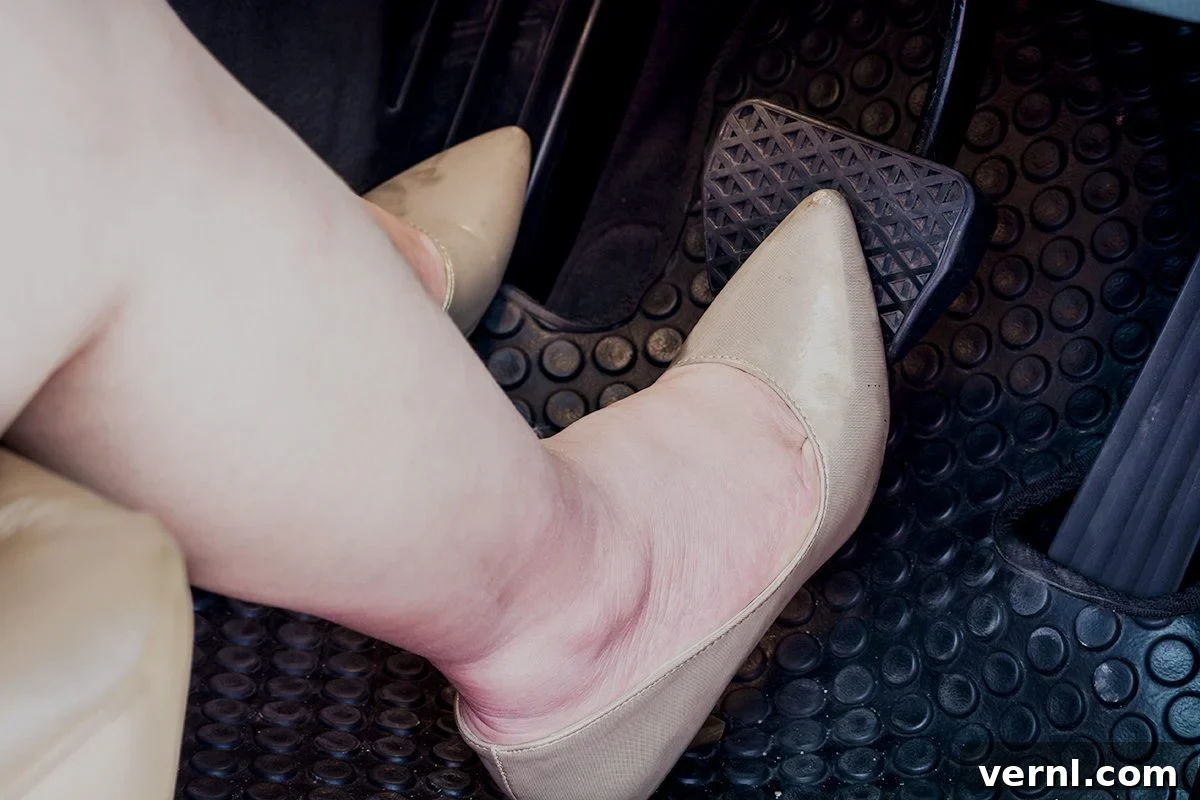
Many drivers often step out the door wearing whatever is most convenient, only to discover a few minutes into their journey that their footwear is a hindrance rather than a help. While the concept of “driving footwear” might seem minor, it plays a crucial role in vehicle control, influencing crucial aspects like pedal feel, reaction time, and overall comfort during both short errands and extended road trips.
In the United States, driving regulations primarily focus on a driver’s ability to maintain safe and effective control of their vehicle. Your feet, however, demand adequate support and stability to perform optimally. The ultimate goal is to choose footwear that satisfies both legal requirements and personal comfort, ensuring a smooth, safe, and incident-free driving experience.
This comprehensive guide delves into the legalities and practical implications of various shoe styles, including heels, sandals, and even barefoot driving. We’ll explore popular footwear choices, backed by research and practical considerations, to help you select sensible driving footwear that prioritizes safety and control.
Understanding Driving Footwear: More Than Just a Style Choice
The connection between your feet and your car’s pedals is direct and vital. Your footwear acts as the interface, transmitting your intended actions to the accelerator, brake, and clutch. The wrong shoes can severely compromise this connection, leading to delayed reactions, imprecise pedal modulation, or even a complete loss of control. Therefore, selecting appropriate driving footwear isn’t merely about fashion or convenience; it’s a fundamental aspect of road safety.
Is It Legal To Drive In High Heels? Examining the Risks and Realities
The short answer is yes, it is legal to drive in high heels across the United States. No specific state statute explicitly prohibits any particular shoe style. Instead, law enforcement focuses on whether the driver can maintain safe control of their vehicle. Should unsafe operation occur, perhaps due to footwear interference, a driver could still be cited under general reckless driving or negligent operation laws.
However, practical comfort and safety are entirely different considerations. High heels significantly alter the natural angle of your ankle and foot. This elevated position can reduce your ability to apply consistent, nuanced pressure to the pedals. The narrow heel itself can get caught under or between pedals, making it difficult to switch quickly between the accelerator and brake, which is critical in emergency situations. This diminished pedal feedback can lead to slower reaction times and a decreased sense of control, turning a routine drive into a potentially hazardous situation.
Is It Legal To Drive In Sandals, Including Flip-Flops? Weighing Convenience Against Safety
Similar to high heels, wearing sandals, including common flip-flops, is legal across the United States. Again, the overarching legal principle revolves around maintaining safe control of your vehicle. While technically permissible, many road safety professionals strongly caution against driving in loose or backless styles, especially for everyday commutes.
The primary concern with sandals, particularly flip-flops, is their inherent lack of stability. Their loose fit means they can easily slip off your foot, become folded, or even get wedged beneath or between the pedals. Imagine needing to brake suddenly and finding your flip-flop caught on the brake pedal or sliding off, causing a momentary, yet critical, delay in your reaction. Flip-flops are often considered a poor choice due to their thin soles and flimsy straps, which offer minimal grip and can easily snag when steady, precise pressure is required on the pedals. This compromise in pedal control can significantly increase the risk of an accident.
Is It Legal To Drive Barefoot? Dispelling Common Myths
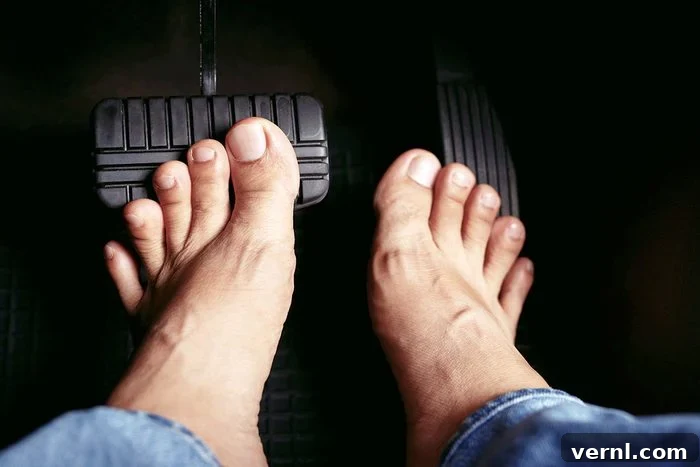
Despite persistent urban myths and anecdotes, it is unequivocally legal to drive barefoot in all 50 states of the United States. There is no state law that bans this practice. The core requirement remains consistent: you must be able to maintain safe control of your vehicle. Should a loss of control occur, potentially leading to an accident, you could still face legal repercussions regardless of your footwear, or lack thereof.
Driving barefoot offers a distinct advantage in terms of direct pedal feel. The unhindered connection between your foot and the pedals can provide excellent feedback, allowing for very precise modulation of acceleration and braking. However, this comes with its own set of disadvantages. Bare feet can be prone to slipping, especially if they are wet from rain, sweat, or a recent visit to the beach or pool. There’s also the lack of protection against hot or cold pedals, or potential injuries to your feet in the event of an accident. Furthermore, prolonged driving barefoot can become uncomfortable, and quickly exiting the vehicle onto hot pavement or rough terrain can be problematic. A practical tip is to keep a small towel in your car to dry your feet and a secure, comfortable pair of shoes nearby for quick stops or when leaving the vehicle.
Other Common Footwear Options: From Practical to Potentially Problematic
Beyond the widely debated categories, many other shoe types present varying degrees of suitability for driving. Understanding their characteristics is key to making informed choices for safe driving.
Snug, Low-Profile Sneakers Or Flat Boots: The Everyday Driving Champion
For most drivers, snug, low-profile sneakers or flat boots represent the optimal choice for everyday driving. Their design inherently supports good driving practices. Thin, flexible soles are crucial as they allow for excellent pedal feedback, enabling you to feel the nuances of pressure and resistance from the accelerator, brake, and clutch. A closed heel ensures the shoe remains firmly planted on your foot and the car’s floor mat, preventing any unwanted slippage or snagging. Furthermore, a modest tread offers reliable grip on the pedals. If you feel your feet are cramped, adjust your seat to ensure your ankle is in a neutral, relaxed position, allowing your heel to rest comfortably on the floor for stability and leverage.
Work Boots And Heavy Hikers: Protection Versus Pedal Sensitivity
Work boots and heavy hiking boots are legal and offer superior foot protection, which is valuable in many scenarios. However, their design, featuring thick, stiff soles, can significantly dull pedal sensitivity. This reduced feedback makes it harder to gauge the precise amount of pressure you’re applying, potentially leading to jerky braking or acceleration. Their bulk can also limit ankle mobility, making smooth pedal transitions more challenging. If you must drive in such footwear, it’s advisable to adjust your seat and take a few gentle, controlled presses on the brake and accelerator before heading out. This “recalibration” helps you adapt to the altered pedal feel.
Platform Shoes And Thick Clogs: A Significant Safety Compromise
Platform shoes and thick clogs pose a considerable safety risk when driving. The excessive sole thickness drastically reduces your finesse and ability to feel the pedals. This can lead to over-application of pressure or, conversely, insufficient pressure. More dangerously, the bulky edges of these shoes can easily catch on the sides of the pedals, or even on the floor mat, creating a dangerous impediment during critical maneuvers. If platform shoes are part of your daily attire, it is strongly recommended to keep a pair of slimmer, dedicated driving shoes in your car and switch them in the parking lot before beginning your journey.
Mules, Slides, And Backless Loafers: The Risk of Dislodgement
While easy to wear and generally legal, mules, slides, and backless loafers present a clear risk due to their unsecured design. Without a heel counter to hold them firmly in place, these styles are prone to slipping off your foot. This can happen at the most inopportune moments, such as when your foot transitions from the accelerator to the brake. A shoe sliding off or getting wedged under a pedal can cause a critical delay or even prevent you from operating the pedals effectively. They do not inspire confidence for quick, precise pedal transitions.
Rain Boots And Bulky Weather Gear: Limiting Essential Mobility
Rain boots and other bulky weather-specific footwear can also compromise safe driving. Their oversized shafts and typically thick soles can severely limit ankle mobility, which is essential for smooth and rapid pedal operation. The thick soles, similar to work boots, dull pedal feel, while the bulk can lead to accidental pedal presses or catching on the car’s interior. Furthermore, wet soles can reduce grip on the pedals, increasing the risk of your foot slipping.
Motorcycle Footwear Note: A Separate and Crucial Category
It’s important to differentiate footwear requirements for passenger vehicles from those for motorcycles. While passenger vehicles typically do not mandate specific shoes, motorcycle riders face distinct safety requirements and recommendations. Sturdy, protective boots are the norm for motorcyclists, designed to protect the feet and ankles in the event of a fall or impact. Riders should always consult local regulations and safety guidelines regarding appropriate motorcycle footwear before riding.
What Makes Ideal Driving Footwear? Key Characteristics for Maximum Safety
When selecting footwear specifically for driving, several key characteristics contribute to optimal safety, control, and comfort. Prioritizing these features can significantly reduce risks on the road.
Sole Thickness and Flexibility: The Foundation of Pedal Feel
The ideal driving shoe features a thin, flexible sole. This design allows for maximum tactile feedback from the pedals, enabling you to feel the pressure and position with precision. A thin sole prevents your foot from being too far removed from the pedal, ensuring a more natural and responsive connection. Flexibility is also crucial, allowing your foot to articulate naturally and comfortably without stiffness impeding movement.
Grip and Traction: Maintaining Secure Pedal Contact
The sole of your driving footwear should have good grip and traction. Non-slip materials are essential to ensure your foot remains firmly planted on the accelerator, brake, and clutch pedals, regardless of external conditions or sudden movements. A moderate tread pattern, rather than a completely smooth sole, can provide the necessary friction without being so aggressive that it snags on the pedals.
Secure Fit and Support: Stability is Key
A shoe that fits securely and offers adequate support is paramount. This means choosing footwear with an enclosed heel (a “heel counter”) that prevents the shoe from slipping off your foot. The shoe should fit snugly but not restrictively, allowing for full ankle and foot mobility without shifting or sliding around. A stable fit ensures that your foot and shoe move as one unit, critical for precise pedal operation.
Comfort and Ankle Mobility: Essential for Long Drives
Comfort is not just a luxury; it’s a safety feature, especially on longer drives. Uncomfortable footwear can lead to fatigue, distraction, and even cramps, all of which can impair your driving ability. Additionally, the footwear should allow for full and unrestricted ankle mobility. Your ankle needs to flex and extend freely to modulate pedal pressure smoothly and switch between pedals quickly. Shoes that are too bulky or stiff will hinder this essential movement.
Practical Tips for Enhancing Pedal Control and Driving Safety
Making conscious choices about your driving footwear, combined with a few simple habits, can significantly boost your safety on the road.
- Keep a Dedicated Pair: Store a pair of slim, secure, and comfortable driving shoes in your car’s trunk or under the seat. This ensures you always have an appropriate option, especially if you’re frequently switching between different types of footwear throughout your day.
- Pre-Drive Footwear Check: Before you even start the engine, take a moment to tap each pedal and sweep your foot from side to side. This quick check confirms that your footwear doesn’t snag, slip, or get caught on any part of the pedal or floor mat.
- Don’t Adapt, Switch: If your footwear feels slippery, vague, or cumbersome on the pedals while driving, do not attempt to adapt or “make it work.” Safely pull over and switch to more appropriate shoes. Trying to adjust to unsuitable footwear mid-drive significantly increases the risk of an incident.
- Dry Feet and Pedals: After encountering rain, visiting the beach, or leaving a pool, always ensure both your feet and the car’s pedal pads are dry. Wet surfaces drastically reduce friction, making it easier for your foot to slip off the pedals. A small towel in the car can be a lifesaver.
- Adjust Your Seat: Proper seat adjustment is crucial. Ensure your seat is positioned so that your heel can rest comfortably on the floor while your foot can fully depress each pedal without stretching or straining your ankle. This creates a stable pivot point for better control.
- Be Mindful of New Shoes: When wearing new shoes, particularly if they are a different style or material than your usual driving footwear, be extra cautious. Their grip, flexibility, and overall feel on the pedals might be unfamiliar, requiring a period of adjustment.
The Hidden Dangers of Inappropriate Footwear: A Safety Perspective
The seemingly small choice of footwear can have significant, and potentially catastrophic, consequences. Inappropriate shoes can lead to a range of dangers that directly impact road safety. These include delayed reaction times, as the foot struggles to feel or transition between pedals effectively. They can also contribute to unintended acceleration or braking if a shoe gets stuck or shifts, causing a driver to press the wrong pedal or apply incorrect pressure. Ultimately, this can result in a loss of vehicle control, leading to collisions, injuries, or even fatalities. Beyond the immediate physical risks, being involved in an accident due to footwear interference could also lead to legal liability, affecting insurance claims and potentially resulting in fines or other penalties.
Conclusion: Prioritizing Safety with Every Drive
While the law in the United States grants considerable freedom regarding footwear choices behind the wheel, personal safety and the safety of others on the road should always be the guiding principle. The impact of your shoes on pedal feel, reaction time, and comfort is undeniable. By understanding the legalities, acknowledging the risks associated with certain shoe types, and consciously choosing footwear that promotes optimal control and stability, you can significantly enhance your driving safety.
Making the simple choice to wear appropriate driving shoes is an easy yet powerful step towards a safer, more confident, and drama-free journey every time you get behind the wheel. Remember, the best driving footwear is the kind that allows you to operate your vehicle with maximum precision, comfort, and control.
Sources and Further Reading
- “A Comparison of Gait Biomechanics of Flip-Flops, Sandals, Barefoot and Shoes.” PubMed Central
- “The Effects of Wearing High Heels While Pressing a Car Accelerator Pedal on Lower Extremity Muscle Activation.” Journal of Physical Therapy Science via PubMed Central
- Things to Never Do While Driving. Family Handyman
RELATED ARTICLES:
- Do You Know What That Little Button on Your Seat Belt Is For?
- What Those Lines on Your Backup Camera Really Tell You
- Here’s What The Small Panel On Your Car’s Front Bumper Is For