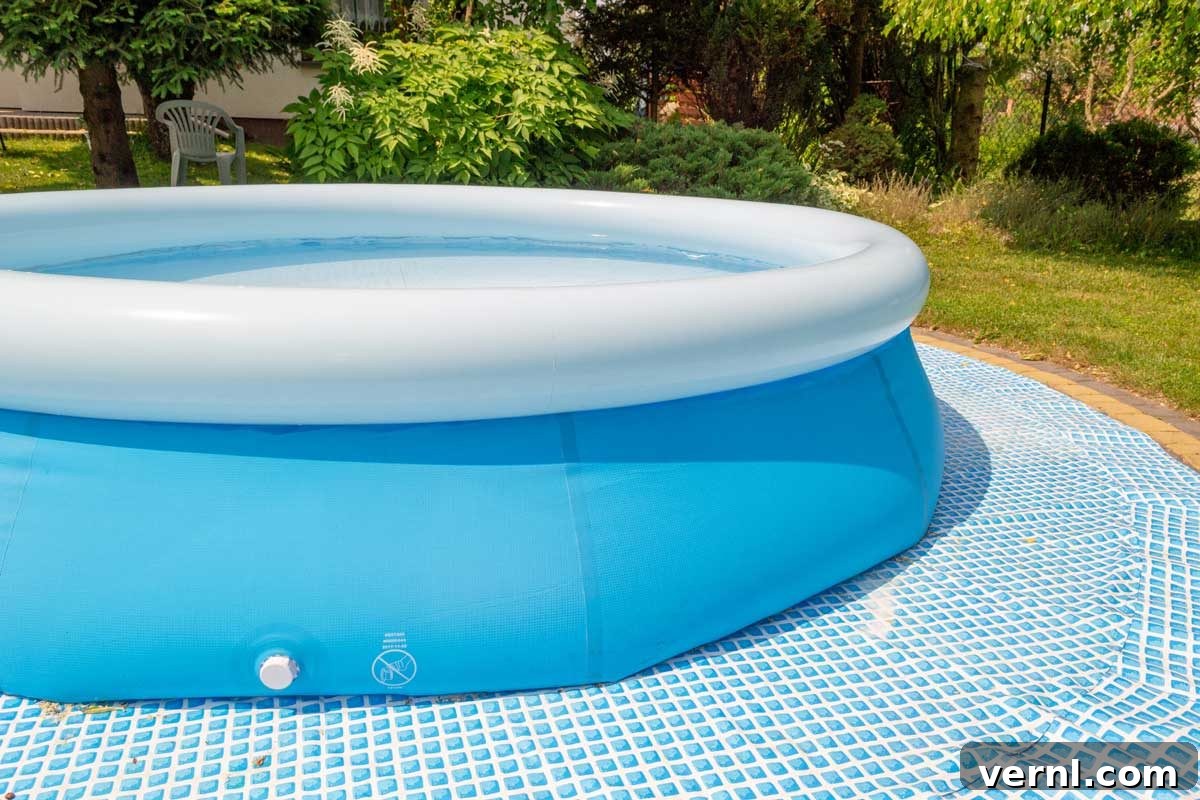
As the weather warms and the sun shines brighter, there’s no better way to beat the heat and create lasting family memories than with a refreshing swim. While in-ground pools offer a permanent fixture, above-ground pools provide an increasingly popular and practical alternative. These versatile aquatic additions offer a fantastic opportunity to transform your backyard into a personal oasis, making summer days more enjoyable and memorable. If you’re considering diving into pool ownership, understanding the various aspects of above-ground pools is key to making an informed decision. From installation to maintenance, safety to style, this comprehensive guide will equip you with all the essential information to help you choose and enjoy the perfect above-ground pool for your home.
Why Choose an Above-Ground Pool? The Smart Alternative for Backyard Fun
For many homeowners, the dream of a backyard pool often comes with a hefty price tag and significant commitment. This is where above-ground pools shine, offering a multitude of advantages that make them a compelling choice, especially when compared to their in-ground counterparts:
-
Significantly More Affordable. One of the most attractive aspects of above-ground pools is their cost-effectiveness. The initial investment for even the most premium above-ground models is typically thousands of dollars less than an in-ground pool. This substantial saving extends to repairs and maintenance, which are also generally much cheaper, making pool ownership accessible to a wider range of budgets.
-
Less Commitment and Greater Flexibility. An above-ground pool offers unparalleled flexibility. Should your lifestyle change, you move to a new home, or simply decide you want your yard space back for other activities, you can drain and disassemble your above-ground pool with relative ease. This temporary nature is a huge advantage for renters or those who prefer not to make a permanent alteration to their property.
-
Simpler and Easier to Maintain. Generally, above-ground pools are easier to care for. Their design is often less complex, and they typically hold less water than in-ground pools, which translates to fewer chemicals needed, shorter filtration cycles, and simpler cleaning routines. This ease of maintenance allows you to spend more time enjoying your pool and less time worrying about its upkeep.
-
Easier and Faster Installation. While larger models may require professional assistance, many above-ground pools, particularly smaller and inflatable types, can be installed as a DIY project over a weekend or even a single afternoon. This quick gratification means you can go from purchase to cannonball in a surprisingly short amount of time, without the extensive construction and landscaping disruption associated with in-ground installations.
-
Suitable for Diverse Landscapes. Above-ground pools are often a practical solution for yards with challenging conditions like rocky soil, high water tables, or sloped terrain, where an in-ground excavation would be prohibitively expensive or impossible. They adapt well to various backyard configurations, offering a refreshing escape where other pool types might not.
Exploring the Diverse Types of Above-Ground Pools
The market for above-ground pools is rich with options, catering to different budgets, aesthetic preferences, and durability requirements. Understanding the distinctions between the main types will help you choose the best fit for your family and lifestyle:
-
Steel Frame Pools: The Economical Choice. Often featuring frames made from materials like aluminum, zinc, or galvanized steel, these pools are known for being strong yet lightweight. They typically consist of a durable liner supported by a robust metal framework. Steel frame pools are a popular budget-friendly option, providing a good balance of cost and stability. However, they can absorb and retain heat from the sun, making the frame hot to the touch, and the metal can be susceptible to dents or corrosion over time, especially if not properly maintained or if exposed to harsh chemicals. They are relatively straightforward to assemble and often come in various sizes.
-
Resin Frame Pools: Durability and Comfort. Considered a step up from steel frame pools, resin frame pools utilize hard plastic or composite materials for their structural components. While more expensive upfront, they often justify the price with enhanced durability and longevity. Resin frames are rust-proof, UV-resistant, and remain cool to the touch even in direct sunlight, providing a more comfortable experience. They are also less prone to denting and can withstand the elements better than steel, making them an excellent long-term investment. Their sleek appearance can also offer a more modern aesthetic.
-
Hybrid Frame Pools: The Best of Both Worlds. Hybrid frame pools ingeniously combine the strengths of both resin and steel. They typically feature resin components in areas most exposed to water and sun, such as the top rails and uprights, which benefit from resin’s rust-proof and UV-resistant qualities. Steel parts are then utilized for critical structural elements where maximum strength and support are needed. This combination aims to offer a balance of durability, aesthetics, and cost-effectiveness, providing a highly resilient pool designed to withstand years of use.
-
Radiant Pools (Semi In-Ground): The Blended Aesthetic. Also known as semi-in-ground pools, radiant pools bridge the gap between traditional above-ground and in-ground options. These pools are designed with exceptionally strong walls, often made from insulated aluminum panels, that can be partially or fully buried into the ground. They offer the sophisticated look of an in-ground pool at a fraction of the cost and with greater installation flexibility. Radiant pools are highly durable, often remain up all year round, and can be customized with various decking and landscaping options. While they are usually the most expensive above-ground pool option, they provide a premium look and feel, excellent insulation properties for heat retention, and a robust structure capable of enduring harsh winters.
-
Inflatable Pools: Instant Fun on a Budget. For those on a tight budget, with limited space, or who are renters, inflatable pools offer an immediate and inexpensive solution. Widely available at big box stores, these pools are incredibly easy to set up—simply inflate the top ring, fill with water, and the pool walls rise. While they provide instant relief from the heat, it’s important to note that inflatable pools are generally less hardy and long-lasting than their framed counterparts. They are more susceptible to punctures and wear, making them best suited for temporary use or as a starter pool to gauge interest in a more permanent option.
Understanding Above-Ground Pool Cost: From Initial Investment to Ongoing Expenses
The total cost of an above-ground pool involves more than just the purchase price of the kit itself. It’s crucial to consider installation expenses, necessary accessories, and ongoing operational costs to get a complete financial picture. The primary cost drivers for above-ground pools are the type of pool kit you select and the complexity of its installation.
Initial pool kit prices vary widely. A basic inflatable above-ground pool can be remarkably affordable, starting from as little as $100 for smaller models. On the other end of the spectrum, a high-end, large resin frame pool or a semi-in-ground radiant pool can command prices upwards of $5,000 to $10,000, depending on size, features, and brand. These prices typically include the pool structure, liner, and sometimes a basic pump and filter system.
Installation costs are another significant factor. While smaller inflatable and soft-sided pools are designed for easy DIY setup, larger, more robust pools made of metal or resin frames often require more involved installation. Professional above-ground pool installation typically runs between $1,000 and $3,000, but can increase depending on several variables: the pool’s size and type, your yard’s terrain and accessibility, the need for extensive ground leveling, and any specific challenges like rocky soil or slopes. You might also incur costs for electrical work to power the pump and filter, and potentially for a dedicated water line. Furthermore, a building permit may be required by your local municipality, adding to the overall expense and ensuring compliance with safety and zoning regulations.
Beyond the initial setup, remember to budget for ongoing costs. These include chemicals for water balance and sanitation (chlorine, pH adjusters, algaecides), electricity for running the pump and filter, water refills or top-offs, and routine maintenance supplies like skimmers, vacuums, and brushes. Factor in potential repair costs for liners or equipment over the years, and the cost of winterizing supplies if you don’t disassemble the pool annually. Planning for these expenses upfront will help you enjoy your pool without financial surprises.
Above-Ground Pool Installation: DIY vs. Professional Expertise
Installing an above-ground pool can range from a simple, afternoon DIY project to a multi-day endeavor requiring specialized skills. The complexity largely depends on the pool’s size, type, and the condition of your chosen site.
For many inflatable and smaller frame pools, installation is designed to be a straightforward DIY task. These kits often come with clear instructions, and with a few basic tools and a bit of elbow grease, homeowners can have their pool ready for water in a matter of hours. The process typically involves selecting a level spot, clearing debris, spreading a ground cloth, and then assembling the frame or inflating the pool before filling it. This option is ideal for those who enjoy hands-on projects and want to save on labor costs.
However, for larger above-ground pools made of sturdy metal or resin frames, the installation process becomes considerably more involved and often warrants professional assistance. These jobs frequently require:
-
Careful Site Preparation: This involves precise surveying and measuring of your yard to ensure the chosen location is suitable, taking into account sun exposure, proximity to power outlets, and drainage.
-
Ground Leveling: One of the most critical steps, achieving a perfectly level base is essential for the pool’s structural integrity and longevity. This can involve significant earth moving, sand or gravel application, and compacting, which can be laborious and may require specialized equipment.
-
Sub-base Installation: Laying down support rails, foundation pads, or a sand base to provide a stable and protective layer for the pool liner.
-
Detailed Assembly: Assembling the intricate pool wall, ensuring panels are correctly aligned and secured, followed by the careful installation of the pool liner to prevent wrinkles or stretching.
-
Pump and Filtration System Setup: Installing and plumbing the pump, filter, and often a skimmer system, requiring basic plumbing and electrical knowledge to ensure efficient water circulation and filtration.
-
Electrical Hookups: Ensuring the pump and any other electrical components are safely wired to a dedicated GFCI-protected outlet, often requiring a licensed electrician.
For these reasons, many people wisely choose to hire professional installers who have the experience, tools, and expertise to ensure the job is done correctly and safely, often backed by warranties. Alternatively, enlisting a few handy friends can significantly ease the burden of a larger DIY installation, but always ensure safety guidelines are followed. Remember that proper installation is paramount to the pool’s safety, efficiency, and lifespan.
Above-Ground Pool Safety: Prioritizing Protection for Everyone
Pool ownership comes with the immense responsibility of ensuring a safe environment for everyone, especially children and pets. Implementing robust safety measures is non-negotiable for above-ground pools. While they are inherently safer than in-ground pools due to their height, vigilance and proper equipment are still essential.
The primary goal is to prevent unsupervised access to the pool. There are several critical barriers and devices you must consider:
-
Ladder and Step Security: The most direct access point to an above-ground pool is its ladder or steps. You have two main options for securing this:
-
Removable or Lockable Ladder: Implement a system where the ladder can be secured, locked, or completely removed when the pool is not in use. This prevents children and animals from climbing into the pool unnoticed.
-
Fenced Barrier Around Ladder/Steps: Install a locked gate or fence specifically around the ladder or steps, creating a secondary barrier that requires an adult to open it for access.
-
-
Perimeter Fencing: For comprehensive safety, a barrier around the entire perimeter of the pool is highly recommended, and often legally required depending on your location. This fence should be self-closing and self-latching, with latches placed out of reach of small children. Crucially, there should be no more than four inches of clearance between the pool’s edge and the barrier to prevent small children or pets from squeezing through. This perimeter barrier adds a vital layer of protection against accidental entry.
Beyond physical barriers, several other pool safety must-haves include:
-
Pool Alarm: An alarm that sounds when it detects entry into the pool or when someone opens a gate leading to the pool is an invaluable safety device. These alerts can give you precious moments to react in an emergency.
-
Heavy-Duty Pool Safety Cover: When the pool is not in use, a robust, ASTM-compliant safety cover can prevent accidental drownings. These covers are designed to support the weight of a child or pet, ensuring they cannot fall into the water.
-
Lifesaving Equipment: Always keep readily accessible lifesaving equipment near the pool. This includes a rope and float line to divide the shallow and deep ends (if applicable), a ring buoy or rescue tube, and a safety hook or shepherd’s crook for reaching someone in distress without entering the water. A fully stocked first aid kit should also be on hand for minor injuries.
-
Strict Pool Rules and Supervision: Establish and enforce clear pool rules, such as no running, no diving (critical for above-ground pools due to shallow depths), and always swimming with a buddy. Most importantly, never leave children unsupervised near the pool, even for a moment. Designate an adult as a “water watcher” who is solely focused on supervision.
-
Learn CPR: All adult household members should consider taking a CPR and first aid course. Knowing how to respond in an emergency can save a life.
Finally, it’s a good idea to inform your homeowners or renters insurance company about your above-ground pool. Some companies require disclosure and may only cover claims if you’ve done so. You may also want to consider increasing your liability insurance to protect yourself in case of accidents, as pool ownership can increase your risk of liability claims.
Above-Ground Pool Maintenance and Care: Keeping Your Water Sparkling Clean
Regular maintenance is crucial for ensuring your above-ground pool remains a safe, clean, and enjoyable place to swim throughout the season. While specific tasks may vary slightly depending on your pool type and size, a consistent routine will prevent common issues like algae growth and cloudy water. Depending on the type of above-ground pool you have, your maintenance regimen will likely include:
-
Install and Run a Pool Filter and Pump: Essential for circulating and cleaning the water, your pump and pool filter system should run daily for several hours. The duration depends on the pool size and usage, typically 8-12 hours. This process physically removes debris, contaminants, and microscopic particles from the water, keeping it clear.
-
Maintain Proper Chemical Levels: This is arguably the most critical aspect of pool care. You’ll need a testing kit to regularly check and adjust several key chemical parameters:
-
Chlorine Level: Maintain a chlorine level between two and four parts per million (ppm) to effectively sanitize the water and kill bacteria and algae.
-
pH Level: Keep the pH level between 7.4 and 7.6. This range ensures chlorine works efficiently and prevents skin/eye irritation, as well as damage to pool components.
-
Calcium Hardness: Ensure the calcium hardness level is between 200 and 400 ppm. Too low, and water can become corrosive, dissolving plaster or etching liners; too high, and scaling can occur.
-
Cyanuric Acid (CYA): Maintain the cyanuric acid level between 30 and 50 ppm. CYA acts as a stabilizer, protecting chlorine from degradation by the sun’s UV rays, making it last longer.
-
Alkalinity: While not listed, Total Alkalinity (TA) is also crucial, typically maintained between 80-120 ppm, as it buffers the pH and prevents drastic fluctuations.
-
-
Remove Debris with a Pool Skimmer: Daily skimming of the water surface with a handheld skimmer net removes leaves, bugs, and other floating debris before they sink or break down and affect water chemistry.
-
Run a Pool Vacuum: Regularly vacuum the bottom of your pool to remove settled dirt, sand, and other particulate matter. This can be done manually with a hose-powered vacuum or with an automatic pool vacuum. (Explore the best pool vacuums for your needs).
-
Clean Out the Skimmer and/or Pump Basket: The skimmer basket (located in the pool’s side opening) and the pump basket (at the front of the pump) trap larger debris. Empty these regularly, often daily or every other day, to maintain good water flow and pump efficiency.
-
Brush Pool Walls and Floor: Periodically brush the pool walls and floor to dislodge algae and dirt that might cling to surfaces, allowing the filter system to capture it. This is especially important for areas that don’t get much circulation.
-
Backwash or Clean Filter: Depending on your filter type (sand, cartridge, or D.E.), you’ll need to backwash (for sand/D.E.) or clean/rinse cartridges regularly to maintain filtration efficiency and pressure.
-
Winterize the Pool: As the swimming season ends and temperatures drop, you’ll need to winterize the pool. This involves cleaning, chemically treating, partially draining, and covering the pool to protect it from freezing and damage during the off-season. Alternatively, smaller pools can be completely drained, disassembled, cleaned, and stored for the winter.
Learning more about maintaining your pool’s chemical levels and understanding how to troubleshoot common problems will empower you to keep your above-ground pool pristine and ready for enjoyment at all times.