
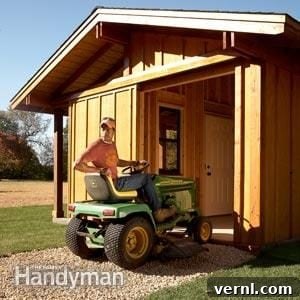
For many years, the task of designing and constructing our annual shed has fallen to me. This responsibility comes with a unique set of challenges and opportunities, allowing me to continuously refine my approach to shed building. The accompanying photograph offers a glimpse of one such project, a robust and practical shed that was featured in our July/August ’12 issue. While every detail contributes to the overall success of a shed, one area consistently demands meticulous planning and execution: the doors. Choosing the right type and number of doors is paramount for functionality, accessibility, and the long-term utility of any storage shed.
Understanding Shed Doors: Beyond the Basics
The doors of a shed are far more than mere entry points; they are critical components that dictate ease of access, security, and even the shed’s overall aesthetic appeal. Over the years, I’ve experimented with various door configurations to meet diverse needs, from simple garden tool storage to housing large machinery. Typically, my designs often incorporate two types of doors: a standard entry door for everyday access and a larger door designed to accommodate bulkier items like riding lawn mowers, ATVs, or substantial gardening equipment.
Common Shed Door Options
When it comes to shed doors, the market offers several options, each with its own set of advantages and considerations:
- Standard Hinged Entry Doors: These are the most straightforward. For smaller sheds or dedicated personnel entry, I usually opt for prehung exterior doors, similar to those you’d find installed in a garage or even a house. They are readily available, relatively simple to install, and offer a good seal against the elements. Their primary limitation is the need for a clear swing radius, which can be problematic in tight spaces or challenging weather conditions.
- Roll-Up or Overhead Doors: While less common for typical backyard sheds, these are excellent for larger workshops or garages where maximum overhead clearance is needed. However, their complexity and cost generally make them overkill for most standard shed applications.
- Sliding Shed Doors: This is where my preference often lies for wide openings. After extensive experimentation with various methods for large access points, I’ve consistently found that sliding shed doors offer the most practical and efficient solution for big entrances. They address many of the limitations associated with traditional hinged doors, particularly when dealing with substantial width requirements.
The Unrivaled Benefits of Sliding Shed Doors
My decision to embrace sliding doors for wide shed openings stems from a clear understanding of their significant advantages over hinged alternatives. These benefits make them a superior choice for many shed designs:
Exceptional Space Efficiency
One of the most compelling reasons to choose sliding doors is their minimal footprint when open. Unlike hinged doors that require a large arc of clear space both inside and outside the shed to fully open, sliding doors glide along a track parallel to the shed wall. This means you don’t need to clear snow, ice, or clutter from a large area in front of the shed to operate them. In my previous home, a pair of hinged doors on a shed proved a constant headache during winter, demanding significant effort to keep the approach clear. With sliding doors, this problem is virtually eliminated, offering unparalleled convenience in all seasons.
Unrestricted Size and Design Versatility
The inherent design of sliding door systems allows for an almost limitless door width. Whether you need a 6-foot, 8-foot, or even wider opening, sliding doors can be engineered to cover it effectively. Since the doors are suspended from an overhead track rather than pivoting from a side hinge, they don’t experience the same gravitational stress on a single point. This top-hung design means the doors don’t have to be as robustly constructed as a hinged door of equivalent size, potentially saving on material costs and reducing the risk of sagging over time.
Enhanced Durability and Stability
The distribution of weight along a top track significantly contributes to the longevity and stability of sliding doors. Hinged doors, especially wide or heavy ones, are prone to sagging on their hinges over time, leading to operational difficulties and alignment issues. Sliding doors, supported across their entire width, maintain their integrity much better, offering smooth, reliable operation for years with proper installation and hardware.
Aesthetic Appeal and Modern Functionality
Beyond their practical benefits, sliding doors can also contribute to a cleaner, more streamlined look for your shed. When closed, they present a flush surface, and when open, they disappear along the wall, maintaining a tidy appearance. This modern functionality can elevate the overall design of your outdoor structure.
Comprehensive Guide to Building Robust Sliding Shed Doors
The success of a sliding shed door system hinges critically on two factors: meticulous planning and the selection of appropriate, heavy-duty hardware. My experience has shown that cutting corners here leads to frustration down the line. Building a durable and smooth-operating sliding door involves several key steps.
Planning Your Sliding Door Project
Before you even think about cutting wood, thorough planning is essential:
- Precise Measurements: Accurately measure the width and height of your door opening. Remember to account for any overlap you want the door panels to have for weatherproofing and security. For bypass systems (two doors sliding past each other), each door panel will need to be slightly wider than half the total opening width.
- Material Selection: Consider the material for your door panels. Plywood, T1-11 siding, or even a tongue-and-groove design are popular choices. Factor in the weight of your chosen material, as this will influence the hardware required. Durability, weather resistance, and aesthetics should guide your decision.
- Design Layout: Decide whether you need a single large sliding door or a bypass system with two doors. Bypass systems are excellent for very wide openings, allowing you to open half the opening at a time. Ensure your shed wall is long enough to accommodate the doors sliding open without obstructing other features.
Selecting the Right Hardware: The Foundation of Performance
The heart of any reliable sliding door system is its hardware. I strongly recommend investing in heavy-duty components designed for exterior use. My go-to solution has been the heavy-duty bypass door hardware from Johnson Hardware (available at johnsonhardware.com) or comparable systems. These systems are specifically engineered for robustness and longevity, crucial for outdoor applications.
A typical heavy-duty system includes:
- Three-Wheel Ball-Bearing Hangers (e.g., Johnson Hardware Part No. 1025): These are the workhorses, capable of supporting significant weight, often up to 150 lbs. per door. The ball bearings ensure an incredibly smooth and effortless glide. Don’t underestimate the importance of quality hangers; flimsy ones will quickly lead to sticking and frustration.
- Aluminum Track (e.g., Johnson Hardware Part No. 111): The track must be rigid and durable. Aluminum is an excellent choice as it’s strong and resistant to corrosion, a critical factor for outdoor shed doors. An 8-ft. track and a pair of hangers for a 4-ft. door might cost around $70, a worthwhile investment for reliable performance.
- Floor Guides and Stops: These components are essential for keeping the door aligned at the bottom and preventing it from sliding off the track or crashing into the end of the opening.
Step-by-Step Installation Process
Once you have your materials and hardware, you can begin the installation:
- Prepare the Opening: Ensure your shed’s door opening is square and plumb. Any misalignment here will translate to problems with door operation.
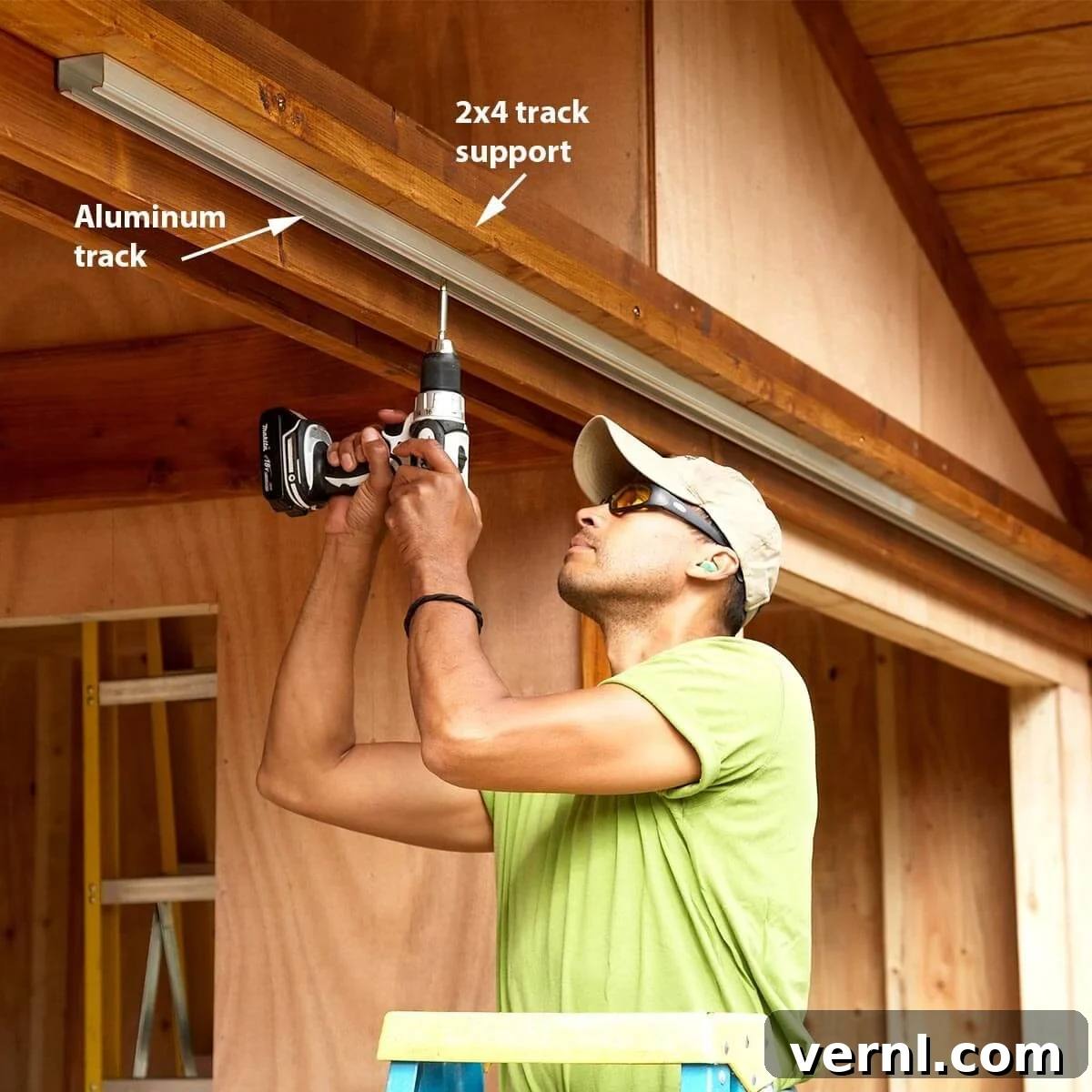
- Reinforce the Header: This is a crucial step that cannot be overlooked. The overhead track will bear the entire weight of the door, so the support structure must be exceptionally strong. I achieve this by ripping a 2×4 down to a thickness of between 2-1/2 and 3 inches, depending on the thickness of the door panels and the specific hardware requirements. This customized header piece is then securely attached to the shed wall using multiple lag screws, driven into the wall studs. This creates an incredibly stable anchor point for the track.
- Install the Aluminum Track: With the reinforced header in place, screw the aluminum track directly to this support. Use a level to ensure the track is perfectly horizontal. Even a slight incline can cause the door to drift open or closed. Follow the manufacturer’s instructions for fastener spacing and type.
- Assemble the Door Panels: Construct your door panels. Ensure they are rigid and dimensionally stable. Attach the hanger plates to the top edge of each door panel, precisely following the hardware manufacturer’s recommendations for placement. Incorrect placement can lead to uneven hanging or binding.
- Hang the Doors: Carefully lift each door panel and hook the hanger wheels onto the track. This often requires two people, especially for larger, heavier doors. Once hung, the doors should glide freely.
- Install Floor Guides and Stops: Mount the floor guides at the bottom of the door opening to keep the doors aligned and prevent them from swinging outwards. Install track stops at the ends of the track to prevent the doors from overshooting or coming off the track.
- Final Adjustments: Test the doors thoroughly. Ensure they glide smoothly without binding or catching. Make any necessary adjustments to the hangers or track alignment until operation is seamless.
Addressing Potential Drawbacks of Sliding Doors
While sliding doors offer significant advantages, it’s important to acknowledge and address their few drawbacks to ensure they are the right choice for your specific needs.
Security Challenges
One of the primary concerns with sliding doors is their inherent difficulty in achieving the same level of security as a well-fitted hinged door. The nature of a sliding door means there’s often a small gap between the door panel and the door frame, making traditional locks less effective. I haven’t found a single “elegant” locking solution that universally applies to all sliding shed doors. However, there are several practical approaches:
- Hasp and Padlock: This is my most common solution. A sturdy hasp and padlock can be installed on the exterior, allowing for a secure closure. For bypass doors, a hasp can bridge the two panels.
- Lockable Gate Latches: Similar to hasps, these can provide a robust locking mechanism, especially for a pair of doors.
- Barrel Bolts or Slide Bolts: Interior-mounted barrel bolts can secure the door from the inside, often used in conjunction with an exterior lock.
- Specialty Sliding Door Locks: Some hardware manufacturers offer locks specifically designed for sliding doors, which can provide a more integrated solution.
- Security Bars: For maximum security, a removable security bar that slides into brackets on either side of the door opening can be very effective when the shed is unattended for long periods.
Weatherproofing and Pest Control
Sealing a sliding door against the elements and pests is generally trickier than with a hinged door. The gaps required for the door to slide smoothly can allow insects, small rodents, and moisture to enter. If your shed contents are highly sensitive to pests or moisture (e.g., storing delicate electronics or grains), you might want to give hinged doors more consideration. However, several techniques can significantly improve the seal:
- Weatherstripping: Applying brush seals or foam weatherstripping along the edges where the door meets the frame can help close gaps.
- Door Sweeps: A sturdy door sweep installed at the bottom of the door can prevent drafts and small creatures from entering.
- Overlapping Panels: Designing the doors with a generous overlap where they meet the jamb or each other in a bypass system can help deflect water.
- Careful Framing: Ensuring the framing around the door opening is perfectly square and plumb minimizes initial gaps.
Maintenance Considerations
While sliding doors are generally low maintenance, occasional checks are beneficial. The track may accumulate debris, which can hinder smooth operation. Periodically cleaning the track and applying a dry lubricant (like silicone spray) can keep the doors gliding effortlessly. Also, check the hanger bolts and lag screws periodically to ensure they remain tight.
Conclusion: Making the Right Choice for Your Shed
The decision between hinged and sliding shed doors ultimately depends on your specific needs, the size of your opening, and your priorities for security and weather protection. While sliding doors present a few challenges in terms of locking and sealing, their unparalleled advantages in space-saving, accommodating wide openings, and ease of operation often make them the superior choice.
For those seeking a door that is straightforward to build and install, operates effortlessly, and doesn’t demand precious exterior space for opening, then sliding doors are incredibly hard to beat. With careful planning, the right hardware, and attention to detail in addressing potential drawbacks, you can create a highly functional, durable, and aesthetically pleasing sliding door system that will serve your shed for years to come.
— Jeff Gorton, Associate Editor