
Safe Gasoline Storage: A Comprehensive Guide for Homeowners
Gasoline is a highly flammable and volatile substance that demands respect and proper handling. Mishandling or improper storage can lead to dangerous situations, posing significant risks to your property and personal safety. The importance of responsible old gas management and general fuel safety was a lesson I learned firsthand, through a challenging and costly experience during a motorcycle rebuild.
While meticulously reassembling my motorcycle, I made a disheartening discovery: several carburetors still contained gasoline that had been sitting untouched for over two years. The consequence was severe gum and varnish buildup, a direct result of the gasoline degrading over time. This neglect necessitated a complete rebuild of all four carburetors, an unexpected expense that consumed countless hours of my time and resources. This incident served as a stark reminder of my oversight in leaving gasoline unchecked in my garage. From that moment, I committed to never making that mistake again, and I hope this guide helps you avoid similar pitfalls by understanding proper gasoline storage and handling practices.
Understanding Approved Gasoline Containers for Safe Storage
When it comes to storing gasoline, choosing the right container is paramount. Federal and local regulations, along with industry standards, dictate specific requirements for safe gasoline storage containers. These regulations are designed to minimize risks associated with a highly flammable liquid. Navigating the myriad of rules from organizations like The Department of Transportation (DOT), the National Fire Protection Association (NFPA)’s Flammable and Combustible Liquids Code, and OSHA can seem daunting. All these regulations are fundamentally rooted in the stringent guidelines set forth by Underwriters Laboratory (UL), ensuring containers meet rigorous safety criteria. Let’s simplify this and explore the types of containers officially approved for gasoline storage.
Consumer-Grade Gas Cans: Practicality for Home Use
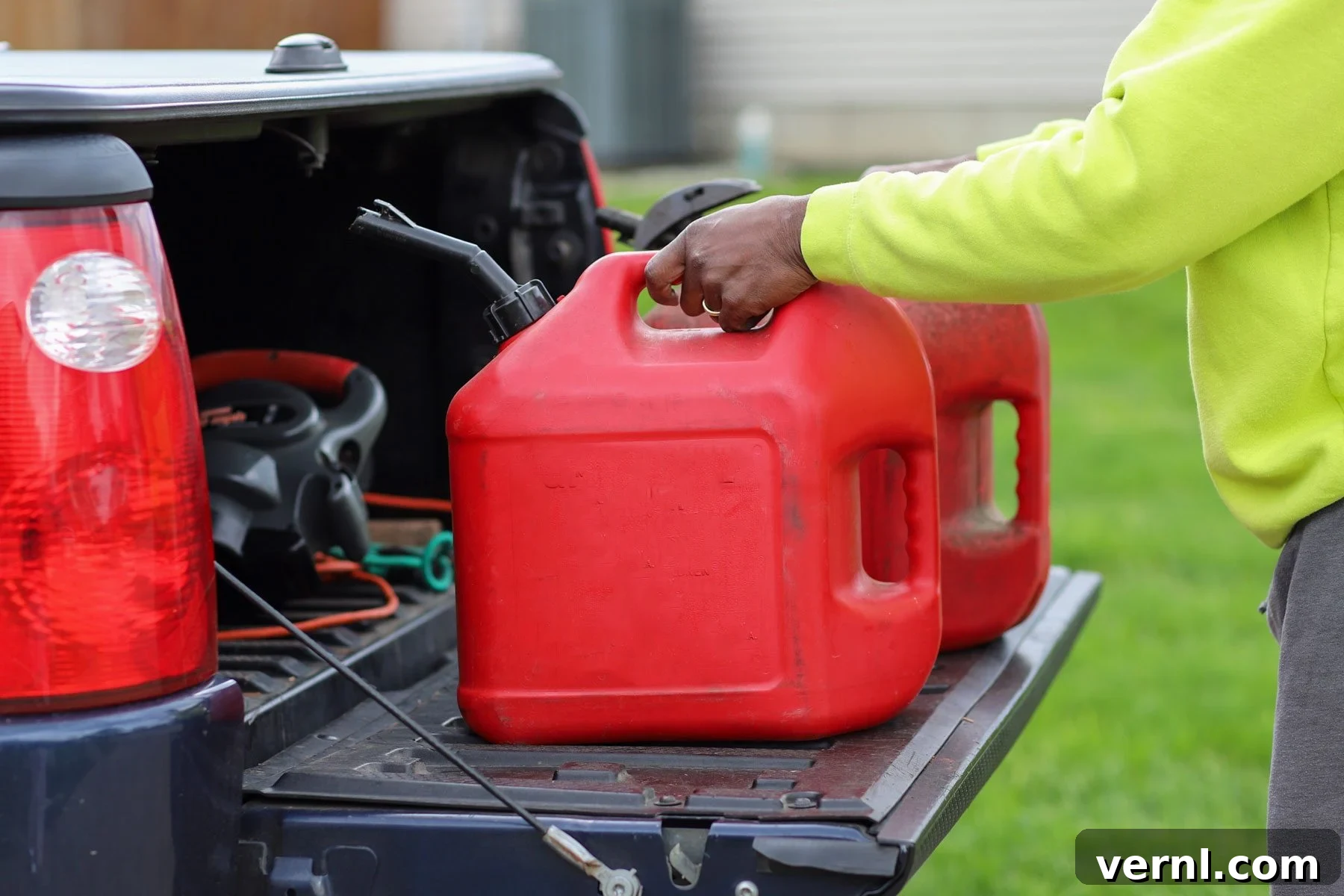
For most homeowners, consumer-grade gas cans are the go-to solution for everyday gasoline storage needs. These practical containers are typically constructed from robust materials like metal or high-density polyethylene (HDPE) plastic. Many users, myself included, often prefer plastic cans due to their inherent advantages: they are significantly lighter, making them easier to transport; they are generally more affordable; and perhaps most importantly, they are rust-proof, offering greater longevity. These cans are specifically designed for domestic use and are readily available at your local auto parts store, hardware store, or home improvement center. They come in convenient capacities, typically 5-gallons or less, making them suitable for powering lawn mowers, trimmers, or small generators.
Metal and Polyethylene “Safety Cans”: Enhanced Protection for Commercial Settings
Stepping up from consumer-grade options, “safety cans” represent a more robust category of gasoline storage containers, offering enhanced safety features. These containers are often UL-listed, signifying that they have undergone thorough testing and meet stringent safety standards established by Underwriters Laboratory. OSHA mandates the use of these specialized safety cans for gasoline storage in commercial, industrial, or construction environments where the risk of spills and fires is heightened. True to their name, safety cans are engineered to provide a superior level of protection compared to standard consumer cans. They boast a range of critical features, including being 100% leak-tested to prevent dangerous seepage, equipped with self-closing lids that automatically seal to contain vapors and prevent spills, and integrated flame arrestors that prevent flashback ignition through the spout. Manufactured from durable metal, polyethylene, or sometimes polyethylene-lined metal, these advanced containers come at a higher price point, typically averaging around $100 or more, reflecting their specialized design and safety assurances. They are generally sourced through industrial supply houses or specialized safety equipment distributors.
DOT-Approved Containers: The Gold Standard for Commercial Transport
When it comes to transporting combustible liquids like gasoline on public roads and highways, especially with commercial vehicles, the safety requirements become even more rigorous. In such scenarios, containers must receive explicit approval from both the Department of Transportation (DOT) and OSHA. These DOT-approved safety cans represent the pinnacle of fuel storage security, incorporating even more stringent safety features than their standard safety can counterparts. Designed to withstand the rigors of transportation and potential accidents, their lids are often lockable, providing an extra layer of security and preventing tampering or accidental opening. Furthermore, their handles are engineered to offer protection for the lid mechanism, safeguarding it against damage in the event of a tumble or impact. Due to their highly specialized construction and adherence to the strictest transportation safety regulations, DOT-approved safety cans typically command a premium price, often exceeding $300. They are exclusively available through specialized industrial and safety supply chains that cater to commercial transportation needs.
The Universal Color Code for Approved Gasoline Containers
An essential aspect of safe gasoline storage and identification is the universally recognized color-coding system for fuel containers. This system helps prevent dangerous mix-ups and ensures the correct fuel is used for its intended purpose. For gasoline, containers should always be distinctively red. This vibrant color immediately signals the presence of highly flammable gasoline. In contrast, yellow is reserved for diesel fuel, blue denotes kerosene, and green is used for the storage of various oils. Adhering to this color code is not merely a suggestion; it’s a critical safety measure that can prevent costly errors and potential hazards. Prioritizing the safety of your family and property should always be your utmost concern. While OSHA regulations may not directly apply to individual homeowners, adopting these professional precautions when storing gasoline is an intelligent and responsible practice that significantly enhances safety.
Strategic Placement: Where to Store Gasoline Safely
Choosing the correct location for gasoline storage is just as critical as selecting the right container. The safest and most recommended place to store gasoline is in an approved gasoline container, situated within a detached garage or a separate shed. This separation from your primary living space is vital. The storage area should be located out of direct sunlight, which can increase the temperature of the fuel, leading to dangerous vapor expansion and potential ignition. Furthermore, it’s imperative that gasoline containers be stored at least 50 feet away from any potential pilot lights or ignition sources. This includes common household appliances like water heaters, space heaters, or furnaces, all of which generate heat, sparks, or open flames. Under no circumstances should gasoline ever be stored inside your home, including basements or attached garages, due to the high risk of fire and harmful vapor accumulation.
If you choose to store your gas cans on the floor of your garage or shed, it’s a good practice to place a piece of plywood or another insulating material between the containers and the concrete floor. Concrete can be surprisingly cold, leading to condensation inside metal cans, which can promote rust and compromise the integrity of the container. This simple step helps prevent rust and potential leaks. Always ensure that gasoline containers are stored safely out of the reach of children and pets, ideally in a locked cabinet or on a high shelf, to prevent accidental access and potential tragedies.
- Safety Note: Never, under any circumstances, store gasoline in glass containers! No glass containers are approved for gasoline storage, and attempting to do so is extremely dangerous. Glass is fragile and can easily break, instantly spilling highly flammable contents and creating an immediate and massive fire risk, especially if a hot engine or ignition source is nearby. As retired deputy fire chief and training officer Joe Simes wisely advises, to mitigate the risk of a possible spark, gasoline should also never be stored near any battery-operated components that are being charged. This includes electric vehicles, scooters, electronic devices, or battery-powered tools, as these charging processes can generate sparks that could ignite gasoline vapors.
Reviewed by Joe Simes, retired Deputy Fire Chief and Training Officer; and Bob Lacivita
Best Practices: How to Store Gasoline Effectively
To reiterate a fundamental safety principle, gasoline should always be stored exclusively in approved plastic or metal containers, ideally with capacities no larger than five gallons. This size limit helps manage the quantity of flammable liquid on hand, reducing the potential impact of a spill or fire. When filling these containers, exercise caution and precision: never fill them beyond 95% of their capacity. This crucial allowance provides necessary space for gasoline to expand safely as temperatures fluctuate, preventing dangerous pressure buildup that could rupture the container or force gasoline out of the spout. After filling, always ensure the cap is securely tightened on the container, creating a vapor-tight seal to prevent harmful fumes from escaping into the environment.
Understanding Gasoline Shelf Life: How Long Can You Safely Store Gasoline?
The longevity of stored gasoline is a common concern for homeowners. According to Exxon-Mobil, for optimal quality and engine performance, gasoline is best used within approximately one month of purchase. However, with proper storage guidelines diligently followed, many individuals find that gasoline can remain viable for up to six months without significant degradation. Over time, gasoline naturally degrades due to oxidation and the evaporation of volatile compounds, leading to the formation of gum, varnish, and water contamination, all of which can severely damage engines and fuel systems.
To significantly extend the life of your stored gasoline, especially for equipment like generators, lawn mowers, or other seasonal machinery, it is highly recommended to add a fuel stabilizer immediately after purchasing fresh gas. Fuel stabilizers are specially formulated additives that contain potent antioxidants and biocides. These chemicals work by preventing the oxidation process that leads to harmful compound formation and inhibiting the growth of microbial organisms (like bacteria and fungi) that can thrive in stored fuel, causing blockages and corrosion. By using a quality fuel stabilizer, you can effectively extend the life of stored gasoline to more than a year, ensuring your equipment starts reliably when you need it most.
Frequently Asked Questions About Gasoline Storage
Can you store gasoline outside?
Yes, gasoline can be stored outside, but only under very specific and controlled conditions to ensure safety. It must be at least 50 feet away from any living quarters or occupied buildings, minimizing the risk to people and structures in case of an incident. Crucially, the outdoor storage location must be completely free from any ignition sources, including grills, fire pits, heaters, or electrical equipment. Additionally, the containers should be placed in an area that is out of reach of children and ideally secured to prevent tampering or theft. It is also vital to check with your local government or fire department regarding specific outdoor storage ordinances, as regulations can vary significantly by municipality and may dictate maximum quantities or require specific containment measures.
How much gasoline can I store at home?
Fire codes typically impose restrictions on the total quantity of gasoline that can be stored on residential property. While these limits can vary by jurisdiction, a common guideline restricts residential gasoline storage to no more than a total of 25 gallons, typically distributed across multiple five-gallon cans. Exceeding these limits can not only put you in violation of local fire codes but also dramatically increase the risk profile of your property, potentially impacting insurance coverage and, more importantly, escalating the danger in the event of a fire. Always consult your local fire marshal or municipal regulations for the exact limits applicable to your area.
Which is safer, metal or plastic gas cans?
For the average consumer, both modern metal and plastic gas cans, when properly approved and maintained, offer a comparable level of safety. Each material has its own set of advantages and disadvantages. Metal cans are incredibly durable and resist punctures, but they are heavier and susceptible to rust and corrosion over time, which can lead to leaks and fuel contamination. Plastic cans, particularly those made from high-density polyethylene, are lightweight, inexpensive, and impervious to rust, making them a popular choice. In my personal experience, considering long-term durability and resistance to degradation from internal moisture, plastic often emerges as the safer and more practical option for consumer use, as rust in metal cans can eventually compromise their integrity.
What color are approved gasoline containers?
Approved gasoline containers are always red in color. This universal color code is a critical safety standard designed for instant identification, preventing the accidental use of gasoline for other fuels or vice-versa. While the container itself is red, it will also feature yellow labeling or stenciling that clearly indicates its contents as “Gasoline” or “Flammable Liquid,” further reinforcing its identity and warning users of its hazardous nature.
Can I mix new gas with old gas?
The short and definitive answer is no. Mixing new gasoline with old, degraded gasoline is a common mistake that can lead to significant problems. Old gasoline undergoes chemical degradation, forming gums, varnishes, and losing its octane rating and combustibility. When you introduce fresh gas into a container with old gas, the degraded fuel will contaminate the new fuel, essentially diluting its quality and compromising its performance. The result is a full container of sub-par fuel that can cause engine sputtering, poor performance, and long-term damage to your equipment’s fuel system. It’s best to dispose of old gas properly and start with fresh, unadulterated fuel.
Can I resurrect old gas with additives?
Unfortunately, no, you cannot truly resurrect old gas once it has degraded. While fuel stabilizers can prevent degradation in *new* gasoline, they cannot reverse the chemical changes that have already occurred in old, stale fuel. Once gasoline has oxidized, evaporated its volatile components, and started forming gum and varnish, adding a stabilizer or other additives will not make the old gas “good” again. The best course of action for old gasoline is proper disposal, not attempting to rejuvenate it.
What bottles can safely hold gasoline?
Absolutely none. It is strictly against the law and incredibly dangerous to fill any plastic or glass bottles not specifically designed and approved for gasoline storage with this highly flammable liquid. Standard beverage bottles, milk jugs, or glass containers are not constructed to withstand the corrosive properties of gasoline, its vapor pressure, or the risk of static discharge. They can easily leak, break, or explode, creating an immediate and severe fire hazard. Always use only red, approved gasoline containers.
What’s the difference between Type 1 and Type 2 gas cans?
The distinction between Type 1 and Type 2 gas cans is quite straightforward and relates to their opening mechanisms. Type 1 containers feature a single opening that serves a dual purpose: the gas is poured into the container through this opening, and it is also dispensed from the same opening. These are common for smaller, general-purpose tasks. In contrast, Type 2 containers are designed with two distinct openings: a larger opening specifically for filling the can, and a separate, smaller spout or nozzle designed for controlled pouring. Type 2 cans are often preferred for their ease of pouring and reduced spillage, especially in commercial or industrial settings.
Can I leave gas in my lawnmower or snowblower over the off-season?
It is generally not recommended to leave gasoline in the fuel tank or carburetor of seasonal equipment like lawnmowers or snowblowers for extended periods (e.g., over the off-season). The gasoline will degrade over time, leading to the formation of gum and varnish that can clog fuel lines, foul carburetors, and cause difficult starting or engine damage when you attempt to use the equipment again. The best practice is to either add a fuel stabilizer to fresh gasoline before storage or, for longer periods of inactivity, to drain the fuel tank completely, then run the engine until it naturally stalls (ensuring the carburetor is also empty), and finally, drain any residual fuel from the carburetor bowl. This prevents fuel system issues and ensures reliable operation next season.
What if I spill gasoline?
A gasoline spill, no matter how small, requires immediate and careful attention due to its flammability and environmental impact. The first step is to ensure safety: eliminate all ignition sources from the area. For small spills, use absorbent materials like sand, cat litter, or specialized absorbent pads to soak up the gasoline. Never rinse spilled gasoline down a drain or into the ground. Once the gasoline is recovered and absorbed, place the contaminated materials (including the absorbent) into approved, labeled, and sealed containers for proper disposal. It is crucial to check with your local government, fire department, or hazardous waste disposal center to determine the specific protocol for disposing of spilled gasoline and cleanup materials. These materials should never be left on the ground, put in your regular garbage, or flushed into drains, toilets, or sewers. Doing so not only poses a severe fire risk but also allows gasoline to seep into streams, rivers, lakes, or contaminate precious groundwater, causing significant environmental damage.
Remember, gasoline should only be used for its intended purpose: as fuel for internal combustion engines. Avoid using it as a solvent, a general cleaner, a barbecue starter, or for any other non-engine application, as these uses are extremely dangerous and irresponsible. Store gasoline only when absolutely necessary and in the smallest practical quantities.
What should I do with old gas?
Disposing of old or degraded gasoline safely and responsibly is essential. If your community has a household hazardous waste (HHW) facility, this is the ideal place to take your old gasoline. HHW centers are equipped to handle hazardous materials, ensuring they are disposed of or recycled in an environmentally sound manner. If there isn’t an HHW center conveniently located near you, check with local service stations or automotive repair shops. Some facilities may participate in recycling programs for old gasoline, offering a safe and convenient option for disposal. Never pour old gasoline down drains, onto the ground, or mix it with your regular trash, as these actions are illegal, environmentally harmful, and pose severe safety risks.
About the Expert
Joe Simes is the former deputy fire chief and training officer of Montgomery County, PA (retired), bringing decades of experience in fire safety and hazardous materials management.
Sources
- The National Fire Protection Association (NFPA): Flammable and Combustible Liquids Code (2024) – Providing comprehensive standards for the safe storage, handling, and use of flammable and combustible liquids.
- American Petroleum Institute: Safe Storage and Disposal of Gasoline – Offering valuable consumer resources and guidelines for responsible gasoline management.
- Exxon-Mobil:Safety & Storage – Providing manufacturer-specific guidance on the safe handling and storage of gasoline products.
Next, learn about the freezing point of gasoline and its effect on your car.