
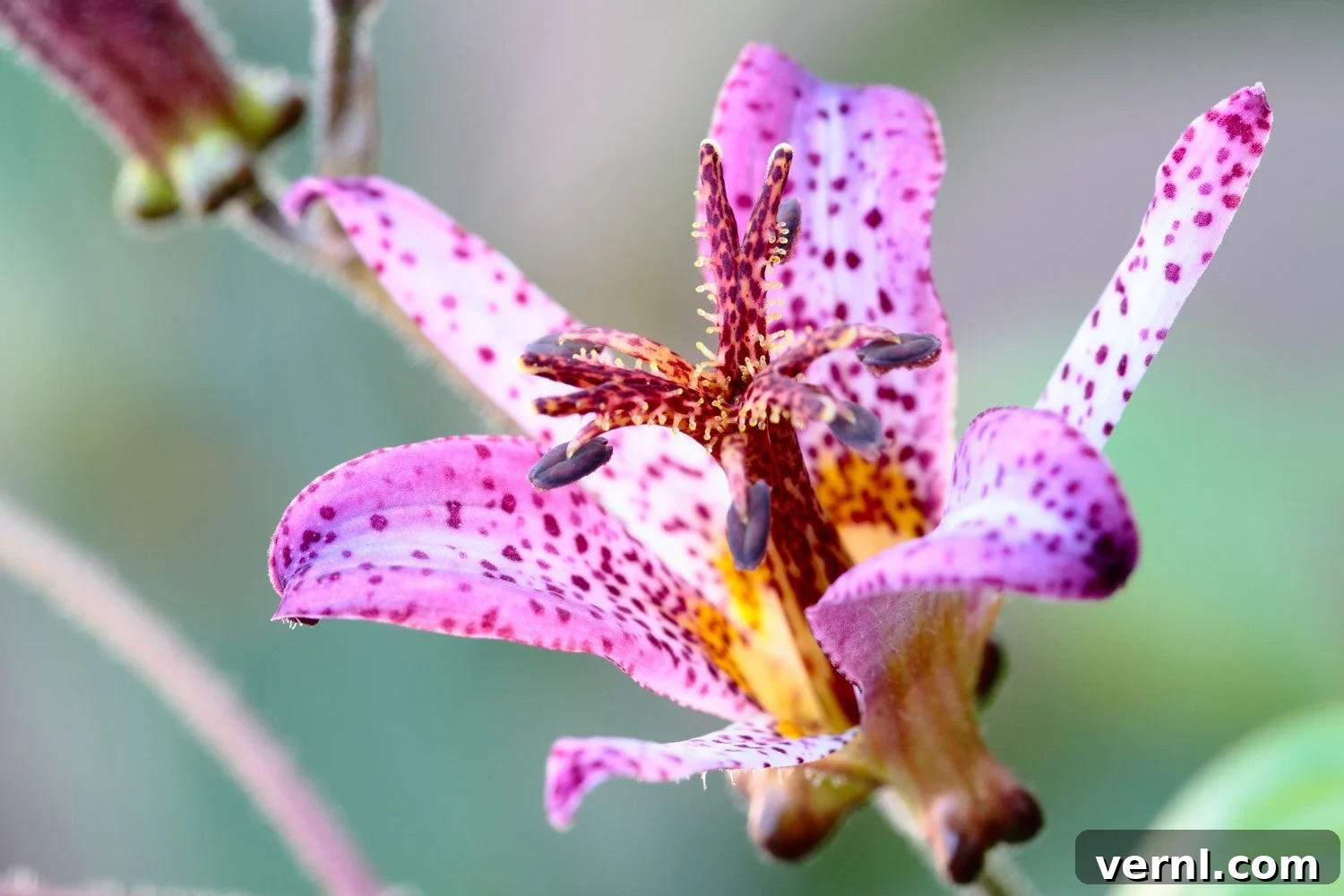
Toad Lilies: The Enchanting Orchid of the Shade Garden
Often overlooked due to their unusual name, toad lilies (Tricyrtis) are a true revelation for any gardener seeking late-season interest and an exotic touch. With their distinct six-petal blossoms, often adorned with intricate spots and resembling delicate orchids, these captivating flowers bring a surprising burst of beauty to shaded corners of the garden. They are an exceptional choice for areas that receive limited direct sunlight, as toad lilies absolutely thrive in the embrace of dappled light and cool, moist conditions.
My first encounter with a toad lily in full bloom left an indelible impression. A friend, describing it as “just an old toad lily,” had no idea she was introducing me to one of the most unique and mesmerizing flowers I had ever seen. Its exquisite patterns and unexpected elegance challenged my perception of typical garden blooms. Today, I am delighted to cultivate several of these “old toad lilies” in my own garden, each one a testament to their enduring charm. This comprehensive guide will provide you with all the essential knowledge to successfully plant, nurture, and enjoy these extraordinary perennials.
What Is a Toad Lily and Why Is It Unique?
Toad lilies are truly the secret stars of the autumn garden, unfurling their exquisite blooms when many other flowers begin to fade. These fascinating, shade-loving perennial flowers are native to the woodland floors of Japan and other parts of Eastern Asia, a heritage that explains their preference for cooler, shadier environments. Beyond their most common moniker, they are also widely known as Japanese toad lily or hairy toad lily, referring to their geographical origin and sometimes the slightly fuzzy texture of their stems or leaves.
Belonging to the esteemed lily family (Liliaceae), all toad lilies are classified under the plant genus Tricyrtis. What makes them particularly unique is their striking floral architecture. Most varieties showcase intricate, spotted flowers that bear a remarkable resemblance to miniature orchids. These blooms, typically appearing in late summer and continuing through fall, offer a sophisticated palette of white, purple, pink, and yellow hues, often embellished with contrasting spots or speckles. This distinctive appearance, combined with their ability to flourish in challenging shaded conditions, makes them an invaluable addition to any discerning gardener’s collection.
Exploring the Diverse Types of Toad Lilies
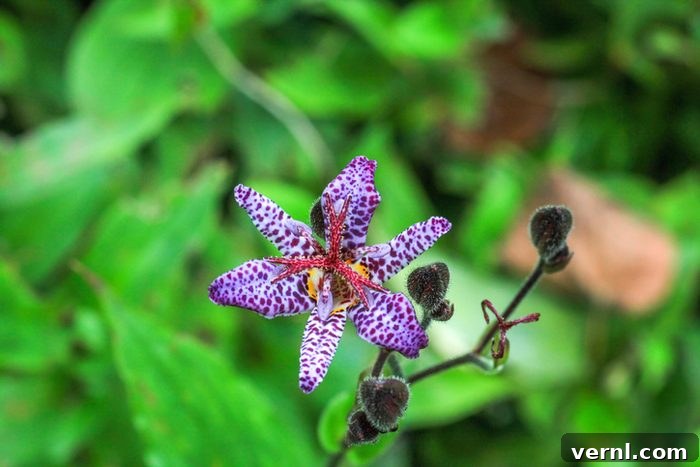
The genus Tricyrtis offers a wonderful array of choices, allowing gardeners to select varieties that best suit their aesthetic preferences and hardiness zones. While many share the characteristic orchid-like flowers, you’ll find variations in bloom color, spotting patterns, plant height, and even leaf variegation. Some varieties boast lush green foliage, while others present stunning variegated leaves that add visual interest even before the flowers emerge. Here are a few notable types that you might encounter and consider for your garden:
- Tricyrtis formosana: Renowned for its resilience, this variety is reliably hardy in U.S. Department of Agriculture Plant Hardiness Zones 4 through 9. It produces charming white flowers delicately adorned with purplish-red spots, creating a subtle yet captivating display. Its ability to tolerate a wider range of climates makes it a popular choice.
- Tricyrtis hirta: Often referred to as the Hairy Toad Lily, this species is hardy in Zones 4 through 8. It features elegant white flowers that are generously covered in deep purplish spots, giving it a dramatic and intricate appearance. The stems often have a slightly fuzzy texture, contributing to its common name.
- Tricyrtis formosana ‘Samurai’: A particularly striking cultivar, ‘Samurai’ is known for its beautiful purplish-blue flowers marked with vibrant red spots. What truly sets it apart are its attractive variegated leaves, which are tipped with a distinctive yellow-gold, providing year-round appeal. This specific variety thrives in Zones 5 through 9 and is a personal favorite in my own garden due to its exceptional visual interest.
- Tricyrtis ‘Imperial Banner’: This is a rarer and highly sought-after variety distinguished by its heavily variegated leaves, which provide a bold backdrop for its purple spotted flowers. While stunning, gardeners should be aware that ‘Imperial Banner’ can sometimes revert to producing all-green leaves over time. Hardy in Zones 6 through 8, this resilient plant has successfully thrived in my Zone 6a garden for many years, proving its hardiness and charm.
- Tricyrtis latifolia: Known for its broader leaves and sometimes earlier blooming period (late spring to early summer), this variety often features yellow or yellowish-green flowers with purple or brown spots. It adds a different hue to the toad lily palette.
- Tricyrtis macropoda: This species is appreciated for its vigorous growth and taller stature, often reaching up to 3 feet. It produces clusters of white or pale lavender flowers with purple spots, creating a cloud-like effect in the shade garden.
How To Plant Toad Lilies for Optimal Growth
Successfully planting toad lilies sets the stage for years of enchanting autumn blooms. Most toad lilies are available for purchase either as potted plants from local garden centers or as bare roots, especially when ordered online or through mail-order nurseries. While some online retailers do ship growing plants, bare roots are a common and effective way to establish new toad lily patches.
When selecting a planting site, prioritize a location with well-drained soil that consistently retains moisture without becoming waterlogged. Toad lilies abhor soggy conditions, which can lead to root rot, but they also resent drying out completely. An ideal soil composition would be rich in organic matter, helping to improve both drainage and moisture retention. A soil pH between 5.5 and 6.5 (slightly acidic to neutral) is generally preferred. Incorporate compost or other organic amendments into the planting hole to provide a nutrient-rich start.
Light conditions are crucial: toad lilies thrive in part-shade to full shade. This typically means an area that receives morning sun and afternoon shade, or dappled light throughout the day. In cooler climate zones (like USDA Zones 4-5), they can tolerate slightly more direct sun, particularly in the morning, as the sun’s intensity is less severe. However, in warmer zones (USDA Zones 7-9), ample shade, especially during the hot afternoon hours, is absolutely essential to prevent scorching of their delicate foliage and ensure vigorous blooming.
Planting methods differ slightly for potted plants versus bare roots. For potted plants, dig a hole twice as wide as the root ball and just as deep. Gently remove the plant from its container, loosen any circling roots, and place it in the hole so that the top of the root ball is level with the surrounding soil. For bare roots, create a small mound of soil in the center of the hole, spread the roots over it, and ensure the crown (where stems meet roots) is at or just below the soil surface. Backfill with enriched soil, gently firming it around the plant to remove air pockets. After planting, water thoroughly to settle the soil. To conserve moisture, suppress weeds, and help regulate soil temperature, apply a one- to two-inch layer of organic mulch, such as shredded leaves or bark, around the base of the plant, being careful not to pile it directly against the stems.
Consider spacing your toad lilies about 12 to 18 inches apart, depending on the mature size of the specific variety, to allow for good air circulation and future growth. They are excellent in woodland gardens, shaded borders, or even in containers on a shady patio, often pairing beautifully with other shade-lovers like hostas, ferns, and astilbes.
Essential Care Tips for Thriving Toad Lilies
Once established, toad lilies prove to be relatively low-maintenance plants, rewarding gardeners with their unique beauty with minimal fuss. However, a little consistent care, especially during their initial establishment, will ensure they flourish and become a beloved staple in your autumn garden.
Watering
Consistent moisture is key for toad lilies. They prefer evenly moist soil, particularly when newly planted, to help their root systems develop robustly. During their first growing season, do not allow the soil around newly planted toad lilies to dry out completely. Regular watering, perhaps two to three times a week depending on weather conditions, will be beneficial. Once established, typically after one full growing season, they become more tolerant of short dry periods during the summer, but prolonged drought can still stress the plants and impact flowering. It’s always best to check the soil moisture by feeling about an inch or two below the surface; if it feels dry, it’s time to water. Deep watering is preferred over frequent shallow watering, encouraging roots to grow deeper into the soil.
Fertilizing
Toad lilies are not heavy feeders. If your planting site was prepared with compost-enriched soil, they generally will not require additional fertilizer. The organic matter provides a slow release of nutrients that is usually sufficient for their needs. However, if your soil is particularly poor or you notice signs of nutrient deficiency (e.g., stunted growth, pale foliage), a light application of a balanced, slow-release granular fertilizer or a liquid feed diluted to half strength can be applied in early spring as new growth emerges. Avoid over-fertilizing, as this can lead to excessive foliage growth at the expense of flowers.
Pests and Diseases
One of the many joys of growing toad lilies is their general resistance to most common garden pests and diseases. In my experience, they have remained remarkably trouble-free. However, it’s wise to be aware of potential issues. According to the Wisconsin Horticulture, Division of Extension, slugs and snails can occasionally pose a problem, particularly in moist, shaded environments where they thrive. These nocturnal feeders may nibble on the leaves, leaving unsightly holes. Rabbits might also occasionally sample the foliage, especially on young plants. Fortunately, deer tend to leave toad lilies alone, making them a good choice for gardens in deer-prone areas.
If slugs or rabbits become an issue, several non-toxic and organic treatments can help deter them. For slugs, consider using iron phosphate baits, creating beer traps, or applying a barrier of diatomaceous earth or crushed eggshells around the plants. For rabbits, physical barriers like wire mesh fences can be effective, especially for vulnerable young plants. Repellent sprays can also be used, but often require reapplication after rain.
Regarding diseases, anthracnose leaf spot, a fungal disease, can occasionally affect toad lilies, particularly in overly humid conditions or when plants are overcrowded. To minimize the risk of infection, ensure good air circulation by providing adequate spacing between plants. Crucially, avoid watering with overhead sprinklers, which keep foliage wet for extended periods, creating an ideal environment for fungal spores. Instead, opt for a trickle of water applied directly to the soil around the base of the plant, or use drip irrigation or soaker hoses. This method not only prevents leaf wetness but also delivers water efficiently to the root zone.
Deadheading and Seasonal Pruning
Deadheading, the removal of spent flowers, is generally not a critical task for toad lilies. They continue blooming prolifically throughout late summer and fall, and their spent flowers often dry inconspicuously among the new buds. I personally don’t feel the need to deadhead my toad lilies, as their natural progression is quite charming. Once the growing season concludes and the foliage naturally dies back with the first hard frosts, you have a couple of options for winter care. Leaving the dead foliage standing through winter can provide some insulation for the crown of the plant, particularly in colder zones. Then, in early spring, before new growth begins to emerge, cut the old foliage back to the ground. Alternatively, if you prefer a tidier winter garden, you can cut the foliage off in early winter after it has completely died back. This can help reduce the potential for overwintering pests or diseases, though it may remove some of the natural winter protection.
Dividing for Health and Propagation
Toad lilies are clump-forming perennials, meaning they slowly expand outwards from their central crown over time. In optimal conditions where they are happily growing and thriving, they may eventually become large enough to warrant division. Dividing toad lilies is a beneficial practice that helps to rejuvenate older, less vigorous clumps, manage their size, and, of course, propagate new plants to expand your collection or share with fellow gardeners.
The best time to divide toad lilies is in early spring as new shoots begin to emerge, or in the fall after they have finished blooming but before the ground freezes solid. Here’s a simple guide to dividing them:
- Preparation: Water the plant thoroughly the day before you plan to divide it to ensure the root ball is moist and easier to work with.
- Dig Up the Plant: Carefully dig around the entire plant, starting a few inches away from the base to avoid damaging the root system. Use a sharp spade or digging fork to lift the entire clump from the ground.
- Divide the Clump: Gently tease apart the root ball into several sections. Each section should have a healthy portion of roots and at least one or two emerging “eyes” or growth points. For larger, denser clumps, you might need to use a sharp knife or a spade to cut through the root ball.
- Replant: Immediately replant the divisions in their desired new locations, following the same planting guidelines as for new potted plants or bare roots. Ensure they are planted at the same depth they were previously growing.
- Water and Mulch: Water the newly planted divisions generously and apply a layer of mulch to help them recover and establish.
Don’t forget the time-honored tradition of sharing extra divisions with other gardening enthusiasts – it’s a wonderful way to spread the beauty of toad lilies!
Why Is My Variegated Toad Lily Turning All Green?
If you’re growing a toad lily variety with beautifully variegated leaves, such as ‘Imperial Banner’ or ‘Samurai’, you might occasionally notice that some of its stems begin to produce entirely green leaves, losing their characteristic patterns. This phenomenon is known as “reversion.” It occurs because the green parts of a variegated plant often contain more chlorophyll, making them more efficient at photosynthesis. These all-green stems are often stronger and grow faster, enabling them to outcompete and eventually crowd out the more delicate stems with variegated leaves, potentially taking over the entire plant if left unchecked.
To maintain the stunning variegation of your toad lily, it is crucial to address reversion promptly. As soon as you spot any all-green leaves on individual stems, act quickly. Simply remove those stems by cutting them back to their point of origin on the main plant or to the ground. If the reversion is extensive, and you find that more stems are producing all-green leaves than variegated ones, you may need to dig up the entire plant. Once out of the ground, carefully separate the reverted all-green sections from the variegated sections. Replant only the variegated portions, discarding or relocating the green ones. This proactive approach ensures that your variegated toad lily retains its unique and desirable foliage patterns for years to come.
Frequently Asked Questions About Toad Lilies
When should I plant my toad lilies?
“Toad lilies are best planted in the early spring or fall to give their roots ample time to settle and establish before the demands of the growing season or the onset of winter,” advises plant expert Tammy Sons. “They prefer shady spots and are truly invaluable for adding a unique pop of color and texture to the garden in late summer and autumn.”
Are toad lilies beginner-friendly?
Generally, toad lilies are considered quite beginner-friendly, especially once they are established. Their low-maintenance nature and ability to thrive in shade make them a relatively forgiving plant. Sons comments that “while they might not be at the very top of my absolute beginner recommendations for someone just starting out, they are still pretty easy to grow with consistent moisture and a bit of attentive care during their initial establishment phase.”
How tall do toad lilies typically grow?
The mature height of toad lilies can vary significantly by species and cultivar. Most commonly grown varieties range from 18 to 36 inches tall, with some smaller types staying around 12 inches and taller ones reaching up to 4 feet. Always check the specific variety’s information for accurate height expectations.
Are toad lilies invasive?
No, toad lilies are not considered invasive. They are clump-forming perennials that spread slowly by rhizomes, gradually expanding their patch over time rather than aggressively colonizing an area. They are well-behaved plants that are easy to manage in the garden.
What are ideal companion plants for toad lilies?
Toad lilies pair beautifully with other shade-loving plants that complement their unique texture and late-season blooms. Excellent companions include hostas (for contrasting foliage), ferns (for texture and height), astilbes (for feathery plumes), hellebores (for early spring interest), and various shade-tolerant groundcovers like creeping phlox or lamium.
About the Expert
- Tammy Sons is a highly respected gardening and plant expert, and the founder and CEO of TN Nursery. Her business has a rich history, having been active in the nursery industry for over 60 years and spanning three generations. Tammy’s extensive knowledge is backed by her academic pursuits, having studied at both Harvard Business School and T.S.U. Horticulture.