
Your bedroom is more than just a room; it’s a personal sanctuary, a space dedicated to rest, rejuvenation, and comfort. While decorating tips abound, from making a small room feel larger to crafting a DIY headboard, or even integrating a home office, its most fundamental purpose remains sleep. A truly restful bedroom environment hinges on one crucial decision: the placement of your bed.
The strategic positioning of your bed is paramount to fostering healthy sleep habits and creating a harmonious living space. The right bed location not only enhances the room’s aesthetic appeal and flow but also profoundly impacts your comfort and sense of security, which are vital for a truly good night’s rest. Whether you’re embarking on a brand-new bedroom design project or simply looking to refresh your current layout, understanding the optimal and less-than-ideal spots for your bed can transform your sleeping experience. Below, we delve into expert advice on where to position your bed for ultimate comfort and style.
Why Your Bed’s Position Is Crucial for Sleep and Style
Among all the elements that define your bedroom layout, the location of your bed stands as the single most important decision. As the largest piece of furniture, its placement dictates the overall balance, flow, and energy of the entire space. Beyond aesthetics, where your bed sits directly influences your sleep quality and psychological well-being. Interior designer Alice Moszczynski emphasizes this, stating, “Your bed’s position can influence how safe, comfortable and relaxed you feel. A well-placed bed creates a sense of grounding and minimizes disturbances.” A bed that feels stable and secure allows your mind to unwind, paving the way for deeper, more restorative sleep.
Consider the practical implications: easy navigation around the room, access to nightstands, and the overall visual harmony. A poorly placed bed can make a room feel cramped, awkward, or even unsettling, subtly impacting your comfort level. Conversely, a thoughtfully positioned bed can transform your bedroom into a true haven, promoting relaxation from the moment you step inside.
The Best Places to Position Your Bed for Optimal Comfort and Flow
Against a Solid Blank Wall
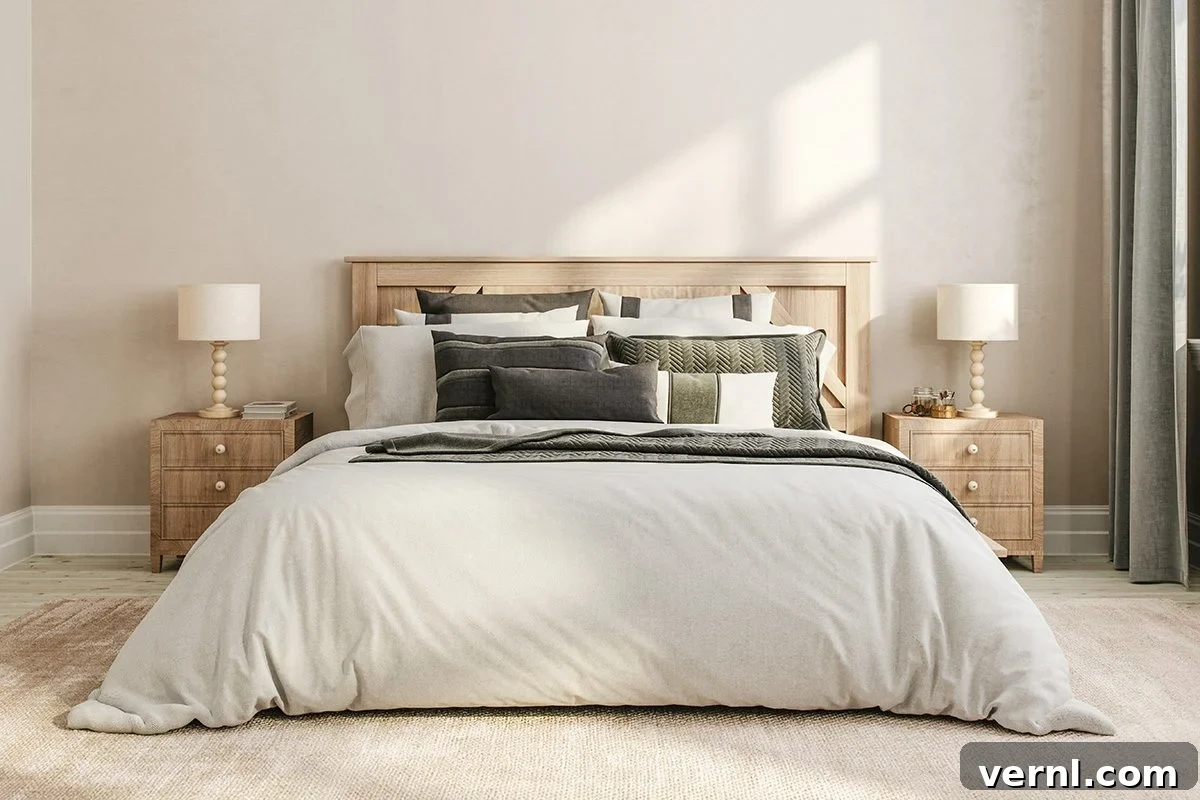
The most intuitive and often the most effective position for your bed is flush against a solid, blank wall. This placement provides a crucial sense of psychological and physical support. Interior designer Angie Kreller explains, “Ideally, your bed should sit flush against a wall for that ‘back support feeling.'” This provides a feeling of security, much like having a strong foundation behind you, which can significantly contribute to a restful night’s sleep.
Centering your bed on the largest uninterrupted wall in the bedroom grounds the bed within the space, making it feel intentional and stable. This also creates a natural focal point for the room. If the wall is expansive enough, flanking the headboard with two nightstands and symmetrical lighting (like matching lamps) enhances visual balance and provides convenient surfaces for bedside essentials. This setup promotes a feeling of order and tranquility, allowing your eye to settle on the primary element of the room without distraction. Moreover, a solid wall acts as a buffer against noise and drafts, further ensuring an undisturbed sleep environment.
Embracing Feng Shui’s “Command Position”
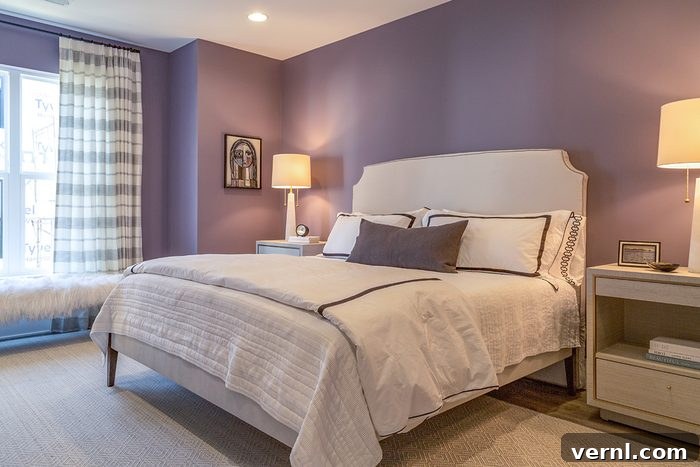
For those who embrace the principles of Feng Shui, the ancient Chinese practice of arranging living spaces to optimize energy flow and promote harmony, the “command position” is paramount for bed placement. This philosophy emphasizes how your surroundings influence your well-being, including your sleep. According to interior designer Alice Moszczynski, “From a Feng Shui perspective, placing the bed diagonally across from the door, but not directly in line with it, is known as the command position, which promotes calmness and restful sleep.”
The command position offers a sense of control and security, as you can see the door without being directly in its path. This allows you to perceive anyone entering the room, reducing subconscious anxiety and promoting a feeling of safety. When your bed is not directly aligned with the door, the energy (Qi) in the room can flow more smoothly around you, rather than directly at you, which is believed to contribute to a more restful and balanced sleep. This strategic placement helps you feel grounded, protected, and in command of your personal space, fostering an environment conducive to deep relaxation and rejuvenation.
Prioritizing Your Personal Preference
Ultimately, your bedroom should serve as a personal sanctuary, a space where you feel most at ease. Therefore, while design rules and ancient practices offer valuable guidance, the best bed position often comes down to your unique personal preference. It is perfectly acceptable to deviate from conventional design aesthetics if a particular layout makes you feel more comfortable and relaxed.
Angie Kreller wisely advises, “The best spot to put your bed doesn’t have to come down to what looks the best aesthetically. I like to think that the ideal place to put your bed will be somewhere in the room that you feel relaxed and comfortable.” This highlights the subjective nature of comfort. If you find yourself gravitating towards a corner, or feeling more grounded with your bed centered on a particular wall, or even positioned differently than “standard,” embrace that feeling. Experiment with different layouts, spend some time in each arrangement, and listen to what truly resonates with your sense of calm. The most important aspect is creating a space that genuinely feels like home to you, promoting personal well-being and a peaceful night’s sleep.
Worst Places to Position Your Bed and How to Fix Them
Under the Window
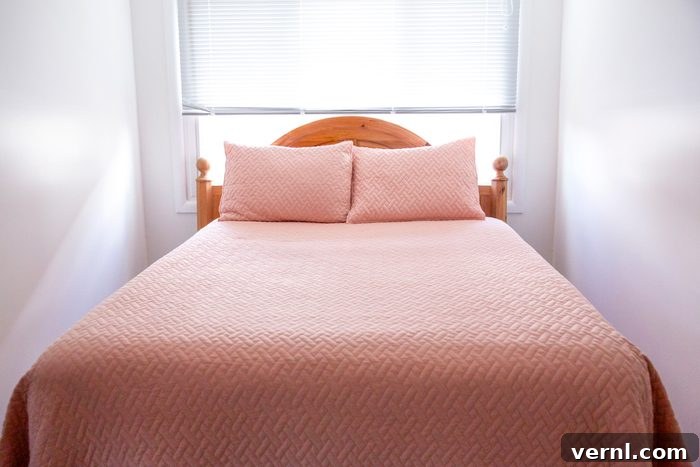
If at all possible, avoid placing your bed directly under a window. This position presents several challenges that can disrupt your sleep and diminish the room’s aesthetic harmony. Angie Kreller notes, “Directly under a window there won’t be any support, and the natural lighting or drafts from the window can disrupt your sleep.” The lack of a solid wall behind the headboard can create a subconscious feeling of vulnerability and instability, which is not conducive to deep relaxation. Furthermore, fluctuating temperatures from drafts, external noises, and early morning light can frequently interrupt your sleep cycle. Aesthetically, a headboard under a window can block natural light, obscure the view, and create a cluttered appearance.
How to Make It Work: If placing your bed in front of a window is your only viable option due to room constraints, strategic choices can mitigate its drawbacks. Opt for a low-profile headboard or even no headboard to minimize obstruction of the window. Select streamlined window treatments such as blackout roller blinds, Roman shades, or thick drapes that can effectively block light and drafts. Use artwork, shelves, or other furniture pieces on adjacent walls to draw attention away from the window and create a more balanced, intentional look. Ensuring the window is well-sealed can also help with temperature and noise control.
Directly Across From the Door
Positioning your bed directly in line with the bedroom door, so that if you were to walk straight through the door, you would hit the foot of your bed, is generally considered undesirable. This layout can trigger a subconscious feeling of exposure and restlessness, as you lack a sense of control over who might enter the room or what might be happening outside. Instead, you should be able to *see* your bedroom door from the bed, but not be in its direct path.
From a Feng Shui perspective, this is often referred to as the “coffin position.” Alice Moszczynski explains, “Placing the bed in direct line with the door can make you feel exposed and restless. In Feng Shui, this is also called the coffin position, which is believed to disrupt restful energy.” This alignment is thought to expose you to the full force of energy flowing into the room, making it harder to feel secure and encouraging disturbed sleep. The feeling of vulnerability can prevent true relaxation and a deep sense of peace.
How to Make It Work: To mitigate the negative effects of a bed positioned directly across from the door, introduce a visual and physical barrier. Adding a sturdy footboard to your bed can provide a sense of enclosure and protection. Alternatively, a piece of furniture such as a bench at the foot of your bed, a low bookshelf, or even a decorative room divider can effectively break the direct line of sight and create a more secure feeling. These elements act as a buffer, preventing the direct flow of energy and offering a perceived boundary that enhances your sense of safety and calm.
Diagonally in the Corner
While some might be tempted to place a bed diagonally in a corner, hoping it will open up the room or create a unique aesthetic, this layout often backfires. Such a position typically leads to awkward room flow, creates inconvenient unused spaces behind the headboard, and makes the room feel less balanced rather than more spacious. The angles can be difficult to work with for accompanying furniture like nightstands, and making the bed itself can become a chore.
Alice Moszczynski advises, “Centering the bed on the longest uninterrupted wall helps the room feel more open and symmetrical. Avoid tucking the bed into a corner unless you’re working with a very small footprint.” Diagonal placement disrupts the natural lines of a rectangular or square room, making it feel disjointed and visually cluttered. The “nook” created behind the headboard often becomes a dust trap or wasted space that is difficult to utilize effectively.
How to Make It Work: For exceptionally small or uniquely shaped rooms where placing the bed diagonally in a corner is unavoidable, creative solutions can transform this challenging spot into a design feature. Consider using a large, custom-built headboard or a decorative screen behind the bed. This strategy helps to anchor the bed and transform the awkward corner into an intentional focal point. A built-in corner unit or shelves can also utilize the space behind the bed, turning a wasted area into functional storage or display. Ensure surrounding furniture is kept minimal and follows the room’s natural lines to maintain as much flow as possible.
Frequently Asked Questions About Bed Placement
How much space should you leave around a bed?
To ensure comfortable movement and prevent your bedroom from feeling visually cluttered, it’s essential to leave adequate space around your bed. Angie Kreller recommends, “To give you enough space around the bed, so it doesn’t look visually cluttered or make you feel closed in, try and leave 15 to 30 inches of space on all sides.” This not only facilitates easy navigation around the bed, allowing you to get in and out comfortably and access nightstands, but also prevents the overall space from feeling cramped or overwhelming. Sufficient clearance also makes cleaning easier and enhances the room’s airy, open feel.
Can bed placement affect sleep quality?
Absolutely, bed placement can significantly impact your sleep quality, both positively and negatively. Alice Moszczynski confirms, “Sleeping with your head near noise sources, direct light or in an exposed position can make it harder to fall or stay asleep.” A well-placed bed contributes to a serene and comforting bedroom environment, which is crucial for restorative sleep. Conversely, a bed positioned in a high-traffic area, under a window allowing light and drafts, or in a spot that feels vulnerable can lead to restlessness, difficulty falling asleep, and frequent awakenings. Your bedroom’s decor and layout, particularly the bed’s location, should prioritize tranquility and a sense of security.
What bed position makes a room look biggest?
The optimal placement for a bed to make a room appear larger is typically against the longest uninterrupted wall, centered. Angie Kreller advises, “This will give you enough space to highlight the layout of the room, and won’t be visually overwhelming. Not only will it make the room look bigger, but it will make the space easier to navigate and give it a more natural flow.” By centralizing the bed on the largest wall, you create a clear path around the room, reducing visual clutter and allowing the eye to perceive the full dimensions of the space. This symmetrical arrangement offers a sense of order and spaciousness, making the room feel more open and inviting.
Is it okay to put a bed in front of a window if I don’t have other options?
While generally advised against, if placing your bed in front of a window is your only practical option due to room size or layout, it can be made to work. The key is to minimize the potential drawbacks. Opt for a low-profile headboard or no headboard at all to avoid blocking light and views excessively. Invest in high-quality, opaque window treatments like blackout blinds or thick drapes to control light and temperature fluctuations. Ensure the window is well-sealed to prevent drafts and noise. Complementary furniture and decor on adjacent walls can help balance the room and draw attention away from the window-bed arrangement, creating a more cohesive and intentional design.
About the Experts
- Alice Moszczynski is an Interior Designer at Planner 5D, where she is dedicated to creating transformative spaces for her clients. Alice brings extensive experience, having worked under acclaimed architects and designers such as Groves & Co, Thom Filicia, and Sandra Nunnerley in New York. She holds a degree in Interior Architecture from the Rhode Island School of Design and is NCIDQ certified, ensuring professional excellence in her design approach.
- Angielique (Angie) Krelller is an interior designer at Yabby, guided by a design philosophy centered on creating spaces that are not only visually appealing but also exquisitely functional. Angie is a Bachelor of Interior Design Graduate with a keen interest in both commercial and residential projects, focusing on practical design solutions and seamless implementation.
Related Reading for Your Bedroom Inspiration
- 7 Signs You’re Over-Decorating
- 18 Cheap Decor Ideas That Look Expensive
- 14 Traditional-Style Home Decor Ideas That are Still Cool