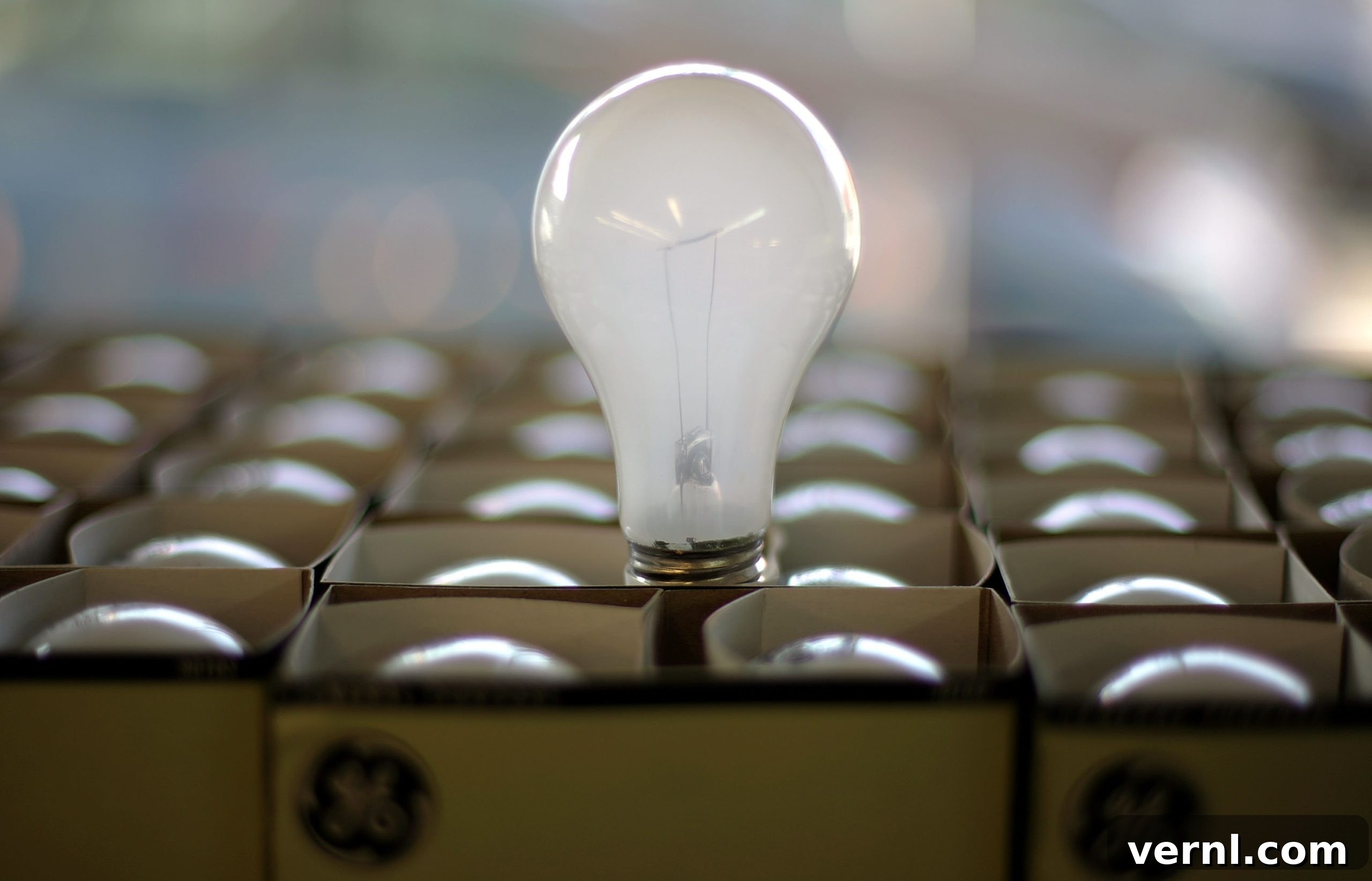
The End of an Era: Why Incandescent Light Bulbs Are Phasing Out and What It Means for You
For over a century, the warm glow of the incandescent light bulb has been a ubiquitous feature in homes and businesses worldwide. While Thomas Edison may not have been the sole inventor, his critical improvements in 1879 transformed early prototypes into a commercially viable product, setting the global standard for illumination. Yet, after more than 140 years, this iconic technology is finally fading into history, making way for a new era of energy-efficient lighting.
A significant shift began on August 1, 2023, when new regulations from the U.S. Department of Energy (DOE) officially came into effect. These updated rules effectively halted the manufacture and sale of most traditional incandescent light bulbs, marking a monumental step towards greater energy conservation across the nation. This change isn’t merely about retiring an old technology; it’s about embracing a future that is brighter, greener, and more cost-effective for consumers.
To fully grasp the implications of these new standards, it’s helpful to understand how an incandescent bulb operates. At its core, an incandescent bulb contains a thin filament, typically made of tungsten, encased within a gas-filled glass bulb. When an electric current passes through this filament, its high resistance causes it to heat up intensely, glowing brightly and emitting light. However, this process is remarkably inefficient. A staggering 95% of the electricity consumed by an incandescent bulb is converted into heat, with only a mere 5% actually producing visible light. This inherent inefficiency is the fundamental reason behind the federal government’s decision to usher in a new era of lighting technology.
The new DOE standard mandates that all general-service light bulbs must produce a minimum of 45 lumens per watt. A lumen is the standard unit used to measure the total amount of visible light emitted by a source. To put this into perspective, traditional incandescent bulbs typically yield a modest 12 to 18 lumens per watt. This means they fall significantly short of the new efficiency benchmark. Beyond incandescents, some other less efficient lighting types, including certain halogen bulbs, also fail to meet these stringent new requirements, pushing the market further towards truly sustainable lighting solutions.
Why Are Incandescent Light Bulbs Being Phased Out?
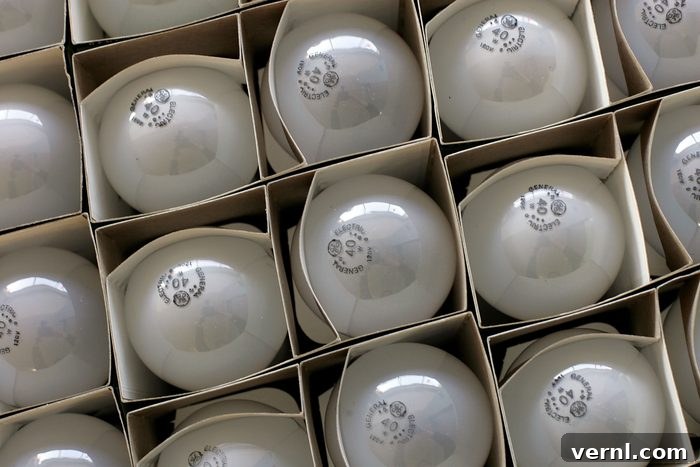
It’s crucial to clarify that the federal government isn’t enacting an outright “ban” on incandescent light bulbs in the traditional sense. Instead, it’s establishing ambitious efficiency standards that, by their very nature, make the continued production and sale of most incandescent bulbs economically and legally unviable. This strategic approach focuses on promoting innovation and market transformation rather than an outright prohibition, allowing consumers to benefit from more advanced lighting options.
The economic rationale behind these new standards is compelling. The DOE estimates that transitioning to more efficient lighting will collectively save Americans approximately $3 billion on their utility bills each year. Over the next three decades, these savings are projected to accumulate into hundreds of billions of dollars, providing a significant financial boon for households and businesses alike. This monumental shift not only puts more money back into consumers’ pockets but also reduces the strain on national power grids, contributing to greater energy security and stability.
These new regulations are the culmination of a persistent, bipartisan effort spanning multiple presidential administrations, all working towards the common goal of greater lighting efficiency. The journey began with the Energy Independence and Security Act of 2007, enacted during the George W. Bush Administration, which called for a 25% increase in efficiency for general household light bulbs. The Obama Administration subsequently introduced regulations that aimed to phase out incandescent bulbs by 2020. However, these efforts faced political hurdles and were ultimately blocked by the Trump Administration. Undeterred, President Joe Biden revived and finalized the initiative in 2022, ensuring that the nation would finally move forward with these vital energy efficiency improvements.
Beyond the immediate financial benefits for consumers, the environmental impact of these new efficiency standards is profound. The DOE projects that this transition will cut carbon dioxide emissions by an astounding 222 million metric tons over the next 30 years. To put this figure into perspective, it’s equivalent to the annual emissions of approximately 28 million homes, or taking nearly 50 million cars off the road. This significant reduction in greenhouse gas emissions is a critical step in combating climate change, reducing air pollution, and fostering a healthier planet for future generations. The shift away from incandescent bulbs is therefore not just an energy policy; it’s a vital environmental policy.
Is It Still Legal to Use Incandescent Bulbs You Already Own?
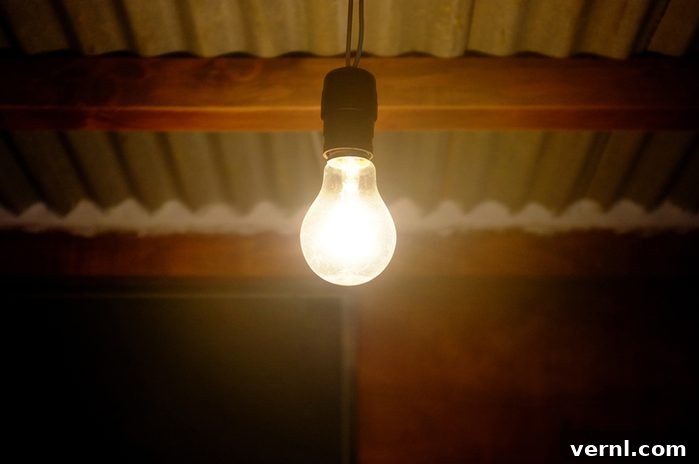
Absolutely, yes. There’s no federal agent or “light bulb police” coming to your home to confiscate your existing incandescent bulbs. The new rules primarily target the manufacturing and sale of inefficient bulbs, not their use. If you currently have incandescent bulbs in your light fixtures, you are perfectly within your rights to continue using them until they eventually burn out. Even then, you can legally replace them with any incandescent bulbs you might have stockpiled in your closet or garage. The key takeaway is simple: you just can’t purchase new general-service incandescent bulbs from retailers anymore.
Furthermore, the new regulations include specific exemptions for certain types of specialty incandescent bulbs that serve unique functions where energy efficiency might be less critical or alternatives are not yet widely available. These exemptions cover bulbs designed for specific appliances, such as those found in refrigerators, ovens, and range hoods. The rules also permit the continued sale of bulbs for specialized applications like heat lamps, infrared lamps, and bug lights, which operate on different principles or fulfill niche requirements. Decorative bulbs and certain reflector lamps may also fall under these exemptions, ensuring that consumers still have options for highly specialized lighting needs.
It’s also important to note that these current DOE rules do not affect the sale or use of fluorescent or compact fluorescent (CFL) bulbs. However, the landscape of lighting efficiency is constantly evolving. Should the DOE decide to increase efficiency requirements further, perhaps to 120 lumens per watt, it’s highly probable that CFLs would also fail to meet the new threshold, potentially leading to their eventual phase-out as well. This ongoing drive for efficiency mirrors global trends, with countries like the United Kingdom already having phased out incandescents, halogens, and CFLs, and preparing to do the same for fluorescent tubes in late 2023. While energy efficiency is a primary motivator for these international efforts, concerns over the mercury content in fluorescent bulbs also play a significant role in their gradual elimination.
What Are The Best Modern Light Bulb Alternatives?
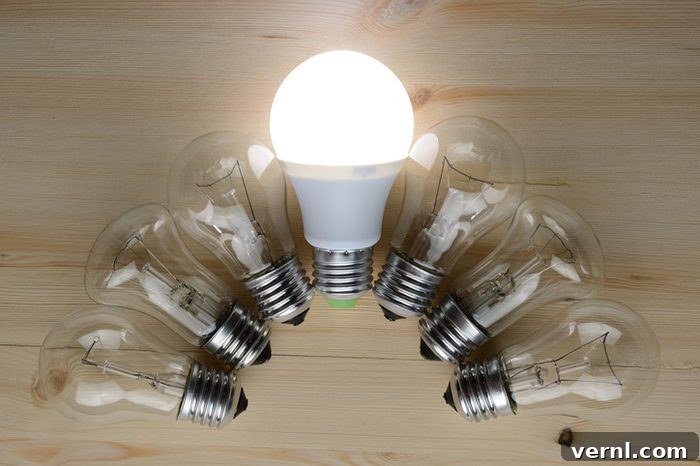
As incandescent bulbs recede into history, consumers are presented with a wide array of highly efficient and advanced lighting options. Currently, the primary alternatives to incandescent bulbs include CFLs (Compact Fluorescent Lamps), some specialized high-efficiency halogen bulbs, and most notably, LED (Light Emitting Diode) bulbs. All of these modern alternatives are readily available with the same familiar Edison screw bases, ensuring compatibility with your existing light fixtures. With very few exceptions, you can easily swap out an incandescent bulb for a new, energy-efficient counterpart.
LED Bulbs: The Ultimate Lighting Solution
Among all the available alternatives, LED bulbs stand out as the superior choice, offering an unparalleled combination of energy efficiency, longevity, and versatility. LEDs consume significantly less energy than any other bulb type on the market – often up to 80-90% less than incandescents – leading to substantial long-term savings on electricity bills. Furthermore, LED bulbs boast an incredibly long lifespan, typically lasting 15 to 25 times longer than incandescents. This means fewer replacements, less waste, and greater convenience for homeowners. The minimal heat radiated by an LED bulb is negligible compared to the considerable heat generated by an incandescent, making them safer and more efficient.
Early LED bulbs, while promising, did present a few challenges that manufacturers have largely overcome. Initial versions were often not dimmable, limiting their application in certain fixtures. However, today, the vast majority of contemporary LED bulbs are fully dimmable, offering seamless integration with existing dimmer switches and allowing for adaptable ambient lighting. Another common complaint was the perceived harshness or glaring quality of light from older LEDs. Thankfully, modern technology has vastly improved. Today, you can find LEDs in an extensive range of color temperatures, from warm, inviting soft whites (around 2700K) that mimic the glow of an incandescent, to cool, crisp daylight (5000K-6500K) ideal for task lighting, and everything in between. This broad spectrum ensures there’s an LED bulb to suit every mood, décor, and functional requirement.
The innovation doesn’t stop there. Recent advancements have introduced “smart” LED bulbs that offer unprecedented levels of control and customization. These technologically advanced bulbs can be controlled remotely via smartphone apps, allowing you to turn lights on or off, adjust brightness, and even change colors from anywhere. Many smart LEDs integrate seamlessly with popular smart home systems like Amazon Alexa, Google Assistant, and Apple HomeKit, enabling voice control and automated lighting routines. This level of sophistication transforms home lighting from a mere utility into an integral part of a modern, connected living space.
Other Alternatives: Halogens and CFLs
While LEDs are the frontrunner, it’s worth briefly touching upon other options. High-efficiency halogen bulbs, which were a transitional technology, offered some improvements over traditional incandescents but still fall short of the new DOE standards and are being phased out alongside them. CFLs, or Compact Fluorescent Lamps, were once considered a primary energy-saving alternative. They offer better efficiency than incandescents and a longer lifespan. However, CFLs contain small amounts of mercury, which poses disposal challenges, and they often take time to reach full brightness. With the superior performance and environmental benefits of LEDs, CFLs are also seeing a decline in market share and are facing phase-outs in many regions globally, primarily due to mercury concerns.
Making the Switch: Practical Tips for Homeowners
Embracing LED lighting is a straightforward process, but a few considerations can help you make the best choices for your home:
- Lumens, Not Watts: Forget the old wattage equivalencies. When choosing an LED, focus on lumens for brightness. For example, a 60-watt incandescent is equivalent to about 800 lumens in an LED bulb.
- Color Temperature (Kelvin): Decide on the ambiance you want. Lower Kelvin (e.g., 2700K-3000K) provides a warm, yellowish light ideal for living rooms and bedrooms. Higher Kelvin (e.g., 4000K-5000K) produces a cooler, bluer light suitable for kitchens, bathrooms, or workspaces.
- Dimmability: If you plan to use an LED bulb with a dimmer switch, ensure the packaging explicitly states it is dimmable. Some older dimmer switches might also need to be replaced with LED-compatible versions for optimal performance.
- Form Factor and Base Type: Most LEDs are designed to fit standard sockets (Edison screw bases like E26/E27), but check for specialty shapes or base types if you have unique fixtures.
- Cost vs. Savings: While LEDs have a higher upfront cost than incandescents, their extended lifespan and significantly lower energy consumption result in substantial savings over time, quickly recouping the initial investment.
The Future of Lighting: Beyond the Incandescent
The departure of the incandescent bulb marks not an end, but a remarkable new beginning for lighting technology. As LEDs continue to evolve, we can anticipate even greater efficiencies, more dynamic control, and further integration into our daily lives. Emerging technologies such as OLED (Organic Light Emitting Diode) panels promise ultra-thin, flexible lighting surfaces, while Li-Fi (Light Fidelity) hints at a future where light not only illuminates but also transmits high-speed data. The move away from incandescents is a testament to humanity’s ongoing pursuit of innovation and sustainability, paving the way for a future where lighting is not only efficient but also intelligent, adaptive, and seamlessly woven into the fabric of our smart homes and cities.
As incandescents finally fade into history, it’s highly unlikely that anyone will mourn their absence for long. The era of inefficient, heat-generating bulbs is over, replaced by a new standard of illumination that is brighter, smarter, and far more sustainable for both our wallets and our planet.