
Mastering Lawn Mower Oil Changes: A Comprehensive DIY Guide for Peak Performance
A well-maintained lawn mower is the cornerstone of a beautiful yard. Just like any other engine, your lawn mower’s engine relies on clean, fresh oil to run smoothly, efficiently, and for many seasons to come. Neglecting regular oil changes can lead to severe engine damage, reduced performance, and costly repairs. Fortunately, changing the oil in your lawn mower is a straightforward DIY task that anyone can tackle with the right guidance and tools.
In this comprehensive guide, we’ll walk you through everything you need to know about changing your lawn mower oil, from understanding its importance and identifying the right time for a change, to a detailed, step-by-step process. We’ll also cover essential tips for choosing the correct oil and offer additional maintenance advice to ensure your mower stays in top condition. Get ready to empower yourself with the knowledge to extend the life of your valuable garden equipment!
Why Regular Oil Changes Are Crucial for Your Lawn Mower
Think of engine oil as the lifeblood of your lawn mower. It performs several critical functions that are essential for the engine’s health and longevity:
- Lubrication: Oil reduces friction between moving parts like pistons, crankshafts, and connecting rods. Without proper lubrication, these components would grind against each other, leading to excessive wear and eventual engine failure.
- Cooling: As the engine operates, it generates a tremendous amount of heat. Oil helps dissipate this heat away from critical components, preventing overheating and thermal damage.
- Cleaning: Over time, combustion byproducts, dirt, and microscopic metal particles can accumulate in the engine. Oil circulates and picks up these contaminants, holding them in suspension until the oil is changed.
- Sealing: Oil helps create a seal between the piston rings and cylinder walls, which is vital for maintaining proper compression and maximizing engine power.
- Corrosion Protection: Modern engine oils contain additives that protect internal engine components from rust and corrosion, especially during periods of inactivity.
When oil becomes old, it loses its viscosity, breaks down, and becomes saturated with contaminants. This significantly diminishes its ability to lubricate, cool, and clean, putting your engine at serious risk. Regular oil changes ensure these vital functions are always performed at their peak.
When to Change Your Lawn Mower Oil: Timing is Everything
Knowing when to change your lawn mower oil is just as important as knowing how. Most manufacturers provide specific recommendations in your owner’s manual, which should always be your primary reference. However, general guidelines can help you stay on track:
- After the First 5 Hours of Use: For brand new lawn mowers, a crucial first oil change is recommended after the initial 5 hours of operation. This is because new engines often produce small metal shavings during the “break-in” period, which need to be flushed out to prevent premature wear.
- Annually or Every 25-50 Hours of Use: For subsequent oil changes, a common recommendation is to change the oil once a year, preferably at the beginning of the mowing season, or every 25 to 50 hours of operation, whichever comes first. If you keep track of your mowing hours, this is the most accurate way to schedule changes.
- Heavy Use Conditions: If you use your lawn mower frequently, for long durations, or in dusty and demanding conditions, you might need to change the oil more often. Consider the environment your mower operates in.
- Visible Signs of Degradation: Always check your oil level and condition before each use. If the oil on the dipstick appears very dark, murky, or has a strong burnt smell, it’s a clear indicator that it needs to be changed, regardless of the hours or time elapsed.
Making a note of when you last changed the oil can be incredibly helpful. Some people even put a sticker on the engine with the date and hours for easy reference.
Tools and Materials You’ll Need for an Oil Change
Before you begin, gather all the necessary tools and materials. Having everything ready will make the process smooth and efficient:
- New Engine Oil: Refer to your owner’s manual for the correct type and viscosity (e.g., SAE 30, 10W-30, synthetic). Ensure you have the right amount, usually around 15-20 ounces for most walk-behind mowers.
- Oil Drain Pan: A wide, low-profile pan specifically designed for draining oil.
- Ratchet and Socket Set: To remove the oil drain plug (if applicable) and potentially the spark plug.
- Wrench (Adjustable or Open-End): If your mower has a hexagonal drain plug or oil fill cap.
- Funnel: To neatly pour new oil into the engine without spills.
- Rags or Shop Towels: For cleaning up spills and wiping parts.
- Gloves: To protect your hands from oil and dirt.
- Safety Glasses: Always recommended when working with machinery.
- Plastic Bag or Container: For disposing of the old oil filter, if your mower has one.
- Wheel Chocks or Blocks: To stabilize the mower if you need to tip it.
- Spark Plug Wrench (Optional but Recommended): For disconnecting the spark plug wire.
- New Oil Filter (If Applicable): Some riding mowers and higher-end push mowers have oil filters that should be replaced with the oil.
Step-by-Step Guide: How to Change Your Lawn Mower Oil
Now that you have your supplies, let’s get started. Follow these steps carefully for a successful oil change:
1. Preparation and Safety First
Safety is paramount when working on any machinery. Always prioritize it.
- Run the Engine Briefly: Start the mower and let it run for 5-10 minutes. Warm oil drains more completely and quickly than cold oil. However, don’t let it get too hot to handle.
- Disconnect the Spark Plug: This is a critical safety step to prevent accidental starting while you’re working on the mower. Locate the spark plug, twist and pull the rubber boot and wire off the top of the spark plug. Secure the wire away from the plug.
- Position the Mower: Move your mower to a flat, level surface, preferably on concrete or pavement, where any spills can be easily cleaned. Lay down newspapers or cardboard for extra protection.
- Clean Around the Oil Fill/Dipstick: Wipe away any dirt or debris from around the oil fill cap/dipstick area to prevent contaminants from entering the engine when you add new oil.
2. Draining the Old Oil
This is where things get a little messy, so have your oil drain pan ready.
- Locate the Drain Plug: Most walk-behind mowers don’t have a traditional drain plug at the bottom like a car. Instead, you’ll typically drain the oil by tipping the mower and letting it flow out of the oil fill tube. Some mowers might have a drain plug, often a bolt near the bottom of the engine block or a yellow cap/spout. Consult your manual if unsure.
- Place the Drain Pan: Position your oil drain pan directly beneath the drain point. If tipping the mower, place the pan strategically to catch all the oil as it pours out.
- Remove the Oil Fill Cap/Dipstick: Unscrew the oil fill cap or pull out the dipstick. This creates a vent, allowing the oil to drain more freely.
- Drain the Oil:
- If tipping: Carefully tilt the mower on its side, ensuring the carburetor and air filter are facing upwards to prevent fuel or oil from leaking into them. Let all the old oil drain completely into the pan. This usually takes 5-10 minutes.
- If using a drain plug: Use a wrench or socket to carefully remove the drain plug. Be prepared for the oil to come out quickly.
- Replace Drain Plug (If Applicable): Once the oil has fully drained, replace the drain plug and tighten it securely. Do not overtighten, as this can strip the threads.
- Check/Replace Oil Filter (If Applicable): If your mower has an oil filter, unscrew the old filter, clean the mounting surface, apply a thin film of new oil to the gasket of the new filter, and screw it on hand-tight until the gasket makes contact, then turn an additional 1/4 to 1/2 turn.
3. Adding New Oil
With the old oil drained, it’s time to replenish your engine with fresh lubricant.
- Return Mower to Level Position: Ensure the mower is back on a flat, level surface before adding new oil.
- Insert Funnel: Place a clean funnel into the oil fill tube.
- Pour New Oil: Slowly pour the recommended amount and type of new engine oil into the fill tube. Refer to your owner’s manual for the exact capacity. For most push mowers, this is typically around 15 to 20 ounces.
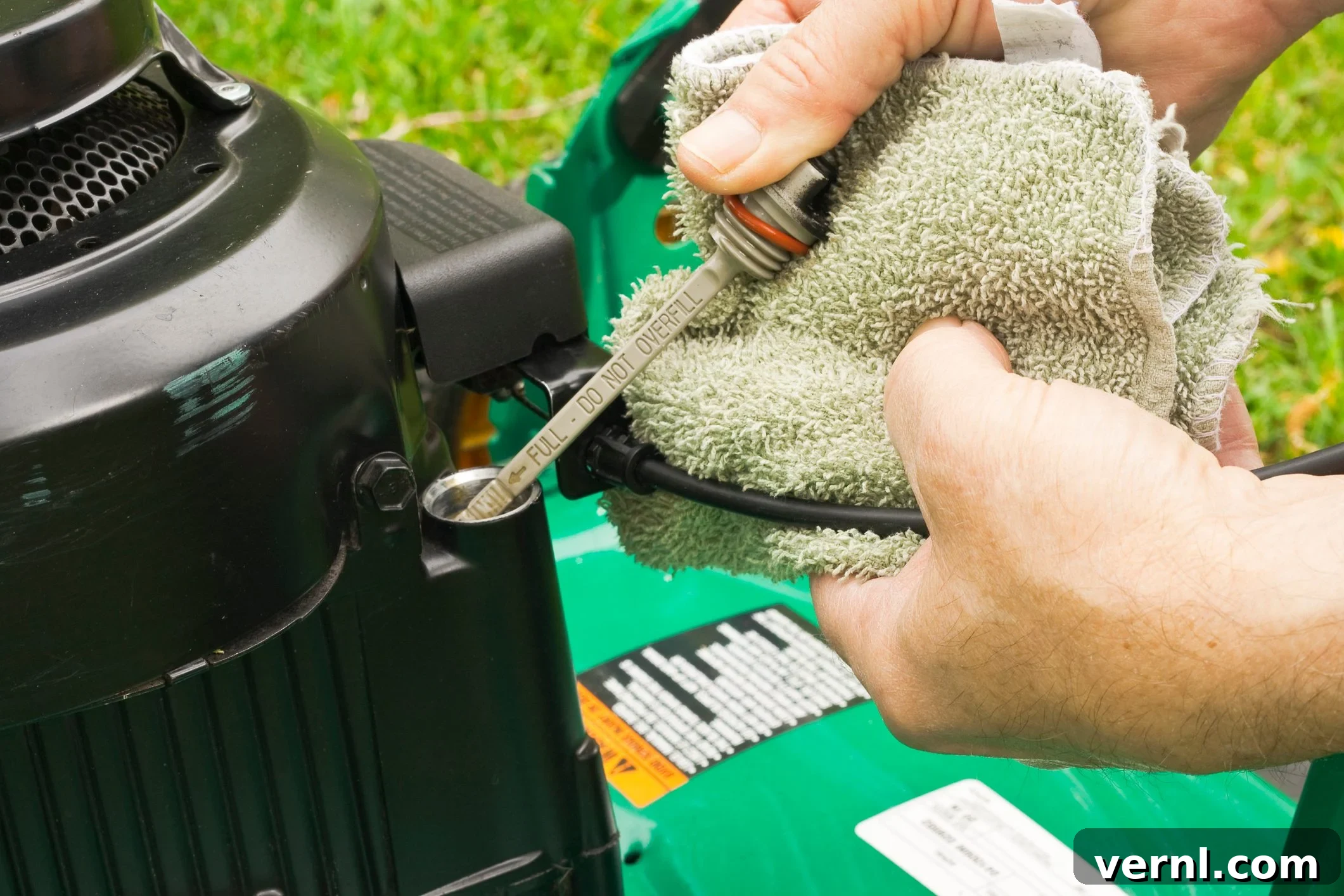
- Check Oil Level: After pouring in most of the oil, remove the funnel and insert the dipstick (without screwing it in if it’s a screw-in type, or screw it in fully then remove if that’s what your manual specifies). Pull it out, wipe it clean, reinsert it, and then check the oil level. It should fall within the “Full” or “Safe” range marks on the dipstick. Add more oil gradually, checking the level frequently, until it’s at the correct mark. Be careful not to overfill.
- Replace Oil Fill Cap/Dipstick: Once the oil level is correct, securely replace the oil fill cap or reinsert and tighten the dipstick.
4. Final Checks and Cleanup
Almost done! A few final steps will ensure everything is in order.
- Reconnect Spark Plug: Push the spark plug wire and rubber boot firmly back onto the spark plug.
- Clean Up Spills: Wipe up any oil spills on the engine or surrounding area with rags.
- Start the Mower: Start the mower and let it run for a minute or two. This circulates the new oil.
- Recheck Oil Level: Turn off the mower, wait a minute for the oil to settle, and then recheck the oil level with the dipstick. Top off if necessary. Also, visually inspect for any leaks around the drain plug or oil filter (if applicable).
5. Proper Disposal of Old Oil
Never pour used engine oil down the drain or throw it in the trash. It’s a hazardous waste that must be disposed of properly.
- Pour the old oil from your drain pan into an empty, sealed container (like the container the new oil came in).
- Take the sealed container to an automotive parts store, a local recycling center, or a designated hazardous waste collection site. These facilities are equipped to handle and recycle used motor oil responsibly.
Choosing the Right Oil for Your Lawn Mower
Selecting the correct type of oil is crucial. Always consult your owner’s manual first, as it will specify the manufacturer’s recommended oil type and viscosity. Common oil types for lawn mowers include:
- SAE 30: This is a very common choice for many smaller, air-cooled engines, especially in warmer climates (above 40°F / 4°C). It offers good protection for typical summer mowing.
- SAE 10W-30: This multi-viscosity oil is often recommended for engines used in a wider range of temperatures, including cooler conditions (down to 0°F / -18°C). It flows better when cold but maintains adequate viscosity at higher operating temperatures.
- Synthetic Oil: While more expensive, synthetic oils offer superior performance, better cold-weather starting, enhanced protection against wear, and extended drain intervals for some engines. They are particularly beneficial for mowers used frequently or in demanding conditions. Make sure the synthetic oil is specifically formulated for small engines.
- Small Engine Specific Oil: Many oil brands offer oils specifically labeled for “small engines” or “lawn mowers.” These are formulated with additives suited to the unique demands of these engines.
Never use automotive engine oil in your lawn mower unless explicitly stated in your manual. Car oils often contain additives that are not beneficial, and sometimes even detrimental, to air-cooled small engines.
Beyond the Oil Change: Other Essential Lawn Mower Maintenance Tips
While an oil change is vital, it’s just one part of a comprehensive maintenance routine that will keep your lawn mower running optimally season after season:
- Clean or Replace Air Filter: A clogged air filter restricts airflow, causing the engine to run rich, lose power, and burn more fuel. Check and clean or replace your air filter annually or more often if mowing in dusty conditions.
- Inspect and Replace Spark Plug: A fouled or worn spark plug can lead to hard starting and misfires. Check it annually; replace if electrodes are worn or heavily carbonized.
- Sharpen or Replace Blade: A dull blade tears grass instead of cutting it cleanly, leaving your lawn susceptible to disease and looking ragged. Sharpen or replace your blade at least once a season.
- Check and Clean Under the Deck: Grass clippings can accumulate under the deck, reducing cutting performance and promoting rust. Clean it regularly, especially after mowing wet grass.
- Inspect Wheels and Bearings: Ensure wheels turn freely and bearings are in good condition. Lubricate moving parts as recommended by the manufacturer.
- Fuel System Maintenance: Use fresh fuel, consider a fuel stabilizer, and drain the fuel tank before long-term storage to prevent carburetor issues.
- Battery Maintenance (for Electric Start/Riding Mowers): Check battery terminals for corrosion and ensure it holds a charge.
- Annual Tune-Up: Consider a professional tune-up every few years or if you notice consistent performance issues that you can’t resolve.
Conclusion
Changing the oil in your lawn mower is a simple yet profoundly impactful maintenance task. By following the steps outlined in this guide, you can ensure your engine receives the lubrication, cooling, and cleaning it needs to perform efficiently and reliably for years to come. This not only saves you money on potential repairs but also contributes to a healthier, greener lawn.
Regular maintenance, including timely oil changes, is an investment in the longevity and performance of your lawn mower. Don’t underestimate its importance – a little bit of effort now will save you a lot of hassle later. So, roll up your sleeves, gather your tools, and give your lawn mower the care it deserves!
For a visual demonstration, watch this helpful video from The Family Handyman automotive expert, Rick Muscoplat, showing you exactly how to change lawn mower oil:
Learn more about lawn mower maintenance and other home improvement projects at:
When and How to Change Oil in a Lawn Mower – The Family Handyman