
Every seasoned woodworker and admirer of fine craftsmanship understands a fundamental truth: a piece of wooden furniture isn’t truly complete until it receives its final, protective finish. Whether this finish deeply penetrates the wood’s pores to harden from within or forms a durable film on its surface, its primary purpose remains the same: to shield the wood from the everyday assaults of moisture, minor impacts, and the subtle fading caused by light exposure. Yet, even the most robust wood finish requires an additional layer of defense to maintain its longevity and exquisite appearance. This is precisely where the timeless art of furniture waxing comes into play.
My journey into the construction trades began with the intricate world of furniture refinishing. It was in the workshops of Canada that I honed my skills, first learning the ropes, then managing my own shop for three years before branching out into the broader field of carpentry. Throughout those years, I handled a diverse array of finishes, but nitrocellulose lacquer always stood out as my favorite. It’s a film finish, yes, but so remarkably thin that it allows the wood grain to retain its tactile texture and natural character. When topped with a meticulously applied layer of furniture wax, it transforms into one of the most stunning and protective finishes available. For those embarking on their own furniture restoration projects, mastering the fundamentals of wax application is an invaluable skill. Next, you might be interested in learning how to refinish a table, a skill that often goes hand-in-hand with proper waxing techniques.
Furniture wax isn’t limited to specific finish types; it has the power to elevate almost any surface, from a resilient, thick film coating like polyurethane to a nourishing, penetrating wood oil. Often, all it takes to breathe new life into a cherished old table or a worn desk is a thorough cleaning followed by a fresh coat of wax. This simple yet effective step can restore its original luster and provide a renewed layer of protection. If you envision furniture restoration as part of your future endeavors, now is the perfect opportunity to delve into the essential principles of using wax to safeguard your treasured pieces.
What Is Furniture Wax and How Does It Function?
Before diving into its benefits, it’s crucial to understand what furniture wax fundamentally is and is not. Let’s clarify: furniture wax is emphatically not a wood finish in itself. Applying it to bare, unfinished wood is a common misconception that yields unsatisfactory results. When applied directly to raw timber, wax will merely sink into the open pores, offering negligible protection. More critically, it creates an impenetrable barrier that prevents any subsequent finish, such as stain, lacquer, or polyurethane, from properly adhering. This can lead to significant adhesion issues and a messy, uneven final appearance.
Instead, furniture wax serves as a vital protectant and enhancer for surfaces that have already been treated with a primary finish. Much like floor wax, its role is to add an extra layer of defense over an existing surface, making it more resilient and aesthetically pleasing. In fact, some high-quality floor wax products can even perform exceptionally well as furniture wax, given their similar formulations for surface protection.
While liquid furniture wax products are readily available and can be convenient for certain applications, the majority of top-tier furniture waxes are formulated as pastes. There’s a compelling reason for this preference among professionals and hobbyists alike. When you apply a paste wax using a soft, lint-free cloth or, as many experienced woodworkers including myself prefer, with very fine steel wool (grade 0000), it’s significantly easier to achieve an incredibly thin, even coating. This thinness is paramount to achieving the desired outcome.
The dangers of applying a thick wax coating are numerous and detract from the finish. Excessively thick wax layers tend to yellow over time, particularly in areas exposed to light, altering the true color of the wood and its finish. Furthermore, thick wax acts as a magnet for airborne dust and dirt, leading to a dull, cloudy appearance that negates the very luster you’re trying to achieve. Perhaps most frustratingly, overly generous wax applications are prone to becoming sticky and gooey, attracting even more debris and creating a perpetually tacky surface that is unpleasant to touch and difficult to clean.
Exploring the Diverse Types of Furniture Wax
The world of furniture wax offers several formulations, each with unique characteristics that make it suitable for different applications and desired effects. Understanding these types is key to choosing the best product for your specific furniture care needs.
Natural Waxes: Carnauba and Beeswax
- Carnauba Wax: Often hailed as the “queen of waxes,” carnauba wax is a vegetable wax derived from the leaves of the carnauba palm tree, native to Brazil. It is renowned for its exceptional hardness and high melting point, making it one of the most durable natural waxes available. When properly applied and buffed, carnauba wax produces an incredibly high-gloss, crystal-clear finish that provides superior resistance to moisture, minor scratches, and fingerprints. Its resilience makes it an excellent choice for frequently used surfaces where maximum protection and a brilliant sheen are desired.
- Beeswax: A more traditional and softer option, beeswax is a natural wax produced by honey bees. It offers a wonderfully rich, warm, and natural luster that enhances the depth and character of wood. While not as hard as carnauba, beeswax provides good protection and has conditioning properties that can help nourish the wood. Its softer consistency makes it very easy to apply and buff, resulting in a gentle, satiny sheen rather than a high gloss. Beeswax is often favored for antique furniture or pieces where a subtle, artisanal finish is preferred.
Petroleum-Based Waxes: Paraffin and Microcrystalline
- Paraffin Wax: This petroleum-based wax is widely known for its use in candle making. However, when it comes to furniture protection, paraffin wax is generally too soft to provide adequate durability. While it can offer some degree of moisture resistance, its low melting point and lack of hardness mean it won’t stand up well to everyday wear and tear on furniture surfaces. It’s best reserved for specialized applications rather than general furniture care.
- Microcrystalline Wax: Another petroleum-derived wax, microcrystalline wax stands in stark contrast to paraffin. It is considerably harder, more flexible, and remarkably stable. Its non-yellowing, acid-free properties make it a favorite among museum conservators for protecting valuable artifacts and antique furniture without altering their appearance over time. Microcrystalline wax is easy to apply and offers excellent protection against moisture and environmental degradation, making it a highly effective and long-lasting option for various woodworking projects.
Solvents and Their Role
For wax to be spreadable and workable, it must be suspended in a solvent that evaporates after application, leaving only the protective wax film. In most conventional furniture waxes, this solvent is mineral spirits, which unfortunately carries a distinct, strong odor that requires good ventilation during use. However, for specific applications, alternative solvents are employed:
- Food-Safe Solvents: For items like cutting boards, kitchen islands, or wooden utensils that come into contact with food, food-safe waxes are formulated using solvents such as olive oil, walnut oil, or other food-grade oils. These ensure the wax is non-toxic and safe for kitchen use.
- Low-VOC and Alternative Solvents: Recognizing the demand for less pungent and more environmentally friendly options, some manufacturers now offer low-VOC (Volatile Organic Compound) waxes. These often utilize water-based or citrus-based solvents, providing a milder aroma and a more pleasant application experience, particularly in poorly ventilated areas.
Wax Colors: Beyond Clear
While clear wax is the most common and versatile, furniture waxes also come in specific colors to achieve decorative effects:
- Clear Wax: The standard choice, clear wax enhances the natural color and grain of the wood without adding any tint.
- Dark Wax: Formulated with pigments, dark wax can be used to deepen the color of wood, highlight grain patterns, or create an antiqued, aged effect, especially when applied over lighter finishes.
- White Wax: Also known as liming wax, white wax is specifically designed to give woodwork a distinctive whitewashed look. It settles into the wood grain, emphasizing its texture with a delicate, translucent white finish that’s popular in coastal or farmhouse-inspired decor.
When and Why to Embrace Furniture Wax for Your Pieces
Integrating furniture wax into your wood care routine offers a multitude of benefits, transforming the appearance and extending the lifespan of your cherished items. Understanding the specific situations where wax excels will help you achieve optimal results.
Refining a New Finish: The “Finishing the Finish” Touch
One of the primary reasons I advocate for using furniture wax on newly finished furniture is what I call “finishing the finish.” Despite careful application, most film finishes, including lacquers, polyurethanes, and varnishes, can leave behind microscopic bumps, dust nibs, or subtle streaks once they fully dry and cure. These imperfections, though often minute, can result in a plastic-like glare or a slightly uneven texture that diminishes the overall elegance of the piece. Wax acts as a micro-filler, smoothing out these tiny flaws to create a perfectly level and silky-smooth surface. It transforms that artificial plastic-like sheen into a luxuriously subtle luster, imbuing the wood with a deep, natural glow that can be effortlessly restored again and again with a simple buffing.
Enhancing Penetrating Oil Finishes
Furniture wax truly shines when applied over penetrating oil finishes. Oils like tung oil, linseed oil, or Danish oil are celebrated for preserving the wood’s natural texture and feel. While this is desirable for many, it can sometimes leave the surface feeling a little rough or uneven to the touch. A layer of wax beautifully addresses this by filling in the open pores and creating a smooth, tactile surface without compromising the wood’s organic aesthetic. The wax not only adds a protective layer but also imparts a rich, deep sheen that complements the inherent beauty brought out by the oil, making the wood truly radiate.
Restoring Dull and Tired Finishes
Beyond new applications, wax is an incredibly effective tool for revitalizing an old finish that, despite being in good structural condition, has lost its vibrancy and turned dull over time. Environmental factors, light exposure, and everyday use can gradually diminish a finish’s original sheen. To restore it, begin by thoroughly cleaning the existing finish with a gentle solvent like mineral spirits, a specialty furniture cleaner, or even mild soap and water for less stubborn grime. This step removes accumulated dirt, grease, and old, oxidized wax. Once the surface is clean and dry, apply a fresh coat of furniture wax and buff it diligently. You’ll be amazed as the dull, lifeless finish is transformed, regaining its original depth and a renewed, brilliant shine.
Protection Against the Elements
Beyond aesthetics, furniture wax provides a crucial layer of protection against daily wear. It acts as a sacrificial barrier, shielding the underlying finish from minor scratches, scuffs, and impacts. While not waterproof, wax significantly improves moisture resistance, helping to repel spills and prevent water rings from penetrating the primary finish. It also offers a degree of UV protection, slowing down the fading process that can occur with prolonged exposure to sunlight. This added defense extends the life of your furniture, keeping it looking its best for years to come.
The Art of Applying Furniture Wax: A Step-by-Step Guide
Applying furniture wax is a straightforward process, but mastering the technique ensures a flawless, long-lasting finish. There’s no secret recipe, but precision and patience are key. Here’s how to achieve professional results:
Step 1: Prepare Your Work Area and Gather Tools
Before you begin, ensure your workspace is clean, well-lit, and adequately ventilated, especially if you’re using mineral spirits-based waxes. Gather your tools:
- Your chosen furniture paste wax.
- Several clean, soft, lint-free cloths (old cotton t-shirts work well, or microfibers).
- Optional: Very fine steel wool (0000 grade) for initial application.
- Optional: A lambswool buffer attachment for a drill or orbital sander for mechanical buffing.
- Protective gloves (recommended to keep hands clean).
- A clean, dry surface for your furniture.
Step 2: Clean the Furniture Surface
This is a critical preparatory step. The surface must be impeccably clean and free of dust, grime, and grease. For routine maintenance, a simple dusting followed by a wipe-down with a damp cloth is often sufficient. For older, dull, or grimy finishes, a more thorough cleaning is necessary. Use a mild furniture cleaner, a diluted solution of dish soap, or mineral spirits applied with a clean cloth to gently remove accumulated dirt and old wax. Allow the surface to dry completely before proceeding.
Step 3: Apply the Wax (Thinly is Key!)
Open your can of paste wax. The most crucial rule for wax application is to always apply it in incredibly thin, even coats.
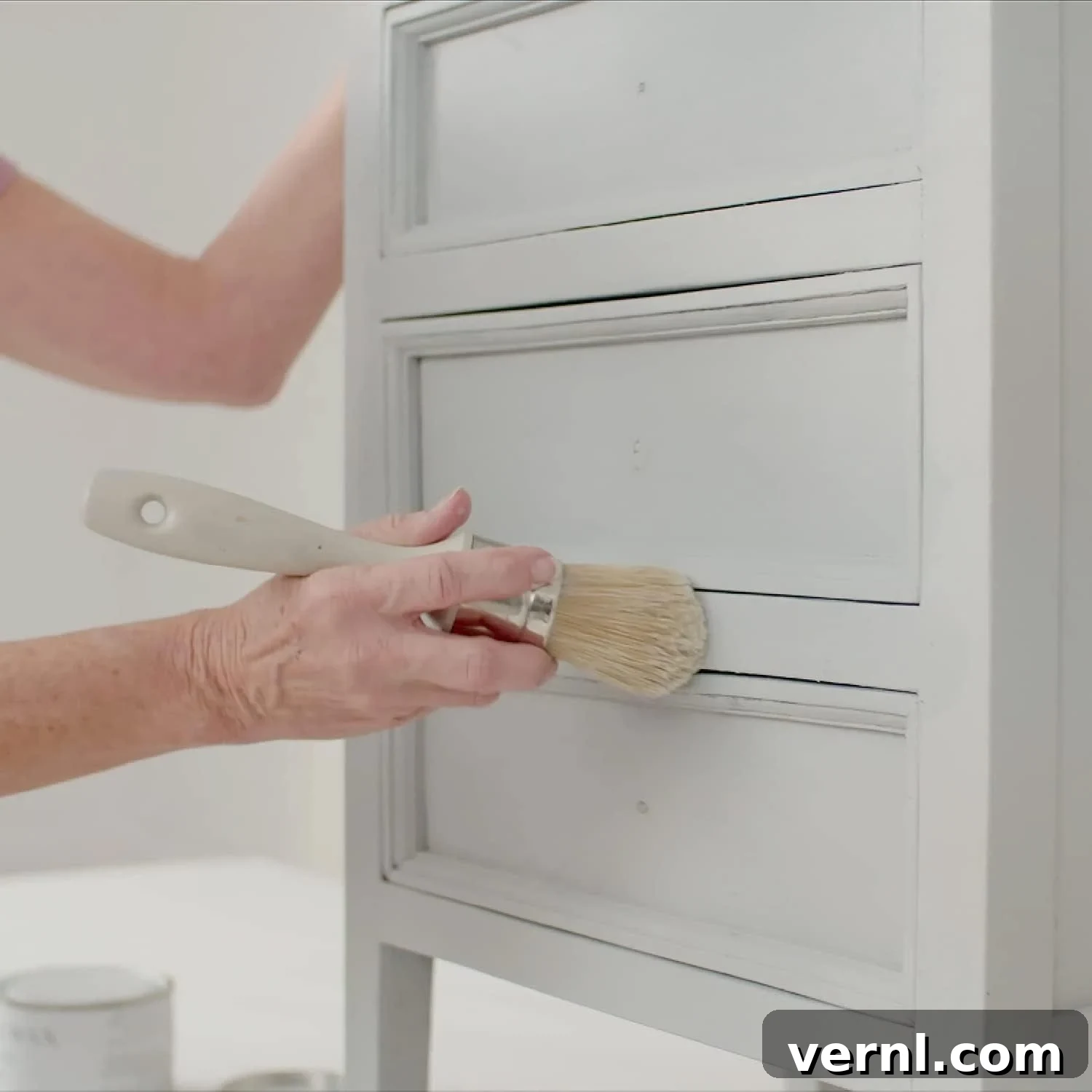
- With a Soft Cloth: Scoop a small amount of wax onto a clean, soft cloth. Work in small sections, rubbing the wax onto the furniture surface in the direction of the wood grain. Use circular motions initially to work the wax into the pores, then finish with strokes along the grain to ensure even coverage.
- With Very Fine Steel Wool (0000 Grade): This is my preferred method, especially for finishes that might have minor imperfections. The ultra-fine steel wool gently abrades the surface as it applies the wax, helping to smooth out any tiny dust nibs or irregularities in the existing finish. Apply a pea-sized amount of wax to a small pad of steel wool and rub it onto the surface in the direction of the grain, using light pressure. This method helps to achieve an exceptionally smooth foundation for buffing.
Regardless of the application method, remember to use only a tiny amount of wax at a time. Less is more.
Step 4: Allow the Wax to Haze
After applying the wax, let it sit for a short period, typically 5-15 minutes, depending on the product and humidity. The wax will begin to dry and develop a dull, hazy appearance. This indicates that the solvent has evaporated, and the wax is ready for buffing. Do not let the wax dry completely hard, as it will become much more challenging to buff.
Step 5: Buff to a Brilliant Shine
Once the wax has hazed, it’s time to buff. This is where the magic happens, transforming the dull haze into a rich luster.
- By Hand: Take another clean, dry, lint-free cloth. Using firm, overlapping circular motions, buff the waxed surface until it develops a beautiful sheen. Turn the cloth frequently to expose a clean surface. Continue buffing until all haziness is gone and the desired level of shine is achieved.
- With a Mechanical Buffer: For larger surfaces or to achieve an even higher gloss, you can attach a lambswool buffer to your drill or an orbital sander. Use a low speed and keep the buffer moving constantly to avoid heat buildup, which can melt the wax and create streaks. This method is incredibly efficient and produces a wonderfully consistent shine.
For enhanced protection and a deeper sheen, you can apply a second thin coat of wax after the first has been buffed. Allow it to haze, then buff again.
Maintaining Your Waxed Furniture
Once your furniture is beautifully waxed, a simple maintenance routine will ensure its lasting beauty and protection:
- Regular Dusting: Dust your furniture regularly with a soft, dry cloth or a duster designed for delicate surfaces.
- Gentle Cleaning: For minor spills or smudges, wipe immediately with a slightly damp cloth, then dry thoroughly. Avoid harsh chemical cleaners, as they can strip the wax layer.
- Reapplication: The frequency of reapplication depends on the furniture’s use. High-traffic surfaces like dining tables may need waxing every 6-12 months, while decorative pieces might only need it every few years. When the finish starts to look dull or water no longer beads up effectively, it’s time for a new coat.
When to Absolutely Avoid Using Furniture Wax
While furniture wax is a versatile and beneficial product, there are specific scenarios where its application is inappropriate and can lead to disappointing results or even damage. Knowing when to hold off is as important as knowing when to apply.
Never on Unfinished Wood
As emphasized earlier, never use furniture wax on unfinished wood. The pores of bare wood will absorb the wax, creating an uneven and patchy appearance that offers minimal protection. Moreover, the wax will form a barrier, making it extremely difficult for any subsequent stains, sealers, or finishes to adhere properly. If you plan to finish a piece of bare wood, wax should be the absolute last step, applied only after all other finishes have been fully cured.
Avoid Damaged or Deteriorated Finishes
Furniture wax is not a repair product. It cannot fix underlying damage to a wood finish. If your existing finish is cracked, chipped, peeling, deeply scratched, or in any other poor condition, applying wax will only temporarily mask the issue or, worse, highlight the flaws. Instead, always complete necessary repairs to the finish first. Strip, sand, or patch as needed, then reapply a proper finish before considering wax as a protective topcoat. Wax should only be used on finishes that are structurally sound and in good overall condition.
Incompatible with High-Utility and Wet Surfaces
While wax offers a degree of water resistance, it is not designed for surfaces that frequently get wet or are exposed to excessive moisture. Wax creates a permeable barrier that will break down under constant exposure to water. Therefore, avoid using it on bathroom countertops, kitchen sinks, or any utility surface that is regularly wiped down with a wet cloth. Similarly, wax offers minimal heat resistance. It will not hold up to hot pots, pans, or dishes placed directly on the surface, which can melt the wax and leave unsightly rings or damage the underlying finish.
Surfaces Requiring Extreme Durability
For surfaces that endure exceptionally heavy use or require maximum durability and chemical resistance, such as certain commercial countertops or outdoor furniture, wax alone might not provide sufficient protection. In these cases, more robust film finishes like epoxy resins or marine-grade varnishes are more appropriate. Wax is best suited for indoor furniture that receives regular, but not extreme, wear.
In conclusion, furniture wax is an indispensable tool in the world of wood care, offering a unique blend of aesthetic enhancement and practical protection. When used correctly, it elevates the beauty of any finished wooden piece, providing a deep, rich luster and a smooth, tactile surface. By understanding its purpose, types, and proper application techniques, you can ensure your wooden furniture not only looks its best but is also well-protected for generations to come. Embrace the simple elegance of furniture wax to truly “finish the finish” and preserve the integrity and beauty of your cherished wooden possessions.