
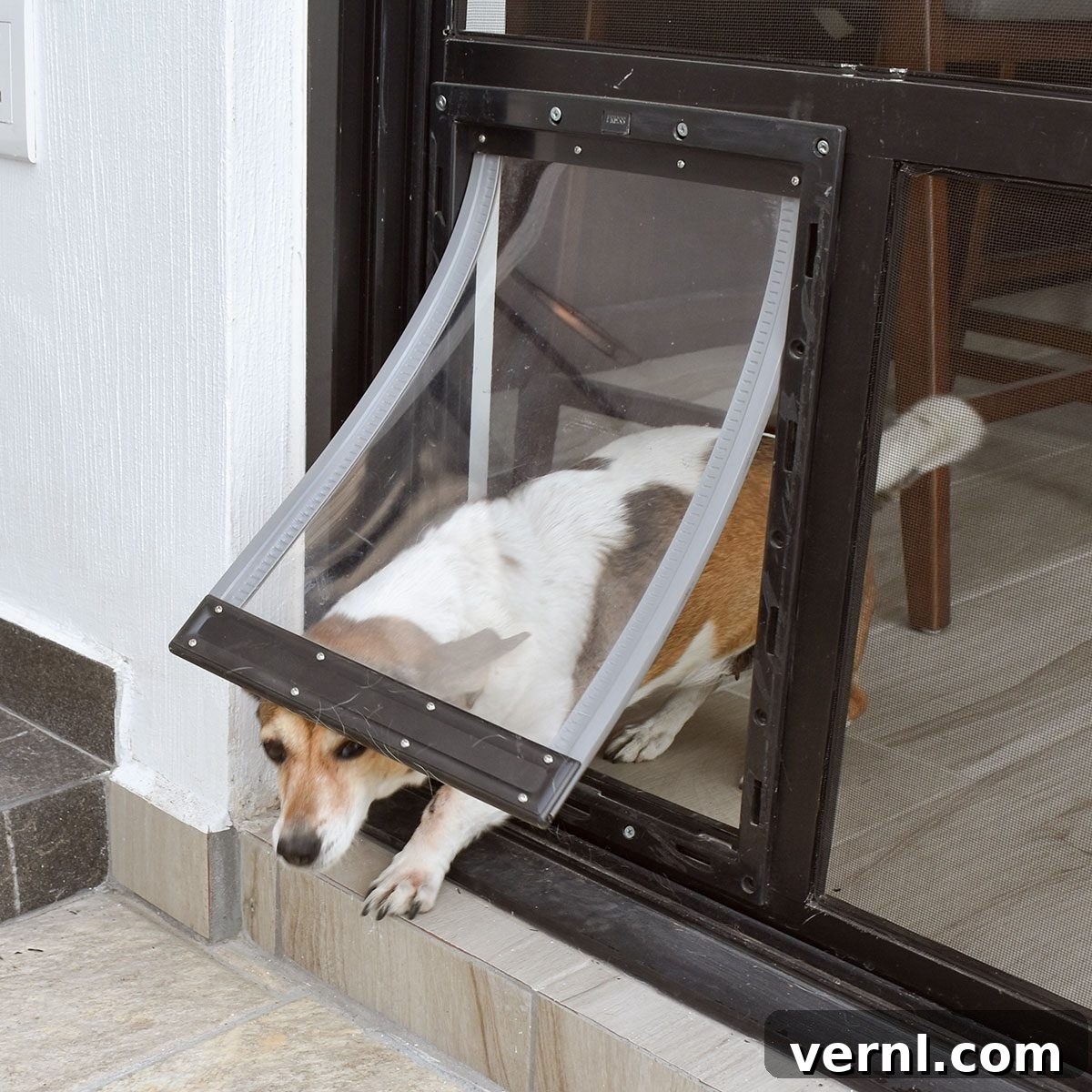
Dog Doors and Home Security: Balancing Pet Freedom with Safety
For many pet owners, a dog door offers unparalleled convenience, allowing furry family members the freedom to come and go as they please without constant human assistance. Imagine no more interrupting important conference calls or rushing home during lunch breaks just to let your pleading pooch out for a quick potty or play session in the yard. The independence it provides for both pet and owner can be truly transformative.
However, this modern convenience often comes with a significant question mark: Are doggy doors truly safe, or do they pose an unacceptable home security risk? The concern is valid, as any opening in your home’s perimeter could potentially be exploited by unwanted intruders. This article delves into the realities of these security risks and, crucially, provides expert-backed strategies to help safeguard your home and its inhabitants if you plan to install a dog door.
Are Dog Doors a Genuine Security Risk?
The short answer is yes, they can be. Burglars are, by nature, opportunists. They meticulously search for the path of least resistance, and an unsecured or poorly chosen dog door can present a glaring vulnerability. This risk escalates significantly if the door is large enough to accommodate a sizable breed, such as a Golden Retriever or a Labrador, potentially allowing a person to crawl through.
“As both a home security professional and a pet owner, I understand the convenience dog doors offer—but they can create a vulnerability if they’re large enough for a person to crawl through or placed in an area that isn’t monitored,” explains Sara Harshbarger, a seasoned security expert and Senior Vice President of Direct to Consumer at Brinks Home. Her insight underscores the critical balance between pet autonomy and household protection.
Beyond the direct entry point, the act of installing a dog door itself can compromise your home’s defenses. Kirk MacDowell, a respected home security expert at Batten Safe and CEO of MacGuard Security Advisors, highlights a fundamental concern: “If there’s a hole, and someone kicks [the dog door] hard enough or uses a block of wood or another tool, it presents the same security risk.” Cutting an opening in an exterior door or wall inherently weakens its structural integrity, making it more susceptible to forced entry, even if a human cannot physically fit through the opening. Furthermore, a determined intruder might simply reach through the dog door to manipulate interior locks, granting them unobstructed access through the main door.
While the threat is real, it’s also important to maintain perspective. Burglaries facilitated by dog doors do occur, but entry through main doors, windows, or even garage doors remains statistically more common. Interestingly, a counter-argument suggests that the presence of a dog door could act as a deterrent for some burglars. The thought of encountering a potentially noisy, territorial, or even aggressive dog might be enough to send some opportunistic criminals searching for an easier target.
However, the deterrent effect is not foolproof, as some burglars may not be intimidated by a dog, or your dog might not be present or alert enough to deter them. Moreover, the security risks extend beyond human intruders. Undesirable wildlife, such as raccoons, opossums, skunks, or even rodents, can also exploit an open dog door, bringing potential health hazards and damage into your home.
Essential Security Tips for Homes with Dog Doors
The good news is that enjoying the benefits of a dog door doesn’t have to mean sacrificing your home’s security. With careful planning and the implementation of smart strategies, you can significantly reduce the associated risks. Here are several key measures you can employ to create a secure environment while still providing your pet with the freedom they deserve and protect your home.
1. Pick the Right Location
The placement of your dog door is perhaps the most critical decision in minimizing its security vulnerability. Harshbarger strongly advises installing a dog door “in a discreet location that’s not visible from the street.” A dog door on your front door, easily visible and accessible from a public thoroughfare, is an invitation for trouble. Instead, consider:
- Side or Rear Walls: These locations are typically less visible from the street and offer more privacy, especially if they lead into a fenced backyard or a secluded side alley.
- Garages or Utility Rooms: If your home layout allows, installing the dog door in a garage or a utility room that is separate from your main living space can add an extra layer of defense. Your pet can access the yard, but an intruder would still need to breach a second locked door to enter your home.
- Fenced Yards: Always ensure the dog door opens into a securely fenced area. The fence itself acts as an initial barrier, making it harder for potential intruders to even reach the dog door.
Avoid placing a dog door directly on a main entry door or in any area that offers easy concealment for someone trying to manipulate or crawl through it.
2. Pick the Right Type of Dog Door
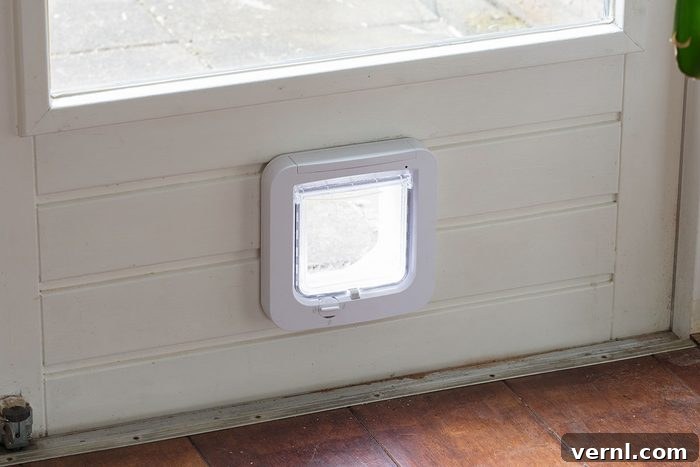
Not all dog doors are created equal when it comes to security. A basic, flimsy flap offers minimal protection and is easily bypassed. Prioritize lockable dog doors with advanced security features. As Harshbarger notes, “Basic flap models provide minimal protection, while advanced designs—like automatic or electronic pet doors that respond only to your pet’s collar or microchip—offer much stronger security.”
Consider these advanced options:
- Electronic/Microchip Activated Doors: These doors only open when they detect a specific signal from a sensor on your pet’s collar or their implanted microchip. This means only your authorized pets can use the door, effectively preventing unwanted animals (raccoons, squirrels, stray cats) and potential human intruders from gaining access. Look for models with reliable sensors and robust locking mechanisms.
- Smart Dog Doors: The cutting edge of pet access, best smart dog doors integrate with your home’s smart ecosystem. Many feature sensors that can trigger alerts via a smartphone app or a home security system whenever something passes through them. Some even include cameras for visual verification. While continuous alerts from a frequently used dog door can be “tiresome quickly,” the ability to monitor and control access remotely offers unparalleled peace of mind.
- Robust Manual Locking Mechanisms: Even with advanced features, a strong, multi-point manual locking system or a sturdy slide-in security panel is essential. This allows you to completely secure the door when you’re away, overnight, or during periods when your pet doesn’t need outdoor access.
- Durable Construction: Opt for doors made from sturdy materials like aluminum or heavy-duty plastic, with reinforced frames that are difficult to pry or kick out.
3. Pick the Right Size of Dog Door
This point cannot be overstressed: the bigger the dog door, the greater the security risk. A dog door designed for a Great Dane presents a much larger potential entry point for a human than one sized for a Chihuahua. Carefully measure your pet – their height and width – and select a dog door that allows them to pass through comfortably, but without any excess space. Avoid the temptation to buy a larger door “just in case” or for future growth if your pet is a puppy, unless you plan to upgrade later. The goal is to provide adequate passage for your pet and nothing more.
4. Lock the Pet Door When Not in Use
Even the most secure dog door is vulnerable if left unlocked. Make it a habit to lock the pet door whenever it’s not actively being used by your pet, especially:
- Overnight: It’s generally not advisable to let your dog roam the yard unsupervised during nighttime hours, which is also when burglars are most likely to operate under the cover of darkness.
- When You’re Away: If you’re leaving your home for an extended period, whether for work or vacation, ensure the dog door is securely locked.
- During Suspicious Activity: If you hear or see anything unusual outside, locking the pet door should be part of your immediate security protocol.
Most dog doors come with a slide-in panel or a manual lock. Always use it. For advanced electronic doors, ensure their locking features are active when appropriate.
5. Add Other Security Measures
A dog door should never be your home’s only line of defense. Integrating it into a broader home security strategy significantly enhances safety. MacDowell recommends monitoring your yard and the doggy door entrance with a home security camera or a comprehensive alarm system for additional peace of mind.
- Security Cameras: Place cameras strategically to cover the area around the dog door. Look for models with night vision, motion detection, and remote viewing capabilities. This allows you to monitor activity in real-time, record potential incidents, and even deter intruders with visible cameras.
- Alarm Systems: Integrate contact sensors on or near the dog door itself, or motion detectors in the vicinity. An alarm sounding can effectively scare off burglars and alert you or monitoring services to a breach.
- Motion Sensor Lights: Outdoor motion sensor lights are a cost-effective and highly effective deterrent. A sudden burst of light can startle both human intruders and unwanted wildlife, making them rethink their approach. Position them to illuminate the dog door area and surrounding pathways.
- Reinforced Fencing and Landscaping: Ensure any fencing leading to the dog door is robust and difficult to scale. Consider thorny bushes or dense hedges as natural barriers around windows and vulnerable entry points. Maintain clear sightlines by trimming overgrown shrubs that could provide cover for intruders.
- Smart Home Integration: For ultimate control, consider linking your dog door’s electronic features with your broader smart home system. This could allow for automated locking schedules, integrated alerts with security cameras, and remote management from your smartphone.
Frequently Asked Questions (FAQ)
Does a dog door make my home insurance more expensive?
According to independent insurance agent Colleen Parsons, simply having a dog door does not typically lead to an increase in home insurance premiums. While the specifics of home insurance policies can vary greatly depending on the type of coverage and the insurer, Parsons notes that she has not encountered theft exclusions specifically related to dog doors in her extensive experience. “However, it is best to be upfront with your agent about owning a dog door, and they can double-check with their insurance carriers,” she advises. This transparency ensures that you understand your policy fully. She also points out that other factors related to dog ownership, such as the breed and any history of biting, are more likely to influence policy concerns and potentially premiums.
Interestingly, Sara Harshbarger of Brinks Home highlights a potential silver lining: being proactive and pairing a dog door with a professionally monitored and installed home security system could, in some cases, even lead to a reduction in your insurance premium. Insurers often offer discounts for homes with robust security measures, as these systems significantly lower the risk of theft and damage.
Should I install a dog door myself or hire a professional?
While many dog doors are marketed for DIY installation, the decision depends on your skill level and the complexity of the installation. Installing through a door often requires careful cutting and sealing, while a wall installation can be more involved, potentially affecting your home’s structural integrity, insulation, and wiring. If you’re unsure about your ability to create a secure, weather-tight, and structurally sound opening, hiring a professional can prevent costly mistakes and ensure optimal security and energy efficiency.
How can I prevent drafts and maintain energy efficiency with a dog door?
Energy efficiency is a common concern with dog doors. Look for models designed with multiple flaps (double or triple flaps) and strong magnetic seals to create an insulating barrier against drafts and weather. Investing in higher-quality, insulated dog doors can significantly reduce heat loss in winter and heat gain in summer. Proper installation, including thorough sealing around the frame, is also crucial to prevent air leaks and maintain your home’s thermal envelope.
About the Experts
- Sara Harshbarger is a security expert and Senior Vice President of Direct to Consumer at Brinks Home, a leading home security provider known for its innovative solutions and commitment to customer safety.
- Kirk MacDowell is a distinguished home security expert at Batten Safe and CEO of MacGuard Security Advisors. With over 40 years of experience, he is a veteran of the security industry, offering invaluable insights into safeguarding homes.
- Colleen Parsons is an independent insurance agent with World Insurance Associates. She has dedicated over two decades to assisting homeowners in Western New York with their insurance needs, providing clear and reliable advice.