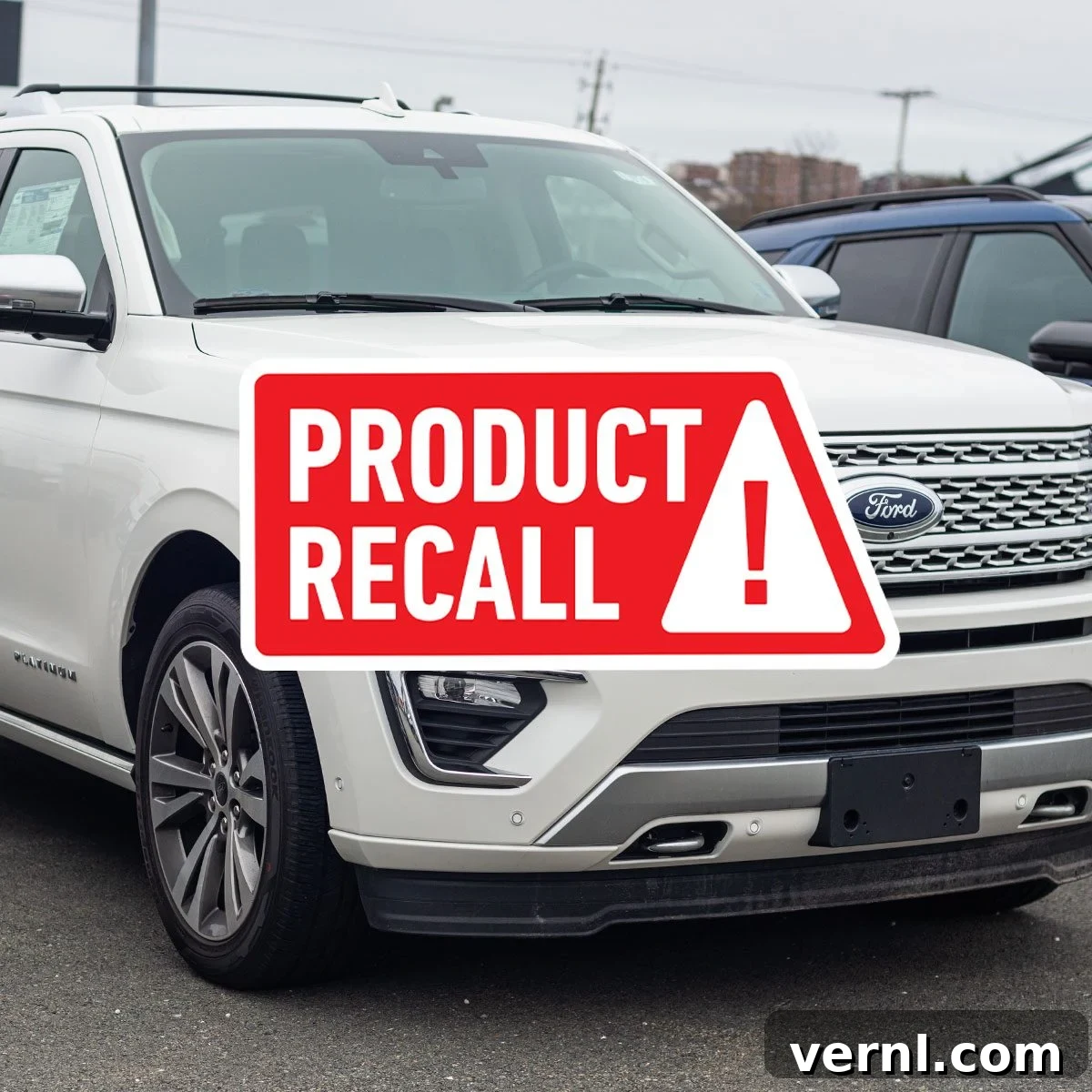
A significant new safety recall from Ford has recently captured headlines, affecting over 100,000 vehicles. This time, the concern centers on a critical safety feature: the seat belt system in certain Ford Expedition and Lincoln Navigator models. The National Highway Traffic Safety Administration (NHTSA) has issued a detailed brief outlining the serious risks posed by these faulty seat belts. Seat belts are not merely practical safety equipment; they are fundamental to occupant protection and are legally mandated in nearly every state across the nation. Therefore, any defect in this vital component constitutes both a profound safety hazard and a legal compliance issue for vehicle owners. This comprehensive guide breaks down the NHTSA’s findings, clarifying which Ford and Lincoln vehicles are impacted, the specific nature of the defect, and the crucial steps owners must take to ensure their safety and the safety of their passengers.
Which Ford and Lincoln Vehicles Are Affected by This Seat Belt Recall?
This urgent recall targets a substantial number of vehicles – over 105,000 Ford and Lincoln models equipped with the potentially faulty seat belt system. The specific models and model years identified in the NHTSA recall brief include:
- 2018 Ford Expedition
- 2019 Ford Expedition
- 2020 Ford Expedition
- 2018 Lincoln Navigator
- 2019 Lincoln Navigator
- 2020 Lincoln Navigator
Owners of these vehicles should remain vigilant for official recall notifications. Ford plans to dispatch owner notification letters around mid-April 2025. It is imperative to keep a close watch on your mailbox during this period to confirm whether your specific vehicle identification number (VIN) is included in this critical safety recall. Acting promptly upon receipt of this notification is paramount to addressing the potential safety risks.
Understanding the Critical Issue: Why Are Ford and Lincoln Recalling These Vehicles?
The core of this recall stems from a serious defect within the seat belt system. According to the NHTSA’s findings, hundreds of thousands of affected Ford and Lincoln vehicles may suffer from seat belts that fail to retract or extend properly. This malfunction is attributed to a specific component: “the seat belt pretensioner in the driver and/or front passenger seat may inadvertently lock the seat belt.”
The Vital Role of Seat Belts and Pretensioners in Vehicle Safety
Seat belts are arguably the most crucial passive safety feature in any vehicle. Designed to secure occupants firmly against the force of an impact, they dramatically reduce the risk of injury or fatality in the event of a crash. When functioning correctly, seat belts distribute crash forces across the strongest parts of the body, prevent ejection from the vehicle, and minimize contact with interior surfaces.
A key component of modern seat belt systems is the pretensioner. This device is engineered to rapidly tighten the seat belt webbing during a collision, pulling the occupant securely back into the seat just milliseconds before the full force of impact. This pre-tensioning action helps to eliminate slack in the belt, optimizing its ability to restrain the occupant effectively and reduce forward movement. When a seat belt pretensioner malfunctions and inadvertently locks, it compromises the entire system’s ability to operate as intended, whether in normal use or during an emergency.
The Grave Risks Associated with Malfunctioning Seat Belts
The NHTSA explicitly states that “seat belts that do not retract or extend can fail to restrain an occupant as intended, increasing the risk of injury in a crash.” This seemingly simple malfunction carries severe implications. A seat belt that cannot extend may prevent occupants from buckling up entirely, leaving them completely unprotected. Conversely, a seat belt that cannot retract correctly might leave too much slack, allowing excessive forward motion during a collision. In either scenario, the protective function of the seat belt is severely compromised, greatly elevating the chances of traumatic injuries, including head trauma, internal injuries, spinal damage, and even death, should a crash occur.
Beyond the immediate physical risks, driving with a faulty seat belt also presents legal challenges. In almost all jurisdictions, wearing a seat belt is a legal requirement. Operating a vehicle with a known defect in its safety equipment could expose drivers to fines, penalties, and increased liability in the event of an accident.
A Recurring Concern: Addressing Past Recall Inspections
For some owners, this issue might unfortunately sound familiar. Ford previously initiated a recall last year (recall 24V-099) involving many of these same vehicles for a similar seat belt concern. This repeat recall underscores the persistent nature of the problem and highlights the need for a definitive solution.
It is critically important for owners to understand that even if their vehicle was inspected under the previous recall (24V-099), this new recall demands a fresh inspection and potential remedy. The NHTSA’s brief clarifies that “some vehicles in this recall that were previously inspected under recall 24V-099…did not have parts replaced will need to have this new recall remedy completed.” This means that a prior inspection, without a part replacement, does not exempt your vehicle from the need for this current, updated repair. Do not assume your vehicle is safe if it was only inspected previously; a new, comprehensive solution is now required.
Is There a Permanent Fix for This Seat Belt Pretensioner Issue?
Yes, Ford has outlined a clear remedy for this safety defect. Authorized Ford and Lincoln dealerships are prepared to address the issue. The repair procedure will involve technicians inspecting “the seat belt retractor date codes and replace the seat belt retractors as necessary.” This detailed inspection ensures that only affected components are replaced, providing a precise and effective solution.
Crucially, this vital safety repair will be performed entirely free of charge to vehicle owners. Ford is obligated to cover all costs associated with the inspection and replacement of the faulty seat belt retractors. Therefore, there should be no hesitation or financial barrier preventing owners from scheduling this essential service. Delaying this repair could place yourself, your family, and any other occupants of your vehicle at unnecessary risk.
Immediate Steps for Affected Vehicle Owners
Upon receiving your official notification letter, or if you suspect your vehicle may be affected, take the following immediate steps:
- Contact Your Dealer: Reach out to your nearest authorized Ford or Lincoln dealership to schedule an appointment for the recall inspection and repair. Inform them that you are calling about recall number 25S31.
- Do Not Delay: Prioritize this repair. Given the critical safety nature of seat belts, putting off this service is not advisable for any reason.
- Check Seat Belts Regularly: While waiting for your appointment, manually check your seat belts regularly. Ensure they extend and retract smoothly. If you notice any sticking, locking, or unusual behavior, be extra cautious or consider avoiding using the affected seating position if possible, though this is not a substitute for the official repair.
Beyond the Repair: General Vehicle Safety and Owner Vigilance
This recall serves as a powerful reminder of the importance of proactive vehicle maintenance and vigilance regarding safety features. Even after your vehicle has been repaired under this recall, it is always a good practice to:
- Regularly Inspect Seat Belts: Periodically check all seat belts in your vehicle for fraying, tears, cuts, or any stiffness in retraction or extension.
- Follow Manufacturer Guidelines: Adhere to your vehicle’s maintenance schedule and be aware of any safety notices issued by the manufacturer or regulatory bodies.
- Stay Informed: Keep up-to-date with recall information for your vehicle by regularly checking the NHTSA website using your VIN.
The NHTSA plays a critical role in vehicle safety by investigating defects, issuing recalls, and enforcing safety standards. Their ongoing efforts help ensure that vehicles on our roads meet stringent safety criteria, but consumer awareness and prompt action are equally vital.
Need Further Assistance or Information?
Should you have additional questions, require clarification, or need assistance locating a dealer, several resources are available:
- You can directly call Ford customer service at 1-866-436-7332. When you call, please reference Ford’s specific number for this recall, which is 25S31.
- For inquiries directly related to vehicle safety recalls and regulations, you can also reach the NHTSA Vehicle Safety Hotline at 1-888-327-4236. When speaking with a representative, it is helpful to provide the NHTSA’s recall number for this specific issue, which is 25V197000.
Ensuring the safety of your vehicle’s occupants is paramount. Do not delay in addressing this critical seat belt recall. Your proactive response can prevent serious injuries and ensure your vehicle remains a safe mode of transport.
Source
- Seat Belt May Fail to Retract or Extend, National Highway Traffic Safety Administration, 2025.