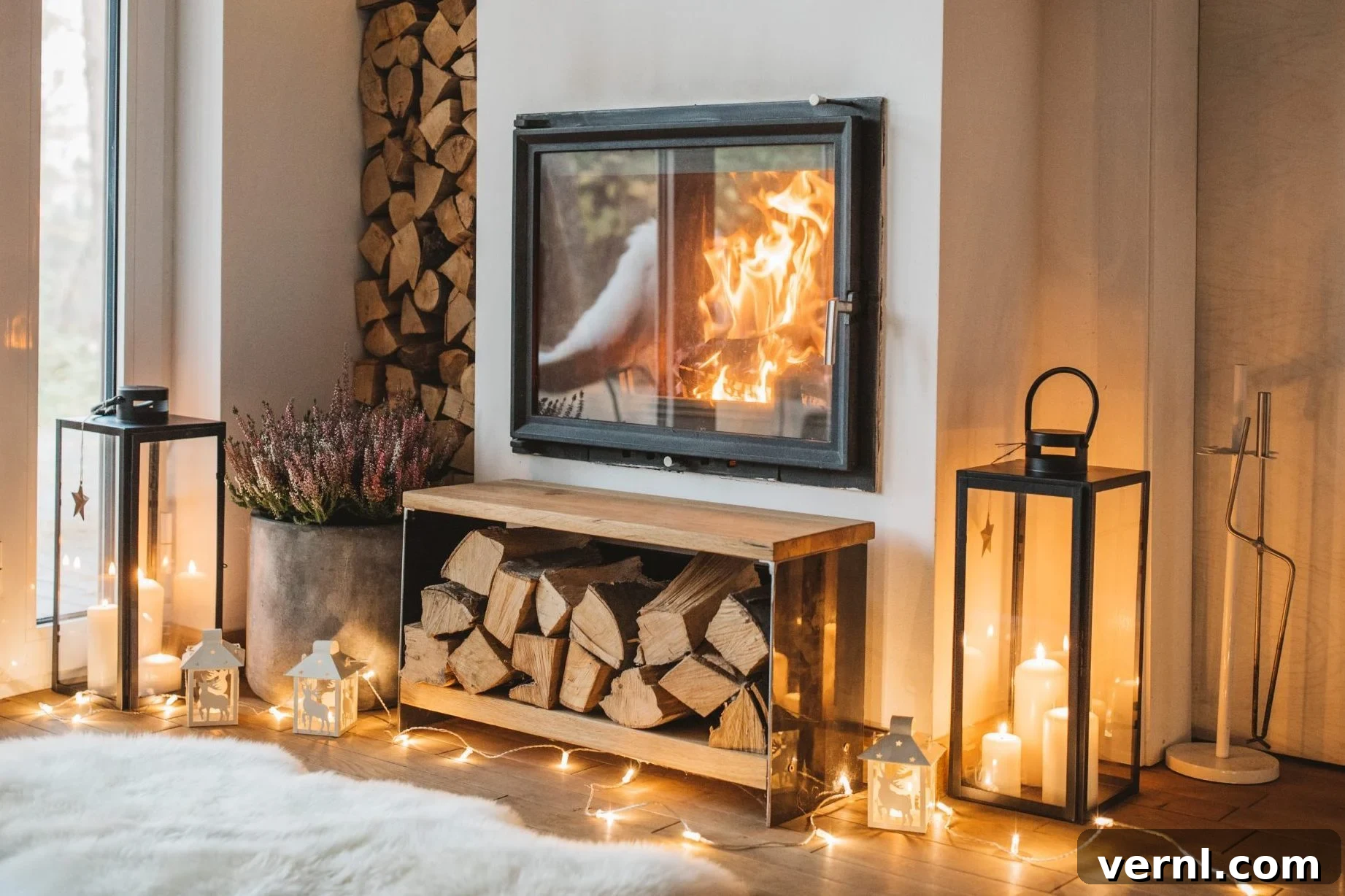
The Ultimate Guide to Choosing the Best Firewood for Efficient Home Heating
For centuries, wood has been a reliable source of heat, providing warmth and comfort during the coldest months. In the United States, a significant portion of the population, approximately two percent according to the U.S. Census Bureau, relies on wood to heat their primary residences. This figure doesn’t even account for the countless vacation homes and cozy cabins that embrace the rustic charm and practical benefits of wood heat across the country. It comes as no surprise that areas experiencing the harshest winters, such as northern New England, the Upper Midwest, and the Pacific Northwest, show the highest consumption of wood for home heating.
Navigating the world of firewood can be challenging. Homeowners often grapple with questions like how much firewood to buy and, crucially, which types offer the best heating performance. While those living in heavily wooded regions might simply step outside and fell their own trees, others need to make informed decisions. Even if you’re an avid woodsman, knowing the optimal species can make a world of difference in your heating efficiency and overall experience. This comprehensive guide will illuminate the best types of firewood for home heating, helping you make choices that are both practical and pleasurable.
What to Consider When Buying Firewood for Heating
Whether you’re contemplating a switch to a wood-burning system, or you’ve just acquired that picturesque cabin in the woods and are pondering the most effective way to keep it warm, several critical factors should influence your firewood selection. Paying attention to these details will ensure you get the most out of your wood-burning appliance, maximize heat output, and minimize potential problems.
Stick with Hardwood Varieties
When it comes to selecting firewood, the distinction between hardwood and softwood is paramount. Hardwood originates from deciduous trees like oak, maple, birch, and hickory, which are known for their dense cellular structure. Softwood, on the other hand, comes from coniferous trees such as pine, fir, and cedar, characterized by a less dense composition. In the perennial debate of hardwood vs. softwood for heating, hardwood invariably emerges as the superior choice.
The primary advantage of hardwood lies in its density. This translates directly into a higher energy content per log. Hardwoods burn significantly longer and hotter than softwoods, delivering a more consistent and sustained heat to your home. Furthermore, hardwood typically leaves behind a substantial bed of glowing coals, which is incredibly beneficial for maintaining a fire throughout the night or making it easy to restart your fire the following morning without much effort. Softwoods, while useful for kindling or quick, short-lived fires, burn rapidly and produce less heat overall, making them less economical for primary heating.
Only Burn Dried and Seasoned Wood
Patience is not just a virtue; it’s a necessity when it comes to firewood. Whether you are purchasing your wood or felling it yourself, proper drying, or “seasoning,” is crucial for optimal burning performance. Wood needs a significant period for its moisture content to decrease to an ideal level (typically below 20%). How long you should dry firewood is influenced by several factors, including the specific wood species and local climatic conditions. Hardwoods, due to their density, generally require longer seasoning times, often up to two years, while softwoods might be ready in 12 to 18 months.
Understanding the difference between seasoned vs. kiln-dried wood is also important. Seasoned wood dries naturally over time, typically stacked outdoors with good air circulation. Kiln-dried firewood, conversely, is subjected to a controlled heating process in a kiln, which accelerates moisture removal. Kiln-dried wood offers the advantage of being ready to burn immediately upon purchase, lighting faster and burning hotter than naturally seasoned wood. However, this convenience often comes at a higher price point.
Burning unseasoned, “green” wood is detrimental for numerous reasons. Wood with high moisture content burns inefficiently, producing more smoke, creosote, and water vapor. This excess smoke can contribute to the rapid buildup of creosote in your chimney, leading to potential chimney fires and significantly decreasing your heating system’s efficiency. Moreover, burning wet wood can damage your chimney and negatively impact indoor air quality, releasing more particulates into your living space. Always look for firewood that sounds hollow when tapped, shows cracks at the ends, and is dark or greyish in color, indicating it’s properly dried.
Burn Locally Sourced Wood
A smart and responsible practice for sourcing firewood is to buy it locally whenever feasible. This means choosing wood from trees that grow in close proximity to your home or vacation property. As Emma Hanson, wood energy coordinator with the Vermont Department of Forests, Parks and Recreation, notes, “As firewood is a high-volume/low-margin product, it typically doesn’t go too far anyway.” This inherent characteristic often means you’ll pay less for local wood due to reduced transportation costs.
Beyond the economic benefits, buying local firewood plays a crucial role in environmental protection. By limiting the movement of wood across long distances, you actively help prevent the spread of invasive wood diseases and harmful insects. Pests like the Emerald Ash Borer or Dutch Elm Disease can devastate entire forest ecosystems when introduced to new areas. Supporting local firewood suppliers also strengthens your community’s economy and promotes sustainable forestry practices in your region.
What to Know About Heat Value (BTUs)
Every type of combustible fuel, whether it’s natural gas, heating oil, or wood, possesses a specific heat value. This value is a crucial measure of the amount of heat released when a given quantity of the substance is burned. For firewood, this measurement is typically expressed in BTUs, or British thermal units. One BTU represents the amount of energy required to raise the temperature of one pound of water by one degree Fahrenheit.
Calculating the precise BTU output of wood can be complex due to numerous variables. Factors such as the wood’s density, its moisture content (dryness), and the efficiency of the burning appliance—be it an open fireplace, a modern wood-burning stove, or a high-efficiency wood boiler—all play a significant role. However, the fundamental rule for home heating remains simple: the higher the heat value of the wood, the more efficiently and effectively it will warm your home, requiring less fuel to achieve desired temperatures.
According to experts like fireplace, hearth, and chimney supplier Northline Express, certain hardwoods consistently rank higher in heat value. These top performers include sugar maple, ash, red oak, beech, birch, hickory, pecan, and apple. These species are prized for their ability to produce intense, long-lasting heat, making them ideal for primary heating applications.
When purchasing firewood, understanding firewood measurements is essential. Online shops and firewood delivery services often offer bulk orders, most commonly measured in cords. A cord of firewood is a neatly stacked pile measuring 4 feet high by 4 feet wide by 8 feet long, totaling 128 cubic feet. While the BTU content per cord does vary by species, as Emma Hanson points out, “the typical homeowner is unlikely to notice a significant difference between a cord of beech and a cord of sugar maple” in day-to-day use. The consistency of hardwood density generally means most mixed hardwood cords will offer excellent heating performance.
What Is the Best Type of Firewood for Heating?
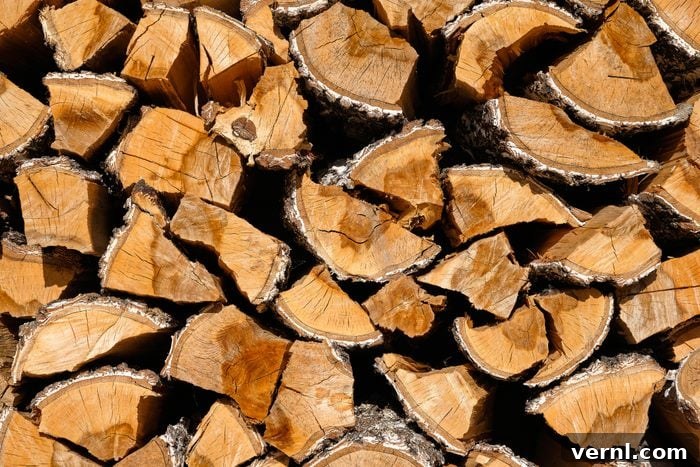
To help you make the best choice for your wood-burning needs, here are our top picks for the best hardwood firewood for home heating, complete with a detailed look at their pros and cons:
Apple Firewood
Apple wood, a highly prized fruitwood, boasts an impressive heat value and burns cleanly with minimal smoke. Its most distinctive characteristic is the sweet, pleasant aroma it releases, making it a favorite for fires meant to create ambiance, as well as for cooking and smoking meats. However, its practicality for large-scale home heating is limited. Unless you reside in a region abundant with apple orchards, this firewood is often expensive and highly sought after, making it more of a specialty wood than a primary heating source.
Ash Firewood
The wood from ash trees is consistently ranked among the most desirable firewoods for heating. It is renowned for its low smoke production and minimal sparking, which contributes to a cleaner burning experience and reduces the risk of stray embers. Ash also emits a mild, agreeable aroma when burned. Both white ash and green ash varieties are excellent, with white ash burning slightly hotter. Ash trees are widely prevalent across the Eastern and Southeastern United States, making them a readily available and practical choice for many homeowners. A notable benefit of ash is its ability to burn relatively well even when “green,” though it always performs best when properly seasoned.
Beech Firewood
Commonly found throughout the Northeastern U.S., beech trees yield an attractive hardwood for burning, primarily due to their extreme density and relatively low moisture content once seasoned. This density translates into a long, hot burn. However, beech wood does come with certain caveats. It typically requires a considerably long time to season properly, often longer than other hardwoods. Furthermore, its dense, interlocked grain can make it quite challenging to split, demanding more effort. Beech is also susceptible to rot if not stored meticulously dry, so proper storage is essential to preserve its quality.
Birch Firewood
Birch is an excellent choice when you desire a fire that lights quickly and heats up fast, providing immediate warmth. It is widely available across the Northern U.S. and Canada, though it typically does not grow south of the Appalachian Mountain chain. Birch produces a moderately hot flame and a pleasant aroma. The downside, however, is its faster burn rate compared to denser hardwoods. Because it burns more quickly, you will likely consume more birch to maintain heat, which can make it less economical for continuous, primary heating unless you have an abundant, cheap supply. It’s ideal for shorter fires or for getting a stubborn fire started.
Hickory Firewood
Hickory is one of the most popular woods for fireplaces, fire pits, wood-burning stoves, and even barbecues. This exceptionally dense hardwood is quick to light, produces a high heat value, and offers a remarkably long burn time, making it incredibly efficient for sustained heating. Hickory also carries the classic, robust “smoke” smell often associated with outdoor grilling, which many find appealing. Its strength and density mean it provides excellent coaling properties, keeping your fire warm for extended periods. Its widespread availability across much of the Eastern and Central U.S. makes it a favored choice.
Sugar Maple Firewood
Also known as hard maple or rock maple, the same trees that provide delicious maple syrup also produce some of the finest wood for heating. Sugar maple offers an exceptionally high heat value, a pleasant, subtle aroma, and an impressively long burn time. Its density ensures a slow, steady release of heat. Sugar maple trees are found across a wide geographical range in the U.S., which further enhances its appeal as a readily accessible and highly effective option for home heating. It’s an all-around excellent performer for any wood-burning system.
Mulberry Firewood
Mulberry trees are commonly found throughout the Eastern and Midwestern U.S. states, extending down into the South, making them a superb hardwood choice for these regions. Mulberry wood is prized for its high heat value and surprisingly easy splitting, even when relatively green, making it an accessible option if you’re just learning how to split firewood. However, a significant characteristic of mulberry is its tendency to throw off a lot of sparks while burning. Because of this, it is generally better suited for use in enclosed heating devices like wood stoves, boilers, or outdoor furnaces, rather than open fireplaces, to ensure safety and prevent sparks from escaping.
Oak Firewood (Red and White)
Oak wood, in all its varieties including both white and red oak, stands as one of the quintessential and best woods for heating. It is incredibly dense, leading to an extremely long burn time, making it ideal for overnight fires and for easily rekindling in the morning due to its excellent coaling properties. A couple of important considerations for oak: it requires a substantial seasoning period, typically at least two years, to achieve optimal burning efficiency. Furthermore, because it burns so slowly and intensely, it is often best combined with other faster-burning woods to help get a fire established and reach peak temperature more quickly before the oak takes over for sustained heat.
Osage Orange Firewood
Osage orange wood elicits a love-hate relationship among wood burners. It is notoriously thorny, incredibly dense, and exceedingly difficult to split, often requiring hydraulic splitters. Moreover, when burned, it throws off copious showers of sparks. So, what’s the immense appeal? Osage orange wood boasts the absolute highest heat value of any commonly available hardwood – it can burn so intensely hot that it has been known to warp poorly constructed wood stoves! Due to its extreme heat and significant spark production, it is best reserved for closed, heavy-duty heating appliances, particularly outdoor wood boilers, where its power can be managed safely. It is often recommended to burn Osage orange in a mix with other hardwoods to temper its intense heat and prevent overheating your system.
Pecan Firewood
As a close relative within the hickory family, pecan shares many of its desirable characteristics, including a high heat value and a long, slow burn. Pecan wood also seasons relatively faster than many comparable hardwoods, which is a convenient benefit. When burned, it emits a pleasant, distinctive nutty smell that is particularly appealing. However, due to its relatively high cost, pecan is often considered more of a “feature” wood. It’s excellent for creating a sweet-smelling, inviting open fire in a fireplace, but its expense might make it less practical for continuous, large-volume heating in closed stoves or boilers.
Benefits Beyond Warmth: Why Choose Wood Heating?
Beyond the immediate warmth, wood heating offers a unique array of benefits that appeal to many homeowners. The cozy ambiance of a crackling fire is unmatched, providing a sensory experience that electric or gas heat cannot replicate. It fosters a sense of self-sufficiency, offering a degree of independence from utility grids and fluctuating fuel prices. Wood is also a renewable resource, making it an environmentally conscious choice when sourced sustainably. Furthermore, for those in rural areas or prone to power outages, a wood-burning system can be a lifesaver, providing essential heat and a means for cooking.
Essential Tips for Firewood Storage and Safety
Proper storage is just as important as choosing the right wood. Firewood should be stacked off the ground to prevent moisture absorption and rodent infestation. Use pallets or a dedicated firewood rack. It also needs good air circulation on all sides to continue drying and prevent mold or rot. A cover, such as a tarp or a woodshed roof, is essential to protect it from rain and snow, but ensure the sides remain open for ventilation. Never store firewood directly against your home, as it can attract pests and create a fire hazard.
Safety is paramount with any wood-burning system. Regularly inspect and clean your chimney to prevent creosote buildup, which can lead to chimney fires. Install carbon monoxide detectors in your home. Always have a fire extinguisher nearby and know how to use it. When starting a fire, use appropriate kindling and fire starters, avoiding flammable liquids. Never leave a fire unattended, and ensure all embers are extinguished before retiring for the night.
Best Practices for Using Your Wood-Burning Fireplace
To ensure safe, efficient, and long-lasting performance from your wood-burning fireplace or stove, consider these essential tips and techniques:
- Maintaining and Using a Wood-Burning Fireplace: Regular cleaning and understanding your appliance are key.
- How to Inspect a Wood-Burning Fireplace: Learn to spot potential issues before they become major problems.
- How to Increase the Heat From Your Wood-Burning Fireplace: Tips for maximizing warmth and efficiency.
- Things You Should Never Burn in Your Fireplace: Avoid harmful materials that can damage your chimney or pose health risks.
- Ways to Use Fireplace Ash: Discover eco-friendly applications for your residual ash.
Conclusion: Make an Informed Choice for a Warm Home
Choosing the best firewood for heating your home is an investment in comfort, efficiency, and safety. By understanding the critical differences between hardwood and softwood, prioritizing properly seasoned wood, and recognizing the heat values of various species, you can make informed decisions that will yield significant benefits. Whether you opt for the robust heat of oak, the fragrant burn of maple, or the intense power of Osage orange, selecting the right firewood ensures a warm, inviting, and efficient home throughout the colder seasons. Always consider local availability and environmental impact to ensure your heating choices are sustainable and responsible.