Unlock Smoothness: The Essential Guide to Lubricating Your Door Locks with Graphite
Few things are as frustrating as a sticky or stubborn door lock. You insert your key, but it refuses to turn, or it gets stuck halfway, leaving you fumbling at your doorstep. While it might seem like a minor inconvenience, a dysfunctional lock can be a significant security risk and a constant source of irritation. Fortunately, before you resort to calling a locksmith or replacing the entire lock mechanism, there’s a simple, effective, and incredibly affordable DIY solution that locksmiths have trusted for decades: graphite.
This comprehensive guide will delve into the world of lock lubrication, exploring why graphite is the preferred choice, how a common household item – a pencil – can be your go-to door lock lubricant, and offer additional tips for maintaining the health and security of your door locks. Say goodbye to sticky situations and hello to smooth, effortless entry every time you use your key.
Why Do Door Locks Get Sticky? Understanding the Root Causes of a Stubborn Lock
Before we dive into the solution, it’s helpful to understand what causes door locks to become stiff and difficult to operate in the first place. Addressing a sticky lock effectively begins with identifying the underlying problem. Several factors contribute to this common predicament:
- Accumulation of Dirt and Grime: Over time, dust, dirt, pet hair, lint, and environmental debris can gradually accumulate inside the intricate mechanisms of your lock cylinder. This build-up acts like sandpaper, significantly increasing friction and making it harder for the delicate pins and springs to move freely and align correctly with your key.
- Wear and Tear of Internal Components: Locks are mechanical devices subject to constant use. Every turn of the key contributes to the gradual wear and tear of the internal components – particularly the pins, springs, and tumblers. This natural degradation leads to increased friction and less precise movement over time, making your key feel stiff.
- Corrosion and Rust: Especially prevalent in humid environments, coastal regions, or on exterior doors exposed to the elements, metal components within the lock can corrode or rust. This process causes the metal to expand and roughen, creating tighter tolerances and impeding smooth operation, potentially even seizing the lock completely.
- Lack of Proper Lubrication: Like any moving mechanical part, locks require regular lubrication to reduce friction between their metal surfaces. Without adequate lubrication, the dry metal-on-metal contact causes resistance, stiffness, and accelerated wear.
- Incorrect Lubricants (The Hidden Culprit): Ironically, sometimes well-intentioned attempts to fix a sticky lock can make it worse. Using oil-based lubricants or spray greases (such as WD-40, which is primarily a penetrating oil, not a long-term lubricant) can attract more dust and grime. This combination creates a thick, gummy residue that can clog the lock’s delicate mechanism, turning a minor issue into a major headache.
Understanding these common causes highlights the critical importance of proper lubrication and proactive lock maintenance. This isn’t just about convenience; it’s about ensuring the longevity, reliability, and security of your home’s entry points.
Graphite for Locks: The Locksmith’s Preferred Solution for Smooth Operation
For generations, professional locksmiths have unequivocally relied on powdered graphite as their preferred lubricant for all types of locks. There’s a compelling reason for this universal preference, especially when compared to other types of lubricants you might consider for household use.
The Undeniable Benefits of Graphite as a Lock Lubricant:
- A Superior Dry Lubricant: The most significant advantage of graphite for locks is its dry nature. Unlike oil-based products, graphite is a non-greasy, dry lubricant. This crucial characteristic means it will not attract dust, dirt, lint, or other airborne debris. Consequently, it prevents the formation of sticky, gummy messes inside your lock cylinder that often lead to more severe problems than the original stiffness.
- Exceptional Friction Reduction: Graphite consists of millions of microscopic, slippery flakes. When applied, these flakes create a smooth, low-friction surface between moving metal parts. It effectively coats the internal components of the lock, such as the pins, springs, and tumblers, allowing them to glide past each other with minimal resistance and precise alignment.
- Broad Temperature Resistance: Graphite boasts remarkable thermal stability. It performs consistently and effectively across a wide range of temperatures, from extreme freezing cold to intense heat, without breaking down, evaporating, or changing its lubricating properties. This makes it an ideal choice for exterior locks that are constantly exposed to fluctuating weather conditions.
- Non-Corrosive and Chemically Inert: Graphite is a chemically inert substance, meaning it will not react with or corrode the delicate metal components inside your lock. This preserves the structural integrity and extends the lifespan of the lock mechanism, preventing degradation that can occur with reactive chemicals.
- Long-Lasting Performance: Once properly applied, graphite tends to adhere to metal surfaces and provide effective lubrication for an extended period. This durable coating reduces the frequency of maintenance required, ensuring your locks remain smooth for a considerable time.
Why You Should Avoid Oil-Based Sprays (e.g., WD-40) for Lock Lubrication:
While multi-purpose products like WD-40 are incredibly useful for many household tasks, they are generally not recommended for lubricating the internal mechanisms of door locks. Understanding why is crucial for effective lock maintenance:
- Magnet for Dust and Debris: The oily residue left by these sprays acts like a powerful magnet for airborne dust, lint, and other fine particles. This quickly transforms the initial lubricant into a sticky, abrasive paste that can severely clog and eventually seize up your lock’s intricate components.
- Gummy Buildup Over Time: Over an extended period, the oil components in these sprays can polymerize, oxidize, or simply dry into a thick, gummy substance. This sticky residue actively impedes the free movement of the lock’s delicate pins and springs, often making the problem significantly worse than it was before any application.
- Not a True Long-Term Lubricant for Locks: WD-40 is primarily formulated as a “water displacer” and a penetrating oil, excellent for loosening rusted parts or driving out moisture. While it might offer a temporary fix by freeing a seized mechanism, it does not provide the long-term, dry, friction-reducing lubrication that the specific environment of a lock cylinder requires.
For these compelling reasons, it is always advisable to opt for a dry lubricant like graphite when addressing a sticky lock. The excellent news is that you probably already possess a perfect, readily available source for this essential lubricant!
The Pencil Hack: Your Go-To DIY Door Lock Lubricant in a Pinch!
Locksmiths have long used powdered graphite to lubricate the workings of locks, and if your key refuses to slide fully into the lock, you can do the same. But there’s an easier (and less expensive!) option than going out and buying a tube of powdered graphite for locks. All you need is a standard pencil for a substitute door lock lubricant. The “lead” in pencils is actually graphite, making them an excellent, readily available, and surprisingly effective source for this essential lubricant. This method is incredibly simple, cost-free, and yields immediate results.
A pencil works great for door lock lubricant in a pinch! Here’s how to do it:
- Gather Your Simple Tools: To begin, you’ll need a standard pencil. A #2 pencil or a softer lead pencil (like a B or 2B) is ideal as they contain a higher concentration of graphite, making the application more effective. Ensure your pencil is well-sharpened; a sharp tip makes it easier to apply graphite into the key’s intricate grooves. You’ll also need the sticky key itself, and a clean, dry cloth for any minor clean-up.
- Prepare the Key (A Quick Clean): Before applying graphite, take a moment to ensure your key is clean and free of any grease, dirt, or debris. A quick wipe with a dry cloth will suffice. This crucial step prevents you from inadvertently pushing existing grime further into the lock mechanism along with the new lubricant.
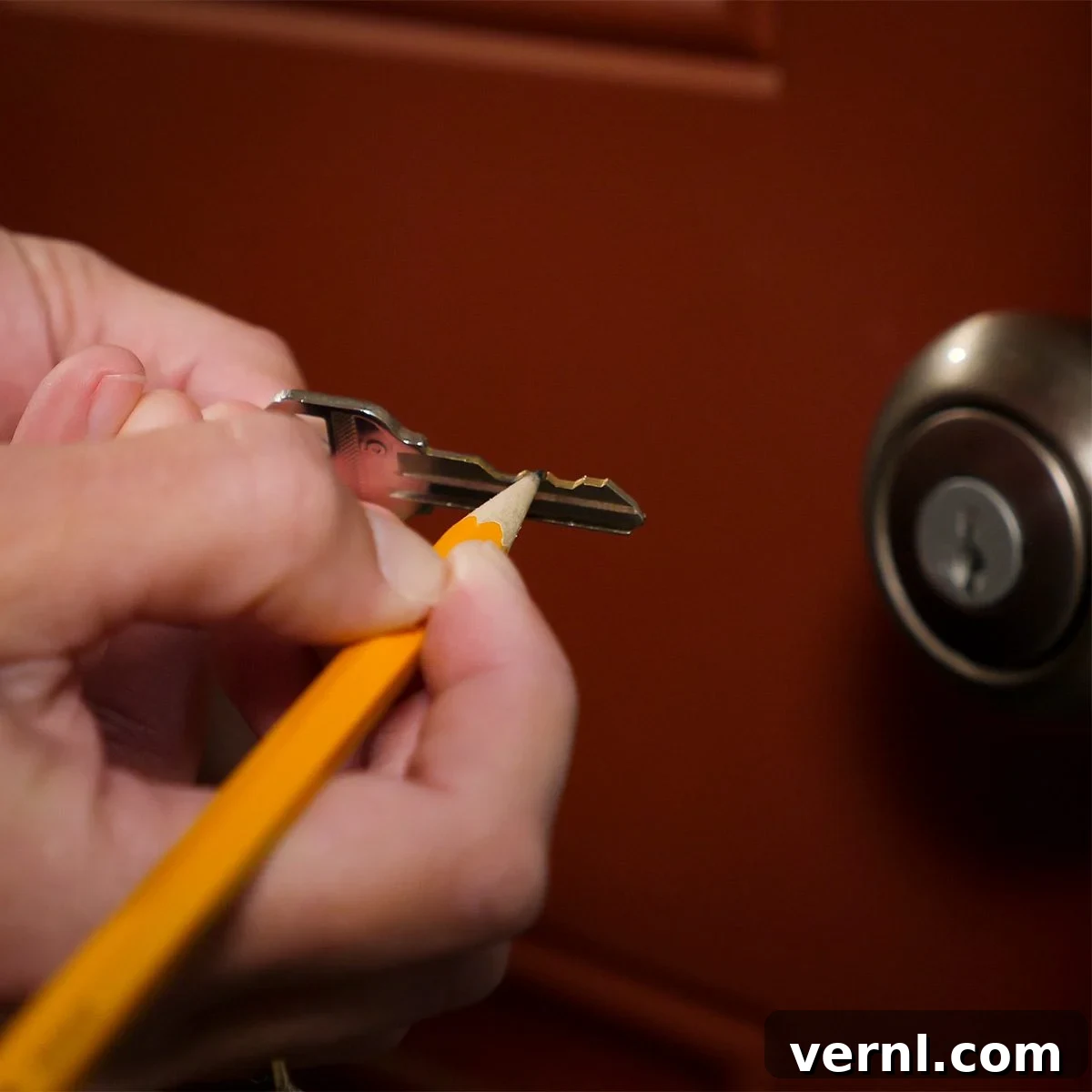
- Apply Graphite Generously to the Key: This is the core step. Simply rub the teeth (the bitting) and the blade (the shaft) of the key vigorously with the sharpened pencil. Don’t be shy with the application! Load it up with a thick, visible coat of graphite. You want to ensure that the entire surface of the key that enters the lock cylinder is thoroughly covered. The sharper the pencil, the easier it will be to get the graphite deeply into the tiny nooks and crannies of the key.
- Insert and Work the Key to Distribute Lubricant: Once your key is thoroughly coated with graphite, insert it into the sticky lock. As you push the key in and out of the keyway, and gently turn it back and forth (if the lock allows for movement), the graphite will be deposited directly into the lock’s internal mechanism. This action effectively distributes the dry lubricant precisely where it’s needed, coating the pins, springs, and tumblers with a friction-reducing layer.
- Repeat the Process Until Smooth: The key to success is repetition. Do this several times: withdraw the key, rub more graphite onto it to refresh the coating, and reinsert it into the lock. Continue this cycle until the key begins to glide in smoothly and the lock mechanism operates without resistance. You should feel a significant and noticeable improvement in how easily the key slides into the keyway and how effortlessly the lock cylinder turns.
- Final Clean Up: Once the lock is working smoothly and you’re satisfied with the improvement, there might be a small amount of excess graphite dust around the keyhole or on your key. Simply wipe this away with a clean, dry cloth. This ensures a tidy finish and prevents the transfer of graphite to your hands or clothing.
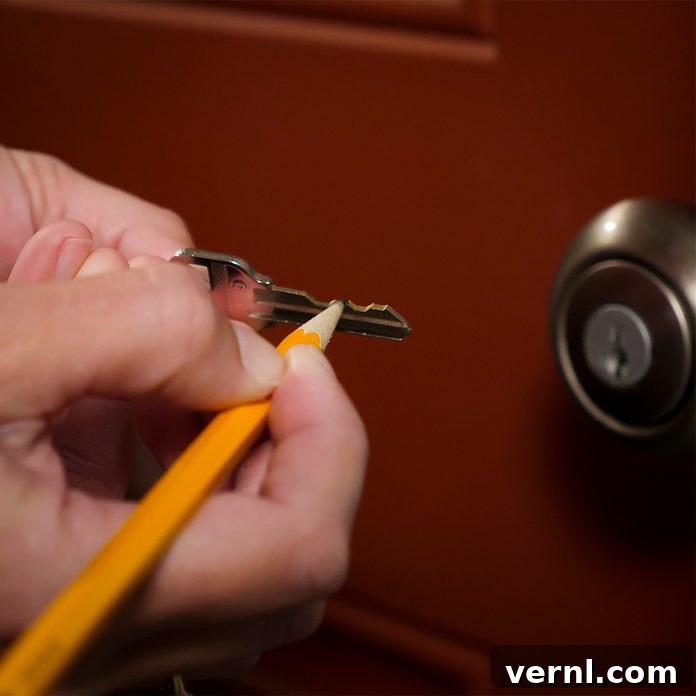
This method is not only incredibly effective but also entirely mess-free and completely safe for your lock. It’s a fantastic, immediate, and environmentally friendly first step for addressing almost any sticky lock issue in your home.
Beyond Lubrication: Essential Tips for Long-Term Door Lock Maintenance
While lubricating your locks with graphite is a critical and highly effective step, overall lock maintenance involves a few other simple yet impactful practices. Incorporating these into your routine can significantly extend the lifespan of your locks, ensure optimal performance, and enhance your home’s security. Proactive care can prevent many common lock problems from developing in the first place, saving you time and potential repair costs down the line.
Additional Lock Maintenance Practices to Adopt:
- Keep the Exterior of Your Locks Clean: Periodically wipe down the visible parts of your lock hardware, including the doorknob or handle, faceplate, and the exterior of the keyhole, with a damp cloth. This simple act removes surface dirt, dust, and grime before it has a chance to be introduced into the internal mechanism, where it can cause friction and wear.
- Regularly Check and Tighten Mounting Screws: Over time, due to constant use and door movements, the screws that secure your lock hardware in place can gradually loosen. This loosening can lead to the lock components becoming misaligned, causing the lock to bind or become difficult to operate. Periodically inspect and tighten all visible screws on the lockset, the latch plate on the door edge, and the strike plate on the door frame. A securely mounted lock functions far more smoothly.
- Inspect and Adjust the Strike Plate: Ensure that the strike plate, which is the metal plate mounted on the door frame where the latch and deadbolt engage, is perfectly aligned with your lock’s latch and deadbolt. If the strike plate is even slightly off-center, it can cause resistance and friction when closing or locking the door. This misalignment puts undue stress on the lock mechanism and can accelerate wear. Minor adjustments can often be made by slightly enlarging the screw holes with a file or carefully bending the strike plate tab.
- Avoid Over-Tightening Lock Components: When installing new lock hardware or re-tightening existing components, exercise caution to avoid over-tightening screws. Excessive force can inadvertently warp or deform metal parts within the lock assembly, which can severely impede the smooth movement of internal mechanisms and lead to immediate operational issues.
- Always Use the Correct and Quality Key: Make it a habit to always use the original key or a high-quality duplicate key. Worn, bent, or poorly cut keys can severely damage the lock’s delicate internal pins and tumblers over time. Using an inferior key creates abnormal wear patterns, leading to stiffness, unreliable operation, and eventual lock failure.
- Address Environmental Factors for Exterior Locks: For exterior doors, consider implementing measures to protect your locks from the elements. Adding weatherstripping around your door can significantly minimize the entry of moisture, dust, and debris into the lock area. In particularly harsh weather conditions, a small cover or escutcheon over the keyhole can offer additional protection against rain, snow, and extreme temperatures.
By incorporating these simple yet effective checks and practices into your routine home maintenance schedule, you can significantly enhance the reliability, security, and operational smoothness of your door locks. This proactive approach will prolong their life, reduce the need for repairs, and ensure seamless access to your home for many years to come.
When to Call a Professional Locksmith: Knowing When to Seek Expert Help
While the pencil graphite trick and regular maintenance can effectively resolve most common sticky lock issues, there are certain situations where professional intervention is absolutely essential. Knowing when to call a qualified locksmith can save you significant time, money, and prevent further damage to your lock, door, or even your home’s security system. Attempting to fix complex issues yourself can sometimes exacerbate the problem.
- Key Breaks Inside the Lock: If your key snaps off inside the lock cylinder, especially if a significant portion remains stuck deep within the mechanism, it is almost always best to call a locksmith. They possess specialized tools and expertise to extract broken key fragments without causing further damage to the lock’s delicate internal components. DIY attempts often push the fragment deeper or damage the cylinder.
- Lock Is Completely Seized or Unresponsive: If the lock is completely unresponsive even after repeated lubrication attempts with graphite, or if the key won’t insert at all, or once inserted, refuses to turn in either direction, it might indicate a more severe internal issue. This could include a broken spring, a fractured tumbler, or significant internal component misalignment. These problems typically require disassembly and specialized repair.
- Concerns About Security or Tampering: If your lock has visible signs of tampering, forced entry, or if you suspect a security breach, contacting a locksmith immediately is crucial. They can assess the damage, repair or replace the compromised lock, and provide expert advice on upgrading your home security system to prevent future incidents.
- Persistent or Recurring Problems: If a particular lock repeatedly becomes sticky, difficult to operate, or otherwise problematic despite consistent lubrication and maintenance, it may be nearing the end of its operational lifespan or could have an underlying manufacturing defect. A locksmith can accurately diagnose the root cause of chronic issues and recommend the most appropriate and cost-effective course of action, whether it’s repair or replacement.
- Installation of New or Complex Locks/Systems: For the installation of new lock hardware, rekeying multiple locks, upgrading to high-security systems, or integrating smart lock technology, a professional locksmith ensures proper installation, correct functionality, and adherence to security standards. Their expertise is invaluable for complex installations to ensure optimal performance and security.
Do not hesitate to seek professional help when these more serious situations arise. A certified locksmith has the necessary expertise, specialized tools, and knowledge to address complex lock issues safely, effectively, and efficiently, ensuring your home’s security remains uncompromised.
Conclusion: Embrace the Power of Graphite for Effortless Locks and Enhanced Security
A sticky door lock doesn’t have to be a persistent source of frustration or an immediate call for an expensive repair. With the simple, age-old trick of using graphite – an incredibly effective lubricant readily available from a common pencil – you can quickly and easily restore your door locks to smooth, effortless operation. This DIY method is not only remarkably cost-effective but also utilizes the best possible dry lubricant for the intricate internal mechanisms of your door locks, cleverly avoiding the detrimental pitfalls associated with oil-based products.
By understanding the common reasons why locks get sticky, embracing the proven power of graphite as your go-to lubricant, and implementing a few basic, routine maintenance practices, you’re doing more than just fixing a minor nuisance. You are actively investing in the longevity, reliability, and ultimately, the security of your home and peace of mind. So, the next time your key meets resistance at the keyhole, remember to reach for a pencil. It’s your simple, effective secret to smoother, more secure entries and exits, ensuring your door locks function flawlessly for years to come.