As the vibrant hues of autumn begin to paint the landscape and a crisp, cool breeze ushers in the promise of colder days, there’s a unique comfort in gathering around a crackling wood-burning fireplace or a lively bonfire. These moments of warmth and togetherness are cherished traditions, but they all depend on one crucial element: readily available firewood. While the thought of a roaring fire brings joy, the process of getting firewood can sometimes feel like a daunting task, especially when you need it most.
Fret not! This comprehensive guide is designed to simplify your firewood journey. We’ll explore the essential factors to consider when purchasing firewood, delve into the nuances of quality, quantity, and cost, and outline various stocking options to suit every budget and schedule. From quick bundles for an impromptu fire pit evening to bulk deliveries for an entire winter season, we’ve got you covered.
Understanding the Essentials of Buying Firewood
Embarking on the quest for the perfect firewood involves three primary considerations: its quality, the amount you need, and the price you’re willing to pay. A wise buyer understands how these elements interlink to ensure a satisfying and efficient burning experience.
Quality: The Foundation of a Great Fire
The first and arguably most critical aspect of buying firewood is its quality. Not all wood is created equal, and choosing the right type can significantly impact your fire’s efficiency, heat output, and the amount of smoke produced. For optimal burning, it primarily comes down to whether the wood is dry, seasoned, and free from excessive exposure to the elements and pests. If you encounter wood that appears damp, moldy, or infested, it’s always best to steer clear.
Dry wood is your ultimate goal. It’s lighter, ignites with ease, and generates considerably less smoke, preventing creosote buildup in your chimney and ensuring a cleaner burn. Wood achieves this dryness through two main processes:
- Seasoned Wood: This refers to wood that has been air-dried naturally for a period typically ranging from six months to a year, sometimes longer depending on the climate and wood type. Properly seasoned wood will feel lighter than green wood, display cracked ends, and have a duller color. It should produce a hollow sound when two pieces are clapped together.
- Kiln-Dried Wood: For a more accelerated and controlled drying process, wood can be kiln-dried in a large, heated oven. This method not only reduces moisture content to very low levels but also effectively kills any insects, mold, or mildew present in the wood. Kiln-dried wood offers immediate burning convenience and superior performance.
It’s crucial to avoid “green wood,” which is freshly cut and still retains a high moisture content. Green wood is notoriously difficult to light, produces excessive smoke, hisses and sizzles, and offers very little heat. It’s truly one type of firewood not to burn.
Beyond dryness, consider the wood species. Hardwoods like oak, maple, hickory, and birch burn hotter and longer than softwoods such as pine, spruce, and fir. While softwoods ignite faster and are great for kindling, hardwoods are ideal for sustained heat. Knowing what kinds of wood burn most efficiently can significantly enhance your fire experience.
Quantity: How Much Firewood Do You Really Need?
Determining the right quantity of firewood can be a bit more complex, as measurement standards for firewood measurement can vary by state and region. It’s always a good idea to research the specific regulations and common practices in your local area. However, broadly speaking, bulk firewood is commonly measured by the cord or the face cord.
- A Full Cord: A standard “cord” of wood is a substantial amount, measuring 128 cubic feet. This typically translates to a stack eight feet long, four feet high, and four feet deep. A full cord is a significant investment and usually enough to heat a home throughout a cold winter season, depending on usage and climate. Many homeowners, especially those with smaller homes or less frequent burning habits, may find this quantity excessive for their needs.
- A Face Cord: A “face cord” is a more manageable quantity, usually measuring eight feet long and four feet high, but only one log deep. The exact volume of a face cord can vary because there isn’t a universally agreed-upon standard for log length. For instance, if the logs are 16 inches long, that face cord would be approximately one-third of a full cord. This size is often more suitable for casual fireplace users or those with limited storage space.
- Other Measurements: You might also encounter firewood sold by the “truckload,” particularly from less formal sellers or independent loggers. This usually involves a flat fee for how much firewood can be neatly stacked in the back of a standard pickup truck. Smaller quantities are also available in bundles, typically found at grocery stores or gas stations.
Estimating your needs for the season depends on how often and how long you plan to burn fires. A good rule of thumb for occasional fires (a few times a week) might be a face cord or two, while daily burning in a primary heat source could require multiple full cords.
Cost: Understanding the Price Tag of Warmth
The cost of firewood is highly variable, influenced by factors such as the season, your geographic location, the type of wood, its dryness, and whether you opt for pickup or delivery. Prices can fluctuate significantly throughout the year, typically rising as winter approaches. As of this writing, for illustrative purposes, a supplier in Maine might charge around $295 for a cord, while one in Wisconsin could be closer to $487, and a supplier in Oregon might list a cord at $540. These examples highlight the broad range of pricing you might encounter.
To secure the best value, consider purchasing firewood during the off-season (spring or early summer) when demand is lower. Buying in bulk generally offers a better per-cord price than buying small bundles. Always inquire about delivery fees, stacking services, and any discounts for larger orders. Remember, cheap green wood often ends up costing more in frustration and inefficiency than well-seasoned wood.
Where to Find Your Firewood Supply
Once you understand what to look for, the next step is finding a reliable source for fuel for your fire. Options range from quick convenience buys to bulk purchases, each with its own advantages and drawbacks.
Grocery Stores and Gas Stations: The Convenience Factor
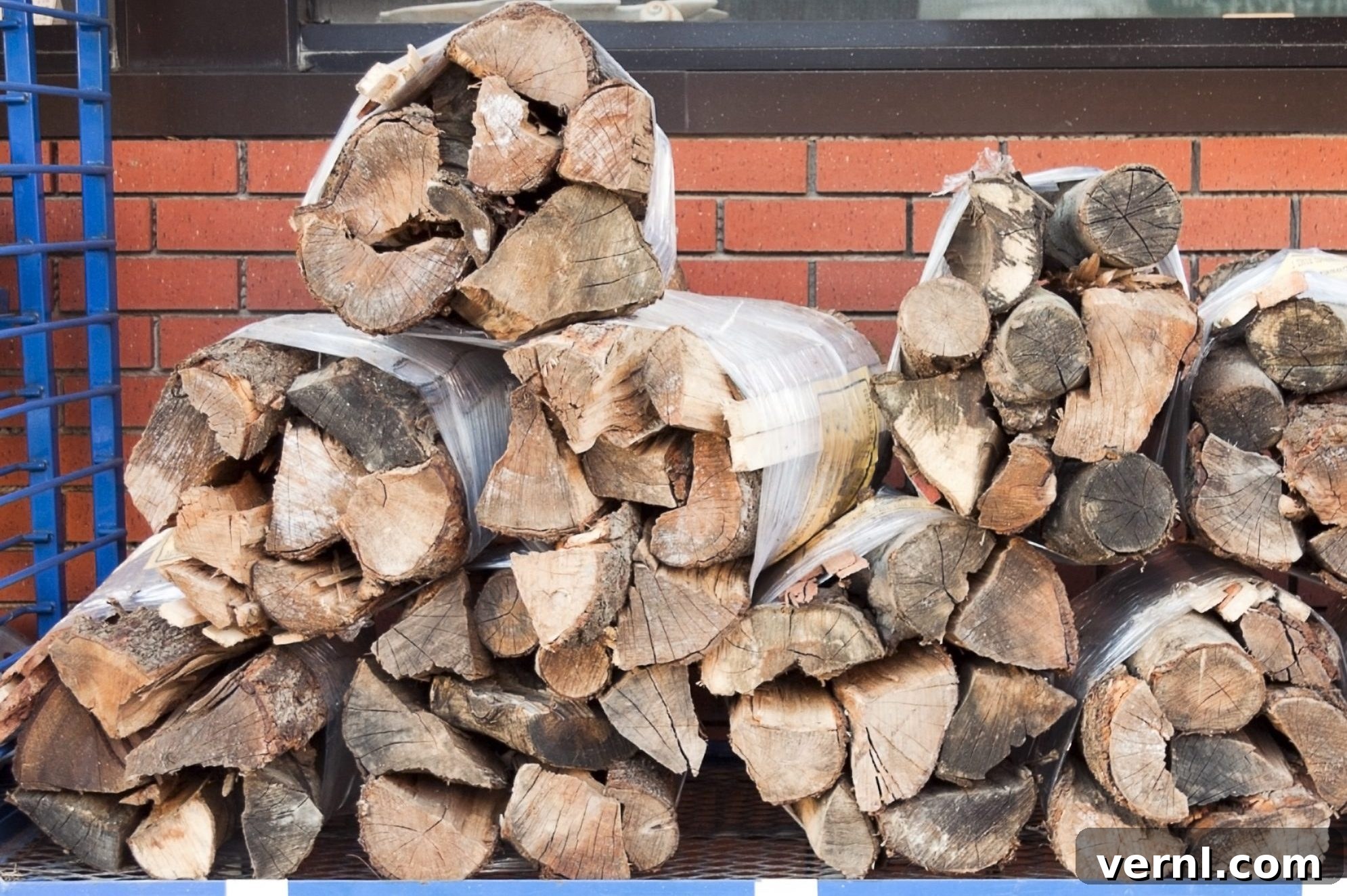
For spontaneous fires or minimal needs, bundles of firewood from grocery stores and gas stations are incredibly convenient. These bundles are typically well-seasoned, easy to transport, and often wrapped in sturdy plastic with a handle. While you pay a premium for this convenience, they’re an excellent option if you’re just looking for a few logs to throw on the fire pit that evening or need kindling in a pinch. You can easily spot these bundles at checkout or near the entrance as you go about your errands.
Special Note on Firewood Movement: It’s critical to be aware that firewood can inadvertently spread destructive insect pests or fungal diseases (like mildew or oak wilt) if moved to new areas. To prevent ecological damage, any transported firewood should ideally be kiln-dried. Furthermore, many state and national parks strictly prohibit visitors from bringing in outside firewood. Always check local regulations. For a comprehensive list of restrictions where you live, visit Dontmovefirewood.org before transporting wood across distances.
Pros:
- Unbeatable convenience for immediate needs.
- Lower up-front cost compared to bulk purchases.
- No long-term commitment or large storage space required.
- Easy to grab exactly what you need, when you need it.
Cons:
- Significantly higher cost per log or per cord equivalent than any other source.
- Limited quantity, not suitable for heating a home.
Dedicated Firewood Distributors: For the Serious Burner
For those who burn regularly or need a substantial supply, dedicated firewood distributors are often the go-to source. These businesses specialize in selling firewood commercially and directly to consumers. The links in the “Cost” section above provide examples of regional distributors offering both pickup and firewood delivery options. Beyond local suppliers, you can also find online distributors, ranging from small boxes of specialty logs on platforms like Amazon to luxury, white-glove delivery services where you might find one-third of a cord for $1,699 (for premium, exotic hardwoods with concierge service)! These distributors are ideal for securing larger quantities of high-quality, often kiln-dried, and specific wood types.
Pros:
- Convenience of delivery, with some services even offering professional stacking.
- Local distributors often provide pickup options for savings.
- Sales representatives are knowledgeable about firewood, helping you choose the best option.
- Excellent resource if you desire a specific type of wood, such as aromatic cherry, robust oak, or high-BTU hickory.
- Generally reliable quality and consistent sizing.
Cons:
- Online pricing can vary wildly, requiring careful comparison.
- You may not always be able to visually inspect the wood before making an online purchase.
- Minimum order requirements might be too large for occasional users.
Online Listings: Community Marketplaces for Firewood
Online community groups and marketplaces such as Craigslist, NextDoor, and Facebook Marketplace effectively transform your city into a vast, virtual garage sale for firewood. These platforms are bustling with listings from a diverse range of sellers – from professional loggers advertising regular sales to individual homeowners simply looking to clear excess yard space or fallen trees. This can be a fantastic way to find local deals, especially during shoulder seasons.
Pros:
- Potential source for significant deals, especially from homeowners looking to offload wood.
- Highly localized options, reducing travel time and supporting local individuals.
- Easy online browsing from the comfort of your home.
- Opportunity to negotiate prices directly with sellers.
Cons:
- Buyer beware! The quantity, quality, and dryness of wood can vary dramatically between sellers. Always inspect the wood carefully before committing to a purchase.
- Availability can be inconsistent; you might not find listings when you’re in a pinch or during peak demand.
- Sellers may not offer delivery or stacking services.
- Less formal transactions, requiring more due diligence from the buyer.
Tree Services: A Sustainable Source
Tree trimming and removal services often generate a considerable amount of wood. Instead of sending all of it to a landfill or chipper, many companies will set aside larger trunk sections or split logs for later resale to individuals. It’s worth calling around to local tree service companies or checking their websites; some might even advertise directly. This can be a very affordable way to acquire firewood, especially if you’re prepared to do some work yourself.
Pros:
- Often a very affordable option, sometimes even free if you’re willing to haul it yourself.
- May be pre-stacked for easy pickup, or even delivered for an additional fee.
- Supports local businesses and promotes responsible wood use.
- You might get unique species not readily available elsewhere.
Cons:
- Normally wet, green wood, meaning it’s not ready for immediate burning. It will require significant seasoning (6-18 months) before use.
- May be sold as uncut trunk sections (“rounds”), requiring a log splitter or some serious wood chopping skills and equipment (e.g., chainsaw, splitting maul).
- Availability depends on their recent jobs and may be sporadic.
Independent Sellers: Your Neighborhood Firewood Entrepreneur
In various parts of the country, particularly in rural or semi-rural areas, it’s common to find entrepreneurial individuals with a pickup truck and access to excess trees. They often split and load up a truckload of firewood and sell it door-to-door or from a roadside stand. These transactions are typically informal but can yield great results if you find a reliable seller.
Pros:
- Typically offers great pricing, often competitive with bulk distributors.
- Convenience of doorstep delivery, sometimes with informal stacking.
- Opportunity to establish a relationship with a local provider, potentially leading to consistent deals and personalized service over time.
Cons:
- Availability can be unpredictable; they may not be around exactly when you need them.
- The wood may be green or only partially seasoned, requiring additional drying time at your home.
- Quality control can vary, so visual inspection and asking questions are crucial.
Big Box Stores: Retailers of Convenience and Bulk
Major home improvement retailers like Lowe’s and The Home Depot are well-known for stocking a wide array of fire pits and outdoor living accessories. It’s therefore no surprise that they also stock firewood, especially during the colder seasons. These stores typically purchase firewood in bulk, often selling kiln-dried varieties. It’s always a good idea to stop by or call your local stores to inquire about their current firewood stock and pricing for the season.
Pros:
- Convenient locations and consistent operating hours.
- Often sold by the cord or pallet, as well as in smaller bundles, offering flexibility.
- Many big box stores offer truck rental services, making it easier to transport larger quantities home.
- Usually kiln-dried wood, ensuring good burning quality immediately.
- Reliable supply during peak season.
Cons:
- Mediocre pricing – better value than gas stations, but typically not as cost-effective as buying directly from independent sellers or tree services.
- Limited variety of wood types compared to specialized distributors.
Start a Scrap Bin: The DIYer’s Eco-Friendly Solution
For the resourceful DIYer, starting a scrap bin is a classic and environmentally friendly solution. Designate a sturdy garbage can or bin near your workshop and make it a habit to toss in any suitable scrap wood. This not only provides free fuel for your fires but also helps reduce landfill waste. However, safety is paramount: remember that you should never burn pressure-treated wood, or wood that has been painted, stained, or chemically altered. These materials can release highly toxic fumes and carcinogens into the smoke, posing severe health risks and damaging your chimney.
Pros:
- Absolutely free fuel source.
- Significantly reduces landfill waste and promotes resourcefulness.
- Offers the satisfaction of extending the DIY ethos to your fire pit.
- Great for kindling and quick, short fires.
Cons:
- May not yield enough wood to keep you supplied through an entire winter season.
- Requires dedicated shop space for the bin.
- Strict limitations on what you can burn: absolutely no painted, stained, or chemically treated wood due to toxic emissions.
- You must be vigilant about not burning composite materials (like MDF or particle board) or plywood, which contain glues and chemicals.
Why Quality Firewood Truly Matters
Investing time in selecting quality firewood goes beyond just a brighter flame; it impacts safety, efficiency, and the overall enjoyment of your fire. Properly seasoned or kiln-dried wood burns hotter and more completely, producing more usable heat (higher BTUs) and less smoke. This means a more efficient burn, requiring less wood to achieve the desired warmth. Furthermore, less smoke translates to significantly less creosote buildup in your chimney, a highly flammable residue that is a leading cause of chimney fires. By choosing quality wood, you’re ensuring not only a beautiful fire but also a safer home.
Storing Your Firewood Properly
Once you’ve acquired your firewood, proper storage is essential to maintain its quality and ensure it’s ready to burn when you are. Even kiln-dried wood can absorb moisture if stored incorrectly. Here are key tips for effective firewood storage:
- Elevate Your Stack: Never store firewood directly on the ground. Use pallets, timbers, or a dedicated firewood rack to elevate the wood at least 4-6 inches. This prevents moisture absorption from the ground and allows for air circulation underneath.
- Ensure Airflow: Firewood needs to breathe. Stack your wood in a single row, or in crosshatch patterns, to allow air to circulate freely around and through the pile. Avoid tightly packing wood against solid walls or structures if you can help it, as this can trap moisture.
- Protect from Above: Cover the top of your firewood pile to shield it from rain and snow. A tarp or a dedicated firewood cover works well, but avoid covering the sides completely, as this inhibits airflow. You want to protect it from precipitation while still allowing it to continue drying.
- Location, Location, Location: Choose a storage spot that is easily accessible but far enough from your home to prevent insect infestations (e.g., termites, carpenter ants) from spreading to your house. A spot that gets good sunlight and is exposed to prevailing winds will aid in the drying process.
- Keep it Clean: Regularly clear away debris, leaves, and grass from around your firewood stack to deter pests and further improve airflow.
By following these storage guidelines, you can ensure your firewood remains in optimal condition, providing you with efficient, clean-burning fires throughout the season.
Conclusion: Enjoying Your Fire Safely and Efficiently
Whether you’re warming your home with a fireplace, enjoying a cozy evening by the fire pit, or simply appreciate the rustic charm of a wood pile, knowing how to source and store firewood effectively is an invaluable skill. From understanding the critical difference between seasoned and green wood to exploring a variety of purchasing avenues, this guide aims to empower you to make informed decisions.
Remember to prioritize quality, assess your quantity needs, compare costs, and always store your wood properly to ensure it delivers maximum warmth and enjoyment. And above all, always practice fire safety: ensure your chimney is clean, never leave a fire unattended, and be mindful of what you burn. With the right firewood, you’re not just buying fuel; you’re investing in countless moments of comfort, relaxation, and cherished memories.