Embrace Sustainability: Your Ultimate Guide to Rain Barrels and Rainwater Harvesting
Rain barrels, once a quaint sight, are becoming an increasingly popular and practical addition to homes and gardens. While you might have only recently spotted these eco-friendly vessels in your neighborhood, the ingenious concept of rainwater capture dates back thousands of years. Archaeological evidence suggests civilizations were actively harvesting rainwater as far back as 4,000 years ago, demonstrating humanity’s long-standing connection to this vital natural resource.
Throughout history, the materials and designs of rain barrels have evolved, yet their fundamental purpose remains unchanged: to efficiently collect and store rainwater for various outdoor uses. This sustainable practice offers a multitude of benefits, from conserving precious water resources to reducing utility bills and protecting local ecosystems. Before you embark on your own rainwater harvesting journey by purchasing or building a rain barrel, it’s essential to understand the intricacies involved. Dive into these expert tips and insights to ensure a successful and rewarding rainwater collection system at your home.
What Exactly Is a Rain Barrel?
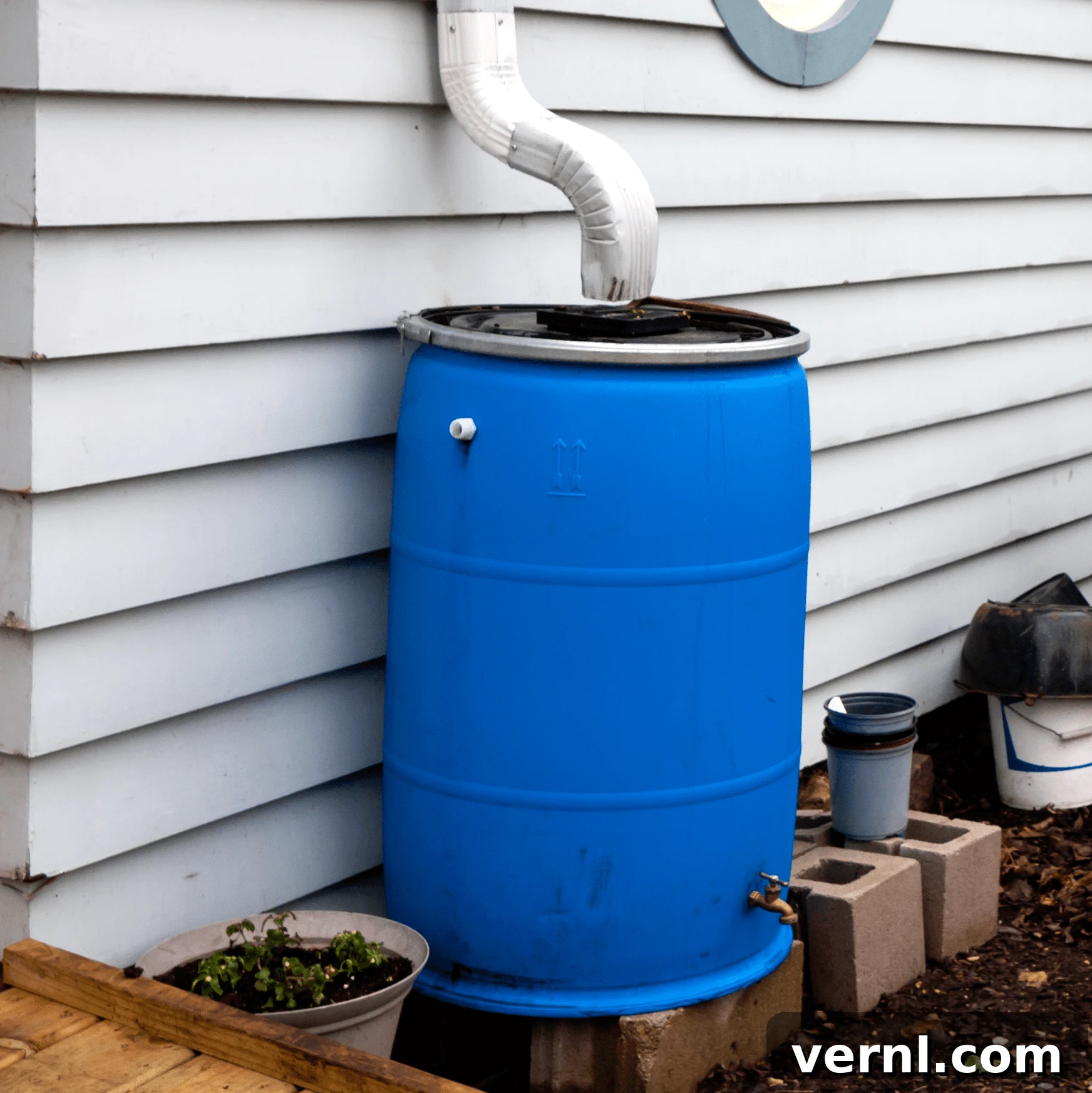
Often mistaken for decorative garden accents or repurposed wine barrels, a rain barrel serves a very distinct and functional purpose. At its core, a rain barrel is a container designed to collect rainwater that flows from a building’s roof gutters. Typically positioned directly beneath a downspout, these barrels capture and store precipitation that would otherwise run off into storm drains, often containing pollutants. The collected water is then readily available for non-potable applications, such as watering plants, cleaning outdoor surfaces, or even flushing toilets. Most rain barrels are equipped with a spigot or hose connection near the bottom, allowing for easy access and distribution of the stored water.
Mastering Rainwater Collection: Expert Tips for Using a Rain Barrel
Setting up and maintaining a rain barrel system involves more than just placing a container under a downspout. Experts share invaluable advice to help you maximize efficiency, ensure safety, and comply with regulations. Here are some crucial, and sometimes surprising, tips for your rainwater harvesting endeavor:
-
Always Check Local Laws and Regulations
Before investing in a rain barrel, the very first step is to verify the legality of rainwater collection in your area. As Andre Kazimierski, a rain barrel enthusiast and CEO of Improovy Painters St Louis, advises, “In some places, it may be illegal to collect water in a rain barrel. So this is the first thing to consider.” Even where it’s legal, municipalities may impose restrictions, such as limits on the volume of water collected or the number of barrels allowed. Consulting your local city or county ordinances is crucial to avoid any potential legal issues or fines.
-
Evaluate Your Local Climate and Rainfall Patterns
The effectiveness of a rain barrel largely depends on your geographical location and its typical rainfall. Jeremy Yamaguchi, CEO of Lawn Love, highlights this point: “Some of my colleagues who live in the Pacific Northwest use rain barrels as the primary water source for their gardens.” However, his own experience in California was less successful because, “it simply never rains!” If you reside in an arid region or an area with infrequent rainfall, a rain barrel might not yield significant water savings, making other water conservation methods potentially more effective. Conversely, in areas with abundant precipitation, rain barrels can become a primary water source for outdoor needs.
-
Strategic Placement and Structural Support are Key
The placement of your rain barrel is critical, not only for efficient collection but also for safety. Tristan Grant, sustainability director at MaGrann Associates, an energy efficiency consulting firm, reminds us, “Water weighs about eight pounds per gallon, so a 50-gallon drum would weigh around 400 pounds when full.” This substantial weight necessitates a stable, level surface capable of supporting the full barrel without shifting or sinking. Placing it on a solid concrete pad or a reinforced deck area is ideal. Ensure it’s close to a downspout for easy connection, and consider using a rain chain as an elegant alternative to a downspout for directing water into the barrel.
-
Design an Effective Overflow Management System
One of the most critical aspects of rain barrel setup is managing overflow. An uncontrolled overflow can lead to significant problems. Grant warns, “Be careful that you don’t create a bulk water issue around the foundation of your home by causing overflow to build up near the base of a building and/or overflow onto windows, siding, etc. Bulk water can cause serious damage to a home.” To prevent structural damage and water intrusion, you must maintain a clear path for the overflow. This can be achieved by connecting the overflow opening to another downspout, directing it to a sequence of downhill rain barrels, or channeling it to a designated drainage area away from your home’s foundation, mimicking the natural path your gutter system would follow.
-
Ensure Proper Coverage to Prevent Contamination and Pests
An uncovered rain barrel can quickly become a breeding ground for mosquitoes and other pests, as Todd Saunders, CEO of FlooringStores, learned firsthand. After setting up barrels at his cabin, he discovered “thousands of things wriggling near the surface of the water,” which turned out to be mosquito larvae, leading to a yard “swarmed by more mosquitoes than I’ve ever seen.” Properly covering your rain barrel is essential not only to stop mosquitoes from breeding but also to prevent leaves, debris, and other contaminants from entering the water, and to minimize evaporation loss.
-
Regular Maintenance: Be Mindful of Buildup and Cleaning
Even though rain barrel water is typically used for non-potable purposes, regular maintenance is vital to prevent bacterial buildup and ensure system efficiency. Leonard Ang, CEO of iPropertyManagement, suggests a thorough cleaning at least once a year. Additionally, Grant emphasizes the importance of regularly emptying and cleaning filters to prevent clogs that could cause water to back up and overflow outside its intended pathways. The frequency of filter cleaning and barrel maintenance may vary based on your local conditions, with more frequent attention needed during seasons when leaves, pollen, or seed pods are prevalent, such as spring and fall.
-
Prepare for Winter: Give Your Rain Barrels a Seasonal Break
If you live in a region where temperatures drop below freezing, preparing your rain barrels for winter is non-negotiable. Grant strongly advises emptying your barrels completely before the cold weather sets in. Water expands when it freezes, and a full or even partially full barrel can suffer significant damage due to this expansion, potentially cracking or bursting the container. Disconnect the barrel from the downspout, drain it thoroughly, and store it in a sheltered location or turn it upside down to prevent water accumulation during the colder months.
The Abundant Benefits of Rainwater Harvesting
Adopting a rain barrel system offers a wealth of advantages, extending beyond simple water collection to encompass significant environmental, economic, and personal benefits:
-
Significant Savings on Water Bills and Enhanced Drought Resilience
One of the most immediate and tangible benefits of using rain barrels is the reduction in your household’s water consumption from municipal sources. Davin Eberhardt, founder of the home improvement blog Nature of Home, highlights that “rain barrels can help you save money on your water bill.” While the exact savings will fluctuate based on your water usage habits and local water rates, diverting rainwater for outdoor tasks significantly decreases your reliance on treated tap water. Furthermore, in times of drought or water restrictions, having a stored supply of rainwater ensures you have a readily available resource for your garden and other outdoor needs, providing invaluable resilience.
-
Reduce Erosion, Stormwater Runoff, and Your Carbon Footprint
Rainwater harvesting plays a crucial role in mitigating environmental impacts. When you choose to water your plants with collected rainwater instead of turning on your faucet or hose, you contribute to a lower energy demand. Municipal water systems require substantial energy for pumping, treating, and delivering water to homes. By bypassing this process, you effectively reduce your carbon footprint. Ang adds that rain barrels also help to curb soil erosion by slowing down stormwater runoff, preventing it from overwhelming sewer systems and carrying pollutants into natural waterways.
-
Protection for Natural Waterways and Local Ecosystems
Uncontrolled stormwater runoff, particularly during heavy rainfall, poses a severe threat to natural bodies of water. Grant explains that when stormwater treatment plants become overwhelmed, they are sometimes forced to discharge untreated water and sewage into local rivers, coastlines, or oceans. “This is obviously not ideal for a number of reasons, including the pollution of local water resources, which is both bad for people who may use those areas for recreation and also bad for the local environment.” By capturing rainwater, you alleviate pressure on these systems, reducing the volume of water that could potentially contribute to pollution and helping to preserve the ecological health of our natural waterways.
-
Replenish Local Aquifers and Support Groundwater Recharge
Modern human development, with its vast expanses of impervious surfaces like driveways, sidewalks, and roofs, drastically alters natural landscapes. Grant notes, “Oftentimes, it flows down the driveway, to a street, and enters the stormwater system, where it is taken further away and typically terminates in a river, lake, or ocean.” This interruption in the natural water cycle means “less water for plants, and ultimately less water replenishing the local aquifers.” By collecting rainwater and using it to water your garden, you allow that water to slowly percolate back into the soil, mimicking natural absorption processes and contributing to the replenishment of vital local aquifers, which are essential for long-term water security.
Diverse Applications: What Can Rain Barrel Water Be Used For?
The water collected in your rain barrel is a versatile resource, perfect for a variety of non-potable uses around your home and garden. Our experts highlight several practical applications beyond just watering plants and flowers:
- Washing cars, windows, patios, and other outdoor surfaces. “Rainwater typically has a neutral pH level, making it perfect for washing cars,” notes Eberhardt, as it leaves fewer spots and streaks than hard tap water.
- Refilling bird baths, koi ponds, decorative water features, and even swimming pools. Its natural composition is often gentler than treated tap water.
- Rinsing off dirty garden tools and muddy shoes, extending their lifespan and keeping your workspace clean.
- Flushing toilets, a significant water-saving application, particularly in off-grid or drought-prone areas.
- Keeping compost bins adequately moist, which is crucial for accelerating the decomposition process and creating nutrient-rich soil.
Understanding the Cost of a Rain Barrel and Finding Affordable Options
The cost of a new rain barrel typically ranges between $100 and $300, depending on its size, material, design, and features. However, for those with a DIY spirit, it’s often possible to construct a functional rain barrel for less than $100, using readily available components and basic tools.
Before making a purchase or beginning a build, Eberhardt strongly advises checking with your local government officials. Many cities, counties, and even states offer various incentives, tax credits, or community programs that provide free or heavily subsidized rain barrels to encourage water conservation. These programs can significantly reduce or even eliminate the initial investment.
Another excellent avenue for affordability, as Grant suggests, is to explore community marketplaces such as Craigslist, Facebook Marketplace, or local Buy Nothing groups. Here, you can often find people selling used barrels at discounted prices, or even giving them away for free. When acquiring a used barrel, however, it’s paramount to ascertain its previous contents. Grant advises, “Food storage barrels and certain mineral compounds like salt or sand would be fine. But you should avoid barrels that were used to store oil or toxic chemicals,” as residual chemicals could contaminate the rainwater and render it unsafe for its intended uses.
Start Your Journey Towards a Sustainable Home
Rain barrels are more than just simple containers; they are powerful tools for sustainable living, offering a tangible way to connect with and conserve one of our planet’s most vital resources. From reducing your environmental footprint and protecting natural waterways to saving money on utility bills and fostering resilience during droughts, the benefits are undeniable. By understanding local regulations, optimizing placement, ensuring proper maintenance, and exploring affordable options, you can successfully integrate rainwater harvesting into your home. Embrace this ancient yet increasingly relevant practice and take a significant step towards a more eco-conscious and self-sufficient lifestyle.