
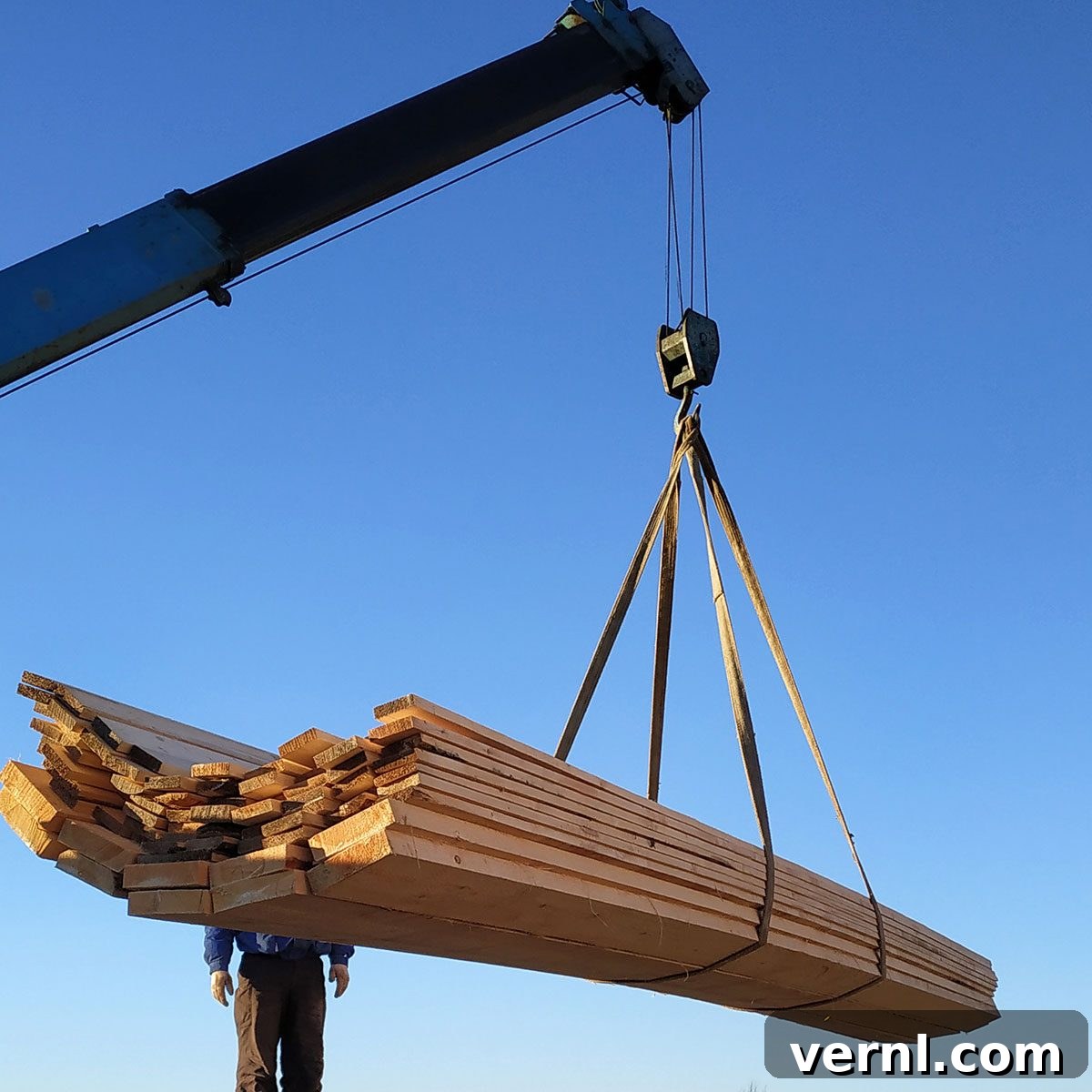
Navigating the world of home improvement and construction projects often comes with a significant logistical challenge: acquiring and transporting the necessary building materials. While a trip to the local hardware store might suffice for a few screws or a paint can, larger endeavors like remodeling a bathroom, building a deck, or adding an extension require considerable quantities of lumber, drywall, insulation, and other bulky items. This is where the invaluable service of building material home delivery enters the picture, offering a convenient, cost-effective, and often indispensable solution for homeowners, DIY enthusiasts, and even small contractors.
Opting for home delivery can transform your project experience. It liberates you from the constraints of vehicle capacity, the physical strain of loading and unloading heavy goods, and the precious hours lost to travel and waiting in lines. By strategically utilizing delivery services, you can allocate your time and energy more efficiently to the actual building and crafting, rather than the logistics of procurement. This comprehensive guide will walk you through the various options available for getting building materials delivered directly to your doorstep, helping you make informed decisions that benefit your budget, timeline, and back.
(Please note: While this information aims to be current and accurate at the time of publication, retail policies, pricing structures, and local/federal regulations are subject to change. Always verify details with your chosen retailers before finalizing any orders.)
The Unseen Benefits: Why Choose Building Material Delivery?
Many project planners initially focus on the direct cost of materials, overlooking the broader financial and physical implications of transportation. However, a deeper dive reveals that home delivery, even with its associated fees, often presents a superior value proposition. Let’s explore the multifaceted advantages:
Time Savings: More Than Just Convenience
- Reduced Travel Time: Eliminate round trips to the store, especially if your preferred supplier is a significant distance away. This means less fuel consumption and more time on the job site.
- Streamlined Shopping: Ordering online allows for quick comparisons and selection without navigating crowded aisles. You can make decisions at your own pace, often outside of store hours.
- Avoid Store Logjams: Skip the queues at the checkout, the lumber yard ticket counter, and the loading bays. These seemingly small delays can quickly add up, eating into your project schedule.
- Focused Productivity: By outsourcing the logistics, you free up valuable hours that can be reinvested directly into construction, planning, or other critical project tasks.
Labor & Safety Advantages: Protect Your Body and Your Investment
- Minimize Physical Strain: Heavy materials like lumber, drywall, concrete bags, and large tools pose a risk of injury during lifting, carrying, and maneuvering. Delivery personnel are equipped and trained to handle these items safely.
- Prevent Vehicle Damage: Transporting oversized or heavy materials in personal vehicles can lead to interior damage, scratched paint, or even suspension issues. Professional delivery trucks are designed for this purpose.
- Enhanced Safety on Site: Materials are typically dropped off at a designated, accessible location, reducing the need for multiple trips or dangerous maneuvers on your property.
- Professional Handling: Experienced delivery teams understand how to transport and offload materials to minimize damage, ensuring your products arrive in pristine condition.
Cost-Effectiveness Beyond the Sticker Price
- Fuel and Vehicle Costs: Factor in the cost of gasoline, potential wear and tear on your vehicle, and even the rental cost of a truck if your personal vehicle isn’t suitable. These hidden costs can quickly outweigh a delivery fee.
- Opportunity Cost: What is your time worth? If the hours spent on material pickup could be used for billable work or progressing your project, delivery can be a financially sound decision.
- Bulk Purchase Savings: Some retailers offer better pricing or reduced delivery fees for larger orders, making it more economical to buy everything you need at once and have it delivered.
Tips for a Seamless Building Material Delivery Experience
Whether you opt for full home delivery or a strategic online order for in-store pickup, a little preparation goes a long way. Understanding the nuances of these services can prevent frustration and ensure your materials arrive exactly when and how you need them.
Understanding Delivery Types: Curbside vs. Full Service
- Curbside or Sidewalk Delivery: This is the most common form of delivery for large building materials. It’s crucial to understand that “curbside” means your materials will be offloaded from the truck at the nearest accessible point to the curb or driveway. They will NOT typically bring items into your home, garage, or backyard. You’ll need to arrange for your own labor, equipment (like a dolly or hand truck), or a system to move the materials from the drop-off point to their final resting place. Ensure you have a clear path and adequate space for the materials to be temporarily stored.
- White-Glove/Threshold Delivery: While less common for raw building materials, some specialized items (like large appliances or finished cabinetry) might offer “white glove” service, which includes bringing items inside your home and possibly setting them up. Always confirm the exact scope of delivery service when ordering.
Optimizing In-Store Pickup for Efficiency
- Order Online, Go Directly to the Yard: Many major retailers offer online ordering with direct-to-yard pickup. This strategy can save significant time. Instead of entering the main store, navigating to the lumber desk, getting a ticket, then driving out to the yard, you might be able to drive straight to the designated pickup area. You’ll typically need your order number and identification. Be aware that some stores may still require a quick stop inside to confirm the order or receive a gate pass.
- Pre-Staged Orders: Online pickup orders are often pre-picked and staged, meaning your materials are ready to go, minimizing your waiting time upon arrival.
Preparing Your Site for Delivery Day
- Clear the Path: Ensure the delivery truck has unobstructed access to your property. Remove parked cars, garbage cans, and any obstacles that might impede the truck’s maneuverability or the safe offloading of materials.
- Designate a Drop-Off Zone: Clearly mark or communicate where you want the materials to be placed. This area should be flat, stable, and protected from the elements if necessary. Consider proximity to where the materials will be used.
- Be Present or Have a Representative: Whenever possible, be on-site during the delivery window to inspect the materials upon arrival, confirm the order’s accuracy, and sign for the delivery. This allows you to immediately address any discrepancies or damage.
- Have Help Ready: For curbside deliveries, ensure you have enough people, tools, or equipment on hand to move the materials from the drop-off point to their storage location quickly and safely.
- Check Your Order Thoroughly: Before the delivery team leaves, quickly count and inspect all items for quantity, type, and damage. It’s much easier to resolve issues while the truck is still there.
Top Retailers and Options for Building Material Delivery
The landscape of building material suppliers ranges from national giants to specialized local yards, each offering distinct advantages in terms of product range, pricing, and delivery services. Understanding these options is key to optimizing your procurement process.
The Home Depot: A Giant in Delivery Logistics
The Home Depot stands as a titan in the home improvement sector, renowned for its vast inventory and increasingly sophisticated delivery infrastructure. They typically categorize their delivery services into two main tiers, designed to cater to different project needs and material sizes.
- Ship to Home: This service is optimized for smaller, shippable items that don’t require specialized freight. Think boxes of fasteners, gate hardware, power tools, light fixtures, or cans of paint. Home Depot often offers free two-day shipping on orders exceeding a certain threshold (e.g., $45 or more). It’s important to note that “two-day shipping” typically refers to two days after the order has been processed, which might add an extra day or two to the total delivery time. This option is perfect for stocking up on consumables or obtaining specialized tools without leaving your project site.
- Express Delivery (or Large Item Delivery): This is Home Depot’s solution for your heavy-duty construction needs. It covers substantial building materials such as lumber, plywood, drywall sheets, bags of concrete, roofing shingles, and large appliances. The pricing for Express Delivery is generally structured with a base fee, which can then incrementally increase with the quantity or weight of the order. For example, a delivery of up to 10 sheets of drywall might incur a $79 fee, while 20 sheets could slightly increase that to $89. While these fees might seem significant for smaller purchases, the value proposition dramatically improves with larger orders. When considering the cost of renting a truck, fuel, and the time and labor saved, Home Depot’s Express Delivery often proves to be a highly cost-effective and convenient service for extensive projects. They also frequently offer free standard shipping on appliance purchases over a specific amount (e.g., $396), making them a go-to for major home upgrades.
Lowe’s: A Strong Contender with Competitive Offerings
Mirroring its primary competitor, Lowe’s also provides a robust set of delivery options, making it a strong alternative for many types of building material procurement. Their services are similarly divided to efficiently handle varying item sizes and weights.
- Ship to Home: Geared towards smaller, more manageable items, Lowe’s Ship to Home service is ideal for items like picture hangers, hand tools, plumbing fixtures, or packaged products such as ceiling fans. Free shipping is typically available for orders meeting a minimum purchase threshold (e.g., $45 or more). Eligibility for this service usually depends on the item’s weight (often less than 150 pounds, or 70 pounds for P.O. box deliveries) and standard package dimensions. For instance, a boxed ceiling fan is eligible, but an 8-foot 2×4 piece of lumber is not. Processing usually takes one business day, with an additional one to three business days for delivery.
- Truck Delivery (or Large Product Delivery): This is Lowe’s dedicated service for large and bulky building materials, including dimensional lumber, sheets of plywood, large bags of insulation, or kitchen cabinets. One of the attractive features of Lowe’s Truck Delivery is its often flat-rate pricing structure, which can be particularly advantageous for substantial orders. For example, the estimated cost to send a truck for anywhere from one to one hundred 8-foot 2x4s might be a consistent $79. Similarly, whether you order one 4×8 sheet of OSB or twenty, the delivery fee could remain $79. This model encourages larger, consolidated orders. A critical consideration for Lowe’s Truck Delivery is the geographical constraint: the store with your items in stock must typically be within a certain radius (e.g., 75 miles) of your delivery address. For very large orders, or when considering the aggregate costs of gas, time, and the physical effort of loading and unloading, this service often represents significant value.
Ace Hardware: Your Neighborhood Specialist
Ace Hardware occupies a unique niche in the building materials market, operating as a cooperative of independently owned local stores. Their product focus tends to be on the smaller to mid-range spectrum of building supplies. You’ll find an excellent selection of specialized hardware, tools, fasteners, trim boards, and shelf standards, rather than full-scale construction lumber or large sheets of drywall. However, what they lack in bulk material quantity, they often make up for in customer service and competitive shipping policies for their product range.
Ace Hardware offers a robust shipping policy for items they stock, which can be a huge asset if their inventory aligns with your project needs. A significant perk for frequent shoppers is their Ace Rewards program, which often grants free shipping on orders over a specified amount (e.g., $50). Due to the localized nature of Ace stores, it’s essential to select your local store on their website to get the most accurate and up-to-date Ship to Home information, including product availability and delivery timelines tailored to your region.
Menards: A Regional Powerhouse
Menards holds a strong regional presence, primarily operating in the Midwestern United States. For residents in these areas, Menards is a go-to for a wide array of home improvement products. Similar to Ace Hardware, Menards is often most competitive for smaller-sized items and general hardware. While they do carry large building materials, their logistical infrastructure for delivering these bulkier items across vast distances can sometimes be less optimized compared to national giants like Home Depot or Lowe’s.
When it comes to delivering large building materials, such as 8-foot boards or 4×8 sheets of plywood, Menards’ custom shipping costs can occasionally be significantly higher. For example, quotes for materials to build several sections of privacy fence have shown Menards shipping estimates in the hundreds of dollars, while a comparable order from a larger national retailer might be considerably less. This difference often stems from the scale of their delivery operations for large freight; they may rely more on third-party carriers for custom, non-standard deliveries, which can drive up costs. Therefore, for large-scale projects requiring substantial quantities of lumber or sheet goods, it’s particularly important to compare Menards’ delivery quotes with those of other major retailers in your area.
Your Local Lumber Supply Yard: Quality and Expertise
For serious builders, contractors, or homeowners undertaking projects where material quality and specialized advice are paramount, your local, dedicated lumber supply yard is an invaluable resource. These establishments are often better equipped to handle builder-sized quantities and typically stock higher-grade lumber and specialized materials that might not be readily available at big-box retail stores.
While many lumber yards primarily cater to trade professionals, a growing number are happy to sell to individual homeowners and DIYers. It never hurts to give them a call, explain your project, and request a price quote for materials and delivery. In areas where retail options are limited, a local lumber yard can be a vital alternative. A significant advantage is the quality of product; you’re more likely to find premium, straighter, and better-graded lumber. Furthermore, the staff at these yards are often true experts in their field, providing invaluable advice on material selection, quantities, and best practices for your project.
It’s important to note, however, that the custom shipping costs from a local lumber yard can sometimes be higher than those from major retail chains. This is often a reflection of their more localized supply chains and less frequent bulk residential deliveries, compared to the optimized, high-volume delivery networks of national retailers. If you encounter higher delivery fees, understand that it’s often a trade-off for superior material quality and expert service. Weigh these factors against your project’s specific needs and budget.
Amazon.com: The Online Marketplace for Specific Needs
Amazon.com continues to uphold its reputation as a comprehensive online marketplace, offering an astounding array of products, including a surprisingly extensive selection within the small to middle range of the building materials scale. Their shipping performance is often a benchmark for efficiency, making them a viable option for specific project components.
For many products, Amazon offers free two-day shipping on orders over a modest threshold (e.g., $25). Prime members often enjoy free shipping with no minimum purchase, and for select items and geographical areas, even one-day shipping is available. Amazon excels at providing virtually every type of hardware, fastener, specialized tool, safety equipment, and even a range of smaller or custom boards for fine woodworking or detailed projects.
However, for very large or bulky construction materials, such as 8-foot or longer dimensional lumber, 4×8 sheets of plywood or drywall, or heavy bags of concrete, Amazon is generally not the recommended source. While you might technically find some listings for these items, they are often prohibitively expensive due to the specialized freight required. The cost-effectiveness simply doesn’t compare to the dedicated delivery services offered by major home improvement retailers or local lumber yards for these types of materials. Amazon is best utilized for supplementary items, tools, or unique hardware that can be easily shipped via standard parcel services.
In conclusion, the decision to have building materials delivered is a strategic one that can significantly impact the efficiency, cost, and overall success of your construction or home improvement project. By carefully evaluating your project needs, comparing the services and pricing of various retailers, and preparing adequately for delivery, you can leverage these valuable services to streamline your workflow and keep your focus where it belongs: on bringing your vision to life.