
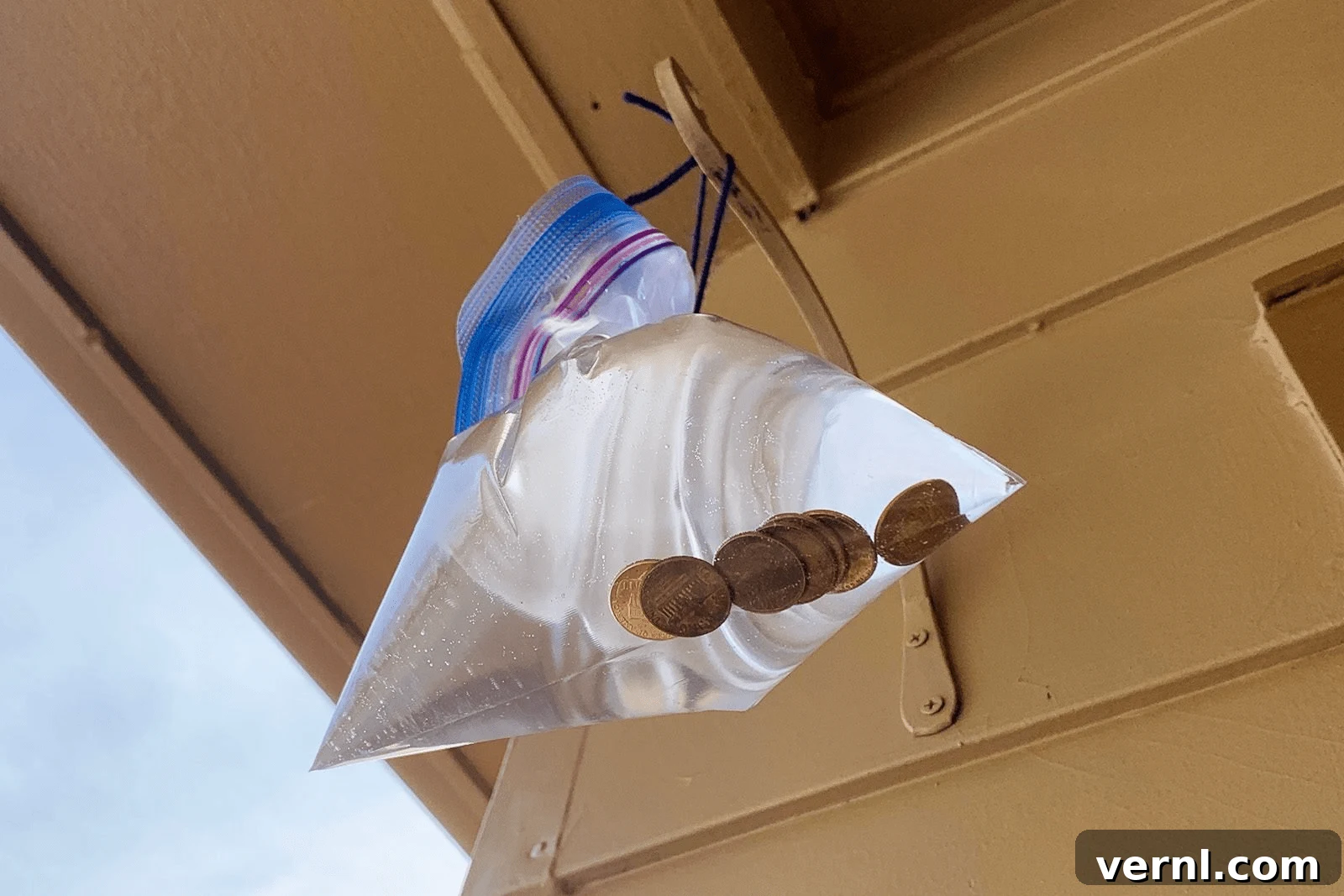
If you live somewhere with flies, you’re undoubtedly eager to discover effective ways to get rid of them. These persistent insects are not merely a nuisance; they pose potential health risks, capable of transmitting diseases and contaminating food. The market and folklore are rife with remedies, each promising varying degrees of success. Among these, a particularly peculiar method has gained traction: hanging a bag of water filled with pennies on your porch. It sounds like something from an old wives’ tale, prompting a crucial question: does this unconventional hack actually work? We’ve delved deep into the theories and evidence surrounding this popular home remedy to provide you with a comprehensive overview.
Understanding the Common Nuisance: Flies and Their Impact
Before exploring solutions, it’s essential to understand why flies are such a prevalent and problematic pest. House flies (Musca domestica) are ubiquitous, found in nearly every corner of the globe where humans reside. They are attracted to decaying organic matter, food waste, pet feces, and anything fermented or sweet, making our homes and outdoor living spaces prime targets. Beyond their irritating buzzing and unsanitary landing habits, flies are significant vectors for disease. They pick up pathogens on their legs and bodies from contaminated surfaces and then transfer them to our food and countertops. Diseases such as salmonella, E. coli, cholera, and typhoid fever can be spread by flies, making their control a matter of public health as much as comfort. Their rapid breeding cycles mean a small infestation can quickly spiral out of control, especially during warmer months, underscoring the constant need for effective deterrents and eradication methods.
Unraveling the Mystery: How the Penny Bag Hack is Supposed to Work
The “penny in a bag of water” hack relies heavily on a fascinating theory concerning house flies’ unique visual perception. Unlike humans who possess simple eyes, house flies are equipped with compound eyes. These remarkable organs are composed of thousands of individual lenses called ommatidia, each providing a slightly different angle of vision. This grants flies an almost panoramic, 360-degree view of their surroundings, making them exceptionally adept at detecting movement. According to pest control service Orkin, a leading authority on insect behavior, house flies’ compound eyes “can recognize even the slightest movements in a wide field” and “detect and react to movement at a quicker pace than species with simple eyes.” This superior motion detection is a crucial survival mechanism, allowing them to evade predators and react to potential threats with astonishing speed, far surpassing human capabilities.
This biological marvel forms the cornerstone of the penny bag theory. When sunlight or ambient light hits a clear bag of water, the water acts as a prism, causing light to refract—or bend—as it passes through the medium. The addition of pennies (or any shiny objects) significantly amplifies this effect. The metallic surfaces of the coins provide multiple points for light to reflect, bounce, and scatter within the water-filled bag. The combined effect of refraction and reflection creates a dazzling, distorted light show. For a house fly with its highly sensitive compound eyes, this intense and erratic interaction of light is believed to be incredibly disorienting. The theory posits that the multitude of shifting light patterns either overwhelms the fly’s visual system, making it uncomfortable or unable to navigate, or it creates the illusion of constant, rapid movement within the immediate vicinity. To a fly, this perceived flurry of motion might signal danger, making the area appear unsafe and encouraging it to seek calmer, less threatening environments elsewhere. Thus, the simple bag of water and pennies transforms into an optical deterrent, leveraging the fly’s own biology against it.
Fact or Fiction? Investigating the Effectiveness of the Penny Bag Method
Despite the intriguing theoretical foundation, the practical efficacy of the penny bag hack remains a subject of considerable debate, largely falling into the realm of anecdotal evidence rather than scientific proof. Reputable fact-checking organizations like Snopes have investigated this theory extensively but have consistently returned with inconclusive results. This mixed verdict highlights a significant divide: while a substantial number of individuals swear by its effectiveness, claiming a noticeable reduction in fly populations, others report absolutely no difference in their fly problem after implementing the trick.
One notable instance of this hack being put to the test was on the popular television show Mythbusters. In a controlled studio environment, the experiment failed to demonstrate any measurable deterrent effect on flies. However, Snopes judiciously points out a critical distinction: testing a natural phenomenon in a sterile, controlled studio setting differs significantly from observing its effects in natural light and real-world outdoor conditions. Factors such as the intensity of natural sunlight, air currents, and the specific environment (e.g., a porch versus a laboratory enclosure) could all play a role in how light interacts with the water bag and, consequently, how flies react. It’s plausible that under certain environmental conditions, the light refraction and reflection are more pronounced or irritating to flies, leading to varied outcomes across different locations and times. This variance contributes to the hack’s ambiguous reputation, making it difficult to definitively label it as either a complete success or an utter failure based solely on limited scientific trials.
The absence of rigorous, peer-reviewed scientific studies specifically validating the penny bag as a reliable fly repellent leaves it in a unique position. It’s not a scientifically proven pest control method, yet its popularity persists due to countless personal testimonies. This discrepancy often exists with many folk remedies—their perceived effectiveness might stem from a combination of specific localized conditions, a placebo effect, or simply a temporary, unquantifiable reduction in fly activity. What is certain, however, is that there’s absolutely no harm in trying it yourself. The setup cost is minimal, requiring only a clear plastic bag, water, and a few pennies. Moreover, for families with children, it can be transformed into a fun, hands-on science project, encouraging curiosity about light, insects, and observation.
Trying It Yourself: A Low-Risk Experiment for Your Home
Given the low cost and minimal effort involved, experimenting with the penny bag hack offers a compelling, chemical-free option for those plagued by flies. Setting up your own fly deterrent is remarkably simple. You’ll need a clear, sealable plastic bag (like a gallon-sized freezer bag), enough water to fill it about two-thirds full, and several pennies. Place 4-6 pennies at the bottom of the bag, fill it with water, seal it securely, and then hang it from a hook or string in an area where flies are a particular nuisance. Common strategic locations include doorways, patio overhangs, porch ceilings, or near outdoor dining areas. The goal is to position the bag where it can catch direct sunlight or bright ambient light, maximizing the refractive and reflective properties believed to deter the flies.
To truly test its potential and perhaps even refine the method for your specific environment, consider trying a few variations. You could set up a controlled experiment in your own backyard:
- **The Baseline:** Hang a plain bag of water without any coins. This will help you observe if water refraction alone has any effect.
- **The Minimalist:** Hang a bag with just one penny.
- **The Multi-Coin:** Use a bag with several pennies, or even a mix of different shiny coins, to see if more reflective surfaces enhance the effect.
- **The Alternatives:** Experiment with other shiny inclusions, such as crumpled aluminum foil, small pieces of reflective Mylar, or even old CDs cut into pieces. These materials might offer different reflective qualities that could be more or less effective.
By comparing the results from these different setups over several days, you might gain a better understanding of what, if anything, works best in your specific location. While scientific validation may be elusive, the hands-on process of observing and adjusting makes this a uniquely engaging and harmless attempt at natural pest control.
Beyond the Penny Bag: Comprehensive Strategies for Fly Control
While the penny bag hack might offer a glimmer of hope for fly-ridden areas, it’s crucial to acknowledge that it’s unlikely to be a standalone, foolproof solution for severe infestations. For truly effective and long-term fly control, a multi-faceted approach combining various strategies is typically recommended. Integrating the penny bag trick with other proven methods can significantly enhance your chances of keeping flies at bay.
Prevention is Key: Eliminating Fly Breeding Grounds
The most effective strategy against flies is preventing them from congregating and breeding in the first place.
- **Sanitation:** Flies are attracted to decaying organic matter. Ensure all indoor and outdoor trash cans have tight-fitting lids and are emptied regularly. Clean up food spills promptly, both indoors and on outdoor patios. Compost bins should be sealed and kept away from entry points. Promptly clean up pet waste in yards.
- **Food Storage:** Keep all food, especially fruits and vegetables, covered or refrigerated. Overripe produce on countertops is a magnet for flies.
- **Moisture Control:** Repair leaky faucets and drains. Eliminate standing water, as some fly species breed in moist environments.
- **Exclusion:** Install and maintain screens on all windows and doors. Seal any cracks or openings around utility pipes or foundations to prevent flies from entering your home.
Other Effective Home Remedies and Natural Deterrents
Alongside the penny bag, several other natural methods can help deter flies:
- **Apple Cider Vinegar Traps:** A simple DIY trap can be made with a bowl of apple cider vinegar, a few drops of dish soap, and covered with plastic wrap with small holes poked in it. Flies are attracted to the vinegar, get trapped by the soap, and can’t escape the plastic.
- **Essential Oils:** Certain essential oils, like peppermint, lavender, eucalyptus, and citronella, are known to repel flies. You can use them in diffusers or spray diluted solutions around entry points.
- **Herbs and Plants:** Planting herbs like basil, mint, rosemary, and bay laurel near windows and doors can act as natural deterrents. Flypaper plants are also an option for outdoor spaces.
- **UV Light Traps:** These devices attract flies with ultraviolet light and then trap or electrocute them. They are effective for both indoor and outdoor use.
When to Consider Professional Pest Control
If you’re facing a persistent and overwhelming fly problem despite implementing various prevention and home remedy strategies, it might be time to call in the experts. Professional pest control services can accurately identify the type of flies, locate their breeding sources, and apply targeted treatments that are often more potent and effective than DIY solutions. They can also offer advice on long-term prevention strategies tailored to your specific situation.
Conclusion: A Quirky Solution in the Grand Scheme of Pest Management
The enduring appeal of the “pennies in a bag of water” hack against flies is a testament to humanity’s endless quest for simple, cost-effective solutions to common nuisances. While the scientific community largely regards its effectiveness as unproven or anecdotal, the theory behind it—leveraging a fly’s sophisticated visual system with dazzling light refraction and reflection—is undeniably fascinating. It highlights how even the simplest elements can be theorized to interact with complex biological processes.
Whether it offers a minor deterrent or merely a placebo effect, the penny bag method remains a harmless, chemical-free experiment worth trying. Its low cost and ease of setup make it an accessible option for anyone looking for a potential edge in their ongoing battle against flies. However, it’s crucial to approach this, and indeed all home remedies, with realistic expectations. For comprehensive and lasting fly control, combining such quirky attempts with established practices like vigilant sanitation, physical exclusion, and, when necessary, professional intervention, will yield the most satisfactory results. Ultimately, the penny bag hack stands as a charming reminder of the ingenuity and hope we invest in even the most peculiar solutions to make our living spaces more comfortable and fly-free.
Sources
- Snopes: “Do Water-Filled Baggies Repel Flies?” (2009)
- Orkin: House Fly Eyes