
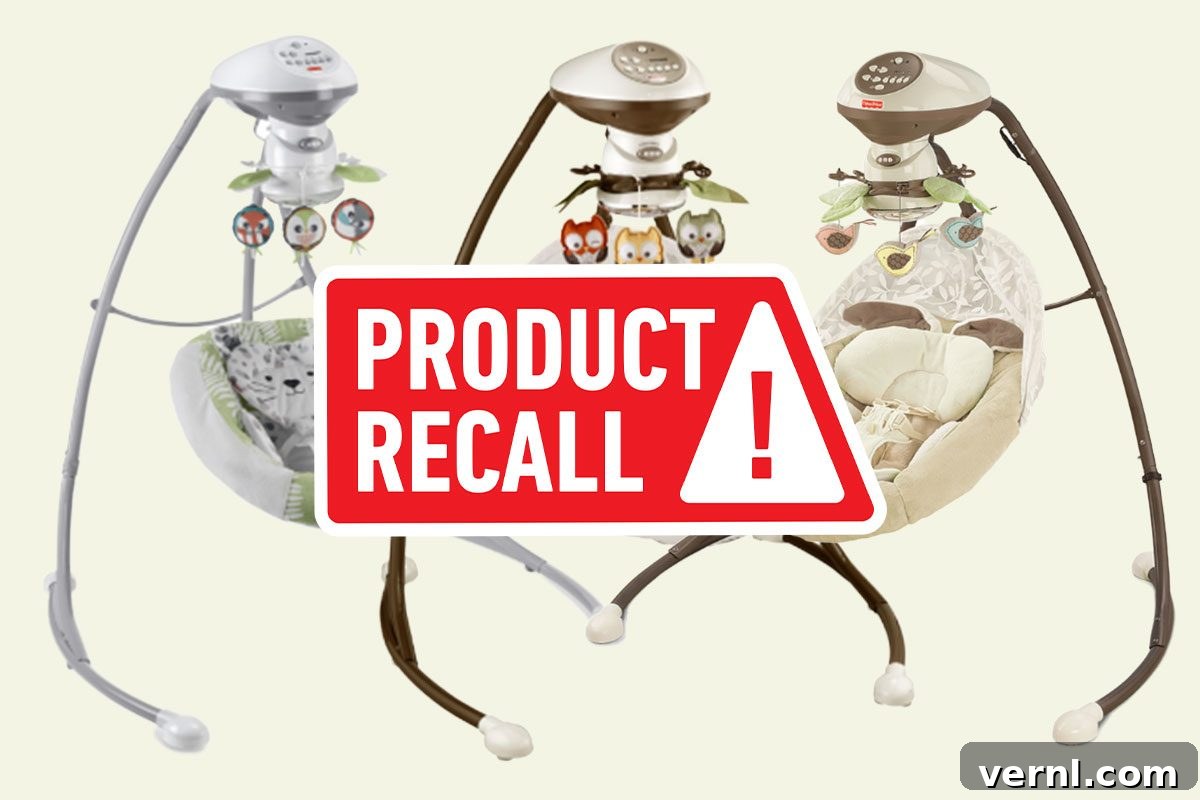
Urgent Safety Alert: Fisher-Price Snuga Swings Recalled Due to Suffocation Hazard
For parents, the safety and well-being of their children are paramount. When a product designed to comfort and soothe infants becomes a potential hazard, it demands immediate attention. Such is the case with the recent, critical recall impacting millions of Fisher-Price Snuga Swings. This recall, initiated by Fisher-Price in collaboration with the U.S. Consumer Product Safety Commission (CPSC), addresses a severe suffocation risk associated with the popular infant swings, following tragic incidents.
The CPSC has issued an urgent recall for more than 2 million Snuga Swings after reports linked them to multiple infant deaths. While these swings are marketed to provide a comforting environment for your little one, they have unfortunately been connected to life-threatening risks, most notably suffocation, particularly if used for infant sleep. This comprehensive guide will walk you through the essential details of this recall, helping you identify if your swing is affected, understand the critical reasons behind the recall, and outline the immediate actions you must take to safeguard your child.
Understanding the full scope of this recall is not merely recommended but absolutely critical for every parent, caregiver, and guardian who owns or uses a Fisher-Price Snuga Swing. Your proactive response can prevent further tragedies and ensure your baby’s continued safety.
Understanding the Gravity of the Fisher-Price Snuga Swing Recall
The recall of over two million Fisher-Price Snuga Swings underscores the profound responsibility manufacturers hold when producing infant products and the constant vigilance required from parents. This is not a minor safety advisory; it’s a direct response to reported fatalities, making it one of the most serious product recalls in the baby gear category. The CPSC, a federal agency tasked with protecting the public from unreasonable risks of injury or death associated with consumer products, has worked closely with Fisher-Price to issue this comprehensive recall, emphasizing the severity of the suffocation hazard.
A product recall of this magnitude can be distressing for parents who rely on these items daily. It highlights a critical design flaw that, under specific circumstances, can turn a seemingly safe product into a dangerous one. The primary concern revolves around the use of these inclined swings for infant sleep, a practice that directly contradicts safe sleep guidelines and has proven tragically fatal in several instances. This incident serves as a stark reminder of the importance of adhering to manufacturer instructions for use, as well as general safe sleep practices recommended by pediatricians and safety organizations.
Beyond the immediate risk, this recall prompts broader discussions about the design of inclined infant sleep products and the potential for positional asphyxia, where an infant’s head can fall into a position that obstructs their airway. The proactive steps taken by Fisher-Price and the CPSC, while a response to heartbreaking events, are crucial in preventing future incidents. It is incumbent upon every owner of a Snuga Swing to fully comprehend the implications of this recall and act decisively to protect the most vulnerable members of our society.
Which Fisher-Price Snuga Swings Are Affected by the Recall?
The recall, officially announced on October 10th, encompasses a significant number of Fisher-Price Snuga Swings, with approximately 2.1 million units sold in the U.S. market since October 2010. This broad scope means many families may unknowingly have a recalled swing in their homes. These units, while appearing nearly identical in their core design, feature slight variations in fabric patterns, colors, and attached toy accessories, which can sometimes make identification confusing. Therefore, precise identification via the model number is paramount.
To assist parents in accurately identifying whether their specific swing is part of this critical recall, Fisher-Price has provided a comprehensive list of the 21 affected models. It’s important to remember that even if your swing looks similar to one on the list, the model number is the definitive identifier. Please consult the list below carefully to cross-reference with your swing’s information:
- BGB32 – My Little Snugakitty™ Cradle ‘n Swing
- CCF38 – My Little Snugabunny™ Swing
- CHM56 – My Little Snugabear Cradle ‘n Swing
- CHM69 – My Little Snugabear Ballerina Cradle ‘n Swing
- CHM76 – Safari Dreams Cradle’ n Swing
- CHM78 – Moonlight Meadow Swing
- DRG43 – Sweet Snugapuppy™ Swing
- FKL21 – Deluxe Swing – Surreal Serenity™
- GJB53 – Sweet Snugamonkey Swing
- GKH44 – Blooming Flowers Swing
- GNG38 – Fawn Meadows Deluxe Swing
- GNG40 – Peek-a-boo Fox Swing
- GVF83 – Dots & Spots Puppy Swing
- HBM23 – Snow Leopard Swing
- HDY10 – Hearthstone Swing
- HGX49 – Baby Raccoon Swing
- V0099 – My Little Snugabunny Cradle ‘n Swing
- W9510 – My Little Sweetie™ Deluxe Cradle ‘n Swing
- X7051 – My Little SnugaMonkey™ Cradle ‘n Swing
- X7345 – My Little Snugapuppy™ Cradle ‘n Swing
- X7347 – My Little Snugabear Cradle’ n Swing
If you own any of these models, it is imperative that you cease using the swing for sleep immediately and proceed with the recommended safety modifications or refund process. Even if your swing provides temporary comfort, its potential to pose a suffocation risk if used improperly outweighs any perceived benefit.
The Critical Danger: Why These Baby Swings Are Being Recalled
The fundamental safety concern driving the Fisher-Price Snuga Swing recall is the severe risk of suffocation, specifically when infants are left to sleep in the swing. While designed to cradle and soothe, the inclined position, coupled with specific features within the swing, can inadvertently create a dangerous environment for a sleeping baby. The core issue lies in the design of the headrest and body support insert, which are integral parts of the seat pad.
These inserts, intended to provide extra comfort and support, can actually increase the risk of suffocation for an infant sleeping in the swing. In an inclined position, a baby’s head can slump forward, chin to chest, compressing their airway. This dangerous posture, known as positional asphyxia, can restrict breathing without any visible signs of distress, leading to silent suffocation. The risk is further compounded if additional bedding materials, such as blankets, pillows, or extra padding, are placed in the swing, as these can easily cover an infant’s face or become entangled around their head and neck, obstructing their ability to breathe.
Between the years 2012 and 2022, a devastating pattern emerged, with five reported infant deaths linked directly to the Snuga Swing. These tragic cases involved infants ranging in age from 1 to 3 months. A common thread in most of these incidents was that the infants were often left unrestrained in the swing, allowing for dangerous slumping, and critically, additional bedding materials like blankets were introduced into the sleep environment. These findings underscore a vital point: swings and other inclined products are not designed nor safe for unsupervised infant sleep. Babies should always sleep on their back on a firm, flat surface, free of any loose bedding.
How to Determine If Your Snuga Swing is Part of the Recall
Identifying whether your Fisher-Price Snuga Swing is affected by this crucial recall is a straightforward, yet vital, step in ensuring your child’s safety. To accurately check if your swing is included, you will need to locate its specific model number. This unique identifier is the definitive way to confirm if your unit is one of the 21 models subject to the recall.
The model number is typically found on a label located on the underside of the swing’s motor housing. This housing is the main operational unit of the swing, usually situated at the base or towards the rear, where the power cord connects. Once you have located this label, carefully read the model number printed on it. It will be a combination of letters and numbers, such as “BGB32” or “CCF38.”
Once you have identified your swing’s model number, compare it against the comprehensive list of recalled swings provided earlier in this article. If your model number matches any of those on the list, your Fisher-Price Snuga Swing is indeed part of the recall, and you must take immediate action. It is advisable to double-check the number carefully to avoid any confusion. If the label is worn or difficult to read, try to take a clear photograph with your phone’s camera, or if necessary, contact Fisher-Price customer service directly for assistance in identifying your model.
Immediate Actions to Take If Your Snuga Swing is Recalled
If you have confirmed that your Fisher-Price Snuga Swing is included in this urgent recall, it is imperative that you take immediate and decisive action to mitigate any potential risks to your infant. Your swift response is critical for ensuring your baby’s safety.
1. Stop Using the Swing for Sleep Immediately
This is the most crucial and urgent step. If your infant currently uses or has used the Snuga Swing for sleeping, you must cease this practice without delay. The primary hazard of this product is its use for sleep due to the suffocation risk. Furthermore, remove any and all bedding materials, such as blankets, pillows, or extra padding, that might be present in the swing. These items significantly increase the suffocation hazard by obstructing an infant’s airway or posing entanglement risks. Swings are designed for supervised awake time only, not for unattended or unsupervised sleep.
2. Remove the Headrest and Body Support Insert
Fisher-Price has advised consumers to permanently remove both the headrest and the body support insert from the swing. These components are directly implicated in increasing the suffocation risk. To do this, you will need to cut the tether that secures the headrest and then detach the body support from the main seat pad. The intention behind this instruction is to ensure these hazardous components cannot be reattached or inadvertently used.
- IMPORTANT NOTE: Even after successfully removing the headrest and body support insert, the swing is still only recommended for awake-time activities and strictly not for sleep. The removal of these parts reduces a specific aspect of the suffocation risk but does not eliminate the inherent dangers of inclined sleep for infants.
3. Request a Refund from Fisher-Price
As part of the recall resolution, Fisher-Price is offering a $25 refund to consumers who comply with the safety instructions by removing and destroying the headrest and body support insert on their Snuga Swing. This refund serves as an incentive for parents to take the necessary safety measures. To claim your refund, you will need to follow the specific instructions provided on the official Mattel service website. These instructions typically involve documenting the removal of the parts, often through photographic evidence, and submitting a claim online.
You can find detailed instructions on how to claim this refund by visiting service.mattel.com. Ensure you follow all steps precisely to successfully process your claim. Participating in this refund program not only compensates you for the inconvenience but more importantly, ensures that the hazardous components are permanently removed from circulation.
Beyond the Recall: Essential Infant Sleep Safety Practices
While addressing this specific recall is vital, it also serves as a crucial reminder of broader infant sleep safety principles. Even if you are not impacted by this particular recall, or once you have taken the necessary steps for your Snuga Swing, reinforcing safe sleep habits for your baby is paramount. The American Academy of Pediatrics (AAP) and other leading health organizations consistently advocate for evidence-based practices to reduce the risk of Sudden Infant Death Syndrome (SIDS) and other sleep-related infant deaths.
The ABCs of Safe Sleep: Alone, Back, Crib
- Alone: Your baby should always sleep alone. This means no bed-sharing with parents, siblings, or pets. While room-sharing is recommended (keeping your baby’s sleep area in your bedroom), having a separate, designated sleep space for the baby is crucial.
- Back: Always place your baby on their back to sleep, for every nap and every night. This position significantly reduces the risk of SIDS. Once babies can consistently roll over from back to stomach and stomach to back, they can be allowed to remain in their sleep position.
- Crib: Your baby should sleep in a crib, bassinet, or play yard that meets current safety standards. The sleep surface must be firm and flat. Never allow your baby to sleep on soft surfaces like sofas, armchairs, or inclined devices not specifically approved for infant sleep.
Key Elements of a Safe Sleep Environment
- Firm, Flat Surface: Ensure the sleep surface is firm and flat. A soft mattress or cushion can conform to an infant’s head and increase the risk of suffocation.
- No Loose Bedding or Objects: The sleep area should be completely free of blankets, pillows, bumper pads, stuffed animals, and any other soft objects. These items can block a baby’s airway. Use a sleep sack or wearable blanket instead of loose blankets to keep your baby warm.
- Avoid Overheating: Dress your baby in light sleep clothing. The room temperature should be comfortable for an adult. Signs of overheating include sweating, damp hair, flushed cheeks, and rapid breathing.
- Pacifier Use: Offering a pacifier at naptime and bedtime, after breastfeeding is well established (usually around 3-4 weeks), has been shown to reduce the risk of SIDS.
- No Smoking Exposure: Do not smoke or allow others to smoke around your baby, either during pregnancy or after birth. Exposure to secondhand smoke significantly increases the risk of SIDS.
Supervision is Key for Awake Time in Swings and Bouncers
If your baby falls asleep in a swing, bouncer, car seat, or any other device that holds them in an upright or semi-upright position, it is imperative that you stay in the room to supervise them. Alternatively, and ideally, immediately transfer them to a safe sleep environment – their crib or bassinet – where they can sleep safely on their back on a firm, flat surface. Never leave a sleeping baby unsupervised in an inclined device.
Conclusion: Prioritizing Infant Safety Above All Else
The Fisher-Price Snuga Swing recall is a powerful and somber reminder of the critical importance of infant product safety and parental vigilance. The tragic incidents that prompted this recall highlight the potential dangers even in products designed with good intentions, especially when misused or if design flaws create unforeseen risks. Your proactive engagement with this recall is not just about following instructions; it’s about making an informed decision to protect your child from a known, severe hazard.
We urge all parents and caregivers to immediately check their Fisher-Price Snuga Swings against the provided list of recalled models. If your swing is affected, please cease using it for sleep, remove the hazardous components as directed, and claim your refund without delay. Beyond this specific recall, let this serve as a reinforcement of the fundamental principles of safe infant sleep: always place your baby Alone, on their Back, in a Crib, on a firm, flat surface, free of any loose bedding or soft objects.
The safety of our children is a shared responsibility. By staying informed, adhering to safety guidelines, and responding promptly to product recalls, we can collectively work towards creating the safest possible environment for our little ones to grow and thrive. Prioritize your baby’s safety, always.