
by Nelson Lebo for Fix.com
Maximize Home Comfort and Energy Savings with Advanced Thermal Curtains
Windows are essential architectural features, inviting natural daylight, offering picturesque views, and connecting us to the world outside. Yet, as the seasons change and winter’s chill sets in, these very windows can transform into significant culprits for heat loss, compromising our homes’ warmth and driving up energy bills. While windows add aesthetic value, they often represent a weak link in a home’s thermal envelope. The good news? High-performance curtains are an incredibly effective, often overlooked, and budget-friendly solution.
Think of curtains not just as decorative elements but as vital components of your winter insulation strategy for windows. When properly selected and installed, thermal curtains create an insulating air gap between your room and the cold glass, significantly reducing heat transfer. However, the vast majority of curtains installed in homes today are not optimized to maximize their insulating capacity. This guide will delve into the science behind window heat loss and reveal everything you need to know about choosing and installing the best thermal curtains to keep your home cozy and energy-efficient all winter long.
The Unavoidable Truth: Windows and Heat Loss
Whether your home features single-glazing, double-glazing, or even storm windows, these transparent barriers are inherently less insulative than your walls. They are, quite simply, the thermal Achilles’ heel of most homes. In many cases, even an uninsulated wall boasts a higher insulating capacity (R-value) than typical double-glazed windows. The R-value is a measure of thermal resistance, indicating how well a material resists the conductive flow of heat. While there isn’t a universally standardized R-value metric for all regions, it consistently highlights that windows, by their very nature, allow more heat to escape than solid walls.
The reality is that no matter how aesthetically pleasing or seemingly robust your windows appear, heat will always find a way to escape through them. This heat loss occurs primarily through three mechanisms: conduction (heat transferring directly through the glass and frame), radiation (heat radiating from warm objects inside to colder window surfaces), and convection (heat moving through air currents). While window technologies continue to improve, the most practical and cost-effective way to significantly mitigate this heat loss is through effective window coverings – specifically, thermal curtains.
A crucial challenge is that many homeowners are unaware that their existing curtains, despite their appearance, are likely not fitted to maximize their insulating potential. Understanding the mechanics of heat transfer at your windows is the first step toward implementing an effective solution.
Beyond Warmth: The Added Benefit of Soundproofing
While battling the cold is paramount during winter, excessive noise can be equally disruptive to your peace and well-being. Much like a cold draft, constant street sounds or household din can negatively impact sleep quality and overall comfort. An often-overlooked benefit of robust, layered thermal curtains is their inherent ability to dampen sound. By adding mass and multiple layers of fabric, these curtains can absorb and block sound waves, transforming your space into a quieter, more tranquil sanctuary. So, as you focus on warmth, consider the added advantage of turning to soundproof curtains to block out some of the din, contributing to a more comfortable environment in multiple ways.
The “Open-Top” Curtain Problem: Unmasking Hidden Heat Loss
Many traditional curtain tracks are designed with brackets that hold the curtain rail a few centimeters (typically 4 to 5 cm or 1.5 to 2 inches) out from the wall. This common setup creates what we refer to as an “open-top” curtain track. The seemingly innocuous narrow gap between the top edge of the curtain and the wall above is, in fact, a significant thermal bypass. Even if this gap appears minimal, any opening whatsoever dramatically diminishes the thermal performance of the entire window area. It’s a fundamental flaw in design that allows for substantial heat loss.
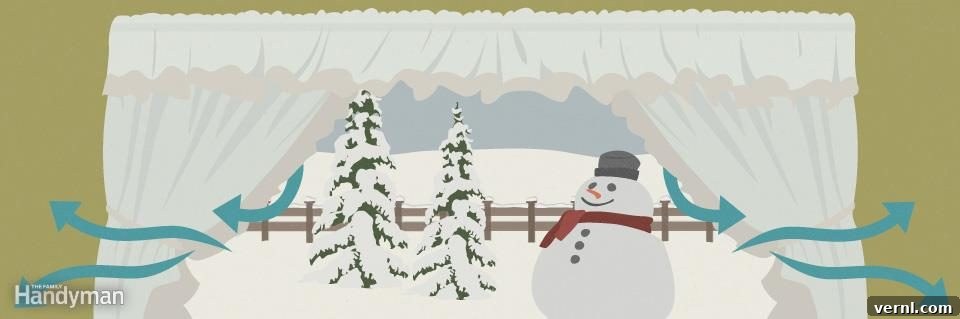
Here’s how this “open-top” design sabotages your home’s warmth: imagine the warm air inside your room. As this warm air approaches the cold window glass, it rapidly cools down. As cool air is denser than warm air, it naturally sinks towards the floor. This downward movement of cold air creates a slight negative pressure, essentially a vacuum, near the floor behind the curtain. To equalize this pressure, warm air from the ceiling above is pulled downwards through the open gap at the top of the curtain track, replacing the sinking cold air. This creates a continuous, cyclical air current – a convection loop – where warm room air is drawn behind the curtain, cools rapidly against the window, sinks, and is then replaced by more warm air from the ceiling. This relentless process ensures that your warm room continually loses heat to the cold window surface and, ultimately, to the outdoors.
This convection-driven heat loss is a silent energy thief, operating continuously from sunset to sunrise, or whenever there’s a significant temperature difference between indoors and outdoors. Depending on your geographical latitude, winter nights can be long, allowing this insidious cycle to siphon a considerable amount of heat from what might otherwise be a very well-insulated home, leading to discomfort and inflated heating bills.
The Comprehensive Solution: Sealing the Thermal Envelope of Your Windows
Now that the mechanism of heat loss is clear, the solutions become logical and straightforward. The core principle is to disrupt the convection currents and prevent warm air from reaching the cold window surface. This involves creating a sealed air pocket between the curtain and the window.
1. Eliminating the Top Gap: The Power of Pelmets, Cornices, and Valances
The most effective way to halt the flow of air from the top of the curtain is to install a “pelmet,” also known as a cornice or valance. These architectural elements are essentially decorative top treatments designed to cover the curtain rail and the often-problematic gap above the curtain. A pelmet can either extend down from the ceiling to completely enclose the top of the curtain or be robustly attached to the wall immediately above the window frame. The latter is commonly referred to as a “box pelmet” and, as its name suggests, should feature closed sides to maximize its effectiveness. Regardless of the style chosen, any pelmet should ideally cover the top of the curtain by at least 5 cm (about 2 inches) to ensure a comprehensive seal and prevent warm air from sneaking over the top.
Pelmets not only provide a critical thermal barrier but also add a refined, finished look to your window treatments, elevating the overall aesthetic of your room. They are a smart investment that pays dividends in both comfort and energy savings.
2. Blocking Bottom Airflow: The Importance of Floor-Length Curtains
Just as a pelmet seals the top, the second crucial step in slowing the movement of air behind the curtain is to replace any shorter, free-hanging curtains with ones that are floor-length. While sill-length or apron-length curtains might be aesthetically pleasing for some applications, they are significantly less effective for insulation. A floor-length fabric acts as a barrier, blocking the free movement of cold air from pooling at the bottom and preventing it from circulating back into the room. For maximum effectiveness, the curtains should just lightly brush the floor or, for a more luxurious look, be allowed to “puddle” slightly, creating an even better seal. By sealing both the top with a pelmet and the bottom with floor-length fabric, you effectively trap a layer of still air between the curtain and the window, dramatically breaking the convection cycle.
3. Addressing Side Gaps: The Often-Missed Detail
While the top and bottom seals are paramount, many curtain installations still suffer from significant air leakage at the sides where the curtain meets the wall. To fully optimize thermal performance, consider solutions to minimize these side gaps. Curtain rods that return to the wall, allowing the curtain fabric to wrap around and meet the wall, are ideal. Alternatively, simple DIY solutions like Velcro strips, magnetic tape, or even tension rods can be used to temporarily secure the curtain edges to the wall or window frame, creating a tighter seal and further enhancing the insulating air pocket.
Budget and Aesthetics: Practical Alternatives
We understand that installing pelmets or replacing all curtains with floor-length, custom-fitted options might not always align with everyone’s budget or aesthetic preferences. Fortunately, even small adjustments can make a significant difference. For those seeking more economical or less permanent solutions, several low-cost options are nearly as effective at boosting window insulation. These can include applying temporary window insulation film, using draft snakes along window sills, or adding DIY thermal liners to existing curtains. For more inspiration and practical advice on keeping your home warm, check out this informative Fix.com article for tips for weatherizing your home.
The Thermal Conclusion: Layering for Superior Insulation
Once your curtains are effectively draft-proofed – meaning the top, bottom, and sides are sealed to prevent air circulation – the next crucial factor is their intrinsic insulation capacity. Insulation is fundamentally about creating “dead air space.” Air is an excellent insulator when it’s still, and the more layers of fabric you have, the more pockets of still air are trapped, dramatically increasing the overall R-value of your window treatment.
For truly superior performance, consider a multi-layered approach. Beyond a single layer of fabric, integrating additional layers can create a super high-performance insulation system for your windows. This typically involves:
- A decorative outer fabric: Chosen for aesthetics and style.
- An interlining: A soft, thick flannel or fleece-like layer sewn between the face fabric and the lining. This adds bulk and traps a significant amount of air, providing exceptional insulation and sound dampening.
- A thermal or blackout lining: This specialized lining typically has an acrylic foam coating or tightly woven fibers that further block light, reduce heat transfer, and enhance the curtain’s R-value.
Research, including studies by the Department of Energy, has consistently shown that having well-fitted, layered curtains with effective top and bottom seals can result in an R-value equal to or even greater than that of modern double-glazing. Crucially, this level of thermal performance can be achieved at a mere fraction of the cost of replacing your windows. It’s a testament to the power of thoughtful design and proper installation.
By implementing these strategies – sealing gaps with pelmets and floor-length designs, and opting for layered fabrics – you’re not just hanging curtains; you’re actively enhancing your home’s thermal efficiency, reducing energy waste, and investing in a more comfortable and sustainable living environment. This approach offers a smart, cost-effective way to transform your windows from energy liabilities into energy-saving assets.
Does putting plastic on your windows really save energy? Find out more here!