
Your bath towels are harboring a dirty little secret — and chances are, you're entirely unaware of it. While a weekly wash might seem sufficient, the truth is, it's often not enough to keep them truly clean. This oversight isn't exclusive to towels; your bed sheets could be concealing similar microbial mysteries, given how quickly they accumulate grime if not washed regularly.
The Invisible Ecosystem: How Bacteria Thrive and Multiply on Your Towels
It’s a common misconception: you step out of the shower feeling fresh and clean, so your towel must remain relatively pristine, right? Not exactly. As Philip Tierno, Ph.D., clinical professor of pathology and microbiology at the New York University School of Medicine, explains, “When you say you wash off bacteria, you’re partially correct — you wash off some bacteria.” However, a significant portion of the microbial flora naturally present on your skin persists. During your post-shower rubdown, these remaining bacteria, along with dead skin cells and body oils, readily transfer onto your towel.
Why Your Bathroom Towels Are a Microbial Hotbed
Once deposited on the towel, these microorganisms find themselves in an ideal environment for rapid proliferation. “It keeps building up as you use the towel again day after day,” observes Chuck Gerba, Ph.D., a distinguished microbiology professor at the University of Arizona. Bacteria, fungi, and yeasts all thrive in dark, warm, and moist conditions – precisely the conditions found in a steamy, often poorly ventilated bathroom, especially when a damp towel is left crumpled or inadequately hung. This constant dampness, combined with the organic matter from your skin, creates a veritable buffet for these unseen inhabitants.
Dr. Gerba’s research underscores this startling reality. A study he led revealed that used hand towels can harbor a staggering 1,000 times more coliform bacteria (indicators of fecal contamination) than a newly purchased one. While this study focused on kitchen towels, the principle extends to bath towels, which are also exposed to various bodily microorganisms. The very act of showering, which is meant to cleanse, inadvertently provides a fertile breeding ground for these microbes on your towel. It’s no wonder then that towels frequently rank among the germiest spots in your bathroom, often surpassing even the toilet in terms of bacterial count.
Beyond Bacteria: A Full Spectrum of Microbes
It's not just bacteria that are multiplying on your towels. Fungi and yeasts also find these conditions highly favorable. Common examples include various species of mold that contribute to musty odors and yeasts like Candida, which are part of our natural flora but can cause issues if they overgrow. These microscopic inhabitants, feeding on skin cells, oils, and moisture, create a complex ecosystem that can lead to unpleasant smells, discoloration, and potential health risks if left unchecked.
Worst Case Scenarios: The Hidden Risks of Unclean Towels
While the thought of microscopic organisms colonizing your towels might be unsettling, the potential health implications are even more concerning. Using a dirty towel can open doors for various skin issues and even infections, particularly when the skin's natural protective barrier is compromised.
Skin Irritation and the Gateway to Infection
The very act of drying yourself with a towel, especially if done vigorously, can create tiny, often imperceptible breaks in your skin. Dr. Gerba points out, “When you use a towel vigorously, you scratch your skin.” These minuscule abrasions act as unwitting entry points, providing bacteria and other microbes with direct access to your body. While your immune system is generally robust, repeated exposure or particularly aggressive microbes can lead to localized infections. This is particularly true for individuals with sensitive skin, eczema, or other pre-existing skin conditions.
Common Infections and Conditions Associated with Dirty Towels
Although it's reassuring to note that severe diseases are "extremely unusual" to contract from a personal bath towel, as infectious disease specialist Aaron Glatt, MD, FACP, FIDSA, FSHEA, spokesperson for the Infectious Diseases Society of America, highlights, the risk of more common, yet still unpleasant, infections increases significantly. Your personal germs might not make *you* sick, but the accumulation creates a higher load, and sharing towels introduces a whole new set of foreign microbes your body isn't accustomed to.
- Bacterial Infections: Dirty towels can contribute to conditions like folliculitis (inflammation of hair follicles), impetigo (a contagious skin infection), and even staph infections, including in rare cases, antibiotic-resistant strains like MRSA, especially if there's an open wound or cut.
- Fungal Infections: Warm, moist conditions are perfect for fungi. If your towel comes into contact with areas prone to fungal growth (like feet), it can transfer fungi leading to athlete's foot, jock itch, or ringworm to other parts of your body or other individuals.
- Acne Flare-ups: For those prone to acne, a dirty towel can be a significant culprit. As you rub your skin, particularly if you have active pustules, bacteria (like P. acnes), dead skin cells, and excess oil from the towel can be redeposited onto your face and body. This process clogs pores and exacerbates breakouts, making it crucial to use a clean towel every time, especially on the face. Dr. Tierno suggests washing your towel after every use if you're acne-prone.
The Enhanced Risk of Sharing Towels
Dr. Gerba’s warning about sharing towels is particularly pertinent. While your body’s own microbiome is generally harmless to you, introducing foreign bacteria and viruses from others significantly heightens the risk of illness. This is why hotels meticulously clean and replace towels for each new guest. Shared towels in households, gyms, or spas are common vectors for the transmission of various pathogens, leading to anything from skin rashes to more serious infections.
Who is Most Vulnerable?
While everyone can be affected, certain groups are more susceptible to infections from dirty towels. This includes individuals with compromised immune systems, young children whose immune systems are still developing, and the elderly. Open wounds, recent surgeries, or chronic skin conditions also increase vulnerability, making strict towel hygiene even more critical for these populations.
The Clean Towel Protocol: Keeping Your Towels as Hygienic as Possible
Understanding the unseen dangers lurking in your bathroom towels is the first step. The next is adopting a rigorous cleaning routine that ensures your towels remain a source of comfort and cleanliness, not contamination. The good news is that maintaining towel hygiene is straightforward, albeit requiring a slight shift in laundry habits.
The Golden Rule: How Often to Wash Your Towels
Dispelling the myth of weekly washing, both Dr. Gerba and Dr. Tierno unequivocally recommend washing bath towels every two or three days. Any longer, and the cumulative buildup of microorganisms will render your towel not just grimy, but potentially hazardous. Dr. Tierno drives home this point with a vivid analogy: “You may not get sick after using a towel for two weeks, but that’s not the point. Would you put on dirty underwear (unless there’s an emergency) after you’ve taken a clean bath? It’s very similar to what you’re doing after the first couple of drying episodes.” This comparison effectively highlights the illogical nature of using a soiled item immediately after a cleansing act.
Here's how often you should wash your towels for optimal hygiene.
Optimal Washing Practices for Superior Cleanliness
Washing your towels isn’t just about making them smell fresh; it’s about eradicating the microbial colonies that call them home. And as Dr. Gerba warns, “It’s really hard to clean those towels. Even with hot water, you have to go through a full cycle to remove them all.”
- Temperature Matters: Whenever possible, wash bath towels in hot water (around 130°F or 54°C). Hot water is more effective at killing bacteria, viruses, and fungi, and dissolving body oils and skin cells. However, always check your towel's care label, as some delicate fabrics may require cooler temperatures.
- Detergent and Additives: Use a good quality laundry detergent. For white towels, a bleach-based product can provide extra sanitization and keep them bright. For colored towels, a non-chlorine bleach or a cup of white vinegar added to the wash cycle can naturally disinfect, remove odors, and soften the fabric without harsh chemicals. Avoid excessive fabric softener, as it can reduce absorbency and leave a residue that traps bacteria.
- Avoid Overloading: Do not overload your washing machine. Towels need ample space to agitate properly and allow the detergent and water to penetrate all fibers, ensuring a thorough clean and rinse.
- Full Cycle Importance: As Dr. Gerba emphasized, a full wash cycle is crucial. Quick wash settings often don't provide enough time or agitation to effectively clean heavily soiled items like towels.
The Drying Imperative: Eliminating Moisture, Eliminating Risk
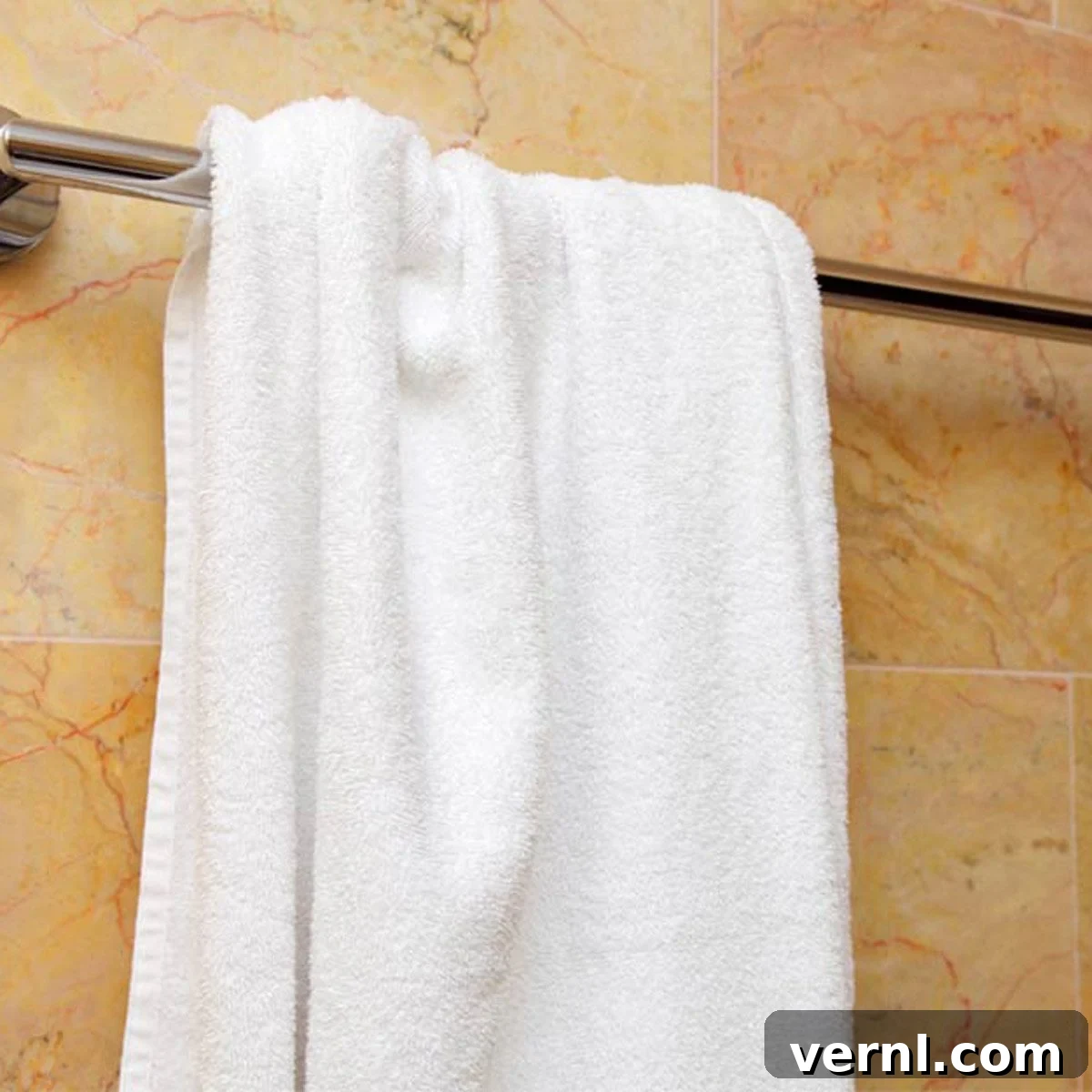
Between washes, reducing bacteria growth is paramount. The key, according to Dr. Tierno, is to let your towel air-dry fully. Instead of folding it or leaving it crumpled on a hook, drape it open on a rod or over a shower curtain rail. The more surface area exposed to the air, the faster and more thoroughly it will dry, thereby starving microbes of the moisture they need to multiply.
After washing, the drying process is equally critical for sanitization. “Once it’s out [of the washing machine], leave it in the dryer for at least 45 minutes to make sure all the moisture is gone,” Dr. Gerba advises. High heat in the dryer further helps to kill any remaining pathogens that survived the wash cycle and, crucially, completely removes moisture, preventing immediate re-colonization. Ensure towels are bone dry before folding and storing them.
Beyond the Laundry Room: Everyday Towel Care Tips
- Proper Ventilation: Ensure your bathroom is well-ventilated. Use an exhaust fan during and after showers, or open a window, to reduce overall humidity levels, making the environment less hospitable for microbial growth.
- Towel Racks vs. Hooks: Opt for towel racks over hooks. Racks allow towels to spread out more fully, promoting faster and more complete drying compared to hooks, which often keep towels bunched up.
- Heated Towel Racks: While a heated towel rack can significantly speed up drying time between uses, extending a towel's freshness, Dr. Tierno warns against over-reliance. While it might allow you to stretch washes to four uses, he cautions that even then, you're "pushing it." They are an aid, not a replacement for regular washing.
- Dedicated Towels: Consider having separate towels for different purposes: one for your body, one for your face, and perhaps another for your hair. This reduces the spread of specific bacteria or products from one area to another.
- Consider Material: While all towels need washing, some materials like microfiber or bamboo blends are designed to dry faster than traditional cotton, potentially slowing microbial growth between washes.
While doing more laundry might not be your favorite chore, understanding the science behind towel hygiene underscores its importance. It's not just about aesthetics or a fresh scent; it's about safeguarding your health and maintaining a truly clean home environment. By adopting these simple, yet effective, practices, you can ensure your bath towels remain a source of comfort and cleanliness, free from their dirty little secrets.