
Beyond Rock Salt: Eco-Friendly & Effective Ice Melt Alternatives for Your Home
As the first wintry blasts sweep across the country, many homeowners are already grappling with driveways and sidewalks blanketed in slippery snow and ice. This isn’t just a seasonal inconvenience; it poses a significant hazard to residents and their neighbors. Beyond the immediate risk of slips and falls, uncleared ice can carry serious legal implications. In many states and municipalities, property owners are legally obligated to clear their sidewalks promptly after a winter storm. Failure to do so can result in liability for any injuries caused by the hazardous, uncleared ice. These potential consequences underscore the vital importance of choosing an effective and responsible ice removal strategy.
For generations, common rock salt (sodium chloride) has been the default standard for melting ice. Its affordability and ability to lower water’s freezing point made it a seemingly practical choice. However, the widespread use of rock salt comes with a myriad of detrimental downsides. It is highly corrosive, accelerating rust on vehicles, metal railings, and outdoor fixtures. Environmentally, it washes into waterways, polluting local ecosystems, harming aquatic life, and contaminating groundwater. Furthermore, it is notoriously destructive to property, aggressively ravaging concrete surfaces, leading to unsightly cracks, spalling, and deterioration over time. Its harsh chemicals can also severely damage lawns, landscaping, and pose a threat to pets who may ingest it or suffer paw irritation. Fortunately, homeowners are no longer confined to this single, often damaging, solution. A growing array of innovative, environmentally conscious, and property-friendly alternatives offers safer and more sustainable ways to keep your home’s exterior clear and safe throughout the winter season.
The Quest for Smarter Deicing: Protecting Your Property and the Planet
Selecting the optimal ice melt solution requires a careful balance of several factors: its effectiveness in varying temperatures, overall cost, environmental impact, and safety for humans, pets, and various surfaces like concrete and plants. While rock salt might offer an attractive initial price point, its long-term costs in terms of property damage, environmental harm, and potential liabilities often far outweigh any perceived savings. This guide will explore some of the most effective and eco-friendly alternatives available today, helping you make an informed decision for a safer and more sustainable winter.
Calcium Magnesium Acetate (CMA): The Eco-Friendly Deicer Champion
Calcium Magnesium Acetate, or CMA, stands out as one of the most highly regarded alternatives to traditional chloride-based rock salt. Derived from dolomitic lime and acetic acid, CMA operates by disrupting the formation of ice crystals, effectively lowering the freezing point of water without introducing corrosive salts. Its unique composition offers a significantly gentler impact on both your property and the environment.
Key Benefits of CMA: CMA is celebrated for its remarkably low corrosivity, making it an ideal choice for protecting valuable surfaces such as concrete, asphalt, pavers, and metal structures. This translates to reduced cracking, spalling, and rusting, preserving the longevity and appearance of your driveways, sidewalks, and vehicles. From an environmental standpoint, CMA is far superior to rock salt; it doesn’t contain chlorides, which are the primary culprits behind plant burn, groundwater contamination, and harm to aquatic ecosystems. It’s largely considered pet-safe, minimizing risks of paw irritation or ingestion issues. CMA’s effectiveness is robust, performing well at temperatures down to approximately 15°F (-9°C), with some specialized blends offering even greater cold-weather performance.
Important Considerations: Despite its numerous advantages, CMA does have specific characteristics to note. One environmental concern is its potential to deoxygenate waterways if washed into natural bodies of water in large concentrations, which could harm aquatic life. However, this impact is generally localized and significantly less severe than the widespread damage caused by chloride runoff. The primary barrier for many consumers remains its higher cost; CMA is notably more expensive than most other ice-melting products. Yet, for homeowners prioritizing the long-term protection of their property, the health of their landscaping, and environmental stewardship, the investment in CMA often proves worthwhile, especially for targeted use in high-value areas. When purchasing, always look for products clearly labeled with CMA on the packaging, as blended formulas can offer a balance of effectiveness and cost efficiency, like those from Snow Joe.
Sand or Kitty Litter: Instant Traction, Minimal Environmental Impact
For those seeking immediate safety improvements without relying on chemical melting agents, spreading sand or kitty litter offers a straightforward and highly effective solution. These materials function not by melting ice, but by providing a coarse, abrasive layer that dramatically increases friction on slippery surfaces. This mechanical action is invaluable for enhancing traction for both pedestrian traffic and vehicles.
Advantages of Traction-Enhancing Materials: The foremost benefit is the instantaneous grip provided, making icy pathways and driveways safer almost immediately after application. Both sand and kitty litter are non-toxic, posing no threat to pets, plants, or concrete, and are exceptionally inexpensive. Sand is particularly useful on inclines or areas where melting agents might runoff too quickly, and it can be especially beneficial for getting vehicles unstuck. Kitty litter provides similar advantages, often with a slightly larger granule size that can offer superior initial grip.
Practical Drawbacks: While excellent for traction, these materials do come with a few considerations. They can be messy, easily tracked into homes on shoes, leading to additional indoor cleaning. More significantly, once winter ends, sand and kitty litter must be swept up and disposed of properly. If left to wash into storm drains and sewers, they can accumulate, causing blockages, impeding water flow, and potentially leading to localized flooding. It’s also crucial to remember that they offer no actual ice-melting properties; the ice will remain until ambient temperatures rise or a melting agent is applied. Despite these minor inconveniences, for quick, non-chemical safety enhancement, sand and kitty litter remain popular and practical choices for making icy surfaces safer.
Sugar Beet Juice/Brine: A Natural, Sweet Approach to Deicing
Perhaps one of the most surprising yet effective natural ice melt solutions comes from sugar beets. Sugar beet juice, typically used in a brine form, works remarkably well by significantly lowering the freezing point of water, much like traditional deicers, but with a profile that’s considerably more environmentally friendly. The natural sugars within the beet juice create a unique eutectic mixture with water, making it highly resistant to freezing even in very cold conditions.
Mechanism and Eco-Benefits: Studies, including those conducted by the Morton Arboretum in Lisle, Illinois, have shown that beet juice can lower the freezing point of water to an impressive -20 degrees F (-29°C), making it effective even in severe winter weather. Crucially, it poses no harm to plant life or pets, offering a distinct advantage over conventional rock salt. It is also biodegradable and less corrosive, making it gentler on concrete, asphalt, and metal surfaces. Many municipalities have begun incorporating sugar beet brine into their road treatment programs due to its proven efficacy and reduced ecological footprint.
Home Application and Considerations: While the concept is appealing, producing enough sugar beet juice from scratch for effective home deicing is generally impractical for most households, unless you’re undertaking large-scale processing of beets. Fortunately, commercial sugar beet juice-based deicer products are readily available, simplifying application. It’s important to be aware that many commercial beet brines are blended with a small amount of salt to enhance their performance and extend shelf life. Therefore, if used on driveways, there’s still a minimal risk of them adhering to the underside of vehicles and contributing to corrosion, though far less than pure rock salt. Another potential consideration is that the dark color of the brine can sometimes temporarily stain concrete, particularly lighter-colored surfaces. Other agricultural brines, such as cheese brine or pickle juice, can offer similar deicing properties due to their salt content, but typically require quantities far exceeding what a typical household would have on hand.
Coffee Grounds: A Sustainable Nudge for Small Icy Patches
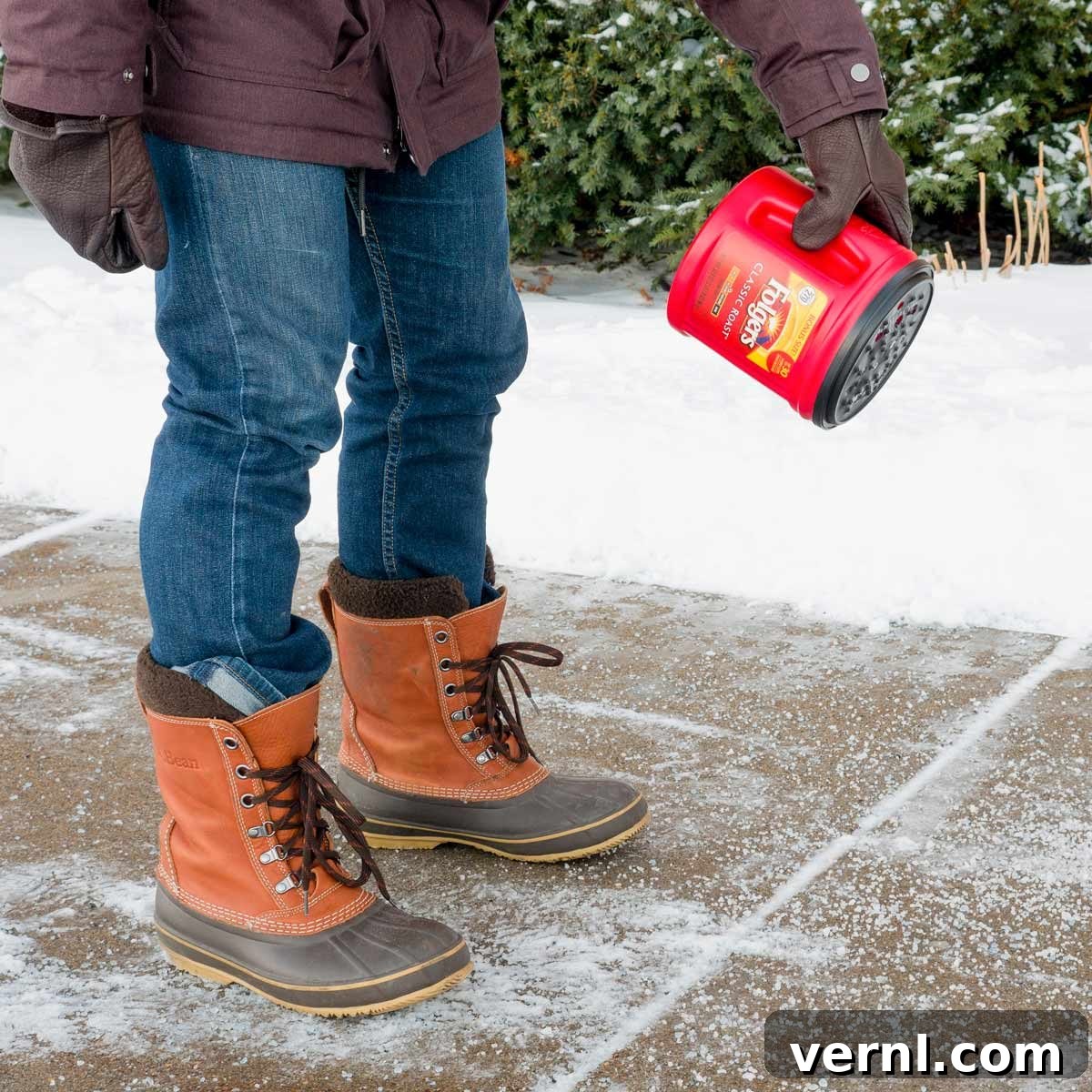
Before discarding your daily spent coffee grounds, consider their surprising potential as a minor aid in ice removal. While not a comprehensive solution for extensive areas, coffee grounds offer a clever, dual-action approach for tackling smaller, localized icy spots, particularly on walkways, steps, and porch areas.
How They Provide Assistance: Firstly, the dark coloration of coffee grounds allows them to absorb solar radiation more effectively. This absorbed heat is then transferred to the ice, promoting a slight melting effect, similar to how dark asphalt melts snow faster than lighter surfaces. Secondly, the gritty texture of the grounds significantly enhances traction on slippery pavement, functioning much like sand or kitty litter by providing an abrasive layer underfoot. Additionally, coffee grounds contain small amounts of nitrogen, which can contribute a very minor chemical melting effect, though their primary benefits come from thermal absorption and physical friction.
Practical Limitations: The main limitation of using coffee grounds is the sheer quantity required for effective large-scale deicing. Unless you own a coffee shop or consume an extraordinary amount of coffee daily, most households won’t generate enough spent grounds to make a substantial difference on large driveways or extensive sidewalks. However, for a few icy steps, a small patch near your front door, or a slippery garden path, they offer a sustainable way to repurpose kitchen waste while enhancing safety. They are also completely safe for pets and plants and will not cause damage to concrete surfaces, making them a truly eco-friendly micro-solution.
Alfalfa Meal: A Natural Fertilizer with Deicing Capabilities
Alfalfa meal, primarily known as an all-natural organic fertilizer for gardening and agriculture, presents a surprisingly effective and beneficial alternative to traditional rock salt. This versatile organic product offers a unique combination of ice-melting power and improved traction, making it an excellent choice for environmentally conscious homeowners.
Dual-Action Benefits: Alfalfa meal contains a significant concentration of nitrogen. When spread on icy surfaces, this nitrogen acts as a natural deicer, helping to lower the freezing point of water and encourage the ice to melt. Simultaneously, the granular, gritty texture of the meal provides immediate and effective traction, drastically reducing the risk of slips and falls on frozen surfaces. This dual functionality sets it apart from simple traction aids like sand. A notable bonus is its pleasant, earthy aroma, offering a welcome departure from the harsh chemical smells associated with many synthetic deicers. Most importantly, as the snow melts and spring arrives, the alfalfa meal naturally breaks down, releasing valuable nutrients into your lawn and garden soil. It acts as a high-quality, slow-release fertilizer, providing a nutrient boost that promotes healthy plant growth throughout the growing season.
Application and Considerations: Applying alfalfa meal is simple: just spread it evenly over icy areas using a scoop or spreader. It is completely safe for pets, plants, and concrete, and will not contribute to groundwater pollution. While generally effective, its melting action might be slightly slower than commercial chemical deicers, especially in extremely cold conditions. However, for moderate winter conditions, as a preventive measure, or for those committed to organic landscape care, it stands as an outstanding natural choice that benefits your landscape long after the ice has gone.
Heated Mats and Integrated Deicing Systems: The Ultimate Prevention Strategy
For those prioritizing unparalleled convenience, maximum safety, and a completely hands-free approach to ice removal, heated mats and integrated deicing systems represent the pinnacle of modern solutions. Instead of reacting to ice and snow after it has formed, these advanced systems proactively prevent accumulation, ensuring completely clear surfaces with minimal effort.
How These Systems Operate: Taking inspiration from innovative cities worldwide, such as Helsinki, Finland, which boasts extensive heated sidewalks, these systems utilize electricity to generate consistent warmth. Portable heated mats, often referred to as heated snow melting mats, are designed for placement on outdoor steps, walkways, or ramps. They plug into standard electrical outlets and actively melt snow and ice upon contact. For a more permanent and integrated solution, radiant heating cables can be installed beneath concrete, asphalt, or paver surfaces during new construction or significant renovations.
Significant Benefits of Heated Systems: The most compelling advantage is entirely hands-free snow and ice removal. A robust heated mat can melt up to two inches of snow per hour and is built to withstand continuous outdoor exposure throughout the winter season. This eliminates the arduous tasks of shoveling, applying deicing chemicals, and constantly worrying about slippery conditions. These systems are especially invaluable for high-traffic areas like front steps, entryways, wheelchair ramps, or elder care facilities where consistent clear access is paramount. Integrated radiant systems offer an aesthetically invisible solution, maintaining pristine surfaces automatically, often controlled by smart thermostats that detect both temperature and moisture levels, optimizing energy use.
Cost and Energy Considerations: The initial investment for heated mats can be substantial, with integrated systems being considerably more expensive due to installation complexities and materials. Electricity consumption is also a factor, impacting utility bills during periods of continuous operation. However, for homeowners who prioritize ultimate safety, unparalleled convenience, and long-term protection of their property from corrosive deicers, these systems offer immense peace of mind. Over time, the elimination of recurring chemical purchases, combined with the prevention of salt-induced concrete damage, can often offset a portion of the initial investment.
Comprehensive Winter Safety: Best Practices Beyond Deicers
While selecting the right ice melt alternative is a critical step, a truly holistic approach to winter safety incorporates several best practices designed to minimize ice formation and ensure safe passage across your property.
- Prompt Snow Removal: The most effective defense against ice is to remove snow as soon as it falls. Shoveling or utilizing a snow blower before snow compacts and freezes significantly reduces the need for deicers and makes any subsequent ice management much simpler and less labor-intensive.
- Improve Property Drainage: Proactively identify and address any areas on your property where water tends to pool or collect. Proper drainage prevents water from freezing into dangerous, concealed ice patches, especially near downspouts, low spots in driveways, or uneven pavement. Consider adding French drains or improving grading if standing water is a persistent issue.
- Strategic Application Timing: For most deicers, applying them *before* a predicted snow or ice event can be significantly more effective than waiting until after accumulation. This creates a protective brine layer that prevents ice from bonding tightly to surfaces, making subsequent snow shoveling easier and often requiring less deicer overall.
- Combine Methods for Optimal Results: Don’t hesitate to use a layered approach. For instance, you might apply a pet-safe melting agent to initiate the thawing process, and then spread sand, kitty litter, or alfalfa meal over heavy traffic areas for immediate, enhanced traction. This combines melting with mechanical safety.
- Proper Product Storage: Ensure all ice melt products are stored in a dry, cool environment within airtight containers. This prevents clumping, maintains their efficacy, and extends their shelf life, ensuring they are ready for use when winter strikes.
- Consider Footwear: Encourage family members and visitors to wear appropriate winter footwear with good traction to further reduce slip risks, regardless of your deicing efforts.
Conclusion: A Safer, Greener Winter Awaits Your Home
The era of indiscriminately relying on corrosive rock salt for winter safety is steadily drawing to a close. Today’s homeowners are empowered with a diverse range of highly effective, environmentally friendly, and significantly safer ice melt alternatives. From the concrete-preserving capabilities of Calcium Magnesium Acetate and the natural fertilizing benefits of Alfalfa Meal, to the ingenious, sweet solution of Sugar Beet Juice, and the ultimate, hands-free convenience of heated mats, there is a tailored solution to meet virtually every need, budget, and environmental concern.
By embracing these innovative solutions and adopting comprehensive winter safety best practices, you can effectively protect your family, beloved pets, valuable property, and the broader environment from the harsh realities and damaging effects of traditional deicers. Make an informed choice this season to ensure your driveways and sidewalks remain clear, safe, and free from harm, allowing you to enjoy a truly safer, greener, and more serene winter at home.