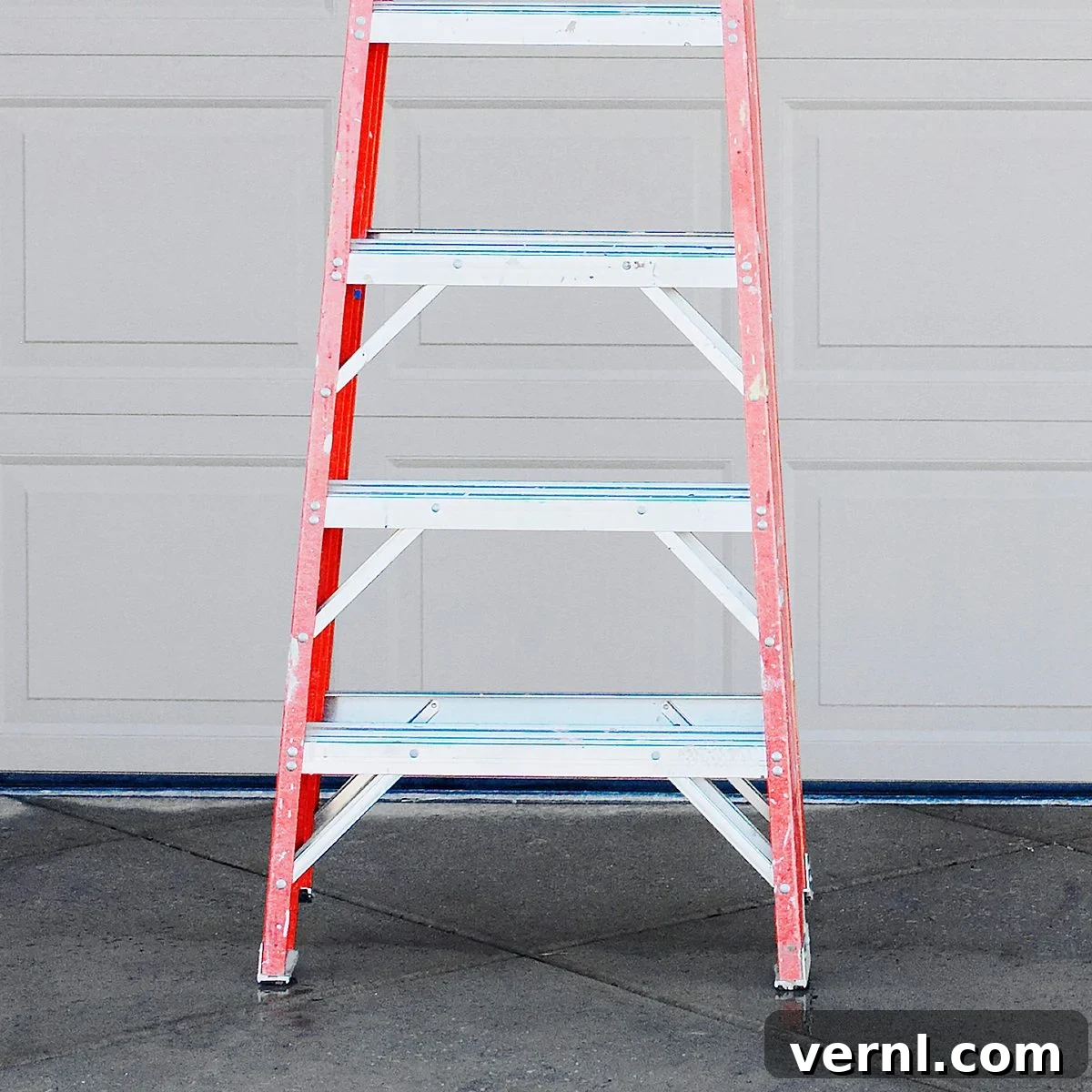
In a memorable afternoon that truly tested the limits of safety, a ladder stabilizer unequivocally saved my life. I was engaged in the challenging task of rebuilding soffits and fascias, perched three stories high on my fully extended 40-foot ladder. The job required a delicate balance of tools, lumber, and concentration. As I meticulously worked, the weather took an unexpected turn; rising winds began to aggressively buffet the ladder. It swayed and shivered under the powerful gusts, but remarkably, it held its ground, a testament to the unwavering support provided by the stabilizer.
Just when I thought the worst had passed, a momentary lapse of coordination from my partner led to a near-catastrophe. In a move reminiscent of a slapstick comedy, a 1×10 board accidentally struck the base of the ladder. The impact sent a violent shudder through the entire structure, yet again, it remained firmly in place. Without the robust grip and extended footprint of that ladder stabilizer, both the ladder and I would undoubtedly have been swept off the gable wall, plummeting to the hard ground below. This harrowing experience underscored the indispensable role of a ladder stabilizer, not just as a tool, but as a vital safeguard for anyone working at significant heights.
The Indispensable Role of Ladder Stabilizers in Home Improvement
Working on the exterior of your home often demands reaching significant heights, whether it’s for painting, siding, gutter installation, or general maintenance. While extension ladders are the go-to tool for such tasks, their inherent design, focusing on vertical reach, can sometimes compromise horizontal stability and optimal working positions. This is precisely where a ladder stabilizer becomes an invaluable asset, transforming a potentially precarious setup into a secure and efficient workstation.
What Are Ladder Stabilizers and How Do They Work?
Ladder stabilizers, often referred to as “stand-offs” or “ladder stand-off brackets,” are purpose-built accessories designed to enhance the safety and versatility of extension ladders. They typically consist of wide tubular arms equipped with non-skid rubber pads at their ends. These arms extend outwards from the ladder, resting against the house wall or other sturdy surfaces, thereby increasing the ladder’s base and distributing the weight over a broader area. This ingenious design dramatically improves both the lateral stability of the ladder and your effective “reach” while working aloft.
By effectively pushing the top of the ladder away from the wall, stabilizers achieve several critical functions:
- Enhanced Stability: The wider stance provided by the stabilizer significantly reduces the chances of the ladder slipping sideways or tipping over, especially when working on uneven surfaces or during unexpected gusts of wind. The non-skid pads offer superior grip compared to the ladder’s rails directly against the wall.
- Increased Working Clearance: The primary benefit of a stabilizer is the increased standoff distance it provides between the ladder and the wall. This clearance, typically ranging from 10 to 29 inches depending on the model, allows you to work comfortably around obstacles like wide windows, deep eaves, or intricate architectural details without the ladder interfering with your access or position.
- Improved Ergonomics: With the ladder held away from the structure, you can maintain a more natural and comfortable working posture. This reduces strain on your back and arms, allowing for longer work periods and more precise execution of tasks like painting, caulking, or minor repairs.
- Protection for Surfaces: The soft, non-marring rubber pads of the stabilizer protect delicate surfaces like siding, fresh paint, or gutters from scratches, dents, and scuffs that the bare ladder rails might otherwise cause.
Stabilizers are compatible with most types of extension ladders, including aluminum and fiberglass models, making them a versatile addition to any DIY enthusiast’s or professional’s toolkit. They allow ladders to straddle wide openings or stand off sufficiently to access deep architectural features, providing a rock-steady and efficient workstation.
When to Prioritize Ladder Stabilizers for Your Projects
While extension ladders are essential for reaching elevated areas, their inherent narrow stance (typically 16 to 20 inches) can limit proper and safe positioning for many intricate tasks. This is where the specialized design of a ladder stabilizer truly shines, making it an indispensable tool for a variety of exterior home repair and maintenance projects.
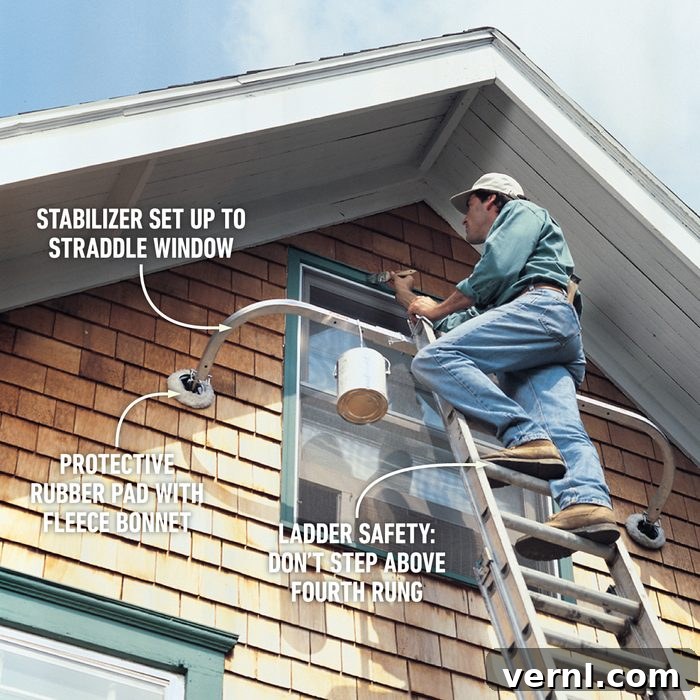
- Accessing All Sides of Wide Windows: Without a stabilizer, repositioning your ladder multiple times is often necessary to reach all areas around a wide window frame, leading to inefficiency and increased risk. With a stabilizer, you can position the ladder just once, spanning the window and providing unobstructed access to the entire perimeter for cleaning, painting, or caulking, saving significant time and effort.
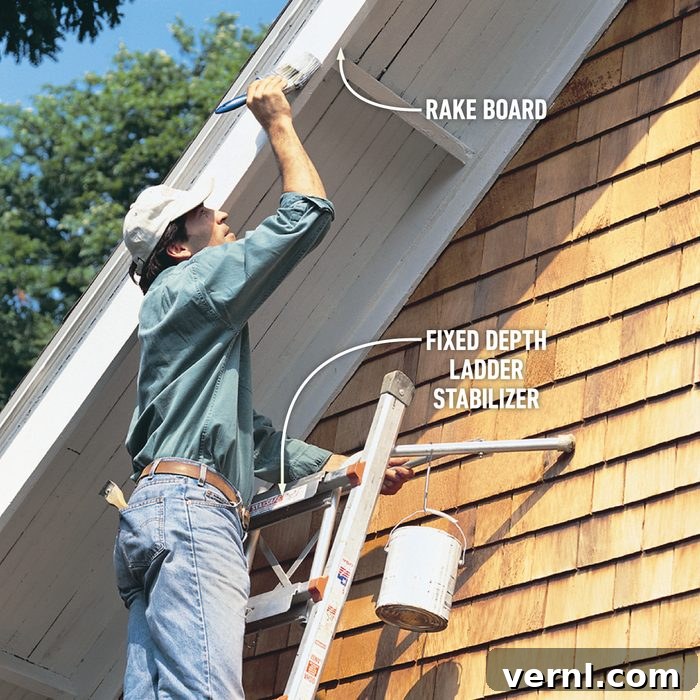
- Painting or Repairing Wide Overhangs and Rake Boards: Reaching deep under a wide eave or across a broad rake board can be awkward and unsafe if your ladder is pressed against the house. A stabilizer creates the necessary standoff, allowing you to clearly see your work, maintain a comfortable posture, and apply paint or make repairs with precision, without having to strain or overreach.
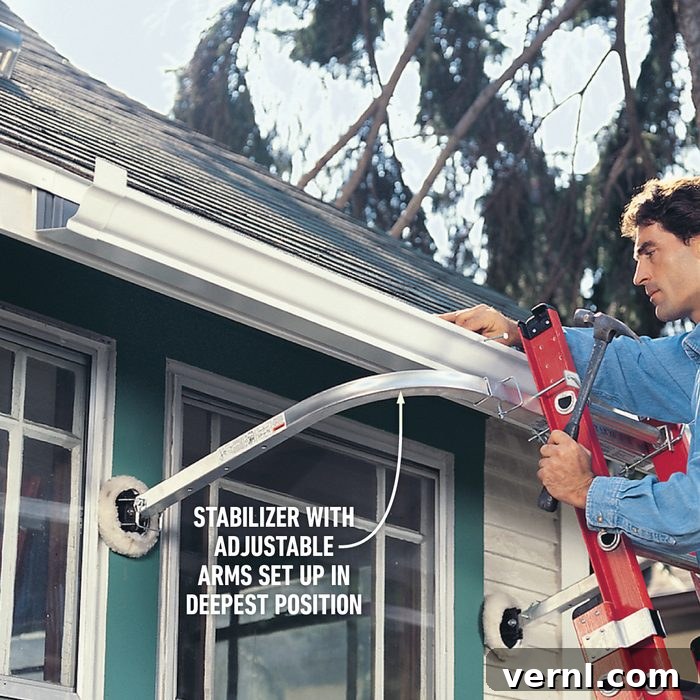
- Working Around Deep Soffits for Gutter Installation or Repair: This scenario perfectly illustrates the stabilizer’s utility. If your ladder rests directly against the house, you’d have to bend awkwardly backward to work on the fascia or soffit. Conversely, if it leans against the fascia, the ladder itself obstructs the very area you need to work on, making gutter installation or repair extremely difficult and potentially damaging. A stabilizer positions the ladder at an optimal distance, providing ample space to work on gutters and fascias without interference or discomfort.
Beyond these specific examples, ladder stabilizers prove invaluable for tasks such as cleaning high exterior walls, pressure washing, pest control, trimming small branches away from the house, or performing any intricate work where direct ladder contact with the surface is either impractical or undesirable. While renting scaffolding might solve some complex access problems, it comes with significant costs, increased setup time, and storage challenges. Opting for a ladder stabilizer instead offers a remarkably cost-effective, efficient, and safer alternative for most residential high-access tasks.
Critical Safety Precaution: Overhead Power Lines
Regardless of the project, always be acutely aware of overhead power lines. Coming into contact with power lines with your ladder or stabilizer can result in severe injury or electrocution. Before setting up, scan your surroundings thoroughly and maintain a safe distance from all electrical wires. When in doubt, contact your local power company for assistance.
Exploring the Types of Ladder Stabilizers
Ladder stabilizers come in various designs, each offering distinct advantages for different types of work. Generally, they can be categorized into two main groups: fixed-depth and adjustable. Before renting or purchasing any type, it’s crucial to verify its compatibility with your specific ladder (aluminum or fiberglass) and its duty rating.
Fixed-Depth Ladder Stabilizers: Simplicity and Reliability
Fixed-depth ladder stabilizers are characterized by their straightforward design and ease of installation. These models typically feature a rigid frame that slides over your ladder’s rungs, securing in place with a robust safety clip or locking pins. A common fixed-depth model might span approximately 45 inches across and hold the ladder at a consistent 10-inch distance from the house wall. They are usually built to handle a load capacity of around 300 lbs., making them suitable for most residential applications. Their primary advantages include quick setup, inherent rigidity once installed, and generally lower cost. Fixed-depth stabilizers are readily available at most home centers and hardware stores, making them a popular choice for straightforward tasks.
Adjustable Ladder Stabilizers: Versatility for Diverse Projects
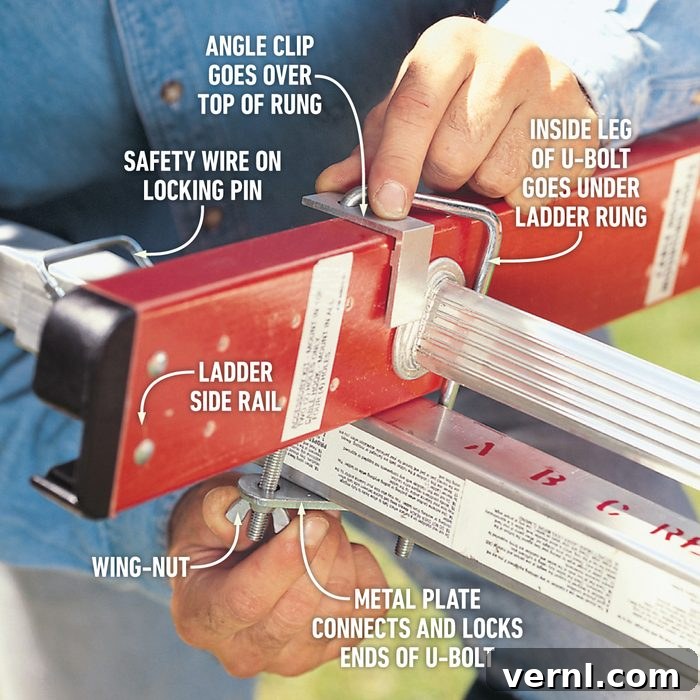
Adjustable ladder stabilizers offer the highest degree of versatility, making them ideal for a wide range of tasks and challenging architectural features. These stabilizers are typically attached to your ladder’s side rails using durable U-bolts, ensuring a secure and firm connection. Their key feature is the ability to modify both their width and their standoff depth from the wall.
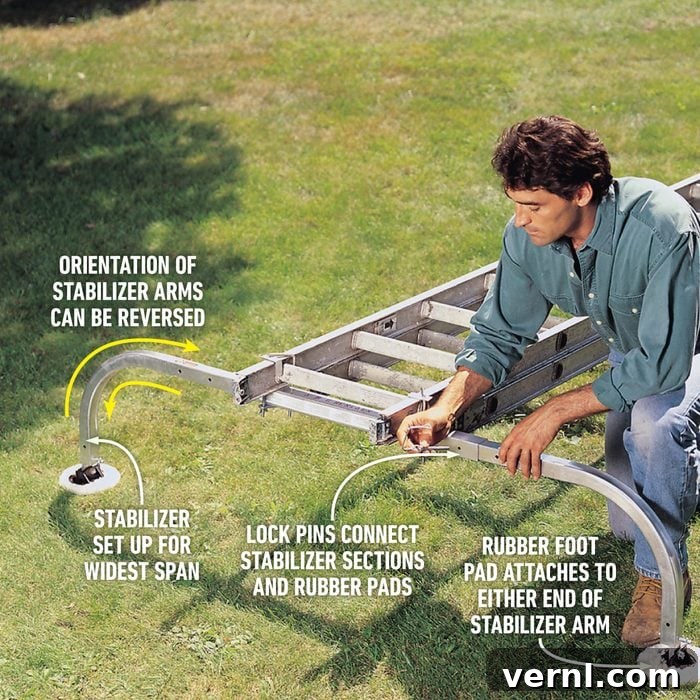
For instance, a typical adjustable model might have a 300 lb. load capacity and can quickly convert between configurations. You might set it to a wide span of 49 to 65 inches at a 12-inch depth for general work around windows, or reconfigure it to a narrower width of 48 inches but with a deeper 29-inch standoff. This deeper setting is particularly useful for reaching extremely deep eaves, working on intricate trim, or navigating around complex architectural elements that require significant clearance. The ability to customize the stabilizer’s dimensions allows for optimal positioning and access in almost any scenario, ensuring both safety and efficiency. Adjustable stabilizers can be found at rental centers, home centers, and larger hardware stores, offering a professional-grade solution for serious DIYers and contractors.
Installation and Setup: Getting it Right for Maximum Safety
Proper installation of your ladder stabilizer is paramount to ensuring its effectiveness and your safety. While specific steps may vary slightly between models, the general principles remain consistent:
- Read the Manufacturer’s Instructions: Always start by thoroughly reading the manual that comes with your specific stabilizer model. This will provide crucial details on compatibility, attachment methods, and any unique safety considerations.
- Ensure Compatibility: Verify that the stabilizer is designed for your ladder’s material (aluminum or fiberglass) and its duty rating.
- Secure Attachment: For fixed-depth models, slide the stabilizer over the appropriate rungs, ensuring it seats firmly and locks securely with its safety clips or pins. For adjustable models, attach the U-bolts to the ladder’s side rails at the recommended height, tightening them firmly with the provided hardware. Double-check that all connections are snug and there’s no wobbling.
- Pre-Use Inspection: Before raising the ladder, inspect the stabilizer for any damage, loose parts, or wear. Ensure the non-skid rubber pads are intact and clean.
- Optimal Ladder Angle: Remember the 4-to-1 rule for ladder angle: for every four feet of ladder height, the base should be one foot away from the wall. This ensures the ladder is stable and prevents it from sliding out or falling backward.
- Level Ground: Always set up your ladder on firm, level ground. If necessary, use ladder levelers or secure wedges to create a stable base. Never place a ladder on unstable objects.
Ironclad Ladder Stabilizer Safety Guidelines
The primary purpose of a ladder stabilizer is to enhance safety, but its effectiveness relies heavily on proper usage and adherence to strict safety protocols. Always apply this ironclad rule: when installing a stabilizer, position it so its arms will rest between the house and the main body of the ladder, creating the necessary standoff and stability. Beyond this fundamental principle, always observe the following essential safety rules:
- Folding (Articulated) Ladders: The types of stabilizers discussed here are generally not suitable for most folding or “articulated” ladders. Due to their unique hinge mechanisms and structural designs, folding ladders require manufacturer-specific stabilizers that are designed to integrate seamlessly with their particular model and duty rating. Using an incompatible stabilizer can compromise the ladder’s integrity and lead to dangerous failures.
- Enlist a Helper for Tall Ladders: Raising a long extension ladder, especially one fitted with a stabilizer, can be cumbersome and risky, particularly around power lines, trees, or on uneven terrain. If necessary, always enlist a helper to safely raise, position, and lower the ladder. This is not only about managing weight but also about maintaining control and preventing unexpected movements.
- Never Stand on the Stabilizer: The stabilizer is designed to provide support and standoff, not to serve as an additional step or platform. Its load rating is for stabilizing the ladder against a surface, not for bearing human weight. Using it as a step can cause it to fail, leading to a fall.
- Respect Load Capacity – No Ladder Jacks or Walk Planks: Ladder stabilizers are not load-rated to carry the additional weight of ladder jacks and walk planks. These heavy accessories, when combined with your body weight and materials, can quickly exceed the stabilizer’s capacity, leading to structural failure. Similarly, never attempt to use the stabilizer arms themselves to support planks. For scaffold-like setups, specialized ladder jacks and planks designed for the ladder’s duty rating are required.
- Safe Tool and Material Transport: It’s efficient to use old joint compound buckets or similar containers to carry tools and materials aloft. However, for maximum safety, always limit the weight of the filled bucket. Ensure that the total load (your weight plus tools and materials) does not exceed the capacity of either the ladder or the stabilizer. When hauling items up, tie a sturdy rope to the bucket, climb the ladder, then haul the bucket up and securely tie it to the ladder rails. Crucially, *never* tie the bucket to the arms of the stabilizer; these arms are not designed for direct vertical loading.
- Know Your Limits and Avoid Overconfidence: While stabilizers provide a dramatically increased sense of security aloft, it’s vital to remain vigilant and understand your physical limits. A common mistake caused by overconfidence is “overreaching” – trying to stretch an additional six inches to reach a spot rather than safely repositioning the ladder. This momentary lapse in judgment can shift your center of gravity, causing instability and potentially leading to a tragic fall. Always prioritize repositioning the ladder over risking an unsafe stretch.
- Regular Inspection: Before each use, thoroughly inspect both your ladder and the stabilizer. Look for bent components, cracks, loose fasteners, or damaged rubber pads. Replace any worn or damaged parts immediately.
- Clear Work Area: Ensure the area around the base of the ladder is clear of obstacles, debris, and other trip hazards.
- Weather Conditions: Avoid using ladders with stabilizers in high winds, rain, or icy conditions. The increased surface area of the stabilizer can make the ladder more susceptible to wind, and slippery surfaces dramatically increase fall risk.
- Proper Footwear: Always wear appropriate, non-slip footwear when working on a ladder.
Maintaining Your Ladder Stabilizer for Long-Term Safety
Like any essential safety equipment, your ladder stabilizer requires basic maintenance to ensure its longevity and continued reliability. After each use, wipe down the stabilizer to remove any dirt, paint, or debris. Pay particular attention to the rubber pads, ensuring they are clean and free of embedded particles that could reduce their grip. Store the stabilizer in a dry place, away from extreme temperatures and direct sunlight, which can degrade rubber components over time. Regularly check all fasteners (bolts, clips, pins) and tighten them if necessary. By following these simple maintenance steps, your ladder stabilizer will remain a dependable tool, enhancing your safety for countless projects to come.