
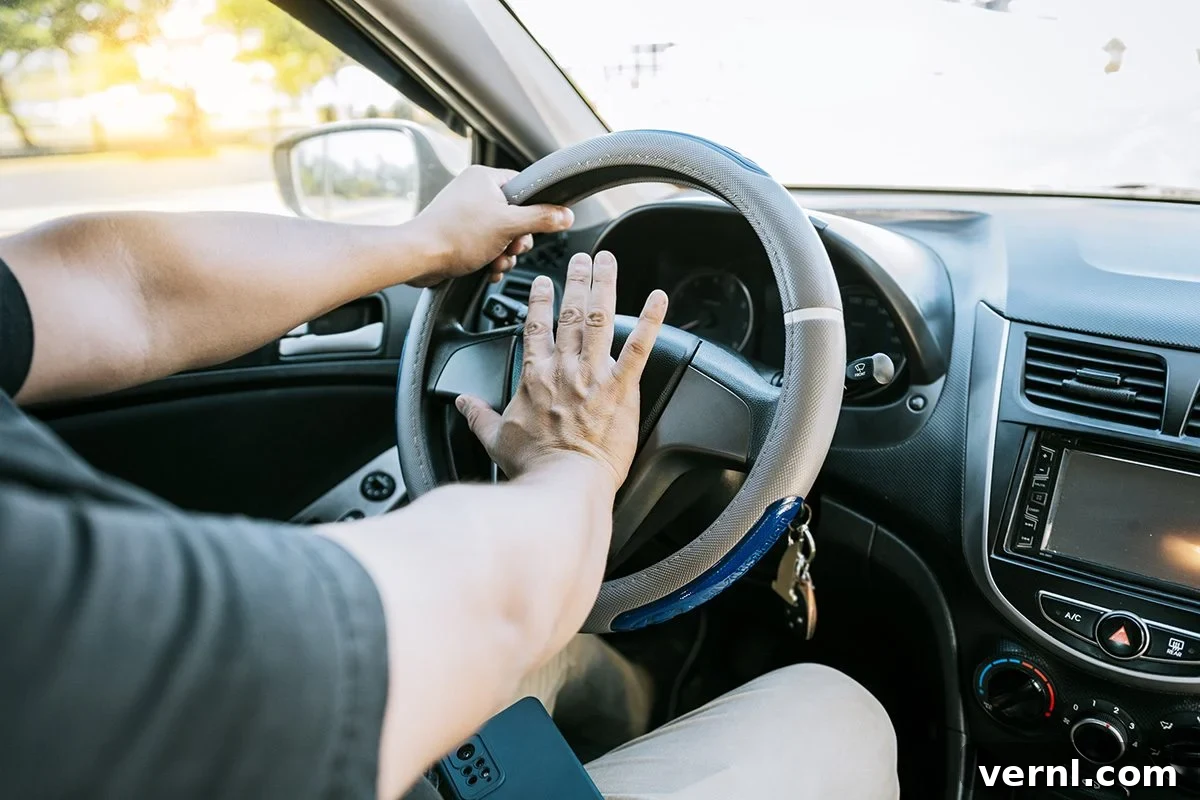
The car horn, often taken for granted, stands as an indispensable safety device in every modern vehicle. Far from being a mere accessory, its primary function is to serve as an audible warning system, crucial for preventing accidents and ensuring the safety of all road users. In the United States, its importance is enshrined in law; Federal Motor Vehicle Safety Standards (FMVSS) No. 101 mandates that “all vehicles must have a horn audible from at least 200 feet.” As a certified vehicle safety inspector with decades of experience working on cars, I can attest to the rigorous testing horns undergo to meet this critical audibility requirement. Every vehicle I’ve encountered in my nearly 60-year career has been equipped with a horn, and for very compelling reasons.
Mastering the appropriate use of your vehicle’s horn is a vital skill that can prevent an accident involving other vehicles, cyclists, or pedestrians. However, it’s equally important to recognize that excessive or aggressive honking is not only impolite but can also escalate tensions, contributing significantly to road rage incidents. Understanding the nuances of horn honking etiquette is more than just good manners; it’s a valuable resource for maintaining road safety and fostering a more harmonious driving environment. Throughout this article, legal experts and road safety professionals will illuminate why proper horn usage is an essential aspect of responsible driving.
When Sounding Your Horn is Appropriate and Necessary for Safety
The primary purpose of your car horn is safety, not expressing anger or frustration. Therefore, using your horn judiciously to alert other drivers or pedestrians to your presence or to prevent a collision is entirely acceptable and often necessary. For instance, a quick tap of the horn can be invaluable when approaching a blind corner, navigating a busy intersection with limited visibility, or when you notice another vehicle drifting into your lane. Personal injury attorney Paul Hernandez emphasizes this point, stating, “A horn is primarily a safety tool and should be used to prevent accidents rather than express frustration.”
Hernandez further explains the preventative power of a well-timed honk: “If another driver, cyclist, or pedestrian is unaware of a hazard or is about to enter your path, a short honk can alert them in time to avoid a collision.” This immediate, non-confrontational warning can make the difference between a near miss and a serious incident. Furthermore, a polite, brief tap on the horn can serve as a gentle reminder to a driver who might be distracted at a traffic light, indicating that the light has turned green and it’s time to proceed. This subtle signal, delivered after a few seconds, helps keep traffic flowing smoothly without causing undue stress.
A Historical Journey: The Evolution of the Car Horn
The history of the car horn is a fascinating testament to automotive innovation. Early automobiles, often referred to as “horseless carriages,” employed crude but effective warning systems. Initially, these “horns” were steam-powered, producing a loud, distinct sound. As technology advanced, manually operated rubber bulb horns became common, similar to those used on bicycles. While functional, these rubber horns were prone to drying out and cracking when exposed to sunlight, limiting their durability and reliability.
Another ingenious early design was the exhaust horn. This system redirected exhaust gases, allowing the driver to pull a lever or valve that would channel the gases over a reed or diaphragm. The resulting sound was often compared to the powerful whistle of a locomotive steam engine. As the automotive industry matured, so too did the sophistication of its warning devices. The 1920s heralded the advent of electric power horns, which delivered a more consistent and significantly louder sound than their predecessors.
The period from the 1910s through the 1930s saw the popularity of Klaxons. These unique horns featured a vibrating diaphragm that produced their distinctive “toogah” sound, easily recognizable and highly effective in drawing attention. By the 1940s, manufacturers began to fine-tune horn sounds, specifically tuning them to musical notes such as E-flat or C. Later, F-sharp and A-sharp were adopted, creating more consistent and powerful dual tones that could effectively cut through the increasing noise of urban traffic and road conditions. Since the 1970s, modern vehicles have predominantly utilized horns equipped with a flat, rapidly vibrating steel diaphragm and an electromagnet. This design generates sharp, crisp dual tones, engineered to be heard clearly even in the loudest and most complex traffic situations, ensuring their continued role as critical safety tools.
When Honking Crosses the Line: Rude, Unnecessary, or Dangerous Usage
While the horn is an essential safety device, its misuse can quickly transform it from a tool of protection into a source of conflict and danger. Auto law expert Doug Burnetti succinctly states, “Your horn should be used to prevent collisions, not incite them.” Lawyers and road safety experts consistently highlight how inappropriate honking can exacerbate tensions on the road. Joshua Branch, a lawyer and road safety expert, explains, “Blowing your horn to say hello or to scare someone is rude.” He further cautions that “excessive use or overusing it in quiet areas would be extremely inconsiderate,” demonstrating a lack of respect for others and the surrounding environment.
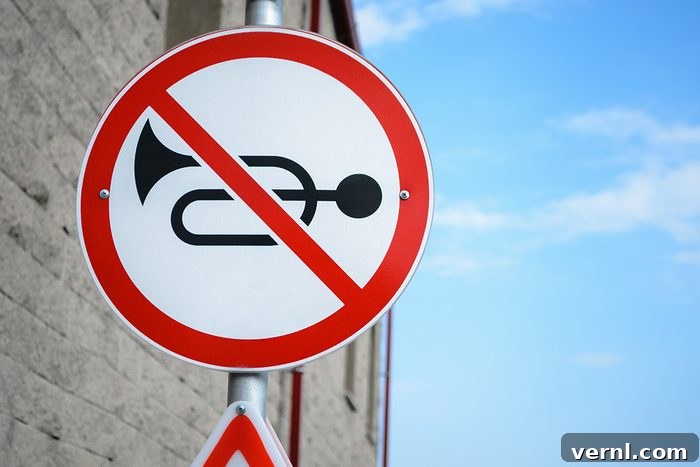
The consequences of unnecessary or ill-timed honking can be severe and unpredictable. Burnetti warns that such actions “can startle another driver, causing them to swerve, make erratic maneuvers, panic stop, unpredictable lane changes, or emotional distress.” Any of these reactions can quickly lead to a needless collision, a frightening near-miss, or a full-blown road rage incident. The sudden, unexpected noise can trigger a fight-or-flight response, impairing a driver’s judgment and ability to react safely. Beyond these direct dangers, there are numerous other scenarios where honking serves no productive purpose and is best avoided:
- Following behind a slow driver: This often conveys impatience and aggression, rather than providing any useful information or preventing a collision.
- Honking coupled with inappropriate hand gestures: Such actions explicitly transform a warning into an insult, directly provoking other drivers and escalating conflict.
- When caught in a traffic jam: Honking in bumper-to-bumper traffic is typically futile. It does not speed up the flow of vehicles and only adds to noise pollution and driver frustration.
Can Excessive Honking Be Considered a Crime? Understanding the Legal Boundaries
The answer is a definitive yes: excessive or inappropriate honking can indeed be a crime, subject to specific traffic laws and municipal ordinances. Many jurisdictions have implemented regulations to curb noise pollution and aggressive driving behaviors, often including specific prohibitions against unnecessary horn use. For example, Paul Hernandez highlights a clear regulation in Virginia: “it is unlawful to use a horn other than as a reasonable warning or to make any unnecessary or unreasonably loud or harsh sounds.” Such laws underscore the legal expectation that horns are tools for safety, not expressions of annoyance or aggression.
The enforcement of noise regulations is becoming increasingly sophisticated, particularly in densely populated urban centers. Forbes reports that cities like New York City (NYC) are deploying advanced noise cameras to “crack down on noisy, illegally modified and speeding cars.” These cameras are programmed to record sounds exceeding 85 decibels. To put this in perspective, most car horns produce sounds in the range of 100 to 120 decibels. For comparison, jet engines and jackhammers operate at similar decibel levels, typically around 120. It’s also important to note that any sound consistently above 85 decibels has the potential to cause hearing damage over time.
Once triggered by excessive noise, these cameras automatically capture video footage of the offending vehicle, including its license plate. Drivers caught exceeding the noise limits are then issued automatic fines. The New York Post reported that NYC’s noise cameras have already issued fines totaling $1.7 million, demonstrating the strict enforcement of these regulations. Furthermore, the legal system has affirmed that blaring a horn excessively is not protected as free speech under the First Amendment. A ruling by the Ninth Circuit Court of Appeals established this precedent, reinforcing the idea that public safety and peace outweigh individual expressions of frustration through noise.
The Art of the Honk: Why Honk Length Matters in Communication
The duration of a honk significantly alters its perceived meaning and impact. While horns are fundamentally designed for safety, prolonged or inappropriate honking can swiftly turn this safety tool into a weapon of aggression. As Joshua Branch explains, “Duration can be an expression of purpose.” A sustained, loud honk almost universally conveys frustration, anger, or even threat, often escalating already tense situations. In stark contrast, a short, brief tap of the horn is generally perceived as a friendly warning, a polite alert to a potential dangerous situation, or a gentle reminder.
The implications of long honking extend beyond mere annoyance. Such actions can often escalate rapidly into more hostile behaviors, including verbal abuse, aggressive tailgating, or retaliatory honking from other drivers. This is particularly true if the initial honk is intended to threaten, intimidate, or humiliate another driver. Doug Burnetti reinforces this distinction, stating, “Short blasts in the interest of safety are typically acceptable behavior, but deliberate, continuous honking sends angry aggressive messages.” This aggressive communication undermines road safety and contributes to a hostile driving environment.
Psychology Today has highlighted the detrimental effects of inappropriate honking, reporting that “honking can result in high levels of distress.” The article notes that “drivers should avoid honking at pedestrians and cyclists, but countless people honk aggressively and incessantly.” Lengthy or aggressive horn blasts directed at vulnerable road users like pedestrians and bicyclists can cause confusion, fear, and disorientation, potentially leading to dangerous missteps. Moreover, such confrontational honking is a significant catalyst for road rage, transforming a simple traffic interaction into a heated conflict.
Beyond Borders: Cultural Differences in Honking Etiquette
The meaning and acceptability of honking vary significantly across different cultures and geographical regions, highlighting diverse social norms and driving practices around the world. What might be considered rude in one country could be a vital communication tool in another.
- United States: Within the U.S., regional differences are notable. In the densely populated Northeast, particularly in cities like New York, honking is a relatively common practice, often used to signal impatience, alert distracted drivers, or encourage drivers who don’t yield the right of way. However, as one moves to the Midwest and mountain states, drivers are significantly less likely to use their horns. Here, a more laid-back driving culture generally prevails, where honking is reserved almost exclusively for genuine emergencies or warnings.
- India: Due to the extraordinarily high traffic density, crowded streets, and often chaotic driving conditions, honking in India has evolved into a ubiquitous and essential communication tool. It’s not just a warning; it’s a constant form of dialogue among drivers. Drivers are expected to use their horns extensively to signal lane changes, alert pedestrians and street vendors of their approach, and indicate their intention to pass another vehicle. The absence of a honk in certain situations might even be considered dangerous, as it means you’re not actively communicating your presence.
- Japan: In stark contrast to India, Japanese culture places a strong emphasis on respect, harmony, and avoiding disruption. Consequently, honking your car horn is generally frowned upon and considered extremely ill-mannered unless it is absolutely necessary for immediate safety, such as preventing an imminent collision. Unnecessary honking is seen as a breach of social etiquette and an aggressive act.
- Germany: German culture values order, stability, and restraint, and these values are reflected in their driving practices. Therefore, horn usage in Germany is tightly regulated and strictly limited to dangerous situations and emergencies only. Drivers are expected to maintain composure and adherence to rules. Unnecessary honking is not only considered rude but can also result in significant fines, underscoring the legal and cultural expectation of responsible and reserved horn usage.
Frequently Asked Questions About Horn Etiquette
What should I do if someone honks aggressively at me?
Encountering an aggressive driver can be startling and frightening, but how you react can significantly impact the situation. If you perceive that the other driver’s aggressive honking was not genuinely intended to alert you to danger, the best course of action is to try and defuse the situation. A small, courteous wave, regardless of who was initially at fault, can sometimes signal an attempt at de-escalation. Joshua Branch advises a clear strategy for minimizing conflict: “Do not engage the person’s eyes; do not respond with hostility; do not get out [of your car] and confront an angry driver.” He adds, “Put as much space between you and an aggressive driver as possible and let them pass.” If an aggressive driver is persistently tailgating you and blowing their horn, it’s wise to pull over safely to the side of the road and allow them to pass. Your safety is paramount. Should you feel your safety is genuinely threatened, do not hesitate to call the police immediately. From personal experience, I’ve found that a light tap on my head with my fist followed by a courteous wave, even if I wasn’t at fault, can quickly quiet an aggressive situation, acknowledging a perceived error and showing respect.
Can a horn be used to say “thank you” or communicate positivity?
Yes, under certain circumstances and with careful execution, your horn can indeed be used to express gratitude or friendly acknowledgment. Paul Hernandez confirms this, stating, “A short, polite honk can be used to thank someone for yielding or to signal a friendly acknowledgment, but it should be brief and context-appropriate.” The key here is the brevity and the clear, positive context. A quick, light tap of the horn, rather than a sustained blast, is the universally accepted signal for thanks. Additionally, complementing this with a wave and a smile offers other effective and universally understood ways to express appreciation to fellow drivers, ensuring your positive intent is clearly communicated without any ambiguity.
Is there a difference between road rage and aggressive driving?
While often conflated, aggressive driving and road rage are distinct behaviors, though one frequently escalates into the other. According to a comprehensive report by Siegfried and Jensen, psychologists and behavioral experts delineate the difference as follows:
- Aggressive driving: This refers to a pattern of reckless and dangerous driving behaviors that inherently endanger others. Examples include speeding excessively, tailgating, running red lights, ignoring stop signs, making sudden and unpredictable lane changes, or weaving erratically in and out of traffic. While dangerous, the primary intent of aggressive driving is typically to save time or assert dominance, not necessarily to cause harm.
- Road rage: This represents a severe escalation of aggressive driving, where the intent shifts from recklessness to intentional violence or extreme hostility. Road rage manifests when aggressive driving behaviors spiral into deliberate acts of aggression aimed at another driver. This can include shouting obscenities, making threatening gestures, throwing objects at another vehicle, intentionally ramming or cutting off another vehicle, or in extreme cases, brandishing a weapon.
Unfortunately, the report highlights a concerning trend: “aggressive driving is often the trigger that leads to road rage, with potential for dangerous encounters alarmingly high.” Recognizing this distinction is crucial for understanding the dynamics of hostile interactions on the road and for promoting safer driving practices.
Experts Contributing to This Guide
- Paul R. Hernandez is a distinguished partner at Kalfus and Nachman. He holds a major in finance with a minor in accounting from Old Dominion University and earned his law degree from Cleveland State University Cleveland-Marshall College of Law, having also spent a year of his legal studies at the College of William and Mary Marshall-Wythe School of Law. (Electronic communication Oct 5, 2025)
- Doug Burnetti is the founding attorney and a recognized auto law expert at Burnetti, P.A. He completed his bachelor’s degree at the University of Florida and subsequently earned his Juris Doctor from the University of Florida College of Law.
- Joshua W. Branch is an attorney, founder, and managing partner at The Law Offices of Joshua W. Branch LLC, specializing in legal representation concerning various injury cases.
Sources and Further Reading
- Melanie Musson, insurance and finance expert at Clearsurance.com
- Code of Federal Regulations: “§ 571.101 Standard No. 101; Controls and displays.” (Oct 6, 2025)
- Commonwealth of Pennsylvania, “Vehicle Equipment And Inspection Regulations” (Oct 6 2025)
- Forbes: “What To Know About Noise Cameras — As NYC Lawmakers Consider Cracking Down On Illegal Mufflers And Exhaust Systems” (Dec 4, 2023)
- Legal Clarity: “Is It Illegal to Drive Without a Horn on Your Vehicle?” (Jan 25, 2025)
- National Constitution Center: “Do You Have a Constitutional Right to Honk Your Car Horn?” (April 17, 2023)
- National Highway Traffic Safety Administration: “ID 11655DRN” (Oct 6, 2025)
- National Library of Medicine: “Regulating Road Rage” (Oct 6, 2025)
- New York Post: “NYC’s hidden ‘noise cameras’ issue $1.7M in fines: ‘Things have gotten worse'” (Sep 15, 2025)
- Psychology Today: “Stop Honking! Honking can result in high levels of victim distress and depressive symptoms.” (Dec 27, 2024)
- Psychology Today: “The Psychology of Road Rage” (Oct 6, 2025)
- Science: “What Is The Decibel Level Of A Jet Plane?” (Mar 24, 2022)
- Siegfried and Jensen: “Red Lights & Short Tempers – Science of Road Rage” (Oct 5, 2025)
- University of California, Davis; Center for Occupational and Environmental Health: “How noise pollution quietly affects your health