
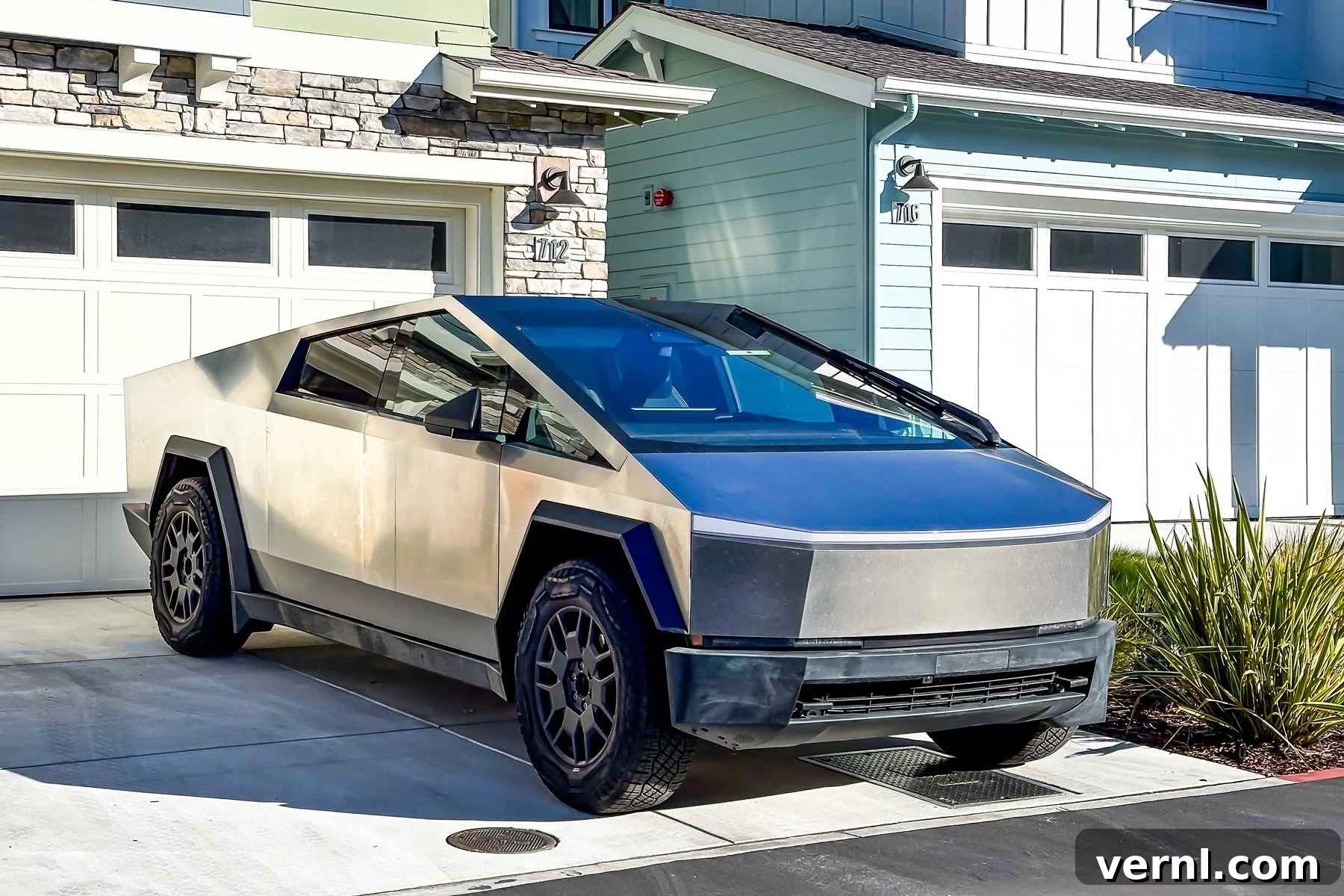
For generations, vehicle owners have embraced the art of personalizing their cars, trucks, and vans. From vibrant bumper stickers expressing unique personalities to whimsical magnets celebrating hobbies or causes, adornments have long been a popular way to make a vehicle truly their own. This tradition continues with modern vehicles, but the advent of the Tesla Cybertruck introduces a unique set of considerations.
With its distinctive, angular design and a striking resemblance to a futuristic stainless steel appliance – perhaps even a high-tech refrigerator on wheels – it’s entirely natural for new Cybertruck owners to ponder its magnetic properties. The question frequently arises: “Are Cybertrucks magnetic?” Given its robust stainless steel exterior, the simple answer is yes, they are. The metallic composition of the Cybertruck’s Ultra-Hard 30X Cold-Rolled Stainless Steel exoskeleton does indeed respond to magnetic forces. However, this magnetic attraction, while seemingly innocuous and even visually appealing, harbors a significant and often unforeseen risk. Enthusiastic owners might be tempted to adorn their new acquisition with decorative magnets, but a closer look reveals that this seemingly cool customization can lead to serious and unsightly damage over time. This article delves into why sticking magnets to your Cybertruck, despite its magnetic nature, is a practice best avoided, and what you should do if you discover signs of corrosion.
The Unique Material: Understanding Cybertruck’s Stainless Steel Exoskeleton
The Cybertruck stands apart from virtually every other vehicle on the road, primarily due to its innovative construction. Unlike traditional cars that rely on painted steel or aluminum body panels, the Cybertruck boasts an Ultra-Hard 30X Cold-Rolled Stainless Steel exoskeleton. This material is renowned for its exceptional strength, dent resistance, and generally impressive corrosion resistance. Stainless steel achieves its “stainless” quality through the presence of chromium, which forms a passive, self-repairing oxide layer on its surface when exposed to oxygen. This chromium oxide layer acts as a barrier, protecting the underlying steel from rust and environmental degradation under normal conditions.
However, it’s crucial to understand that “stainless” does not equate to “stain-proof” or “rust-proof” under all circumstances. While highly resistant, stainless steel can still corrode, particularly when its protective passive layer is compromised or when it’s subjected to specific, aggressive environments. This is where the seemingly harmless act of attaching magnets comes into play, inadvertently creating conditions that can undermine the very properties that make stainless steel so resilient.
Why Magnets Are a Hidden Threat to Your Cybertruck’s Finish
The allure of easily attaching and removing decorative magnets to the Cybertruck’s metallic surface is strong, yet it comes with a considerable hidden danger. A compelling cautionary tale emerged from a user known as Nick, who shared his unfortunate experience on the popular Cybertruck fan forum, Cybertruck Owners Club. After adorning his truck with magnets and leaving them in place for several months, Nick’s discovery upon their removal was nothing short of disheartening.
Beneath each magnet, the pristine stainless steel surface had succumbed to rust and corrosion, leaving indelible marks of damage. The once-smooth, reflective exterior was now marred, disfigured, and in some areas, visibly pitted. While Nick diligently attempted to mitigate the damage with a surface cleaner, he reported that the metal remained pitted, and persistent white marks lingered across the gleaming silver surface. This incident serves as a stark warning to all Cybertruck owners.
The Mechanism of Corrosion: Crevice Corrosion Explained
It’s important to clarify that the magnets themselves are not the direct cause of the corrosion; rather, they act as catalysts by creating an ideal environment for it to occur. This phenomenon is often referred to as “crevice corrosion” or “pitting corrosion,” a specific type of localized corrosion that can affect stainless steel.
- Trapping Moisture and Debris: The primary issue is that magnets, when placed directly on the Cybertruck’s surface, create an extremely tight seal. This seal forms a miniature, enclosed crevice between the magnet and the stainless steel. Within this confined space, moisture – from rain, condensation, or car washes – becomes trapped. Along with moisture, various environmental contaminants such as road salt, dust, dirt, industrial fallout, and even tiny metallic particles from brake dust can accumulate and become lodged.
- Oxygen Deprivation: Inside this tight crevice, the oxygen supply necessary for the chromium oxide passive layer to maintain and repair itself becomes depleted. Stainless steel relies on a continuous supply of oxygen to keep its protective barrier intact. When oxygen levels drop significantly, this passive layer can break down.
- Concentration of Corrosive Agents: With moisture and debris trapped, especially in the presence of chlorides (common in road salt, coastal air, or even tap water), these corrosive agents become highly concentrated in the oxygen-deprived crevice. The stagnant, oxygen-poor, and chemically aggressive environment then aggressively attacks the now unprotected stainless steel surface.
- Electrochemical Reaction: This combination of oxygen deprivation and concentrated corrosive elements initiates an electrochemical reaction where the steel actively rusts. The process can lead to unsightly discoloration, surface roughening, and in severe cases, deep pitting that compromises the structural integrity and aesthetic appeal of the exoskeleton. The longer magnets are left in place, particularly in humid or salty environments, the more severe and irreversible the damage can become.
Safeguarding Your Investment: Preventative Measures and Alternatives
Given the significant risk of corrosion, the most effective preventative measure is straightforward: avoid placing magnets on your Cybertruck entirely. While the idea of temporary customization might be appealing, the potential for lasting damage far outweighs any short-term aesthetic benefit. Preserving the unique finish of your Cybertruck’s Ultra-Hard Stainless Steel exoskeleton should be a top priority.
If personalization is desired, consider alternative methods that do not involve direct surface contact or create conditions conducive to corrosion:
- Vinyl Wraps and Decals: Professional-grade vinyl wraps and decals are designed to adhere to vehicle surfaces without trapping moisture or chemicals in a harmful way. They are generally safe for automotive use and can be removed without damage if applied correctly. Ensure that any decals used are specifically rated for outdoor vehicle application.
- Static Clings (with extreme caution): While static clings don’t use adhesive or magnets, they can still trap moisture if not applied perfectly flat and regularly removed and dried. If you must use them, consider them for very short-term display only, and ensure the surface is perfectly clean and dry before application, and remove them promptly, especially after rain or washing.
- Paint Protection Film (PPF) or Ceramic Coatings: While primarily for protection, a high-quality PPF or ceramic coating applied to the stainless steel can offer an additional layer of defense against environmental contaminants and might provide a safer surface for certain types of temporary decals (always consult with the coating/film manufacturer).
Beyond avoiding magnets, general maintenance plays a crucial role in preserving your Cybertruck’s finish. Regular cleaning, especially after exposure to road salt, dirt, or industrial areas, is vital. Use only pH-neutral car wash soaps and soft microfiber cloths to prevent scratching and ensure all contaminants are thoroughly rinsed away. Promptly addressing any visible dirt or grime prevents it from accumulating and potentially compromising the stainless steel’s passive layer.
Addressing the Problem: What To Do If Your Cybertruck Rusts
Despite best efforts, if you discover any spots of rust or corrosion on your Cybertruck’s stainless steel exoskeleton, immediate action is critical. The sooner you address the issue, the greater your chances of mitigating the damage and restoring the surface. Ignoring rust can lead to more extensive pitting and permanent discoloration.
Tesla provides specific recommendations for treating contaminated surfaces on the Cybertruck. It’s essential to follow these guidelines carefully to avoid further damage:
Step-by-Step Rust Remediation:
- Gather Your Supplies: You will need a mild citric acid cleaner (often found in automotive detailing sections or as a rust remover specifically safe for stainless steel), a non-scratch scouring pad (white or blue pads are generally suitable, avoid abrasive green or black pads), and several clean, soft microfiber cloths.
- Prepare the Area: Before applying any cleaner, thoroughly rinse the affected area with clean water to remove any loose dirt, dust, or contaminants. This prevents abrasive particles from scratching the surface during cleaning.
- Apply the Citric Acid Cleaner: Apply a small amount of the mild citric acid cleaner directly to the rusted or corroded spot. Citric acid is a chelating agent that effectively dissolves iron oxides (rust) without being overly aggressive on the stainless steel itself, making it an ideal choice for this specific material.
- Gentle Agitation with a Non-Scratch Pad: Using the non-scratch scouring pad, gently work the cleaner into the affected area. Apply light, even pressure and rub in the direction of the metal’s grain (if discernible). Avoid circular scrubbing or excessive force, as this can create swirl marks or further damage the surface finish. The goal is to carefully lift the rust, not to aggressively abrade the stainless steel.
- Rinse Thoroughly: After scrubbing, immediately and thoroughly rinse the cleaned area with plenty of clean water. It’s crucial to remove all traces of the citric acid cleaner and dissolved rust particles to prevent them from drying on the surface and causing new stains.
- Dry Completely: Using a clean, dry microfiber cloth, carefully dry the cleaned area. Microfiber cloths are highly absorbent and lint-free, making them perfect for achieving a streak-free finish. Ensure the area is completely dry to prevent water spots and inhibit new rust formation.
- Inspect and Repeat if Necessary: Once dry, inspect the area. If some rust or discoloration remains, you may carefully repeat the process. For stubborn spots, allow the citric acid cleaner to dwell for a few minutes before gently scrubbing. However, if the damage is deep or widespread, or if you are unsure about the process, it’s always best to consult with a professional automotive detailer specializing in stainless steel or a Tesla service center.
What to Avoid:
Never use harsh abrasive cleaners, steel wool, highly acidic or alkaline chemicals, or anything that could scratch or further damage the delicate passive layer of the stainless steel. These can cause permanent damage, making the area even more susceptible to future corrosion.
Long-Term Preservation of Your Cybertruck’s Iconic Look
Owning a Cybertruck is a unique experience, and preserving its distinctive Ultra-Hard Stainless Steel exoskeleton requires a mindful approach to care and maintenance. Beyond avoiding magnets and addressing rust promptly, adopting a comprehensive long-term care strategy will ensure your Cybertruck retains its revolutionary aesthetic for years to come.
- Regular Inspections: Periodically inspect your Cybertruck’s body panels, paying close attention to areas that might accumulate dirt or moisture. Early detection of any anomalies, such as subtle discoloration or faint pitting, can prevent minor issues from escalating into major problems.
- Environmental Awareness: Be particularly vigilant if you live in coastal regions where salt air is prevalent, or in areas with heavy industrial pollution. These environments contain higher concentrations of corrosive agents that can challenge stainless steel’s resilience. More frequent washing and protective measures may be necessary.
- Professional Detailing: Consider professional detailing services that specialize in stainless steel. These experts can offer advanced cleaning techniques, surface treatments, and protective coatings that are specifically formulated for the unique demands of your Cybertruck’s material.
- Protective Coatings: While stainless steel is inherently robust, applying a high-quality clear bra (paint protection film) or a ceramic coating designed for automotive use can provide an additional sacrificial layer. These coatings can help repel water, reduce the adhesion of contaminants, and offer an extra barrier against minor abrasions, further aiding in the prevention of corrosion-inducing conditions.
- Storage Considerations: Whenever possible, store your Cybertruck in a garage or under a cover to protect it from harsh weather, environmental fallout, and prolonged exposure to moisture, which can accelerate corrosion processes.
Conclusion
The Tesla Cybertruck is an engineering marvel, boasting an Ultra-Hard Stainless Steel exoskeleton that is both visually striking and incredibly durable. While its metallic surface is indeed magnetic, the convenience of attaching magnets comes with a significant and potentially costly caveat. The risk of crevice corrosion, caused by trapped moisture and corrosive contaminants beneath the magnets, can severely damage the Cybertruck’s pristine finish. Owners like Nick have learned this lesson the hard way, witnessing their truck’s surface marred by rust and pitting.
To preserve the iconic, futuristic appearance of your Cybertruck, the recommendation is clear: avoid using magnets for personalization. Instead, explore safer alternatives like high-quality vinyl decals or wraps, and commit to a regimen of regular cleaning and proactive maintenance. Should rust appear, addressing it immediately with Tesla’s recommended mild citric acid cleaner and a non-scratch pad is crucial for successful remediation. By understanding the unique properties of its stainless steel construction and adopting responsible care practices, Cybertruck owners can ensure their revolutionary vehicle remains an unblemished symbol of innovation for years to come.
Sources
- Cybertruck Owners Club, “Don’t put magnets on your CT! Corrosion?” (2024)
- Tesla, “Removing Surface Contamination” (2024)
- Family Handyman, “Can Stainless Steel Rust?”