
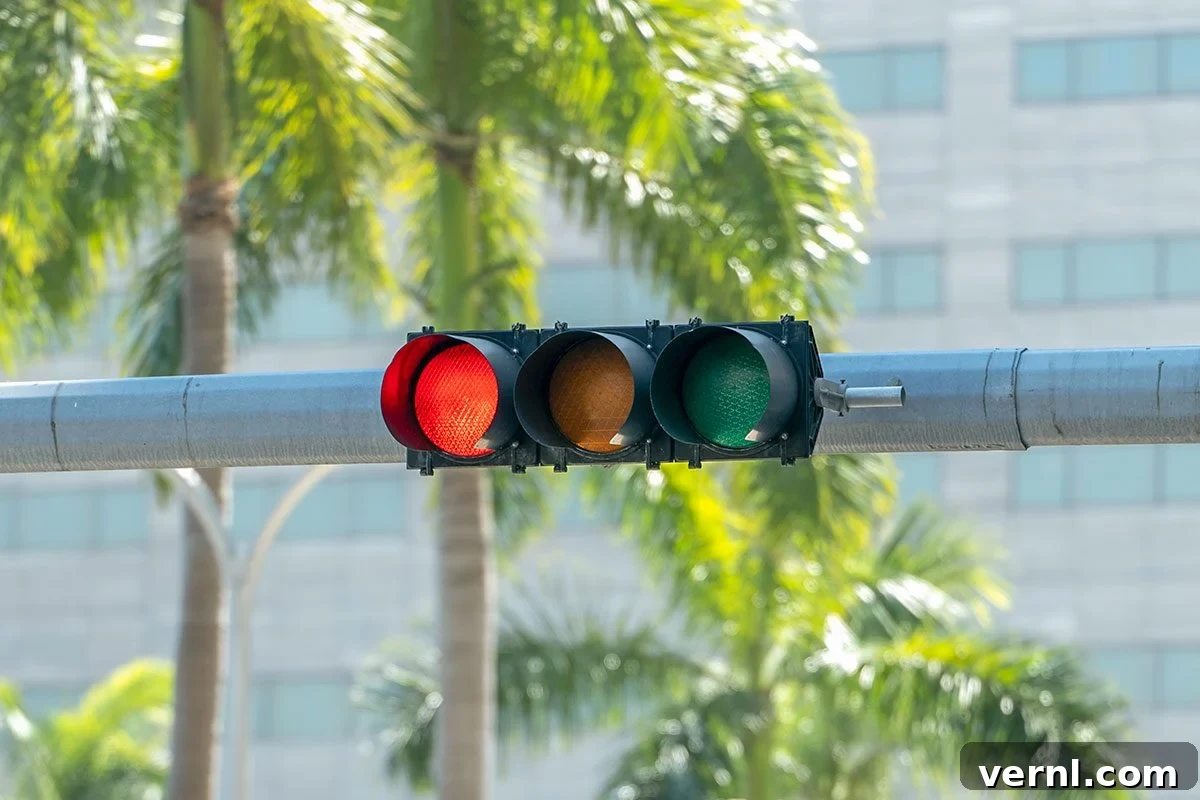
Navigating the roads sometimes presents us with visual cues that might initially seem out of place. One such instance is the sight of a horizontal traffic light. While perhaps unfamiliar to some, these sideways signals are not only fully functional but are also an intentional and strategic choice in numerous regions across the United States. Unlike their vertical counterparts, which typically stack red, yellow, and green lights one above the other, horizontal traffic lights arrange these essential signals from left to right. This distinct layout, though initially surprising to drivers accustomed to vertical configurations, carries the exact same critical instructions for road users. Understanding how to interpret a horizontal traffic light and appreciating the specific reasons for its adoption can significantly reduce hesitation, foster greater driving confidence, and ensure smoother navigation, especially when traveling through unfamiliar locales.
These unique signals are more than just a stylistic variation; they are a testament to adaptive engineering designed to meet specific environmental and spatial challenges. Their presence signifies thoughtful urban planning and a commitment to road safety under diverse conditions. By demystifying the horizontal traffic light, we empower drivers with the knowledge needed to react appropriately and safely, regardless of the signal’s orientation. This comprehensive guide will delve into the prevalence, advantages, and safe interpretation of horizontal traffic lights, alongside an exploration of other common traffic signal variations that contribute to an efficient and secure transportation network.
Where Are Horizontal Traffic Lights Most Common?
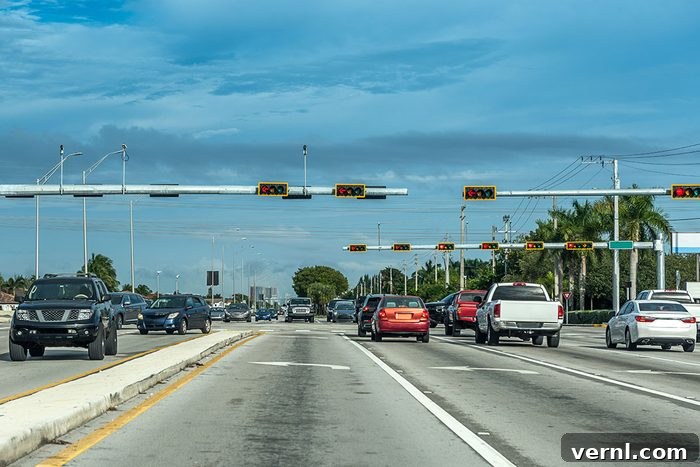
The prevalence of horizontal traffic lights is often dictated by environmental factors and urban planning necessities. You will frequently encounter these robust signals in geographical areas prone to severe weather conditions such as high winds, hurricanes, or heavy snowfall. States like Florida and Texas, known for their hurricane seasons and strong coastal winds, and parts of the Midwest, which experience harsh winters and significant snow accumulation, often adopt this design as a standard. The horizontal configuration offers enhanced structural stability, making it significantly more resilient against powerful gusts of wind. By distributing the signal units horizontally, the overall surface area exposed to direct wind pressure is reduced, thereby lessening the strain on the support poles and making them less susceptible to damage or collapse during extreme weather events. Furthermore, in snowy regions, the horizontal arrangement can sometimes lead to less snow accumulation on individual signal lenses compared to stacked vertical lights, improving visibility and reducing maintenance requirements.
Beyond their weather-resistant properties, horizontal traffic lights also provide an ingenious solution in environments where vertical space is at a premium. Consider narrow urban streets, areas with low overhead clearances such as underpasses, bridges, or tunnels, or intersections overshadowed by complex signage and infrastructure. In such scenarios, installing a tall, vertical traffic light might not be feasible or could obstruct other vital visual cues. Horizontal lights, by occupying less vertical real estate, fit seamlessly into these constrained spaces without compromising their visibility or effectiveness. This adaptability makes them an ideal choice for diverse urban landscapes and ensures that critical traffic information remains clear and unobstructed for drivers.
Once a particular region or municipality adopts the horizontal traffic light style, it typically maintains this consistency across its infrastructure. This standardization not only simplifies installation and maintenance for local authorities but also fosters familiarity among local drivers. For instance, in Louisiana, horizontal traffic signals are the default installation across the entire state, a legacy decision rooted in its susceptibility to hurricanes. This consistent approach aids in driver recognition and reduces confusion, contributing to overall road safety. These lights can be strategically mounted in various ways: suspended above intersections on sturdy gantries or affixed to poles by the roadside. Regardless of their specific mounting location or the structural design, their fundamental purpose and the meaning conveyed by their illuminated colors remain constant. The key for drivers is to focus intently on the colors displayed, not the orientation or exact position, to always understand the required action and navigate safely.
Historical Context and Evolution of Traffic Signals
While the first traffic signal emerged in the late 19th century, the evolution to various modern designs, including horizontal ones, reflects a continuous effort to improve road safety and efficiency. Early signals were manually operated and simple, but as vehicle traffic surged, the need for automated, universally understood signals became paramount. The standardization of red, yellow, and green colors was a pivotal development, transcending language barriers and ensuring rapid comprehension. The shift to horizontal designs in certain areas showcases this adaptability, proving that while the core message remains constant, the method of delivery can be optimized for specific local challenges. Modern traffic signals, whether horizontal or vertical, now often incorporate advanced LED technology, which offers superior brightness, energy efficiency, and a longer lifespan, further enhancing their reliability and visibility in all conditions.
Reading Horizontal Signals Safely
Despite their distinct appearance, horizontal traffic lights operate on the exact same principles as their vertical counterparts. The universal color code for traffic signals in the United States remains unchanged: red universally signifies “stop,” yellow instructs drivers to “slow down” or “prepare to stop,” and green indicates “proceed” or “go.” These fundamental meanings are standardized nationwide, ensuring that drivers can interpret the signals consistently, regardless of where they encounter them. The beauty of this standardization lies in its simplicity and effectiveness, creating a predictable framework for driver behavior at intersections.
For individuals who experience color blindness, the standardized position of the lights within the horizontal array provides an invaluable visual aid. In the vast majority of horizontal traffic light installations, red is consistently positioned on the far left, yellow occupies the central position, and green is always found on the far right. This consistent spatial arrangement serves as an additional layer of information, allowing color-blind drivers to safely interpret the signal by recognizing its position, even if distinguishing between red and green hues is challenging. This thoughtful design consideration highlights the commitment to inclusivity in road infrastructure, ensuring that all drivers, regardless of visual perception differences, can navigate intersections safely and confidently.
Contemporary horizontal traffic signals are equipped with state-of-the-art features designed to maximize visibility and clarity under a wide range of conditions. Many modern units utilize bright, energy-efficient LEDs (Light Emitting Diodes) that offer superior illumination compared to older incandescent bulbs. These LEDs are not only brighter and more durable but also consume less energy, making them an environmentally friendlier choice. Furthermore, signals are often installed with contrasting backplates – large, dark panels positioned behind the light units. These backplates create a strong visual contrast against the surrounding environment, making the illuminated signals stand out more prominently against bright skies, complex backdrops, or during adverse weather conditions like fog, rain, or snow. The combination of advanced LED technology and effective backplate design ensures that horizontal traffic lights are easily discernible, enhancing safety for all road users, day or night.
The Psychology of Signal Recognition and Driver Behavior
The initial surprise of encountering a horizontal traffic light can sometimes lead to momentary hesitation for unfamiliar drivers. This brief pause, while seemingly minor, can impact traffic flow and potentially lead to rear-end collisions if drivers behind are not equally alert. However, once a driver understands the universality of the color code and the standardized left-to-right arrangement, this hesitation quickly dissipates. The brain adapts rapidly to new visual patterns, especially when the underlying meaning is consistent. This highlights the importance of driver education and awareness regarding different types of road infrastructure. By preemptively informing drivers about variations like horizontal signals, we can reduce cognitive load at intersections, promote smoother decision-making, and significantly enhance overall road safety, reinforcing a sense of control and confidence behind the wheel.
Other Traffic Light Variations and Their Importance
Beyond the fascinating world of horizontal traffic lights, drivers encounter a variety of other specialized signals designed to manage complex traffic scenarios and enhance safety. Understanding these variations is crucial for navigating modern road networks effectively and confidently. These innovations collectively contribute to a more organized, safer, and efficient transportation system, adapting to the diverse demands of urban and rural environments.
Arrow Signals: Guiding Turns Safely
Many intersections, particularly those with high traffic volumes or intricate lane configurations, employ arrow signals. These signals are specifically designed to regulate turning movements, providing clear guidance on when it is safe to turn left or right without conflicting with opposing traffic or pedestrians. A green arrow typically indicates a protected turn, meaning you have the right-of-way and can proceed without fear of collision from oncoming vehicles or cross-traffic. A flashing yellow arrow, increasingly common, signifies a permissive turn, allowing drivers to turn in the direction of the arrow only after yielding to oncoming traffic and pedestrians. A solid yellow arrow warns that the protected turn phase is ending, and a red arrow prohibits turning. These precise signals are indispensable for preventing accidents at busy intersections and ensuring that turning maneuvers are executed safely and predictably.
Pedestrian Signals: Ensuring Safe Crossings
Pedestrian signals are vital components of urban intersections, dedicated to managing the safe movement of people on foot. These signals often feature iconic “Walk” and “Don’t Walk” symbols, sometimes accompanied by countdown timers. The “Walk” symbol, usually a walking person, indicates that pedestrians have the right-of-way to cross the street. The “Don’t Walk” symbol, typically a raised hand, means pedestrians should not enter the crosswalk. Countdown timers add an extra layer of safety by showing exactly how many seconds remain before the “Walk” signal ends, allowing pedestrians to gauge if they have enough time to safely cross or to wait for the next cycle. This feature is particularly beneficial for individuals with mobility challenges, ensuring they are not stranded mid-crossing. Pedestrian signals play a crucial role in creating a harmonious co-existence between vehicular and foot traffic, significantly reducing the risk of pedestrian accidents.
Flashing Lights: Caution and Mandatory Stops
Flashing traffic lights serve distinct purposes, primarily at less-busy intersections, during off-peak hours, or when a signal is malfunctioning. A flashing yellow light universally means “proceed with caution.” Drivers encountering a flashing yellow signal should slow down, be prepared to stop if necessary, and yield to any cross-traffic or pedestrians. This signal effectively converts a controlled intersection into a less restrictive “yield” scenario, allowing traffic to flow when volumes are low while maintaining a degree of awareness. Conversely, a flashing red light carries the same imperative as a stop sign: “stop completely.” Drivers must come to a full halt before the intersection, and then proceed only when it is safe to do so, yielding to all other traffic. These flashing signals are critical for adapting intersection control to varying traffic conditions, optimizing flow without compromising safety.
Advanced Traffic Signal Technologies
Modern traffic management is increasingly reliant on sophisticated technologies embedded within traffic signals. You might notice intersections featuring multiple signal heads, stacked vertically or horizontally, or arrayed across a wide gantry, purely for enhanced visibility, ensuring that at least one signal is always clearly visible to drivers, even if a line of sight is temporarily obstructed. Newer systems often integrate bright, long-lasting LEDs for all signal types, which not only improve visibility but also reduce energy consumption and maintenance costs. Beyond visual enhancements, intelligent transportation systems (ITS) are transforming how traffic lights operate. These advanced systems use sensors, cameras, and data analytics to detect real-time traffic conditions and adjust signal timing dynamically. This adaptive timing can significantly improve traffic flow, reduce congestion, and minimize unnecessary idling, contributing to both efficiency and environmental benefits. Some cutting-edge systems even communicate with vehicles, providing alerts or guidance, paving the way for future autonomous driving environments. These technological advancements underscore a continuous evolution in traffic signal design, all aimed at creating safer, more efficient, and more responsive road networks for everyone.
Related Insights and Road Safety Awareness
- If You See a Blue Stop Sign, Here’s What It Means
- If You Spot This Yellow Device on Your Windshield, You’ve Been Barnacled
- What Do Shoes on Power Lines Mean?