Few things are as startling or unwelcome as stepping out of a refreshing shower only to spot a bizarre creature like a house centipede or a silverfish darting across your pristine bathroom floor. With their numerous legs, long antennae, and often unsettling speed, these multi-legged intruders can instantly trigger a “freak out” moment for even the most composed homeowner. The initial reaction is often a mix of surprise, revulsion, and perhaps a touch of embarrassment, wondering what might be attracting such critters to your sanctuary.
While both insects can cause a momentary panic, it’s crucial for homeowners to understand that these two common household visitors play very different roles within your home’s ecosystem. One, despite its intimidating appearance, is actually a beneficial predator that helps control other pests. The other, however, is a destructive nuisance that requires proactive intervention. Distinguishing between them is the first step in effective and humane pest management. This comprehensive guide will equip you with the knowledge to identify, understand, and appropriately respond to the presence of house centipedes and silverfish in your living space, turning apprehension into informed action.
House Centipede vs. Silverfish: Unraveling Their Distinctive Appearances
Understanding the visual differences between a house centipede and a silverfish is paramount for proper identification and subsequent pest management strategies. While both share a preference for damp environments and can move with surprising speed, their physical characteristics are quite distinct upon closer inspection.
House Centipede: The Many-Legged Predator
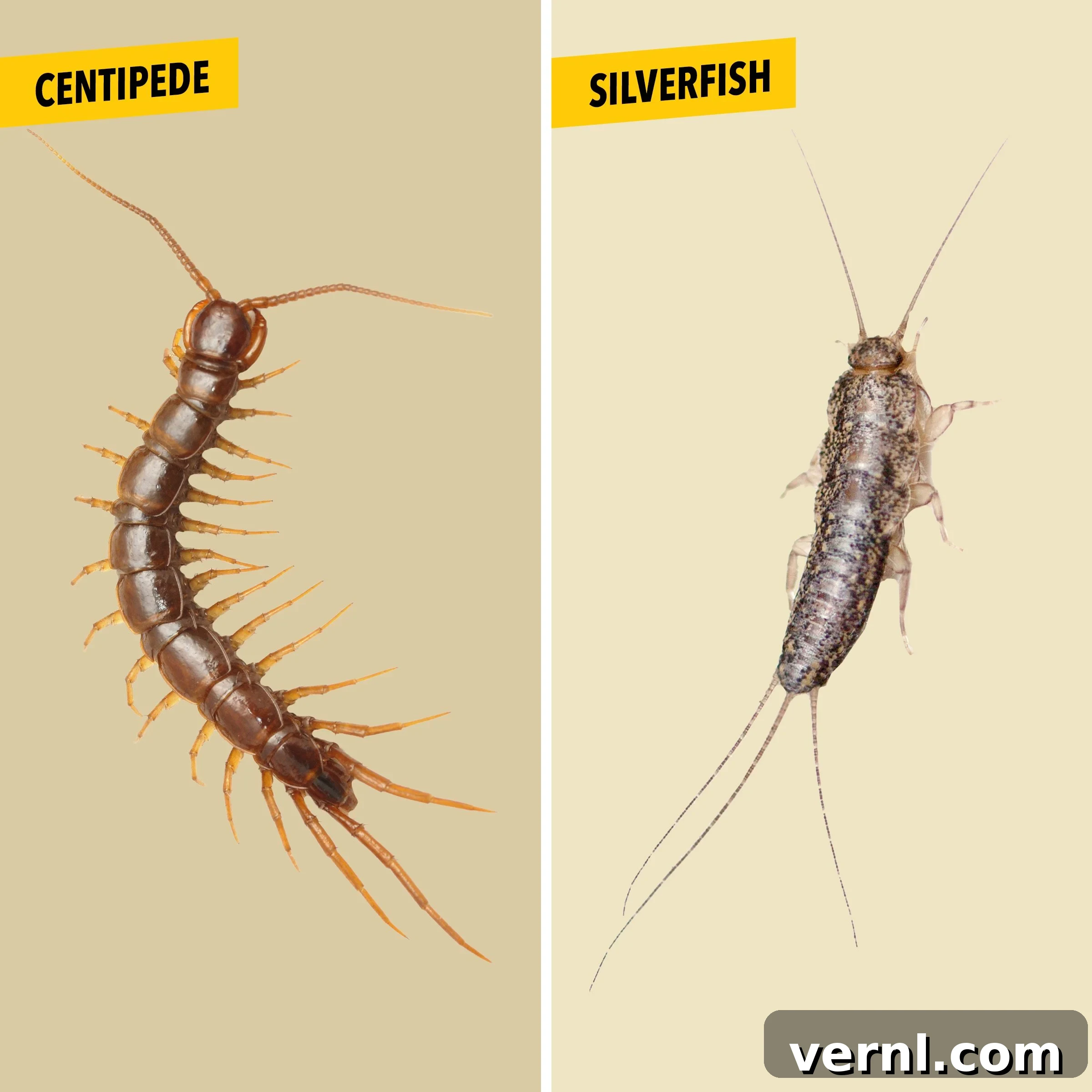
House centipedes (Scutigera coleoptrata) are perhaps the most visually alarming of the two. Their bodies typically measure around 1 to 1-1/2 inches in length, featuring a segmented, yellow-brown body often marked with distinctive dark stripes running lengthwise. However, it’s their impressive array of legs that truly catches the eye and gives them their common name, though the “hundred legs” is an exaggeration. Most house centipedes possess 15 pairs of legs, totaling 30 legs, not 100. These legs are incredibly long, slender, and numerous, extending outwards from their bodies, allowing for their characteristic rapid, gliding movement. At the head, they sport two exceptionally long, whip-like antennae that are used for sensing their environment. The combination of their elongated body, striped pattern, and dozens of delicate, fast-moving legs makes them unmistakable. You might encounter several types of centipedes, but the house centipede is the most common indoor variety.
Silverfish: The Scaly, Flat Marauder
Silverfish (Lepisma saccharina) present a significantly different profile. They are generally much shorter than house centipedes, usually measuring about 1/2 to 3/4 of an inch in length. Their bodies are flatter and more tear-drop or carrot-shaped, tapering from head to tail. Their color ranges from a dark gray to a shimmering, metallic silver, giving them their common name and somewhat iridescent appearance. Unlike the centipede’s numerous appendages, silverfish only have six legs, which are relatively short and tucked close to their body, facilitating a wiggling, fish-like movement when they scurry. Similar to centipedes, they possess two long antennae at their head, but they also have three distinctive tail-like appendages (cerci) at the rear of their abdomen, often longer than their body itself. Their smooth, scaly bodies and unique movement often cause them to be mistaken for tiny, prehistoric fish darting across surfaces.
House Centipede vs. Silverfish: Preferred Habitats and Entry Points
Understanding where these creatures prefer to live and how they enter your home is key to both preventing their presence and effectively managing an existing infestation. Both house centipedes and silverfish thrive in specific environmental conditions, making certain areas of your home more susceptible to their unwelcome visits.
House Centipede: The Global Wanderer in Damp Corners
Centipedes are a diverse group of arthropods, with an estimated 8,000 species found across nearly every terrestrial biome on Earth, from the humid depths of tropical rainforests to arid deserts and even the icy expanse of the Arctic Circle. Some truly massive species, like the 12-inch centipedes found in South America, are formidable predators capable of preying on mice and lizards. However, the house centipede is specifically adapted for indoor living in human dwellings.
Within homes, house centipedes are primarily attracted to dark, secluded areas that offer high humidity and a consistent food supply. Their favorite haunts include:
- Basements and Cellars: Often cool, damp, and undisturbed.
- Crawl Spaces: Providing darkness, moisture, and plenty of hiding spots.
- Attics: Especially those with poor ventilation leading to moisture buildup.
- Bathrooms and Kitchens: Areas prone to leaks, condensation, and high humidity from showers or cooking.
- Closets: Especially those that are cluttered or where clothes block airflow.
- Behind Walls and Under Floorboards: Offering hidden, damp pathways.
They often enter homes through cracks in foundations, gaps around windows and doors, or utility pipe openings, seeking shelter and moisture, particularly during colder or drier outdoor conditions.
Silverfish: The Moisture-Loving Urbanite
Silverfish are also widely distributed globally, found across Africa, the Americas, Australia, Eurasia, and various parts of the Pacific. Unlike centipedes, which have species adapted to extreme environments, silverfish primarily seek out moist areas with specific humidity levels, ideally ranging from 75% to 95%. This makes many urban and suburban homes ideal breeding grounds for them.
In residential and urban environments, silverfish are frequently discovered in:
- Attics and Basements: Like centipedes, these areas often provide the necessary humidity and solitude.
- Bathrooms and Kitchens: Around sinks, bathtubs, and showers where water is readily available and humidity is high.
- Laundry Rooms: Where moisture from washing machines and dryers can accumulate.
- Storage Areas: Particularly those with old books, cardboard boxes, and stored clothing, which serve as both food sources and hiding places.
- Libraries and Classrooms: Drawn to paper, books, and starches.
- Garages and Sheds: If they contain damp cardboard or wood.
Silverfish can enter homes through tiny cracks in the foundation, gaps around pipes, or even on items brought indoors, such as cardboard boxes from storage units or second-hand books. Their small, flat bodies allow them to squeeze into incredibly tight spaces, making their presence often unnoticed until an infestation becomes significant.
House Centipede vs. Silverfish: Decoding Their Behavior and Impact
Understanding the distinct behaviors of house centipedes and silverfish is crucial for effective pest management. While one is a natural ally, the other can be a persistent menace, causing significant damage if left unchecked.
House Centipede: The Home’s Silent Guardian
House centipedes are renowned for their incredible speed and agility. They can move at an astonishing pace, clocked at up to 1.3 feet per second. As elegantly described by the Columbus Dispatch newspaper, their movement isn’t just a simple walk or run; “House centipedes don’t walk or run as much as they glide, sort of like a spooky undulating feather magically levitating across the wall.” This unique gait allows them to pursue and capture prey efficiently.
Centipedes are strictly carnivorous and are highly beneficial predators in your home. Their diet consists primarily of other small, undesirable insects, including:
- Cockroaches
- Spiders
- Moths
- Flies
- Termites
- Silverfish (yes, they eat silverfish!)
Therefore, an increased presence of centipedes in your home can actually be an indicator of a more significant underlying pest problem, as they are drawn to areas with abundant food sources. By preying on these common household pests, house centipedes act as natural exterminators, helping to keep your home cleaner and free from more destructive insects.
Despite their intimidating appearance, house centipedes are generally docile towards humans. They typically avoid human interaction, preferring to hide in dark, secluded spots. When provoked or cornered, larger centipedes may bite, though this is rare and usually only occurs in self-defense. A centipede bite is comparable to a bee sting, causing localized swelling, redness, and mild numbness. For most people, it’s not medically serious, but individuals with allergies should seek medical attention. The golden rule with house centipedes is simple: if you don’t bother them, they won’t bother you. Recognizing their role as beneficial pest controllers is key to embracing a more natural approach to home pest management.
Silverfish: The Silent Destroyer
Silverfish, while not as visually aggressive as centipedes, possess a different set of behaviors that make them a genuine household pest. They are incredibly agile, capable of jumping up to two feet and often outrunning even centipedes or spiders with their rapid, wiggling motion. Unlike centipedes, silverfish do not bite humans, nor do they pose a direct health threat in terms of transmitting diseases.
However, their presence is often indicative of underlying structural or environmental issues within your home. Silverfish thrive in high-humidity environments, and their presence can signal excessive moisture, which may be caused by:
- Leaks in pipes or roofs
- Poor ventilation in bathrooms or attics
- Cracks in the foundation that allow moisture infiltration
Uncontrolled moisture can lead to subsequent problems like mold, mildew, fungi, and algae growth, which can not only damage your home’s structure but also exacerbate respiratory issues for occupants. Silverfish are also notorious for hitching rides into homes via cardboard boxes, especially those stored in damp basements or garages, transporting their destructive potential directly indoors.
The primary concern with silverfish lies in their incredibly destructive eating habits. They are nocturnal feeders with a broad appetite for materials rich in carbohydrates, particularly starches and cellulose. This means they can cause significant damage to a wide array of household items, often unnoticed until it’s too late. Their diet includes:
- Paper products: Books, magazines, newspapers, wallpaper, glue in bookbindings, photographs, cardboard boxes, documents.
- Fabrics: Cotton, linen, silk, rayon, some synthetic fabrics, especially if starched or dirty. Silverfish can be destructive eaters of your clothing.
- Food items: Sugars, flour, oats, dried meat, coffee.
- Other organic materials: Dead insects, hair, dandruff, some shampoos, and glues.
They typically leave behind irregular holes, notches along edges, or surface etchings, often accompanied by their tiny pepper-like droppings and shed skins. While they can survive for weeks without food or water, they generally prefer to stay close to a reliable food source, making areas like cluttered bookshelves, linen closets, and storage boxes prime targets for infestation. Their capacity for silent, persistent damage makes them a genuine pest that warrants active removal and prevention strategies.
House Centipede vs. Silverfish: Effective Management and Elimination Strategies
The approach to managing house centipedes and silverfish in your home differs significantly due to their contrasting roles. While one offers beneficial pest control, the other is a persistent and destructive nuisance. Understanding these differences is key to adopting the right strategy.
Managing House Centipedes: Embrace or Gently Relocate
Encountering a house centipede scurrying across your kitchen floor, as I recently did, can be a startling experience. My instinct was not to harm it but to gently guide it outdoors with a tissue. According to Ike Osakuni, an expert with Abra Kadabra Environmental Services in Mound, Minnesota, this was indeed the correct and most advisable action.
“Centipedes are not harmful to humans or your home’s structure,” Osakuni explains. “In fact, they are beneficial predators. They actively hunt and consume common household pests like silverfish, box elder bugs, cockroaches, termites, and spiders. They are also territorial and will even eat each other, which naturally limits their population within your house. You won’t typically find an overwhelming number of them.”
Osakuni acknowledges that people often react emotionally to centipedes due to their appearance. “You can’t blame them, but centipedes look worse than they are. They are a sign that you might have other, more problematic insects that they are helping to control.”
If their presence genuinely makes you uncomfortable, Osakuni suggests a humane approach: “If you want to reduce their numbers, you can place sticky traps along your baseboards in areas where you’ve seen them.” These traps can capture centipedes, allowing for easy, albeit less direct, removal. While bifenthrin or cypermethrin sprays are effective insecticides that can kill centipedes, using them is generally discouraged because of the centipedes’ beneficial role. The most recommended course of action is to simply leave centipedes alone or gently relocate them outdoors, focusing instead on addressing the underlying pest issues that attract them in the first place.
Eliminating Silverfish: A Multi-pronged Approach
Unlike centipedes, silverfish are unequivocally pests that should be actively managed and eliminated. Their destructive feeding habits and the indication of moisture problems make them undesirable residents. Osakuni emphasizes the core strategy: “To get rid of silverfish, you must eliminate moisture and messes.”
1. Moisture Control: The First Line of Defense
Silverfish absolutely require high humidity (75-95%) to survive and thrive. Addressing moisture is the most critical step:
- Dehumidifiers: Place them in damp basements, attics, and crawl spaces. Maintaining indoor humidity below 50% makes your home inhospitable to silverfish.
- Fix Leaks: Promptly repair any leaky pipes, faucets, or roof leaks. Even small drips can create ideal silverfish habitats.
- Improve Ventilation: Ensure bathrooms and kitchens are well-ventilated, especially during and after showers or cooking. Use exhaust fans regularly.
- Seal Gaps: Seal cracks in foundations, around windows, doors, and utility entry points to prevent moisture intrusion.
While I keep my kitchen clean and dry foods in sealed containers, I learned that my lack of a dehumidifier in a potentially damp area was a vulnerability.
2. Eliminate Food Sources and Hiding Spots: Declutter and Clean
Silverfish are attracted to cellulose and starches. Minimizing these available food sources is crucial:
- Declutter: Remove old newspapers, magazines, cardboard boxes, and unused paper from basements, attics, and storage areas. Store essential documents in sealed plastic containers.
- Vacuum Regularly: Thoroughly vacuum carpets, rugs, and especially cracks and crevices to remove food crumbs, dust, and potential silverfish eggs.
- Store Food Properly: Keep dry goods like flour, sugar, and cereals in airtight containers.
- Clean Up Spills: Promptly clean up any food or drink spills, especially starchy or sugary ones.
- Store Clothing Properly: Keep seasonal clothing in sealed bins rather than open boxes in damp areas.
3. Direct Treatment Methods: Natural and Chemical Options
For active infestations, several methods can be employed:
- Bleach Solution: For silverfish visible on walls or surfaces, a simple spray mixture of two parts water and one part bleach can be effective. Pour bleach and hot water down drains to kill any silverfish that might be lurking in pipes or infesting plumbing systems.
- Diatomaceous Earth (DE): This natural, non-toxic powder consists of fossilized diatoms. When silverfish crawl over it, the microscopic sharp edges cut their exoskeletons, leading to dehydration and death. Sprinkle food-grade DE in cracks, crevices, behind appliances, and along baseboards. Always wear a mask when applying.
- Boric Acid: Boric acid is a stomach poison for silverfish. It can be lightly dusted in hidden areas where silverfish are suspected. Use with caution around children and pets.
- Natural Repellents: Silverfish are known to dislike certain scents. Using essential oils like citrus, cinnamon, cedar, or lavender in diffusers or on cotton balls placed in problem areas may help deter them, though this is often more of a preventative measure than a treatment for active infestations.
- Sticky Traps: Similar to centipedes, sticky traps can be placed along baseboards or in storage areas to monitor silverfish activity and capture individual pests.
4. Professional Pest Control: When to Call the Experts
While DIY methods can be effective for minor infestations, a persistent or widespread silverfish problem often warrants professional intervention. Products like Silverfish Packs (bait stations) and Ultrasonic Silverfish Repellents are available, but their efficacy can vary. For reliable and long-term silverfish control, especially if the infestation is severe or recurring, calling a professional like Osakuni’s team is advisable. They can employ non-poisonous sprays and integrated pest management techniques both inside and outside the home to effectively eradicate silverfish and prevent their return, without posing risks to your family or pets.
Conclusion: Living Harmoniously with Nature’s Intruders
While the sudden appearance of a house centipede or silverfish can undoubtedly be an unsettling experience, knowledge is your most powerful tool in responding effectively. This guide has illuminated the distinct differences between these two common household arthropods, from their appearance and preferred habitats to their unique behaviors and impact on your home.
The key takeaway is clear: the house centipede, despite its startling speed and numerous legs, is primarily a beneficial insect that preys on other pests, making it a natural ally in maintaining a healthier home environment. Humane relocation or simply leaving them alone is often the best course of action. Conversely, silverfish are destructive pests that can cause significant damage to your belongings and signal underlying moisture problems within your home. Eliminating silverfish requires a comprehensive strategy focused on moisture control, meticulous cleaning, decluttering, and, when necessary, targeted treatments or professional intervention.
By understanding these distinctions, homeowners can move beyond immediate panic and adopt informed, targeted approaches to pest management. This not only ensures the well-being of your home and belongings but also promotes a more harmonious coexistence with the natural world, even the creepy-crawlies that occasionally share our space.