
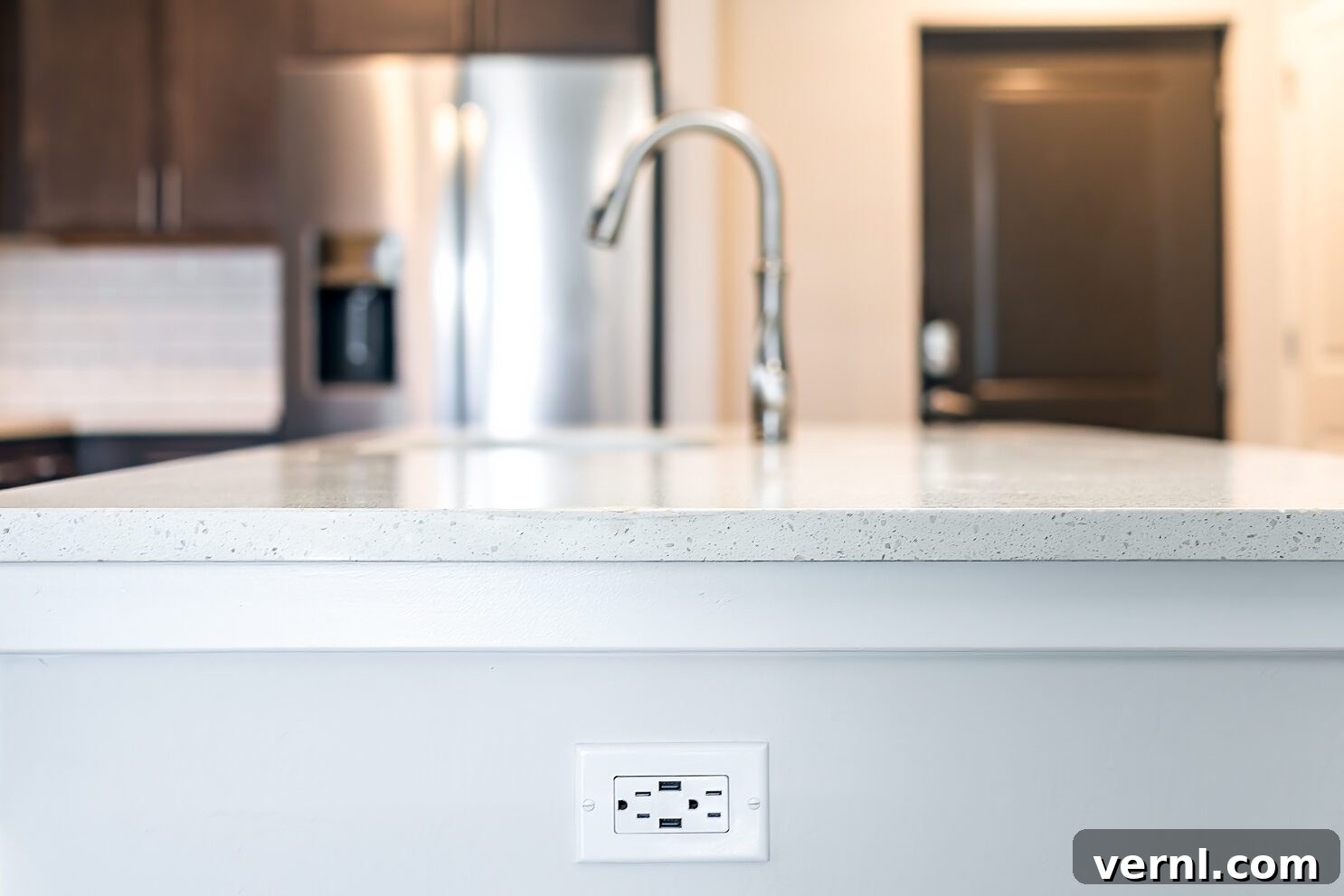
Embarking on a kitchen renovation or building a brand-new culinary space involves meticulous planning, and a critical component of this is understanding and implementing the latest electrical receptacle requirements. The National Electrical Code (NEC), published by the National Fire Protection Association (NFPA), serves as the bedrock for electrical safety standards across the United States. Given its vital role in preventing electrical hazards and keeping pace with technological advancements, the NEC undergoes rigorous updates every three years.
The 2023 edition of the NEC introduced significant revisions concerning kitchen electrical installations, particularly regarding receptacles. These changes aim to enhance safety, improve functionality, and adapt to modern kitchen designs and appliance usage. While the technical language of the code can often be challenging for those outside the electrical profession, expert insights can illuminate these complex requirements. Jim O’Brien, an experienced electrician and content marketing manager at Leviton, a leading manufacturer of electrical devices, offers invaluable clarification on these crucial updates.
It’s important to note that these code changes are prospective. If your existing kitchen’s electrical setup doesn’t align with the most recent code (which is common for older homes), there’s no immediate requirement to overhaul it. Code updates apply exclusively to new installations or substantial remodels initiated after the code’s publication. Therefore, if you’re planning any new construction or a kitchen renovation, familiarizing yourself with these contemporary NEC guidelines is essential for a safe, compliant, and efficient electrical system.
Number and Placement of Receptacles: Powering Your Kitchen Safely
The kitchen is undeniably the most power-hungry room in any home, demanding a substantial number of 120-volt receptacles to power everything from small countertop appliances to dedicated major equipment. The precise number and strategic placement of these receptacles are not arbitrary but are carefully dictated by the NEC, primarily influenced by the kitchen’s size and layout.
Countertop Receptacles: Accessibility and Spacing
To ensure convenient and safe access to power for everyday kitchen tasks, the NEC mandates specific requirements for countertop and work surface receptacles. Any countertop space or work surface measuring 12 inches (300 mm) or wider must be served by at least two dedicated 20-ampere (20A) small-appliance branch circuits. These circuits are designed to handle the high current draw of common kitchen appliances like blenders, toasters, and coffee makers, preventing circuit overloads.
Placement is key for both safety and usability. Receptacles serving countertops can be mounted in the wall no higher than 20 inches (500 mm) above the countertop surface. Alternatively, they can be installed within the cabinet structure itself, provided they are no more than 12 inches (300 mm) below the countertop edge. This latter option is permissible only if the countertop extends less than 6 inches (150 mm) beyond the base of the cabinet, ensuring accessibility and preventing cords from snagging.
The spacing of countertop receptacles is also critical. They must be separated by no more than 48 inches (1200 mm) along the countertop length. This strategic spacing ensures that a standard small appliance with a typical 24-inch (600 mm) power cord can be plugged in from any point along the countertop without the need for extension cords, which are often a fire hazard. For longer countertops, this 48-inch rule necessitates the installation of additional receptacles, meaning there is no upper limit to the number of receptacles, as long as each section meets the spacing requirement.
- Important Update: Previous NEC editions included language that required one receptacle for the first nine square feet of countertop space and one additional receptacle for every subsequent 18 square feet. This specific calculation-based requirement has been removed in the latest NEC, simplifying the approach to a more direct linear spacing rule, making compliance easier to understand and implement.
General-Purpose Wall Receptacles
Beyond the countertop, other wall spaces in the kitchen also require power access. Any empty wall space 12 inches (300 mm) or more in width that is not obstructed by cabinetry, a doorway, or another permanent fixture must have a receptacle. This ensures that vacuum cleaners, floor lamps, or other household items can be easily powered within the kitchen area. For extended wall sections that are uninterrupted by such fixtures or doorways, multiple receptacles should be installed, maintaining the same maximum separation of 48 inches (1200 mm) to provide adequate power coverage.
The standard height for these general-purpose wall receptacles is typically 12 to 16 inches (300 to 400 mm) above the finished floor. However, the NEC does allow for alternative installations in baseboards or even the floor itself, provided that appropriate electrical boxes and listed covers are used to ensure safety and protection from damage or moisture. Such installations require careful planning to maintain code compliance and practical usability.
Island and Peninsula Receptacles: Evolving Safety Standards
One of the most notable changes in the 2023 NEC concerns receptacles on kitchen islands and peninsulas. In a significant departure from previous editions, the current code no longer explicitly *requires* the installation of receptacles on these freestanding or attached work surfaces. However, this change comes with a crucial caveat that emphasizes future flexibility and adaptability.
As Corey Hannahs, NFPA Senior Electrical Content Specialist, highlights, “If a receptacle outlet is not provided for islands and peninsulas, provisions must be provided for the addition of a receptacle outlet in the future.” This means that even if you opt not to install an outlet immediately, you must still rough-in the wiring to a junction box located discreetly within the cabinet space beneath the countertop. This foresight allows homeowners to easily add an outlet later if their needs change, without the need for extensive and costly electrical work.
Should you choose to install island or peninsula receptacles, they must adhere to the same stringent spacing requirements as fixed countertop receptacles, ensuring the 48-inch maximum separation. When selecting receptacle types for islands and peninsulas, approved options include wall-mounted receptacles on the side of a peninsula that adjoins a permanent wall, or listed pop-up receptacles installed directly into the island or peninsula countertop. These pop-up units are designed to recess into the surface when not in use, offering a clean aesthetic and enhanced safety.
Critically, the installation of receptacles *below* the countertop on islands or peninsulas is now explicitly prohibited. This prohibition stems from a history of documented injuries, particularly to children, who suffered burns and other electrical trauma when pulling on appliance cords that were plugged into these less-accessible outlets. The NEC’s updated stance prioritizes child safety by ensuring all island and peninsula receptacles are easily visible and accessible from above the countertop.
Dedicated Receptacles: Powering Major Appliances
Certain high-power kitchen appliances require their own dedicated 120-volt receptacles, each served by an independent circuit that is not shared with any other equipment. This requirement is paramount for preventing circuit overloads, which can lead to tripped breakers, appliance damage, or even electrical fires. Appliances that typically demand dedicated circuits include:
- Refrigerators: Essential for food preservation, refrigerators draw continuous power and require a dedicated circuit to ensure reliable operation without interruption.
- Dishwashers: These appliances consume significant power during their wash and dry cycles, necessitating a dedicated circuit for safety and optimal performance.
- Garbage Disposals: While used intermittently, disposals are high-torque motors that can draw a large surge of current when activated, making a dedicated circuit crucial.
- Built-in Microwaves: Unlike portable models, built-in microwaves are permanently installed and often feature higher wattage, requiring their own power source.
- Wall Ovens: Electric wall ovens, whether single or double, are substantial heating appliances that demand a dedicated circuit due to their continuous high current draw during operation.
Each of these dedicated circuits must be protected by either a 15-ampere (15A) or 20-ampere (20A) circuit breaker, with the specific amperage determined by the current draw specifications of the appliance it services. Always consult the appliance manufacturer’s recommendations and local code requirements to select the appropriate breaker size.
GFCI and AFCI Protection: Dual Shields Against Electrical Hazards
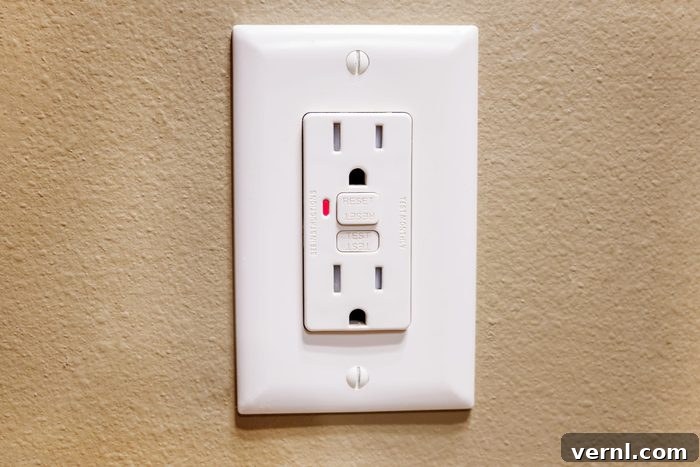
Electrical safety in the kitchen is further bolstered by the mandatory implementation of Ground-Fault Circuit Interrupter (GFCI) and Arc-Fault Circuit Interrupter (AFCI) protection. These technologies serve distinct but equally vital roles in safeguarding against electrical shock and fire.
“The most significant update in the 2023 NEC related to kitchen outlets is the expanded GFCI protection requirement,” states Jim O’Brien. He elaborates, “This update clarifies that GFCI protection is necessary for a broader range of receptacles, including those not directly serving countertops.” Previously, GFCI requirements were more narrowly focused on areas near water. The expanded scope now ensures comprehensive protection throughout the kitchen, encompassing all 125-volt, single-phase, 15- and 20-ampere receptacles. This means that outlets intended for high-powered appliances, those located under sinks, or even those in pantry areas within the kitchen space must now incorporate GFCI protection. This broader requirement significantly reduces the risk of electrical shock by instantly disconnecting power when a ground fault—an unintended path for electricity to flow to the ground—is detected.
For GFCI devices to function effectively and be safely reset after tripping, the code also mandates that they remain readily accessible. This can pose a challenge for receptacles hidden behind heavy appliances like refrigerators or those mounted high on a wall, making manual resetting inconvenient or impossible. A practical and highly recommended solution for such hard-to-reach receptacles is to install GFCI breakers at the main electrical panel. These breakers provide ground-fault protection for the entire circuit, offering a centralized and accessible point for resetting without needing to move appliances or reach awkward locations.
While GFCI protection guards against electric shock, AFCI protection tackles another critical hazard: electrical fires. Since 2014, the NEC has mandated AFCI protection on all kitchen receptacle circuits. O’Brien succinctly explains the distinction: “While GFCI protection is vital for preventing electric shock, AFCI protection helps prevent electrical fires by detecting arcing conditions in circuits.” Arc faults occur when electricity jumps across a gap in the wiring, often due to damaged insulation, loose connections, or frayed cords. These arcs generate intense heat, which can ignite surrounding materials and lead to a fire. AFCI devices are designed to detect these dangerous arcing conditions and trip the circuit before a fire can start.
For ultimate convenience and comprehensive safety, combination devices are available. O’Brien points to products like Leviton’s SmartLockPro, which offer both GFCI and AFCI protection in a single receptacle unit. Alternatively, for circuit-wide protection, electricians can install AFCI/GFCI combination breakers directly in the electrical panel, providing dual-layer defense against both shock hazards and potential electrical fires for all outlets on that circuit. Implementing both GFCI and AFCI technologies is a cornerstone of modern kitchen electrical safety.
Tamper Resistance: Protecting the Youngest Members of Your Family
The safety of children is a paramount concern in electrical code development, leading to the introduction of tamper-resistant (TR) receptacles. Recognizing the danger presented by toddlers and young children attempting to insert foreign objects, like forks or keys, into electrical outlets, the NEC introduced the requirement for kitchen outlets to be tamper-resistant in 2008. This crucial safety measure has remained a consistent requirement and applies to virtually all receptacles throughout the kitchen.
Tamper-resistant receptacles are designed with spring-loaded shutter mechanisms that cover the contact openings. These shutters remain closed when unequal pressure is applied (e.g., a child trying to insert a single object), effectively blocking access to the energized contacts. The shutters only open when equal pressure is applied simultaneously to both slots, such as when a two-pronged plug is inserted. This simple yet ingenious design dramatically reduces the risk of accidental electrical shock to curious children.
There are only a few specific exceptions to the tamper-resistant requirement. Receptacles installed higher than 5 1/2 feet (1.67 meters) above the floor are generally exempt, as they are considered out of reach for young children. Additionally, receptacles located behind heavy, stationary appliances, such as a refrigerator or a permanently installed built-in oven, are also exempt. The reasoning here is that these outlets are typically inaccessible to children once the appliance is in place. However, for all other accessible outlets in the kitchen, tamper-resistant receptacles are a non-negotiable safety feature.
FAQ: Common Questions About Kitchen Electrical Codes
Where can I find the most current electrical code requirements for my area?
Electrical codes can have local amendments and variations. To ensure you have the most precise and up-to-date electrical code requirements for your specific town, city, and state, it is always best to contact your local building department or code enforcement office directly. They can provide guidance on the adopted NEC edition and any local modifications.
If I’m doing DIY work, do I need to know about the electrical code requirements?
Absolutely, yes. DIYers are legally and morally obligated to understand and meticulously follow all applicable electrical code requirements when undertaking any electrical work, whether it’s a minor upgrade, a major remodel, or a new installation. These codes are not mere suggestions; they are comprehensive safety standards designed to protect you, your family, your home, and your electrical items from potential hazards like shock and fire. Ignorance of the code is not an excuse, and non-compliant work can be dangerous and costly to correct later.
What happens if my kitchen’s electrical system doesn’t meet the current code?
As explained in the introduction, if your existing kitchen was wired under a previous code edition, you typically do not need to immediately upgrade it to meet the latest requirements. Code changes primarily apply to new installations and major remodels. However, if you are planning any significant electrical work or renovation in your kitchen, then all new work must comply with the current code. For safety and future peace of mind, it’s always advisable to consider voluntary upgrades to newer safety standards, such as GFCI and AFCI protection, even if not strictly mandated for existing installations.
About the Expert
- Jim O’Brien is an electrician and the Contractor Marketing Manager for Leviton, a globally recognized leader in the manufacturing of electrical wiring devices, including a wide range of receptacles and safety products.
Source
- National Fire Protection Association: Changes to Kitchen Island and Peninsula Receptacle Outlet Requirements for the Past Three NEC Editions; Corey Hannahs, January 2023.