
The Silent Threat: Unmasking the Dangers of Giant Hogweed
Imagine a plant boasting towering stature and magnificent white flowers, seemingly a great addition to your garden, promising to enhance any landscape with its unique beauty. Yet, looks can be incredibly deceiving. Beneath this appealing facade lies a formidable adversary: Giant Hogweed (Heracleum mantegazzianum). Often mistaken for harmless wildflowers like Queen Anne’s Lace, but on an intimidatingly larger scale, this plant is far from innocuous. It is a highly dangerous invasive species, originally hailing from the Caucasus Region and Central Asia, which has unfortunately established a foothold in North America, posing a significant threat to both human health and native ecosystems.
Reaching an astounding height of up to 10 to 14 feet, Giant Hogweed is more than just a large weed; it’s an environmental menace. Its presence has been increasingly reported across various parts of the United States and Canada, with recent sightings in states like Virginia underscoring the urgent need for public awareness and swift action. Understanding how to identify this plant and, more critically, how to avoid contact with it, is paramount for anyone who enjoys spending time outdoors, whether in their garden, local parks, or natural areas.
The Deceptive Beauty: Identifying Giant Hogweed
Before delving into the severe risks associated with Giant Hogweed, it’s crucial to equip yourself with the knowledge to identify this towering plant accurately. Its sheer size and distinct features make it stand out, but misidentification can have serious consequences. Here’s a detailed breakdown of its key characteristics:
Towering Stature and Grand Blooms
- Height: Giant Hogweed truly lives up to its name, typically growing between 7 and 14 feet tall, with some specimens even exceeding this height under ideal conditions. Its impressive vertical growth makes it visible from a considerable distance.
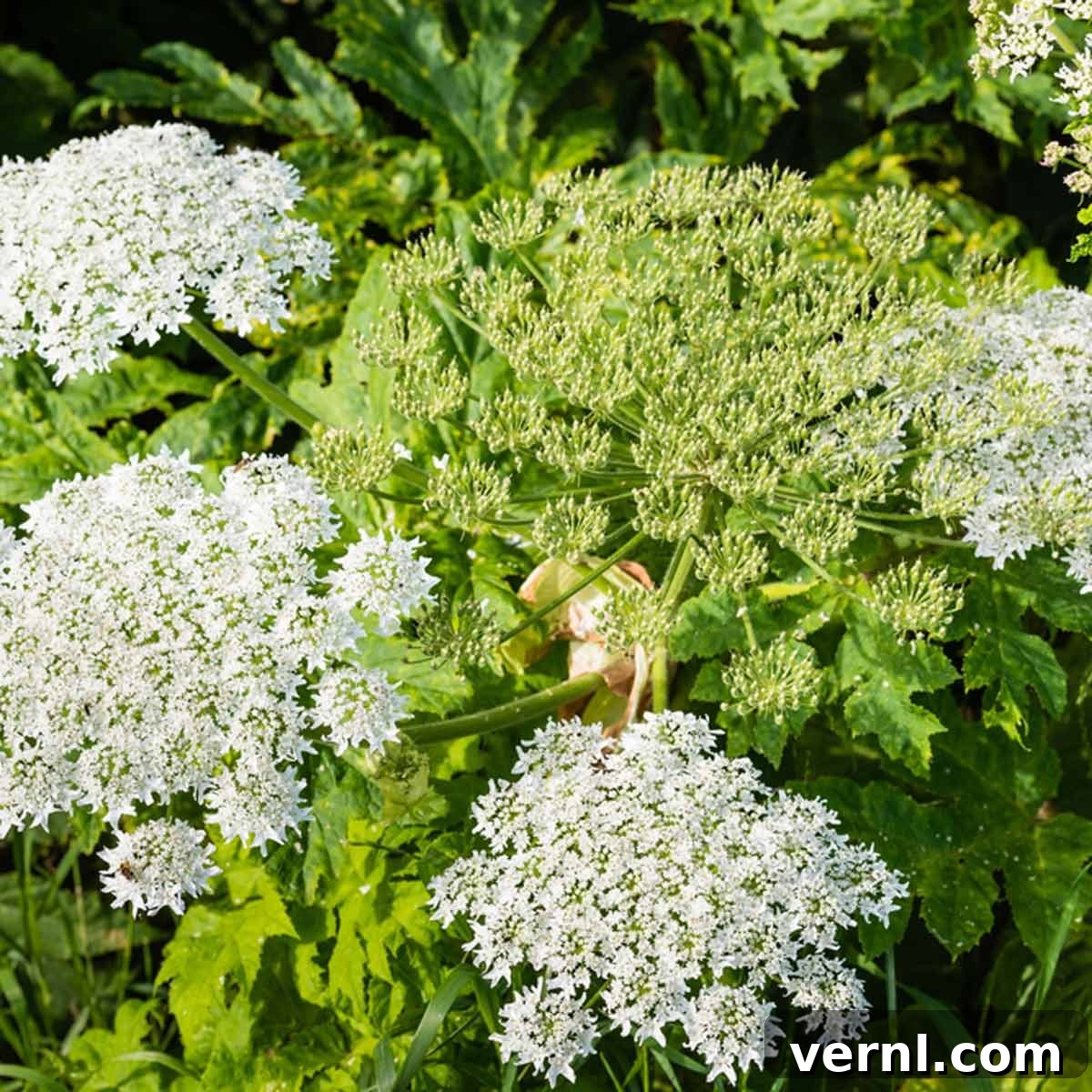
- Flowers: The plant produces massive, umbrella-shaped flower clusters, known as umbels, that can measure an astonishing 2-1/2 feet in diameter. These clusters are composed of 50 to 150 small white flowers, radiating outwards, creating a flat-topped or slightly rounded appearance. This striking floral display is often what initially attracts people, drawing them closer to danger.
Distinctive Leaves and Stems
- Leaves: Giant Hogweed boasts extraordinarily large leaves, which can spread up to 5 feet wide. These leaves are deeply incised and lobed, featuring a somewhat jagged or serrated margin. Their sheer size and distinct shape are unmistakable, contributing to the plant’s overall imposing presence.
- Stems: The plant’s robust stems are a crucial identifying feature. They are green but distinctly marked with prominent purple splotches, giving them a mottled appearance. Furthermore, the stems are covered in coarse, stiff white hairs, particularly noticeable at the base of the leaf stalks. These hairs, combined with the purple blotches, are a strong indicator of Giant Hogweed. The stems are also hollow and grooved.
While these features provide a comprehensive guide, always exercise extreme caution and maintain a safe distance when attempting to identify any suspicious plant.
The Perilous Sap: Understanding the Danger of Giant Hogweed
The true danger of Giant Hogweed lies not in its physical presence, but within its clear, watery sap. This sap contains potent chemicals called furanocoumarins, which are highly phototoxic. This means that when the sap comes into contact with human skin and is then exposed to sunlight (ultraviolet rays), it triggers a severe reaction known as photodermatitis.
Immediate and Long-Term Health Risks
- Skin Irritation and Burns: Initial contact with the sap may not immediately cause pain, making it dangerously insidious. However, within 15 minutes to 2 hours of sun exposure, the affected skin can develop redness, itching, and a burning sensation. This can rapidly escalate into painful, fluid-filled blisters that resemble severe chemical or even third-degree burns.
- Permanent Scarring and Hyperpigmentation: The blisters can be quite extensive and slow to heal, often leading to permanent scarring. Even after the blisters subside, the affected skin often undergoes hyperpigmentation, turning dark purple or brown, which can persist for months or even years. This discoloration is a lasting reminder of exposure to Giant Hogweed.
- Eye Contact and Blindness: One of the most severe risks involves contact with the eyes. If the sap gets into the eyes, it can cause excruciating pain, temporary or even permanent blindness, as highlighted by experts like Naja Kraus, a giant hogweed program coordinator for the New York Department of Environmental Conservation. This makes any encounter with the plant incredibly hazardous, particularly for children or pets who might inadvertently rub their eyes after contact.
- Increased Sensitivity: Even after initial healing, the affected skin can remain hypersensitive to sunlight for several years, requiring vigilant protection to prevent recurrence of symptoms.
It’s important to understand that merely touching the plant’s leaves or stem might not immediately result in problems unless the sap is released from broken parts of the plant and comes into direct contact with your skin, followed by sun exposure. However, given the plant’s brittle nature and the ever-present risk of accidental sap release, it is always safest to avoid all contact.
An Invasive Threat: Why Giant Hogweed is a Problem Beyond Health
Giant Hogweed isn’t just a threat to human health; it’s a formidable invasive species with significant ecological consequences. Introduced to America in the 19th century as an ornamental garden plant due to its impressive size and exotic appeal, its aggressive nature quickly became apparent.
Ecological Impact and Spread
- Outcompeting Native Species: Giant Hogweed grows incredibly fast and tall, forming dense canopies that shade out native vegetation. This deprives indigenous plants of sunlight, effectively outcompeting them for resources and severely reducing local biodiversity. Over time, this can lead to a monoculture where Giant Hogweed dominates, altering the natural landscape.
- Soil Erosion: In areas where Giant Hogweed thrives, particularly along stream banks and river systems, its dense growth can prevent other plants from establishing. When the hogweed dies back in winter, it leaves bare soil vulnerable to erosion, contributing to runoff and impacting water quality.
- Prolific Seed Production: A single Giant Hogweed plant can produce tens of thousands of seeds, which are capable of remaining viable in the soil for up to 15 years. These seeds are easily dispersed by wind and water, allowing the plant to rapidly colonize new areas, often along roadsides, stream banks, and disturbed soils.
Today, Giant Hogweed can be found in at least 11 states across the U.S., predominantly on the East Coast, and in parts of Canada, notably Ontario. In 2011 alone, New York State confirmed over 1,000 sightings, highlighting the plant’s pervasive spread. Due to its significant risks and invasive nature, it is illegal to grow, transport, or sell Giant Hogweed in many jurisdictions.
Similar Look-Alikes: Avoiding Misidentification
While Giant Hogweed possesses distinct features, several other plants bear a resemblance, leading to potential misidentification. Knowing the differences is crucial to avoid unnecessary panic or, conversely, to prevent dangerous exposure. Here are a few common look-alikes:
- Queen Anne’s Lace (Daucus carota): This common wildflower is significantly smaller than Giant Hogweed, typically growing no more than 2-4 feet tall. Its white flower clusters are much smaller, and its stems are usually green and hairy, lacking the prominent purple splotches and thick hairs of Giant Hogweed. The leaves are also finer and more fern-like.
- Cow Parsnip (Heracleum maximum): As a native North American species and a close relative, Cow Parsnip is often confused with Giant Hogweed. It is also a large plant, but generally only grows 5-8 feet tall. Its leaves are broader and less deeply incised than Giant Hogweed’s, and its stems are green, often hairy, but typically lack the distinctive purple splotches. While its sap can cause a milder form of photodermatitis, it is not as potent or dangerous as Giant Hogweed.
- Wild Parsnip (Pastinaca sativa): This invasive plant, though not as tall as Giant Hogweed (typically 2-5 feet), also has phototoxic sap. Its flowers are yellow, not white, and it has grooved, hairless stems. Its leaves are also less deeply cut.
- Angelica (Angelica atropurpurea): Another tall plant with large umbrella-like flower clusters, Angelica can reach 5-7 feet. However, its flowers are typically greenish-white, and its stems are smooth, purplish, and hollow, but without the coarse hairs and distinct purple splotches found on Giant Hogweed. Its leaves are also different in shape.
When in doubt, it is always safer to assume a plant is Giant Hogweed and maintain a safe distance, especially if it exhibits the characteristic purple-splotched, hairy stems and massive size.
What to Do If You Spot Giant Hogweed
Encountering Giant Hogweed can be alarming, but knowing the correct course of action is vital for your safety and the safety of others. The most important rule is: **DO NOT TOUCH GIANT HOGWEED.**
- Maintain Distance: If you suspect you have found Giant Hogweed, keep a safe distance. Do not attempt to cut, pull, or otherwise disturb the plant yourself, as this can easily release its hazardous sap.
- Report the Sighting: Immediately report the sighting to your local environmental conservation department or agriculture agency. Many states have dedicated invasive species programs or hotlines for reporting. For example, in New York, the Department of Environmental Conservation has specific protocols for giant hogweed sightings. Provide precise location details, and if possible and safe, take photos from a distance without approaching the plant.
- Professional Removal is Key: Giant Hogweed requires specialized handling and removal techniques. Professional invasive species teams or certified experts are trained to safely eradicate the plant using appropriate protective gear and methods. Attempting to remove it yourself puts you at severe risk of exposure.
- First Aid for Accidental Contact: If you accidentally come into contact with the sap:
- Immediately and thoroughly wash the affected skin with soap and water.
- Keep the affected area completely covered from sunlight for at least 48 hours to prevent the phototoxic reaction.
- If blisters or a rash develop, seek medical attention promptly. Inform your doctor about the potential Giant Hogweed exposure.
- If sap gets into your eyes, flush them with water immediately and seek emergency medical attention.
Prevention and Awareness: Protecting Your Community
The battle against Giant Hogweed is ongoing, and public awareness plays a critical role. Educating ourselves and our communities about this dangerous invasive plant is the first step towards its control and eventual eradication. Gardeners and landowners have a particular responsibility to be vigilant, regularly inspecting their properties and surrounding areas for any signs of this unwelcome guest.
By understanding its identification, the severe risks associated with its sap, and the proper response to a sighting, we can collectively work to protect our health, our gardens, and our native ecosystems from this towering menace. Stay informed, stay safe, and remember to keep an eye out for these 10 invasive plants you should get out of your garden now, including the formidable Giant Hogweed.