
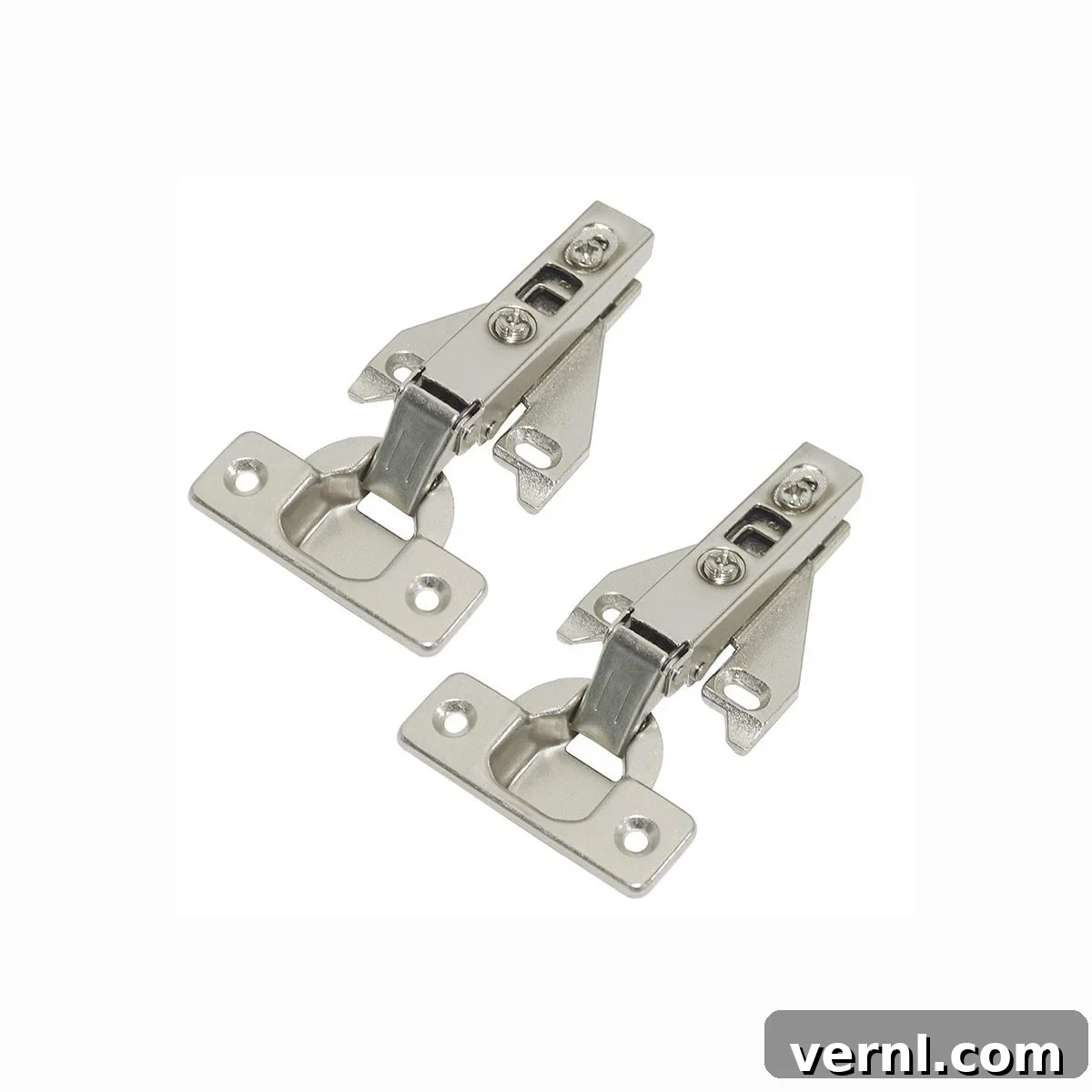
There’s an undeniable allure to a door or cabinet that operates with seamless precision, revealing no visible hardware from the outside. This sophisticated aesthetic is achieved through the ingenious design of concealed hinges. From grand entry points to elegant interior doors, and particularly in the intricate world of cabinetry and furniture, these hidden mechanisms offer a clean, uninterrupted look that elevates any space. It’s only when you open the door that the true magic – a precisely engineered, hidden hinge system – is revealed. Combining beautiful design with exceptional utility, concealed hinges are a modern marvel for enhancing the visual appeal and functionality of your home.
What Are Concealed Hinges? An Introduction to Hidden Hardware
Concealed hinges, often referred to interchangeably as invisible hinges, hidden hinges, or specifically for cabinetry, European hinges, represent a specialized category of hardware engineered to remain completely out of sight when a door or cabinet panel is closed. Unlike traditional butt hinges, which are prominently visible on the edge of the door and its frame, concealed hinges are meticulously mortised (recessed) into the material of both the door and the cabinet or frame. This design choice results in a completely flush and sleek appearance, making them a cornerstone in minimalist and contemporary interior designs.
These sophisticated components are versatile and widely adopted across a variety of applications within residential and commercial settings, including:
- Entry and Interior Doors: Offering both a streamlined visual and enhanced security benefits for full-size doors.
- Kitchen and Bathroom Cabinetry: A ubiquitous feature in modern kitchens and bathrooms, prized for their precise adjustability and smooth, quiet operation.
- Furniture: Utilized in custom wardrobes, entertainment units, office furniture, and other bespoke pieces to maintain clean lines and a high-end finish.
The concept of hidden door mechanisms boasts a rich history, evolving significantly over centuries to the advanced systems we see today. Respected brands like Soss have been at the forefront of this innovation, perfecting concealed hinge technology for well over a century. Their enduring presence underscores the timeless appeal and continuous development in this specialized hardware niche.
Why Choose Concealed Hinges? Unveiling the Multifaceted Advantages
The decision to opt for concealed hinges extends far beyond their initial aesthetic allure. They deliver a comprehensive suite of practical benefits that significantly contribute to both the functionality, security, and long-term durability of your doors and cabinetry.
1. Superior Aesthetics and Unparalleled Design Versatility
The most immediately apparent advantage of concealed hinges is their capacity to create an incredibly clean, uninterrupted visual flow. By eliminating visible hardware, these hinges foster a smooth, sleek appearance that aligns perfectly with modern, minimalist, and contemporary interior design philosophies. This allows the primary focus to remain on the inherent beauty of the door material, the rich finish of the cabinet, or the intricate details of a custom furniture piece, rather than being detracted by exposed hinge knuckles. They are the go-to choice for achieving a sophisticated, high-end look in virtually any room, from the busy kitchen to the serene bedroom, enhancing the overall perception of quality and craftsmanship.
2. Enhanced Security and Robust Tamper Resistance
For entry and interior doors, concealed hinges provide a crucial security upgrade. Unlike traditional external hinges, which can be easily accessed, potentially tampered with, or even removed from the outside by intruders, hidden hinges are fully encased and protected within the door and its frame when closed. This ingenious design makes them exceptionally resistant to forced entry or vandalism, thereby adding a vital extra layer of protection to your home or property. This security advantage is particularly impactful for exterior doors, where traditional hinge systems might otherwise present a significant vulnerability.
3. Advanced Functionality and Precision Adjustment (European Style Hinges)
European-style concealed hinges, which are the standard for modern cabinetry and furniture, offer an impressive degree of adjustability that sets them apart. This feature is a significant game-changer both during the initial installation phase and for long-term maintenance. Most European hinges provide sophisticated three-way adjustability:
- Depth Adjustment: Allows you to move the door closer to or further away from the cabinet frame, ensuring perfect alignment with adjacent panels.
- Height Adjustment: Enables the raising or lowering of the door to achieve perfectly level tops and bottoms across a series of cabinets.
- Side-to-Side Adjustment: Facilitates fine-tuning the gaps between doors, ensuring consistent reveals and a professional, custom-fit appearance.
This unparalleled precision allows installers to compensate for slight construction imperfections, natural shifts in materials over time, or variations in door sizing. You can achieve perfectly even gaps and impeccably flush surfaces, ensuring a professional, tailored finish that would be challenging to replicate with traditional hinges. This level of forgiveness and fine-tuning capability is a paramount advantage, saving time and frustration during installation.
4. Seamless Soft-Close and Convenient Quick-Release Features
A highly desirable feature found in many European-style concealed hinges is the integrated soft-close mechanism. This innovative dampening system ensures that cabinet doors close gently and silently every time, preventing jarring slams, significantly reducing noise pollution in busy areas like kitchens, and protecting both the door and the cabinet frame from premature wear and tear. This feature is a hallmark of modern, high-quality cabinetry, adding a touch of luxury and enhancing the daily user experience.
Furthermore, some advanced designs incorporate a clever quick-release or clip-on mechanism. This allows you to effortlessly detach cabinet doors from their hinge mounting plates without the need to unscrew the entire hinge assembly. This is incredibly practical for tasks such as cleaning the cabinets, repainting, or performing maintenance on the cabinet interior, simplifying tasks that would otherwise be cumbersome and time-consuming.
5. Enhanced Durability and Longevity
Concealed hinges are typically engineered and constructed from robust, high-quality materials such as solid steel, often finished with specialized coatings for superior corrosion resistance and enhanced aesthetics. Because the hinge mechanism is predominantly protected and housed within the door and frame, it is significantly less exposed to external elements, accidental impacts, or everyday wear and tear compared to surface-mounted hinges. This inherent protection contributes directly to their extended lifespan and consistent, reliable performance over many years, making them a durable and wise investment for any home improvement or construction project.
When Are Concealed Hinges the Ideal Choice? Key Applications and Design Considerations
The decision to specify concealed hinges is often a deliberate design choice, made when the finished aesthetic, precise functionality, and overall quality of a door or cabinet are considered paramount. They are particularly favored and excel in specific applications:
1. Modern Kitchens and Bathrooms
The European style of concealed hinge is an indispensable component and a defining feature of contemporary kitchen and bathroom design. They are expertly suited for both frameless cabinets (where the door directly mounts to the cabinet box, creating a sleek, full-access interior) and face-frame cabinets (where a decorative wooden frame surrounds the cabinet opening). Their ability to create pristine, seamless cabinet fronts without any visible hardware is fundamental to achieving the clean, uncluttered, and minimalist look highly desired in these high-traffic and visually critical areas. The integrated soft-close feature is also a major draw, adding a layer of convenience, quiet operation, and refined luxury to daily routines.
2. High-End Interior and Entry Doors
For discerning homeowners, architects, and interior designers, concealed hinges are a preferred choice for interior doors in living rooms, bedrooms, and offices, serving to maintain a consistent, elegant, and understated aesthetic throughout the entire home. For exterior entry doors, their significant aesthetic advantages are compounded by the critical benefit of enhanced security, positioning them as a premium choice where both visual appeal and uncompromising safety are non-negotiable priorities. They play a crucial role in creating a cohesive architectural statement, particularly in homes that embrace minimalist, contemporary, or high-modern design elements.
3. Custom Furniture and Specialized Architectural Projects
Concealed hinges are utterly indispensable in the creation of custom furniture pieces such as bespoke wardrobes, elegant armoires, integrated entertainment centers, and sophisticated built-in shelving units. They empower designers and craftsmen to achieve perfectly flush surfaces and impeccably clean lines that would be simply impossible or aesthetically compromised with traditional hinge types. Beyond conventional furniture, they can even be ingeniously employed in more creative and specialized architectural applications, such as the construction of secret doors, hidden compartments, or innovative pivoting wall panels, adding an element of surprise, intrigue, and sophisticated functionality to a space.
It is important to acknowledge that the sophisticated appeal and advanced engineering of concealed hinges typically come with a higher price point compared to their traditional counterparts. Prices can range from approximately $5 for basic cabinet hinges to several hundred dollars for heavy-duty, architectural-grade door applications. Consequently, they are often used judiciously and selectively in areas where their unique benefits are most valued and where they contribute most significantly to the overall design vision and perceived quality of the project.
Choosing the Right Concealed Hinge: A Comprehensive Selection Guide
The specific type of concealed hinge you select will depend critically on its intended application and the underlying construction of your doors or cabinets. A thorough understanding of the various types and their unique attributes is paramount to making an informed and effective decision.
For Cabinetry and Furniture: Navigating European Style Hinges
When choosing a European-style concealed hinge for cabinets or furniture, the primary and most crucial consideration revolves around how the cabinet door will sit relative to the cabinet frame. This relationship directly dictates the required “overlay” type:
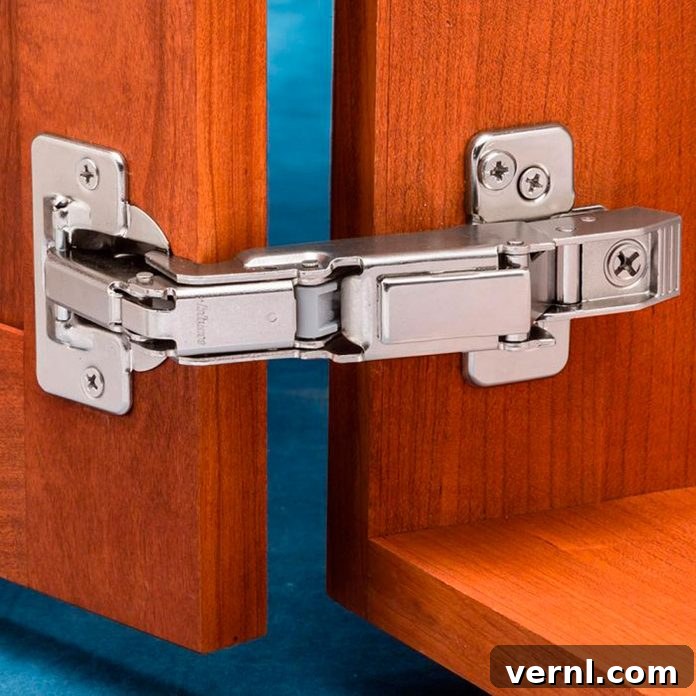
• Full Overlay Hinge: This is arguably the most prevalent and widely used type. A full overlay door is designed to completely cover the cabinet opening and sit nearly flush with the cabinet’s exterior face. It is typically specified for single cabinets or for doors located at the very ends of a continuous series of cabinets, creating a visually unbroken and seamless bank of doors. The door edge fully overlaps the cabinet box, leaving only a minuscule and consistent reveal.
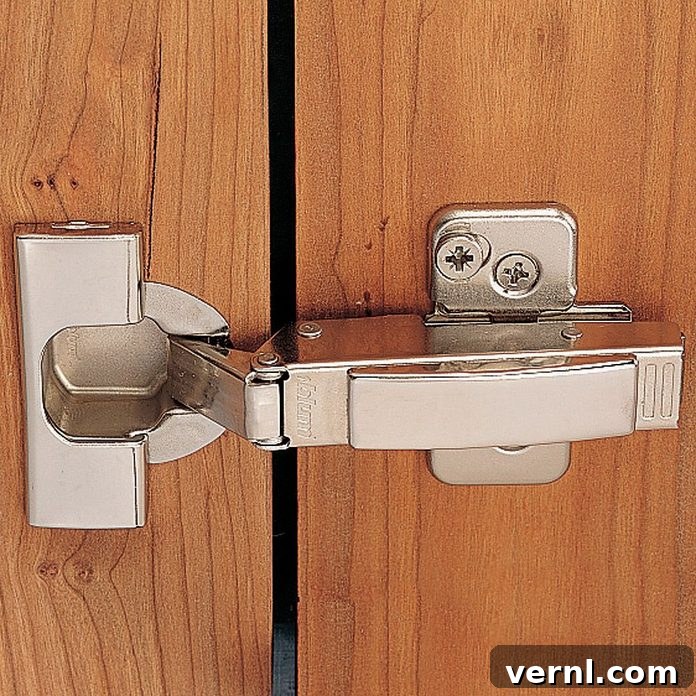
• Half Overlay Hinge: Also frequently referred to as a twin overlay hinge, this specific type is employed in scenarios where two adjacent cabinet doors share a common vertical partition in the middle of a cabinet unit. Each door is designed to cover approximately half of the cabinet’s side panel or face frame. This configuration creates a small, consistent reveal between the two adjacent doors and a slightly larger reveal on the outside edges, enabling multiple doors to operate efficiently within a single, wider cabinet unit.
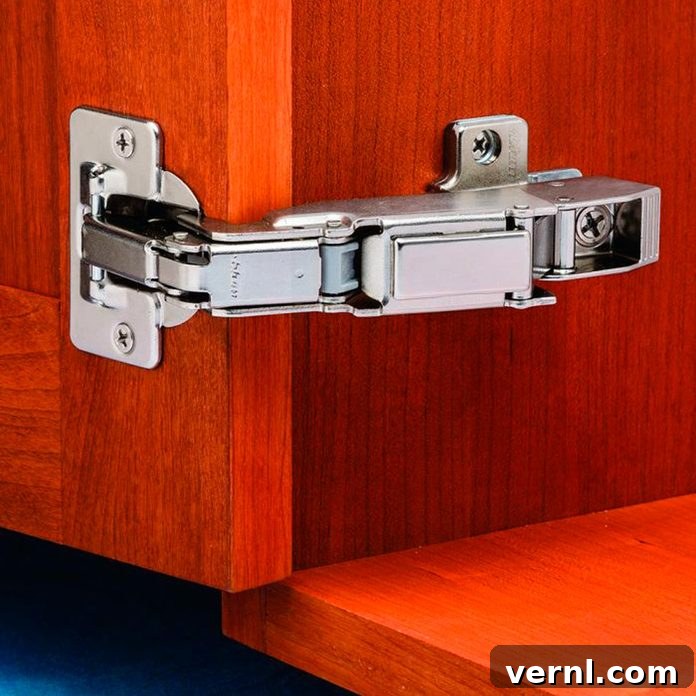
• Inset Hinge: This style is chosen for cabinet doors that are designed to sit entirely within the cabinet frame, perfectly flush with the outer face of the cabinet. This provides a more traditional, classic, or furniture-like aesthetic, where the cabinet frame itself is visibly exposed and frames the door. Inset hinges demand meticulous and precise installation to ensure the door closes perfectly flush, without any protruding or recessed edges.
Specialty European Hinges for Unique Cabinetry Solutions:
- Corner Hinges: Specifically engineered for cabinets located in corners, often featuring wide opening angles to allow for full access or to accommodate blind corner units with pull-out mechanisms.
- Opening Angle Hinges: While a 110-degree opening is standard for most cabinet doors, a variety of options exist for specific needs. These include wider openings (e.g., 170 degrees for maximum accessibility) or restricted openings (e.g., 90 degrees to prevent doors from impacting adjacent walls or appliances).
The market for high-quality European-style hinges is robust, with numerous reputable manufacturers. Some of the most recognized and trusted brands that consistently deliver innovative and durable solutions include Soss (widely respected for its extensive range of concealed door hinges across various applications), Blum (a global leader in cutting-edge cabinet hardware, particularly noted for its advanced soft-close mechanisms and comprehensive hinge systems), and Amerock (offering a diverse portfolio of decorative and highly functional hardware solutions). It’s worth noting that not all new doors, especially custom ones, come with hinges pre-attached or pre-mortised. Therefore, understanding how to effectively recess hinges on a door can prove to be an invaluable skill for dedicated DIY enthusiasts.
For Entry or Interior Doors: Selecting Heavy-Duty Concealed Hinges
For full-size doors, whether for interior passages or exterior entryways, the hinge selection process shifts its focus towards the door’s specific dimensions, its overall weight, and the required load-bearing capacity of the hardware. Key factors to meticulously consider include:
- Door Size and Thickness: Larger, heavier, and thicker doors will invariably necessitate more robust and higher-capacity hinges to ensure proper support and smooth operation.
- Door Weight: Hinges are rigorously rated for specific maximum weight capacities. It is absolutely crucial to ensure that the chosen hinges can safely and reliably support the full weight of your door over its lifespan.
- Number of Hinges: Taller and heavier doors typically require a greater number of hinges (e,g., three, four, or even five instead of the standard two for a lighter cabinet door) to effectively distribute the substantial weight evenly, prevent door warping, and maintain alignment.
- Material Composition: Common materials include hardened steel and solid brass, each offering different levels of inherent strength, resistance to corrosion, and aesthetic finish options.
- Fire Rating: For commercial buildings, multi-family residential units, or specific custom residential applications, it is critical to ensure that the selected hinges comply with relevant fire safety standards and building codes.
Leading brands specializing in heavy-duty concealed door hinges that meet rigorous architectural specifications include Soss, which boasts an extensive and versatile range of hinges suitable for various door types and weight classifications, and Tectus, globally renowned for its high-performance, aesthetically refined concealed hinge systems that cater to the most demanding architectural projects and design aesthetics.
Installation Considerations for Concealed Hinges: Precision is Key
While the profound benefits of concealed hinges are undeniable, it is important to understand that their installation generally demands a higher degree of precision and can be more involved than the straightforward fitting of traditional butt hinges. Successful installation often requires specialized tools and a meticulous attention to detail:
- Accurate Mortising: Both the door and the cabinet/frame require precisely cut mortises (recesses) to flawlessly accommodate the hinge body. For European cabinet hinges, a specialized Forstner bit is typically employed to drill the characteristic circular cup hole in the door for the hinge cup.
- Specialized Jigs and Templates: Utilizing purpose-designed jigs or precise templates can dramatically simplify the installation process, ensuring accurate placement, consistent spacing, and perfect alignment, particularly important for achieving professional results.
- Post-Installation Adjustments: Proper and careful adjustment after the initial installation is absolutely critical to achieve the desired perfectly flush fit, consistent reveals, and butter-smooth operation, especially with the multi-directional adjustability offered by European-style hinges.
For those embarking on a DIY project involving concealed hinges, thorough research, precise measurement, and a patient approach are absolutely essential. However, for complex installations, heavy architectural doors, or if you are at all unsure about the process, engaging a professional installer is always the recommended course of action to ensure optimal performance, longevity, and a flawless finish.
The Enduring Appeal and Value of Hidden Hardware
The true magic of concealed hinges resides in their remarkable ability to seamlessly integrate advanced engineering with an uncompromising commitment to aesthetic purity. They possess the transformative power to elevate ordinary doors and cabinets into sophisticated elements of elegant design, offering unparalleled functionality, enhanced security, and a consistently refined finish that speaks volumes about attention to detail. While they may represent a higher initial investment compared to traditional hardware, the long-term benefits in terms of superior visual appeal, exceptional durability, advanced functionality, and an enhanced user experience make them an invaluable and highly rewarding addition to any discerning home renovation, custom furniture piece, or new build project. Embrace the subtle sophistication and the profound practical advantages of concealed hinges to truly elevate the beauty, functionality, and overall perceived value of your living spaces.