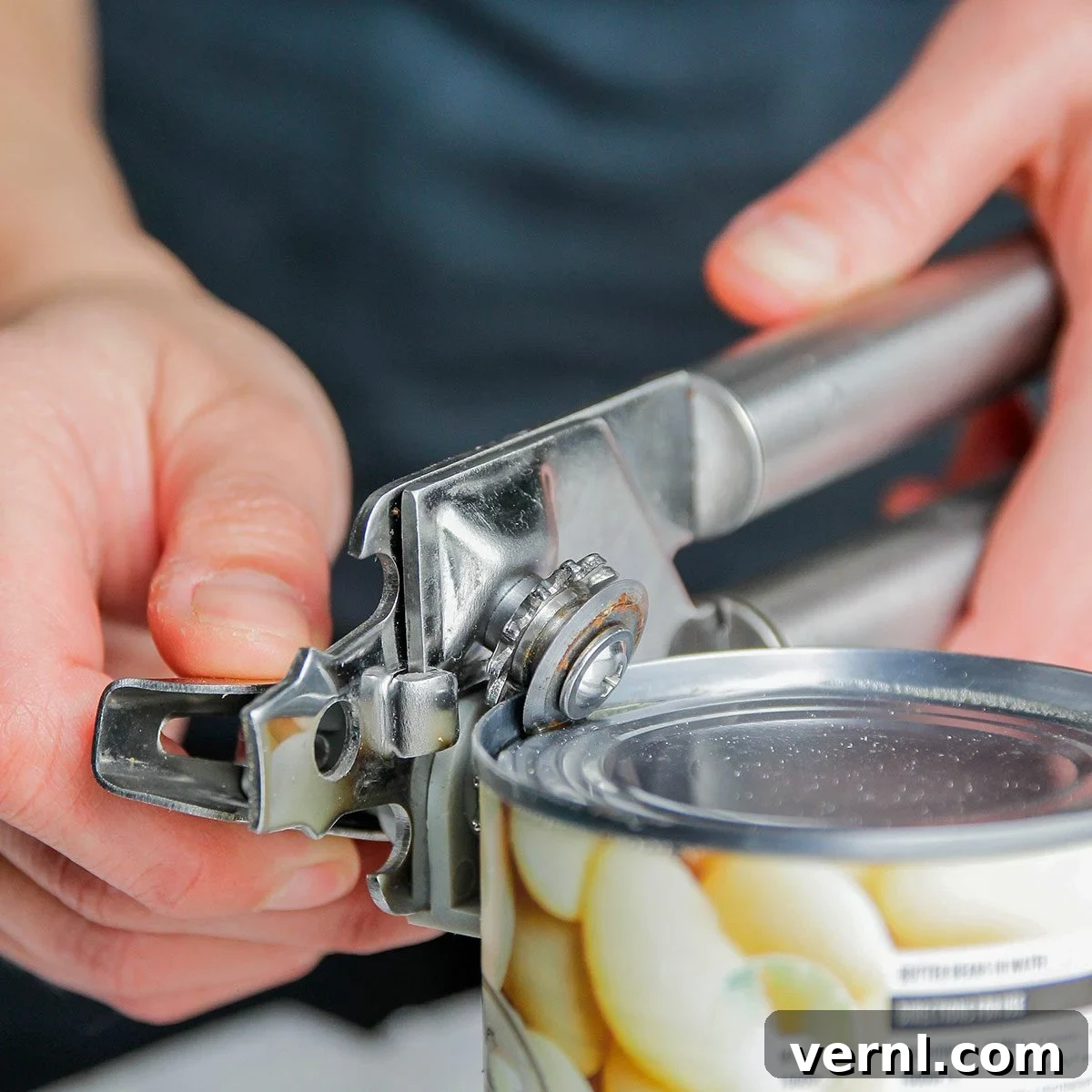
Unlock the Secret: Are You Using Your Can Opener the Right Way?
Imagine this: you’re in the kitchen, ready to prepare a delicious meal, and you reach for that trusty can opener. You’ve done it countless times before, slicing into the top of a can with practiced ease. But what if we told you that the method you’ve been using your entire life might actually be incorrect, inefficient, and even potentially dangerous? It sounds far-fetched for such a seemingly simple device, yet a surprising number of people are indeed using their can openers in a way that goes against its intended design and purpose.
From the moment food canning became a widespread practice, the art of opening these sealed containers evolved dramatically. Initially, the process was a brute-force endeavor, involving tools far removed from the convenient devices we know today. Early attempts might have seen individuals resorting to methods akin to opening a treasure chest with a chisel and a hammer, a spectacle that would undoubtedly raise eyebrows in any modern kitchen. This rather primitive approach highlights a curious historical gap: the invention of food canning predated the invention of a dedicated can opener by nearly half a century. The first food canning factory in the United States opened its doors in 1812, offering a revolutionary way to preserve sustenance. However, the much-needed can opener didn’t receive its first patent until 1858.
That inaugural can opener was a rudimentary implement, essentially a sharpened knife modified for a very specific task. Yet, it laid the groundwork for a kitchen essential that would eventually become ubiquitous, residing in practically every kitchen drawer across the nation. What’s truly astonishing, however, is that despite the can opener’s long history – predating Abraham Lincoln’s presidency – many individuals continue to operate it incorrectly to this very day. This article aims to demystify this common kitchen conundrum, shedding light on the intended use of can openers and revealing the understandable, but ultimately flawed, methods many people employ.
A Brief History of Cans and Can Openers: An Innovation Gap
To truly appreciate the can opener, it’s worth a quick dive into its fascinating, albeit somewhat delayed, origins. The concept of canning food emerged from Napoleon Bonaparte’s search for a method to preserve provisions for his army. In 1810, French confectioner Nicolas Appert developed a method of sealing food in glass bottles and sterilizing them by heating. This innovation quickly led to the development of tin-plated iron cans, which were more durable and practical for transport and storage.
However, the early tin cans were incredibly thick – often made from iron sheets up to 0.14 inches thick – and required considerable effort to open. They were typically designed to be opened with a hammer and chisel, or even a bayonet, truly a testament to the perseverance of those seeking preserved food. It wasn’t until 1855 that Robert Yeates invented the first proper can opener, a claw-shaped device with a sharp, sickle-like blade designed to hack at the can. This was followed in 1858 by Ezra Warner’s patented design in the U.S., which was essentially a large, heavy blade, similar to a bayonet, with a guard to prevent it from piercing too deeply. These early models were certainly improvements, but still far from the user-friendly tools we have today.
The modern rotary can opener, with its familiar turning wheel and cutting blade, didn’t appear until 1870, patented by William Lyman. Even then, its design continued to evolve over decades, striving for greater safety and efficiency. This long evolutionary path underscores how deeply ingrained certain usage patterns can become, even if they aren’t the most optimal for the current iteration of the tool.
The Common, Yet Incorrect, Way Most People Use a Can Opener
Let’s address the elephant in the kitchen. You likely believe you’re a seasoned pro with your can opener. The typical routine involves gripping the can, positioning the small circular blade on the top surface, aligning it with the can’s rim, and then clamping the opener down until the blade punctures the can’s lid. With the can opener’s turning knob held roughly parallel to the can, you begin to twist, meticulously cutting a circular path across the top. Voilà! The lid is detached, granting you access to the contents within. Many might confidently declare this the ‘correct’ way, having witnessed it countless times and successfully opened innumerable cans.
However, this widely adopted technique, while functional, is not the ideal method and can lead to several significant drawbacks. Firstly, and perhaps most inconveniently, cutting into the top surface of the can often results in the lid falling directly into the food once the cut is complete. This isn’t just an annoyance; it can potentially contaminate the food, especially if the lid hasn’t been thoroughly cleaned. Furthermore, retrieving the lid from a can of soup or beans can be a messy and frustrating endeavor, often requiring you to get your fingers into the food.
Secondly, and more critically, this top-cutting method creates sharp, jagged edges around the inner rim of the can. These razor-sharp points transform your innocuous food container into a potential hazard, posing a significant risk of cuts to your fingers or hands, especially when reaching into the can to scoop out contents or during the subsequent cleaning process. Disposing of these cans also becomes a danger for sanitation workers. These safety concerns are precisely why this method is considered suboptimal, urging us to seek a better, safer alternative.
The Safest and Most Efficient Method: Side-Cutting Cans
So, if cutting into the top is the ‘wrong’ way, what exactly constitutes the ‘right’ way to wield this everyday kitchen gadget? The answer lies in understanding the subtle, yet crucial, design principle behind many modern can openers – particularly those designed for safety and efficiency. Have you ever observed an automatic can opener in action? These sophisticated machines don’t cut into the top of the lid. Instead, they operate by clamping onto the side rim of the can, cutting a neat, smooth line around the outside edge, just below the top seam.
The good news is that many manual can openers are designed to mimic this precise action. The key difference lies in *where* the blade makes contact with the can. Instead of puncturing the top, the blade of a side-cutting can opener is intended to engage with the outside edge of the can. Here’s how to execute this method correctly:
View this post on InstagramA post shared by Smooth (@yesimsmooth)
(The Instagram post above visually demonstrates the side-cutting method, showing how the can opener clamps onto the rim of the can and cuts along the side, rather than the top surface.)
Step-by-Step Guide to the Correct Method:
- Position the Can Opener: Instead of aiming for the top lid, align the can opener’s blade with the outermost edge of the can, where the lid meets the body. The turning knob of the can opener should be parallel to the top surface of the can, essentially lying flat on the lid.
- Engage the Blade: Squeeze the handles of the can opener firmly until the blade punctures the exterior side wall of the can, just below the crimped top seam. You should feel it securely grasp the can.
- Begin Turning: Once the blade is engaged, twist the turning knob. The can opener will meticulously cut a circular path along the side of the can, detaching the entire top section, including the crimped rim.
- Remove the Lid: When you’ve completed a full revolution, the top of the can, along with its side rim, will lift cleanly away. Because the cut is made on the side, the lid will typically stay attached to the can opener or simply lift off, leaving a smooth, safe edge on the can itself.
This side-cutting method offers a multitude of benefits. Firstly, it leaves you with a beautifully smooth, burr-free edge on the can, eliminating the risk of accidental cuts. Secondly, there’s virtually no chance of the lid falling into your food, ensuring better hygiene and a mess-free experience. Finally, this method effectively removes the entire top of the can, creating a wider opening that makes it much easier to pour out liquids or scoop out solid contents, and even allows the can to be repurposed for other uses if desired.
Why the Confusion Persists: Unraveling the Misconception
If the side-cutting method is demonstrably safer and more efficient, why do so many people continue to use the ‘wrong’ method? There isn’t a single definitive answer, but a combination of factors likely contributes to this widespread misconception.
Generational Knowledge Transfer
Kitchens are often centers of learning, where culinary techniques, shortcuts, and tool usage are passed down from one generation to the next. If an elder in your family tree – a parent, grandparent, or guardian – inadvertently used a can opener incorrectly, there’s a very high probability that this incorrect method was then passed down to you. Without explicit instruction or a reason to question it, this becomes the ‘norm,’ even if it’s not the optimal way.
The “It Works” Fallacy
Perhaps the most compelling reason for the persistence of the top-cutting method is simply that, well, it *works*. The can does eventually open, and the food becomes accessible. For many, the minor inconveniences of jagged edges or a dropped lid are outweighed by the familiarity and perceived ease of their long-standing habit. The human tendency to stick with what is known, even if less efficient, is a powerful force.
Evolution of Can Opener Design
Early can openers were indeed designed to puncture the top of the can, as the cans themselves were constructed differently. As can manufacturing evolved and safer, more efficient can openers were developed, the instructions for use often didn’t keep pace with the widespread adoption of the new designs. Many people simply transferred their old habits to new tools. Furthermore, some older, simpler can openers might have been ambiguous in their design, leading users to intuitively, but incorrectly, attempt to cut through the lid’s surface.
Lack of Explicit Instruction
How often do you read the instruction manual for a simple kitchen gadget like a can opener? For most people, the answer is rarely, if ever. Can openers are often seen as intuitive tools, leading users to rely on prior experience or assumptions rather than seeking out the manufacturer’s recommended usage. This lack of explicit guidance allows misconceptions to flourish.
Ultimately, this common can opener dilemma serves as an excellent reminder of a broader principle applicable to many aspects of the DIY mentality and everyday life: just because you can do something a certain way, doesn’t necessarily mean it’s the right or best way to do it. It encourages a healthy curiosity and willingness to question established practices, even for the most mundane tasks.
Beyond the Basics: Tips for Can Opener Maintenance and Selection
Now that you’re armed with the knowledge of the correct can-opening technique, let’s explore how to keep your tool in top condition and what to consider when purchasing a new one.
Cleaning Your Can Opener
A often-overlooked aspect of can opener care is regular cleaning. Food particles and residues can accumulate on the cutting blade and gears, not only hindering its performance but also posing a hygienic risk. After each use, it’s best to:
- Rinse Immediately: Run your can opener under warm water to remove any visible food debris.
- Hand Wash: Use a small brush (like an old toothbrush) and dish soap to thoroughly scrub the blade and gear mechanism. Pay extra attention to the crevices where grime can hide.
- Dry Thoroughly: Wipe the can opener dry with a clean cloth immediately after washing. Leaving it to air dry can lead to rust, especially on metal components.
- Lubricate (Optional): For can openers with stiff gears, a tiny drop of food-grade mineral oil can help maintain smooth operation.
Choosing the Right Can Opener
Not all can openers are created equal. When selecting one, consider these factors:
- Manual vs. Electric: Manual can openers are portable, affordable, and don’t require electricity. Electric models offer convenience, especially for those with limited hand strength or dexterity, but take up counter space.
- Smooth-Edge Safety Can Openers: These are specifically designed to cut along the side seam, completely detaching the lid without creating any sharp edges. They essentially guarantee the ‘right’ method and are excellent for safety. They operate by lifting the lid from the side seal rather than cutting through the top.
- Material and Durability: Look for can openers made with high-quality stainless steel blades for longevity and resistance to rust. Sturdy handles, often with ergonomic grips, can make a big difference in comfort and control.
- Ease of Cleaning: Some can openers are designed with simpler mechanisms that are easier to clean and maintain.
Investing in a good quality can opener and using it correctly not only ensures safety but also makes the task of opening cans a far more pleasant and efficient experience in your kitchen.
Conclusion: Embrace the Correct Technique
The humble can opener, a seemingly simple and unassuming kitchen tool, holds a surprising secret: many of us have been using it in a suboptimal way for years. By transitioning from the common, top-cutting method to the safer and more efficient side-cutting technique, you can eliminate dangerous sharp edges, prevent food contamination, and enjoy a cleaner, more fluid cooking process. This revelation serves as a powerful reminder that even the most ingrained habits can be improved upon with a little knowledge and a willingness to adapt.
Next time you reach for a can of beans or diced tomatoes, pause and consciously apply the correct method. You’ll likely find that this small adjustment makes a significant difference, transforming a mundane kitchen task into a smoother, safer, and more satisfying experience. Happy cooking!
Sources
- Smithsonian Magazine, “Why the Can Opener Wasn’t Invented Until Almost 50 Years After the Can” (2017)
- Acumence, “The History of Canning and Can Making” (2025)
Related Kitchen & Home Insights
- The Real Reason Aluminum Foil Has a Shiny Side and a Dull Side
- Think Adirondack Chairs Are Uncomfortable? You’re Using Them Wrong
- Why You Shouldn’t Crush Aluminum Cans Before Recycling