
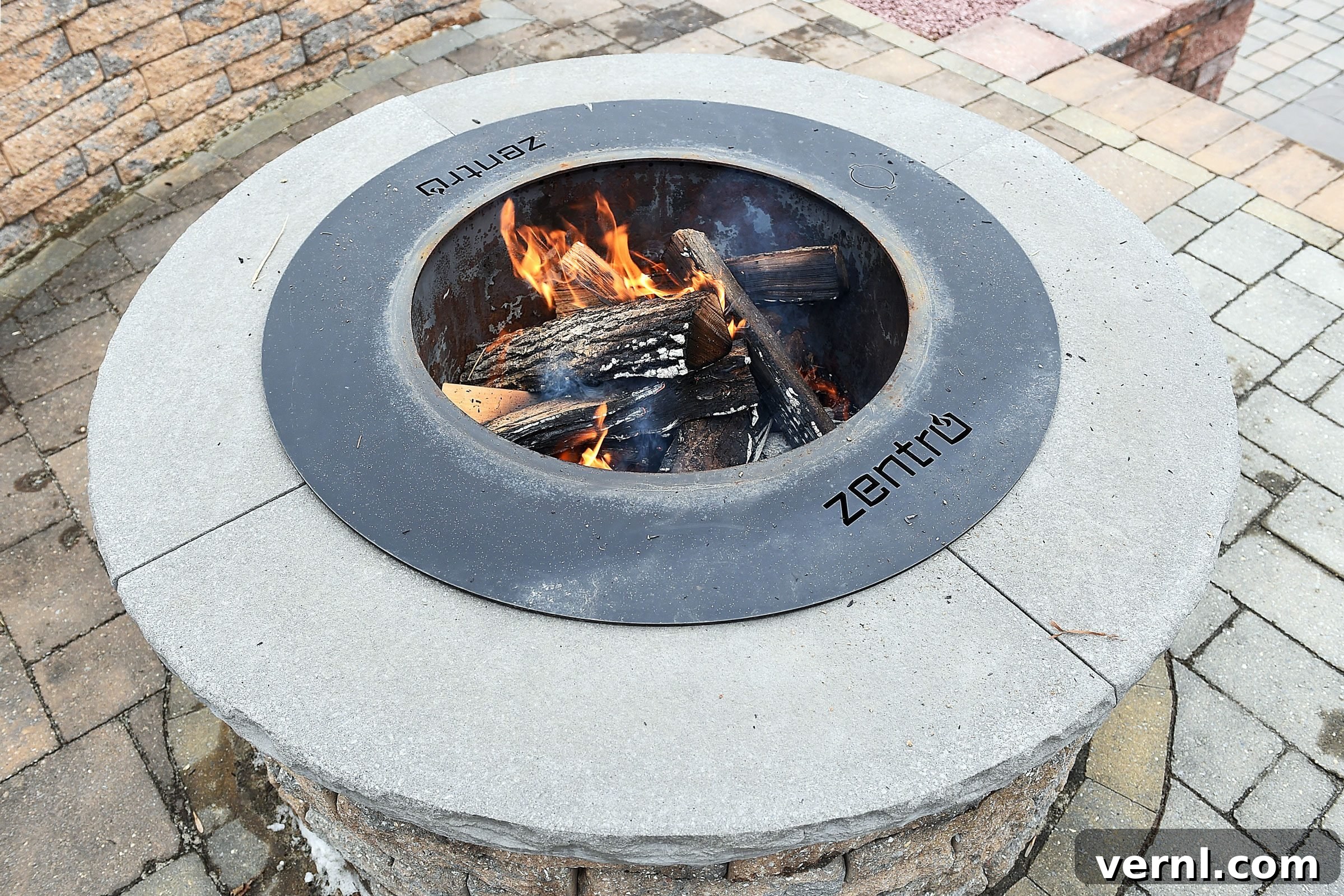
There’s an undeniable allure to gathering around a crackling fire, sharing stories, and making memories with loved ones. The warm glow, the comforting sounds, and the shared experience are truly special. However, this idyllic scene often comes with an unwelcome guest: smoke. If you’ve ever played musical chairs around a fire pit, constantly shifting to escape a stinging cloud of smoke, you know the frustration. The persistent burn in your eyes and the lingering campfire smell on your clothes can quickly dampen the mood, turning a relaxing evening into an irritating ordeal.
Fortunately, there’s an innovative solution that allows you to reclaim the joy of outdoor fires without the typical smoky nuisance: smokeless fire pits. These ingeniously engineered units are designed to significantly reduce or even virtually eliminate smoke, transforming your outdoor gatherings. In this comprehensive guide, we’ll delve into the world of “smokeless” fire pits, exploring models designed for traditional logs, wood pellets, or charcoal. It’s worth noting that propane-fueled fire pits are inherently smoke-free due to their fuel type, so while they offer a clean burn, they operate on a different principle than the wood-burning, secondary combustion fire pits we’ll focus on here.
Read on for a complete overview of what smokeless fire pits are, how they work, their distinct advantages and disadvantages, key considerations when buying one, and even how you can embark on a rewarding DIY project to build your own.
What Exactly Is a Smokeless Fire Pit? Understanding the Innovation
To truly appreciate a smokeless fire pit, it helps to understand why traditional fires produce so much smoke. Smoke is essentially unburnt fuel – tiny particulates, gases, and water vapor released when wood or other fuel doesn’t combust completely. This happens when the fire isn’t hot enough to ignite all the combustible elements present in the fuel, allowing these particles to rise with the hot air as visible smoke. This is often more prevalent with wet wood, or when a fire is just starting or smoldering.
Modern smokeless fire pits tackle this issue head-on by utilizing a clever principle known as secondary combustion. This advanced design creates extremely high temperatures, so intense that it essentially re-burns these smoke-producing particles before they ever have a chance to escape into the atmosphere and drift into your eyes or permeate your clothing. It’s a game-changer for anyone who loves the ambiance of a fire but despises the smoke.
While the term “smokeless” might be a slight overstatement – it’s practically impossible to eliminate every single trace of smoke from a wood-burning fire, especially during the initial lighting phase or when adding fresh fuel – it’s more accurate to think of them as “low-smoke” or “reduced-smoke” fire pits. However, the difference is profound. A well-designed smokeless fire pit produces such minimal smoke that it effectively eradicates those eye-watering, throat-irritating clouds that are characteristic of a standard campfire. This allows you to enjoy the warmth and captivating flames without the constant battle against shifting smoke.
Today’s market offers a variety of smokeless fire pit options. You can find highly portable, self-contained units perfect for camping or tailgating, or choose from smokeless fire pit inserts designed to be integrated into a stationary, permanent fire ring within your backyard landscape. This versatility ensures there’s a smokeless fire pit solution for almost any need or preference.
How Do Smokeless Fire Pits Work? The Science of Secondary Combustion
The fundamental concept behind smokeless fire pits isn’t entirely new; its origins can be traced back centuries. For instance, historical accounts describe the Dakota people crafting sunken fire pits as far back as the 1600s. This design provided additional airflow, enabling them to cook and benefit from the fire’s heat with significantly less smoke. This rudimentary design laid the groundwork for modern innovations.
Contemporary smokeless fire pits leverage this same core principle but achieve it with advanced engineering, typically featuring a double-walled fire ring construction. Here’s a detailed breakdown of the ingenious mechanism:
- Primary Air Intake: The outer wall of the fire pit is equipped with strategically placed holes near its base. When the fire pit is lit, cool ambient air is drawn in through these bottom vents.
- Air Heating Channel: This incoming air then travels upwards within the cavity between the inner and outer walls. As the fire inside the main chamber burns, the inner wall becomes intensely hot. This heat is transferred to the air circulating in the double-wall channel, causing it to rapidly heat up and expand.
- Secondary Air Injection: The inner wall of the fire pit is ringed with another set of precisely engineered holes, typically located near the top rim of the burn chamber. As the preheated air continues to rise and expand within the double-wall channel, it’s naturally pushed out through these upper holes into the main fire chamber.
- Secondary Combustion Zone: This stream of superheated, oxygen-rich air acts like a natural bellows, powerfully fanning the flames and creating a highly efficient burn zone above the primary fire. The extremely high temperatures in this “secondary combustion” zone are sufficient to ignite and incinerate the microscopic smoke particles and unburnt gases that would otherwise escape as visible smoke. Essentially, these particles are consumed by the flames before they can exit the fire pit, resulting in a significantly cleaner and more efficient burn.
This sophisticated airflow design ensures that the fuel burns hotter and more completely, leading to a much more enjoyable fire experience. The captivating flames dance more vigorously, and the absence of irritating smoke allows for closer, more comfortable gatherings.
Pros and Cons of Smokeless Fire Pits: Weighing Your Options
Before investing in a smokeless fire pit, it’s wise to consider both the advantages and potential drawbacks. Understanding these will help you make an informed decision tailored to your specific needs and preferences.
Pros:
- Significantly Less Smoke: This is, without a doubt, the primary advantage. As advertised, smokeless fire pits produce a fraction of the smoke compared to a traditional fire pit. This means no more dodging smoke plumes, no more burning eyes, and a vastly more comfortable experience for everyone gathered around. Your clothes and hair will also thank you, as they won’t absorb that pervasive campfire smell.
- More Efficient Burning: The secondary combustion process means the fuel burns more completely. This not only reduces smoke but also extracts more heat energy from your wood or other fuel, making your fire more efficient. You might find you use less fuel over time for the same amount of heat and ambiance.
- Easier Fire Starting & Maintenance: The built-in ventilation and advanced airflow design of most smokeless fire pits make it remarkably easier to get a fire roaring quickly and maintain a consistent, hot burn. The natural draft system ensures a steady supply of oxygen to the flames, reducing the need for constant tending or fanning.
- Enhanced Social Experience: Without the constant distraction of smoke, conversations flow more freely, and people can relax and enjoy each other’s company without interruption. It transforms the fire pit from a source of frustration into a genuine hub for social interaction.
- Reduced Environmental Impact: By burning fuel more completely, smokeless fire pits release fewer harmful particulates into the atmosphere, making them a more environmentally friendly option compared to traditional open fires.
Cons:
- Less Radiant Heat: While the flames burn hotter within the fire pit, the super-heated air and efficient design tend to send more heat upwards rather than radiating outwards. This means that to truly feel the warmth, you might need to huddle a little closer to the fire, especially on colder evenings. This isn’t a deal-breaker for everyone but is a common observation.
- Higher Price Point: If you opt for a store-bought smokeless fire pit from a reputable brand, you’ll generally pay a significantly higher price than you would for a similarly sized traditional fire pit. The advanced engineering and quality materials contribute to this cost. However, many users find that the improved, smoke-free experience offers strong value, making the investment worthwhile. For those on a tighter budget, the DIY route can be an excellent way to save money while still enjoying the benefits.
- Specific Fuel Requirements for Optimal Performance: While many models can burn various solid fuels, achieving truly smokeless performance often relies on using dry, well-seasoned wood, wood pellets, or charcoal specifically recommended by the manufacturer. Using wet or unseasoned wood will still produce some smoke, even in a smokeless unit, although likely less than a traditional pit.
- Initial Learning Curve: While generally easier to start and maintain, getting the most out of a smokeless fire pit might involve a slight learning curve regarding fuel placement and understanding its unique airflow patterns to achieve truly minimal smoke.
- Potential for Embers: Like any wood-burning fire, there’s always a risk of embers escaping. While the design aims for complete combustion, users should still exercise caution and ensure a safe distance from flammable materials, especially during windy conditions.
How To Choose a Smokeless Fire Pit: Key Considerations for Your Backyard Oasis
With the growing popularity of smokeless fire pits, the market is brimming with options. Selecting the right one for your outdoor space involves balancing several crucial factors, including cost, fuel type, portability, and your unique lifestyle needs. Brands like the Blue Sky fire pit and East Oak fire pit are often highlighted as excellent choices, but let’s break down what truly matters in your decision-making process.
Cost: Budgeting for Your Smoke-Free Experience
The price of a smokeless fire pit can vary dramatically, largely depending on its size, materials, brand reputation, and additional features. The bigger the fire pit’s diameter and the more premium its construction (e.g., stainless steel), the higher the ticket price will be. You can expect to find small, portable units designed for backpackers starting around $70. On the higher end, designer models with elaborate features or larger capacities can run into thousands of dollars. For a mid-range, family-sized fire pit capable of comfortably accommodating a group of four to five people, a budget between $300 to $600 is generally considered reasonable. Remember, this investment is not just for a fire pit but for a significantly enhanced, smoke-free outdoor experience that can add immense value to your gatherings.
Fuel Type: Optimizing for a Clean Burn
Smokeless fire pits are primarily designed to burn solid fuels such as wood logs (hardwood is often preferred for a cleaner burn), charcoal, or specialized wood pellets. While many models boast multi-fuel capabilities, their internal airflow and clean-out systems are usually optimized for one specific type of fuel. For the best performance and minimal headaches, it’s highly recommended to stick with the fuel type the manufacturer suggests. Using dry, seasoned wood is paramount for reducing smoke, even in a smokeless unit.
A Crucial Distinction: Gas-Powered Fire Pits: It’s important to reiterate that if you’re open to a gas-fed fire pit, which operates on natural gas or propane gas, all of your options will inherently be smokeless. These units don’t produce the smoke-creating byproducts (unburnt particulates) that wood and charcoal combustion does. They offer instant ignition, precise flame control, and require no cleanup, making them an excellent choice for convenience and a completely smoke-free experience, albeit with a different aesthetic and heat profile than a wood fire.
Portability: On-the-Go Ambiance
Are you looking for a mobile fire pit for camping trips, beach bonfires, or moving it around your yard? Portability becomes a key factor. Beyond just the unit’s overall weight, consider its carrying convenience. Does it come with sturdy handles, a dedicated carrying bag, or a compact, collapsible design? The ease of clean-out is also vital; you certainly don’t want to lug around an ash-filled fire pit in your backpack or car. Look for models with removable ash pans or efficient ash disposal systems to simplify cleanup on the go.
The ‘X’ Factor: Personalizing Your Fire Pit Experience
Sometimes, the best fire pit choice isn’t just about price or technical specs, but about a specific style you’re drawn to or a particular usage you have in mind. This “X factor” can heavily influence your final decision:
- Cooking & Grilling: If you envision doing a lot of grilling or cooking over your fire, seek out models that offer a wide range of compatible cooking accessories, such as grill grates, rotisseries, or even specialized inserts.
- Aesthetics & Design: For those who prioritize outdoor decor, the visual appeal of the fire pit is paramount. Many brands offer fire pits with distinctive, modern designs that can serve as a stunning centerpiece in your backyard. Consider the material finish (e.g., polished stainless steel, powder-coated steel, corten steel) and how it complements your existing outdoor furniture and landscape.
- Safety & Placement: If you plan to place your fire pit on a sensitive surface, such as a wooden deck, composite patio, or concrete slab that you wish to protect, you’ll need a model that comes with an integrated stand, heat shield, or offers an optional elevated base. These accessories ensure that the intense heat from the bottom of the fire pit is safely managed, preventing damage to your surfaces.
- Durability & Materials: Consider the construction materials. Stainless steel is highly durable and resistant to rust, making it a premium choice. Powder-coated steel offers good protection but can scratch. Cast iron offers a classic look but requires more maintenance. Your climate and how often you’ll use it should guide your material choice.
Whatever your particular “X factor” may be, keeping these personal preferences and practical considerations in mind as you compare various models will help you find the perfect smokeless fire pit to enhance your outdoor living space.
Can You Make a DIY Smokeless Fire Pit? A Rewarding Project for Your Backyard
Absolutely, you can embark on the rewarding journey of building a DIY smokeless fire pit! While crafting a truly portable DIY smokeless fire pit might present a few intricate challenges for a beginner, constructing a stationary smokeless fire pit for your backyard is an eminently achievable and satisfying project, often falling within a beginner to intermediate skill level.
The core concept for a DIY version mirrors the double-walled design of commercial units. You’ll need two main components for the burning chamber: an outer ring and an inner ring. A common and cost-effective approach is to start with a pre-made fire ring (or a sturdy metal drum/barrel cut to size) to serve as your outer wall. For the inner wall, you can use a slightly smaller metal ring or another metal container that fits inside the outer one, leaving a gap for airflow.
The key to transforming this into a smokeless design lies in strategically drilling vent holes. You’ll use a hole saw or a step bit to create holes at the bottom of the outer wall for primary air intake. Then, you’ll drill a series of smaller holes near the top rim of the inner wall. These upper holes are crucial for injecting the preheated air back into the fire, enabling that essential secondary combustion. While the exact steps and materials will vary based on your desired size, aesthetic, and chosen layout, the fundamental principles of the smokeless design – creating an air gap and controlling airflow for secondary combustion – are relatively straightforward to achieve with basic tools and a bit of planning.
One of the most attractive aspects of the DIY route is its exceptional affordability. If you’re converting an existing traditional DIY fire pit or starting with readily available materials, the total cost to upgrade it into a high-performing, smokeless “super-burner” can often be less than $100. This makes it an incredibly accessible project for homeowners who want to enjoy the benefits of reduced smoke without the premium price tag of a commercial unit. Not only will you save money, but you’ll also gain the satisfaction of building something practical and enjoyable with your own hands, custom-tailored to your outdoor space.