
Silence Your Steps: The Essential DIY Guide to Eliminating Squeaky Floors
There are few household annoyances quite as persistent and disruptive as a squeaky floor. Whether it’s the insistent creak with every step down a hallway, the groan from the living room as someone walks across, or the dreaded early morning serenade from an unsuspecting family member, noisy floors can significantly detract from the peace and quiet of your home. Many homeowners live with these bothersome sounds, assuming they are an inevitable part of an older house or a complex problem requiring professional intervention. However, the truth is often much simpler. With the right approach and a clever home hack, you can effectively silence those annoying squeaks and reclaim the tranquility of your living space.
This comprehensive guide will delve into the root causes of squeaky floors, introduce you to an incredibly effective, simple, and lasting DIY solution involving a corner bracket, and provide you with all the knowledge and steps needed to achieve a quiet floor. Say goodbye to the symphony of creaks and embrace the quiet comfort of your home.
Understanding Why Floors Squeak: The Root of the Noise
Before diving into the fix, it’s crucial to understand what causes floors to squeak in the first place. The sound is almost always a result of friction – specifically, wood rubbing against wood, or metal against wood, due to movement. This movement often occurs between the subfloor and the floor joists, or sometimes between the finished floor and the subfloor. Several factors contribute to this friction:
Common Causes of Squeaky Floors:
- Movement Between Subfloor and Joists: This is arguably the most common culprit. Over time, the bond between the subfloor (the layer of plywood or OSB directly on top of the joists) and the joists can weaken. Nails can loosen, screws can strip, or wood can simply shrink and create small gaps. When you step on the floor, the subfloor presses down, rubbing against the joist or the shank of a loose fastener, creating that characteristic squeak.
- Wood Shrinkage and Expansion: Wood is a natural material that reacts to changes in humidity and temperature. As humidity levels fluctuate seasonally, wood can expand and contract. This constant movement can loosen fasteners and create gaps where friction can occur, leading to noisy floors.
- Loose Fasteners: Nails, especially common in older homes, can work their way up over time, allowing movement between the floor layers. Screws can also become loose or strip out of the wood, losing their grip.
- Uneven or Warped Joists: If floor joists are not perfectly level or have warped over time, they can create voids between the subfloor and the joist. This allows for excessive movement when weight is applied, resulting in squeaks.
- Lack of Blocking or Bridging: Inadequate blocking or bridging between joists can allow them to twist or deflect excessively, contributing to movement and subsequent squeaks.
- Rubbing Finished Flooring: Sometimes, the squeak originates not from the subfloor or joists, but from the finished flooring itself (hardwood planks, laminate). Individual planks might rub against each other or against the subfloor, especially if they are loose or improperly installed.
Pinpointing the exact source of the squeak is the first step toward a successful repair. Often, it’s a combination of these factors, but the primary focus for our hack will be addressing the movement between the subfloor and the floor joists, as this is where many persistent squeaks originate.
The Ingenious Home Hack: A Permanent Solution for Squeaky Floor Joists
The method we’re about to describe is a remarkably simple yet highly effective way to eliminate squeaks originating from the movement between your subfloor and joists. This ingenious hack leverages a common hardware item – the corner bracket – to create a strong, lasting bond that pulls the subfloor tightly against the joist. This eliminates the friction that causes the noise, offering a permanent fix.
This specific technique, often shared among experienced DIY enthusiasts and builders like Charles J. Long, targets the core problem of a loose connection. Instead of simply driving more fasteners from above (which can sometimes miss the joist or not fully secure the subfloor), this method works from below, providing a direct and controlled way to pull the subfloor down onto the joist, effectively “clamping” it into place.
Materials You’ll Need:
Before you begin, gather these essential tools and materials:
- 1-1/2-inch L-shaped Corner Brackets: These are readily available at any hardware store. You’ll need one for each significant squeak, or several for longer squeaky sections.
- Wood Screws (1-inch to 1-1/4-inch length): These will be used to attach the bracket to the joist. Ensure they are strong enough to hold firmly in the wood.
- Wood Screws (1-1/2-inch length or slightly longer than your subfloor thickness): This screw is critical. It will go through the bracket and into the subfloor. Its length should allow it to penetrate the subfloor sufficiently without poking through the finished floor above.
- Cordless Drill/Driver: Essential for quickly and securely driving screws.
- Appropriate Driver Bits: Phillips, Square, or Torx, matching your screw heads.
- Stud Finder: (Optional, but useful if working from above to locate joists).
- Flashlight or Work Light: For clear visibility in dark basements or crawl spaces.
- Safety Glasses: Always protect your eyes when working with tools.
- Pencil: For marking locations.
Step-by-Step Guide to Fixing Squeaky Floor Joists:
Step 1: Locate the Squeak
This is the most crucial preliminary step. You need to identify the exact location of the squeak. Have a helper walk across the noisy area of the floor upstairs while you listen carefully from below (in the basement or crawl space). Pinpoint which specific floor joist and which section of the subfloor above it is causing the noise. Once you’ve found it, mark the joist with a pencil so you know exactly where to work.
If you don’t have access from below, you may need to locate the joist from above using a stud finder and mark its position. However, this particular corner bracket method is most effectively applied from beneath the floor.
Step 2: Access the Joist and Prepare the Area
Ensure you have clear, safe access to the underside of the floor where the squeak is located. Clear away any obstacles, debris, or insulation if necessary. Make sure your work light provides ample illumination. You’ll be working directly on the side of the joist and below the subfloor.
Step 3: Install the Corner Bracket to the Joist
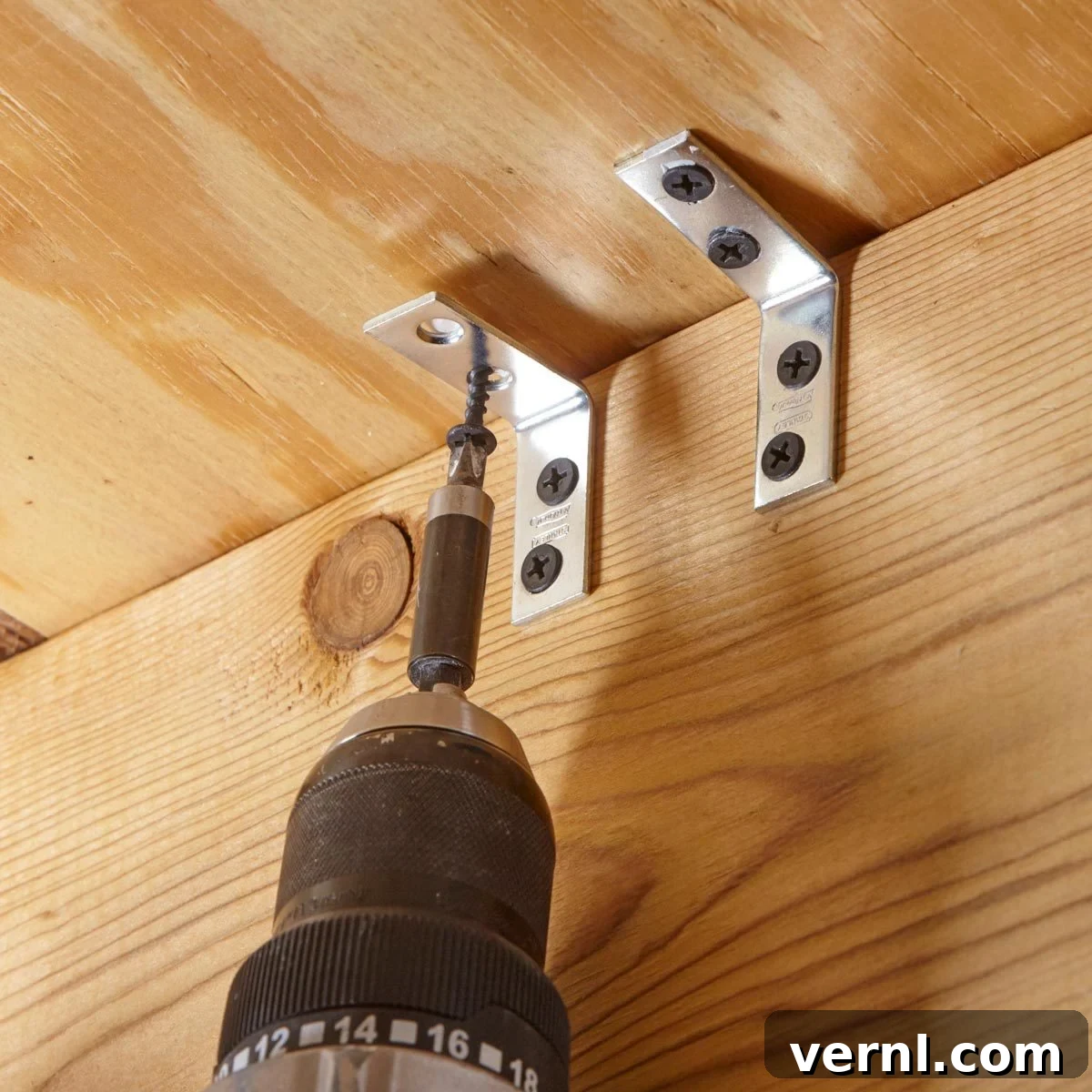
Take one of your 1-1/2-inch L-shaped corner brackets. Position the bracket against the side of the joist, ensuring that one arm of the ‘L’ is flush against the joist’s side. The other arm of the ‘L’ should be pointing horizontally, directly underneath the subfloor. The critical detail here is to position the bracket approximately 1/8 inch below the subfloor. This slight gap is intentional and essential for the hack’s success. Use your 1-inch to 1-1/4-inch screws to firmly attach the bracket to the side of the floor joist. Drive these screws securely, making sure the bracket is rigidly fixed to the joist.
Why the 1/8-inch gap? This small space ensures that when you drive the subsequent screw *up* into the subfloor, it has room to pull the subfloor down into the bracket, effectively creating tension and a strong, non-squeaking bond. Without this gap, the screw might not be able to exert enough downward force on the subfloor.
Step 4: Secure the Subfloor to the Bracket
Now, take your longer 1-1/2-inch wood screw. Carefully insert this screw through the horizontal arm of the corner bracket (the part that’s 1/8 inch below the subfloor) and drive it upwards directly into the subfloor. As you tighten this screw, you will notice it gradually pulls the subfloor down towards the joist, compressing any gap that was previously allowing movement and friction. Drive the screw until it is snug and secure, ensuring the subfloor is pulled tightly against the top edge of the joist.
The beauty of this method is the mechanical advantage provided by the bracket. It acts as an anchor, allowing the screw to effectively draw the subfloor down, eliminating the vertical movement that causes squeaks. The corner bracket itself becomes a permanent, rigid connection point.
Step 5: Test and Repeat
Once the bracket and screw are installed, have your helper walk across the area again, or test it yourself if you can safely move from below. Listen carefully. Has the squeak disappeared? If so, congratulations! If you still hear a faint noise, or if the squeak persists elsewhere, repeat the process. Squeaks often occur in multiple spots along a joist or in adjacent areas, so be prepared to install several brackets as needed. Each installation takes only a few minutes, and the cumulative effect will lead to a wonderfully quiet floor.
Other Common DIY Squeaky Floor Fixes (When Access is an Issue)
While the corner bracket method is superior when you have access from below, sometimes that’s not possible. Here are a few alternative DIY fixes:
- Screwing from Above: If you can’t access the joists from below, you can try securing the subfloor from above. Locate the floor joists using a stud finder. Use specialized subfloor screws (which have a non-threaded shank near the head to pull the subfloor down tight) or standard wood screws. Drive them at an angle through the finished floor (if it’s carpeted or can be hidden), subfloor, and into the joist. Countersink the screw heads if necessary and fill the holes. This method is less ideal for hardwood floors unless you’re willing to patch and finish.
- Using Shims from Below: If there’s a visible gap between the subfloor and the top of the joist, you can gently tap in wood shims (thin wedges of wood) until the gap is filled and the subfloor is snug against the joist. Be careful not to tap too hard and push the finished floor upwards. Secure the shims with wood glue or a small nail. This helps prevent vertical movement.
- Applying Lubricants: For squeaks coming from finished floorboards rubbing against each other or the subfloor, a simple lubricant might work. Sprinkle talcum powder, graphite powder, or even a small amount of liquid wax into the cracks between floorboards. The powder reduces friction and can silence minor surface squeaks. This is typically a temporary fix and less effective for structural squeaks.
- Construction Adhesive: If working from below, applying construction adhesive along the top edge of the joist where it meets the subfloor can also help create a stronger bond and reduce movement. This requires the floor to be held in place while the adhesive cures.
Preventing Future Squeaks: Maintenance for a Quieter Home
Once you’ve silenced your existing squeaks, consider these tips to prevent new ones from developing:
- Maintain Consistent Humidity: Wood floors and structural lumber are sensitive to humidity. Use humidifiers in dry months and dehumidifiers in damp months to keep indoor humidity levels stable (ideally between 40-60%). This minimizes wood expansion and contraction.
- Proper Installation for New Floors: If installing new flooring, ensure the subfloor is securely fastened with both screws and construction adhesive to the joists. This creates a strong, lasting bond from the start.
- Regular Inspections: Periodically check basements or crawl spaces for any signs of loose connections or new gaps forming between joists and subfloor. Early intervention can prevent minor issues from becoming major squeaks.
When to Call a Professional
While this DIY corner bracket hack is incredibly effective for most common squeaky floor issues, there are instances where professional help might be warranted:
- Extensive Structural Issues: If you notice sagging floors, significant cracking in joists, or signs of water damage, these could indicate more serious structural problems that require a professional carpenter or structural engineer.
- No Access from Below: If your home has finished ceilings in the basement or no crawl space access, and you’re unwilling to cut into your finished flooring from above, a professional might have specialized tools or methods to address the squeaks without visible damage.
- Lack of Confidence: If you’re uncomfortable working with tools or in confined spaces, it’s always best to hire a skilled handyman or contractor to ensure the job is done safely and correctly.
Conclusion: Embrace the Quiet with This Simple Home Hack
Squeaky floors don’t have to be a permanent fixture in your home. With the simple, brilliant hack of using a 1-1/2-inch corner bracket to pull your subfloor tightly against the joist, you can achieve remarkable results. This DIY fix is not only cost-effective but also incredibly satisfying, allowing you to reclaim the peaceful ambiance of your living space. By understanding the causes of squeaks and applying this straightforward method, you’ll not only silence annoying noises but also gain confidence in your home repair abilities. So, gather your tools, follow these steps, and prepare to enjoy the quiet comfort of a squeak-free home!