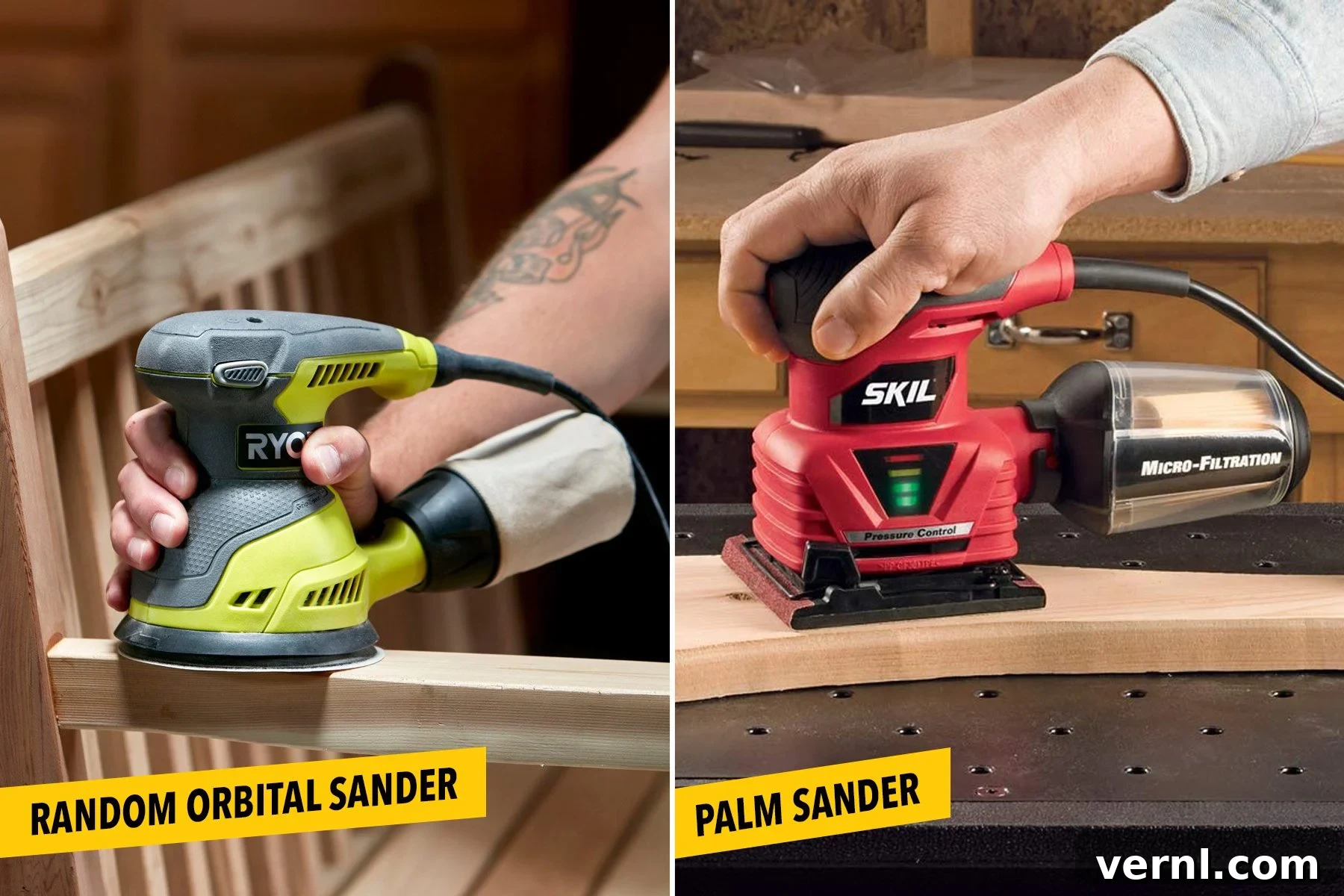
For anyone delving into the rewarding world of carpentry, woodworking, or even simple DIY home improvement projects, a reliable power sander is an indispensable tool. These compact, relatively affordable machines are engineered to transform rough, unfinished wood into smooth, ready-to-finish surfaces with remarkable speed and efficiency. They represent a significant leap in productivity compared to manual sanding blocks, saving countless hours and reducing physical strain. As a professional carpenter with extensive experience in both residential and commercial settings, I’ve had the opportunity to work hands-on with a diverse array of power sanders, particularly two common types: random orbital sanders and palm sanders. While both are designed to smooth surfaces, their operational mechanics and ideal applications are more distinct than many might initially realize.
Understanding the Random Orbital Sander: The Workhorse for Flawless Finishes
A random orbital sander is a handheld power tool celebrated for its ability to produce exceptionally smooth, swirl-free finishes. What sets it apart is its unique sanding action: the round sanding pad not only spins in a circle but also simultaneously oscillates in tiny, random elliptical patterns. This ingenious “random” motion prevents the sandpaper grit from following the same path twice, effectively eliminating the noticeable swirl marks that can be left by standard orbital sanders which only move in a predictable circular or back-and-forth motion. The result is a uniformly sanded surface, ideal for projects where a pristine finish is paramount.
Random orbital sanders are incredibly efficient, making them the go-to choice for large-scale woodworking projects. Their round sandpaper pads ensure a consistent finish across broad surfaces without creating visible edges or lines, though their circular design means they cannot effectively reach into tight, closed corners. The sandpaper used with these tools typically attaches via a hook-and-loop (Velcro-style) system, which, while convenient for quick changes, can make the specialized pads slightly more expensive than standard rectangular sandpaper sheets used by palm sanders. Throughout my career, I’ve relied on random orbital sanders almost daily for tasks like refinishing antique desks, restoring tabletops, and preparing large panels for painting or staining. I consider them one of the most essential power tools for any serious woodworker due to their versatility and superior finishing capabilities. Many models also offer variable speed settings, providing greater control over the sanding intensity, which is crucial when working with different wood types or stages of finishing.
Key Applications for Random Orbital Sanders
The unique motion and power of random orbital sanders make them perfectly suited for a variety of tasks:
- Preparing Large Surfaces: Ideal for smoothing unfinished wall panels, doors, or cabinet faces before painting or staining, ensuring an even base.
- Refinishing Furniture: Highly effective at stripping old varnish, paint, or stains from larger furniture pieces like tables, dressers, or chairs, preparing them for a new finish.
- Sanding Large, Flat Pieces: Excellent for efficiently sanding down extensive, flat wood panels, ensuring uniformity without swirl marks.
- Smoothing Drywall Mud: Can be used to achieve a very smooth finish on drywall compound after repairs, though specialized drywall sanders exist for this purpose.
- Automotive Applications: Frequently used in auto body work for preparing surfaces before painting due to their ability to produce a flawless finish.
Exploring the Palm Sander: The Compact Choice for Detail Work
A palm sander, often referred to as a 1/4-sheet sander due to the size of the standard sandpaper it uses, is the smallest and most maneuverable type of power sander. Its compact design and lightweight nature make it an excellent tool for precision work and light-duty finishing tasks. Unlike the round pads of random orbital sanders, palm sanders feature square or rectangular sanding pads. This shape is a significant advantage, allowing them to fit perfectly into tight spots, internal corners, and intricate areas that larger, round sanders simply cannot access. This makes them indispensable for detail-oriented woodworking.
Palm sanders also boast a notable advantage in terms of cost. They are generally more affordable than random orbital sanders, both in terms of the initial tool purchase and ongoing sandpaper expenses. Their reliance on standard 1/4-sheet sandpaper, which can be cut from larger sheets, makes consumables much less expensive than the specialized hook-and-loop pads required for random orbital sanders. However, their smaller motors and less aggressive sanding action mean they are not designed for heavy material removal. Attempting to strip thick layers of paint or varnish with a palm sander would be time-consuming and inefficient. Instead, they excel at light-duty sanding projects, delicate finishes, and addressing minor imperfections, providing excellent control and precision where it matters most.
Key Applications for Palm Sanders
The precision and compact size of palm sanders make them ideal for:
- Finishing Small Woodworking Pieces: Perfect for sanding small craft items, intricate carvings, or detailed components of furniture where accuracy is key.
- Accessing Inside Corners: Their square pads allow them to reach into tight 90-degree angles and internal corners that a random orbital sander cannot, ensuring a complete and even finish.
- Sanding Down Small Imperfections: Excellent for touching up minor flaws, burrs, or small areas of unevenness on wood surfaces without affecting surrounding areas.
- Light Prep Work: Ideal for final sanding before applying a clear coat or light paint layer, ensuring a perfectly smooth texture.
- Trim and Molding: Precisely sands trim work, baseboards, and molding where larger sanders would be cumbersome or leave marks.
Making the Right Choice: Random Orbital Sander vs. Palm Sander
Deciding between a random orbital sander and a palm sander hinges primarily on the specific requirements of your projects. Each tool offers distinct advantages that cater to different sanding needs. Understanding these differences will help you make an informed decision and invest in the most appropriate tool for your workshop.
Consider Project Size and Scope: Your first consideration should be the typical size and nature of your woodworking tasks. If you frequently work on large pieces, expansive panels, or need to strip significant amounts of old finish before painting or staining, the power and efficiency of a random orbital sander are unmatched. Its stronger motor and larger sanding surface allow it to complete extensive sanding jobs much quicker and with less effort. Conversely, if your work primarily involves smaller items, intricate designs, or areas requiring meticulous detail and access to tight spaces, a palm sander will prove to be far more suitable and manageable. It offers the precision and control needed for delicate tasks where larger tools would be cumbersome.
Desired Finish Quality: The ultimate aesthetic goal for your project also plays a crucial role. If your aim is an extremely smooth, flawless finish that is completely free of swirl marks or blemishes—imperfections that would be glaringly obvious under paint or stain—then a random orbital sander is the clear winner. Its unique random action ensures a superior, professional-grade surface. If your objective is simply to eliminate small imperfections, smooth rough edges, or reach into challenging inside corners, especially on projects where a perfectly unblemished finish isn’t the absolute top priority, then a palm sander will serve you well. While it may leave microscopic swirl patterns under harsh light, these are often negligible for many practical applications, especially when painting opaque surfaces.
Budget and Consumables: While the initial purchase price is a factor, also consider the ongoing cost of consumables. Random orbital sanders generally have a higher upfront cost and use more expensive hook-and-loop sanding pads. Palm sanders, being less expensive initially, also benefit from using standard, cheaper 1/4-sheet sandpaper. If you’re unsure about the extent or frequency of your projects, or if budget is a significant concern for occasional use, a palm sander might be a more economical entry point. However, for serious woodworking or consistent large projects, the efficiency gains from a random orbital sander often justify the higher investment.
Versatility vs. Specialization: For general-purpose sanding of various project sizes, especially if a very smooth finish is a consistent requirement, we generally recommend starting with a random orbital sander. Its versatility makes it a powerful all-rounder. However, for specialized tasks like intricate detail work, sanding trim, or reaching into tight crevices, a palm sander is indispensable. Many seasoned woodworkers find value in owning both tools to cover the full spectrum of sanding challenges, leveraging the strengths of each for different aspects of a project.
Evaluating the Investment: Cost of Random Orbital and Palm Sanders
The cost of power sanders varies significantly depending on the brand, motor power, features, and overall build quality. Generally, a high-quality random orbital sander can range from approximately $75 to $200+, while a capable palm sander typically runs about $60 to $150+. However, both types of sanders are also available at more budget-friendly price points, often around $30, for those who are just starting out or have less frequent needs.
In our professional experience, while budget options can certainly get the job done for occasional light use, investing in a higher-quality tool often pays dividends in terms of durability, performance, and user comfort. Brands like Festool, for instance, are renowned for their exceptional quality and precision, and while they come with a higher price tag, their tools are almost always worth the investment for serious enthusiasts and professionals alike.
To give you a clearer idea of what to expect at different price points, here are some popular options:
- Value Random Orbital Sander: The compact Black+Decker Five-Inch Random Orbital Sander (typically around $29) offers an ergonomic grip for comfortable handling and maximum control, paired with a built-in dust collection bag for cleaner operation. It’s an excellent entry-level option for DIYers.
- Average Priced Random Orbital Sander: I’ve personally used the DeWalt Five-Inch Random Orbital Sander (around $74) for years. Its robust 3.0-amp motor and comfortable rubber grip allow you to power through sanding projects quickly and with reduced fatigue, making it a reliable choice for consistent use.
- Splurge Random Orbital Sander: Yes, it’s a significant investment, but from extensive hands-on experience, the Festool Random Orbital Sander (starting around $215) is truly worth every penny. If you anticipate heavy sanding tasks and demand an exceptionally smooth, professional-grade finish, Festool’s precision engineering and durability are unparalleled.
- Value Palm Sander: The Skil Palm Sander (around $28) features a unique color-coded pressure indicator that helps you maintain optimal sanding pressure for precise control, preventing gouges. Its small footprint also makes it highly convenient for storage and transport.
- Average Priced Palm Sander: This DeWalt Palm Sander (around $59) is known for its heavy-duty paper clamps that securely hold sandpaper in place, preventing slippage during use. Its locking dust port can be connected to the included dust bag or an external shop vacuum for efficient dust extraction.
- Splurge Palm Sander: For those with a more generous budget seeking a top-tier detail sander, the Festool Palm Sander (starting around $289) offers an incredibly lightweight design, a large and efficient dust extraction receptacle, and utilizes specialized paper sheets for superior performance and longevity. It’s a premium option for professional-grade detail work.
Ultimately, whether you opt for a random orbital sander, a palm sander, or decide to acquire both, the key is to match the tool to the task. Each plays a vital role in achieving excellent woodworking results, bringing you closer to crafting beautifully finished pieces with ease and precision.