
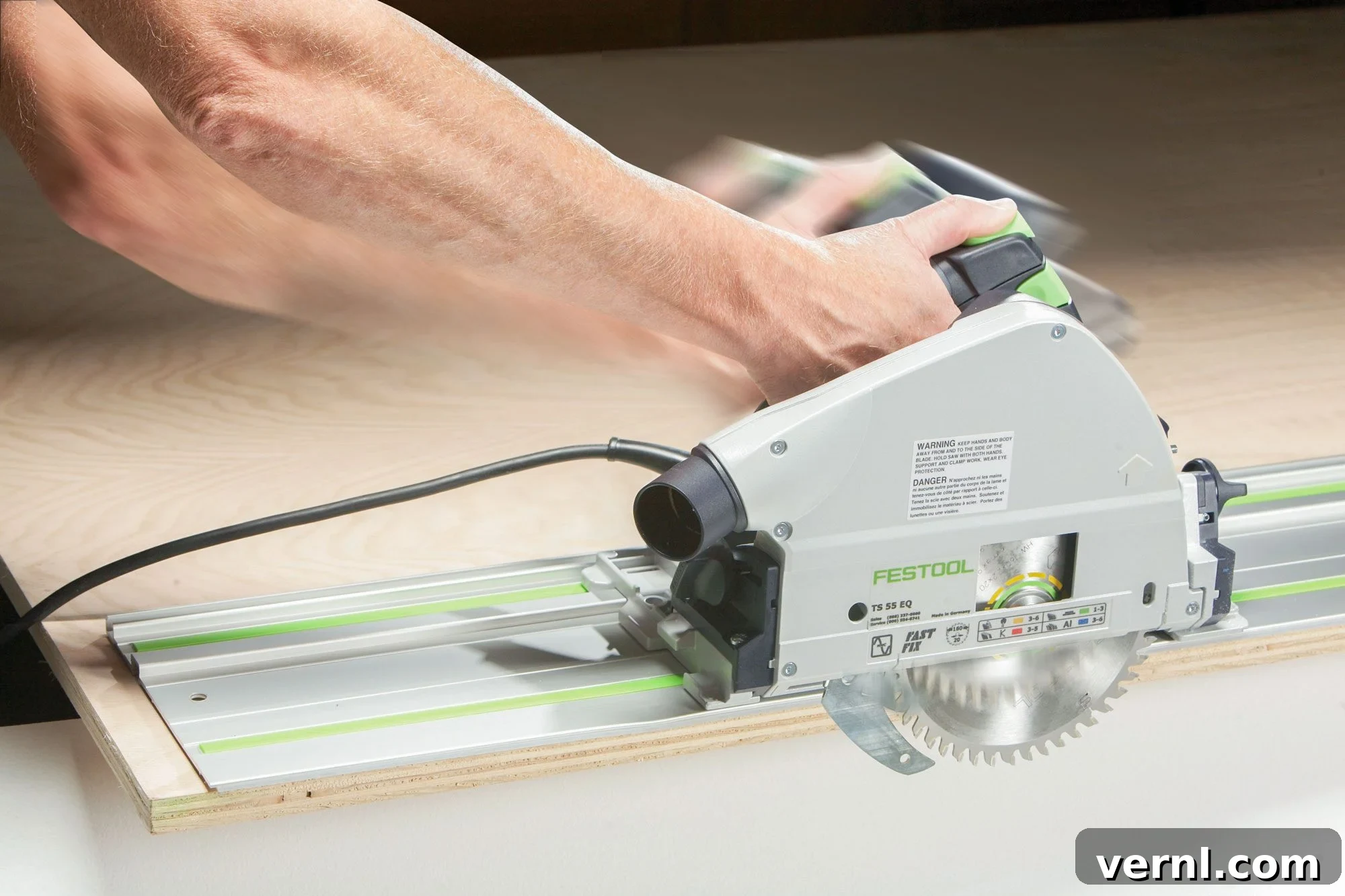
Unlock Precision: Why a Track Saw is a Game-Changer for Your Workshop
When I first encountered a track saw, my initial reaction was skepticism. Armed with a reliable table saw and a straightedge for my circular saw, I questioned the necessity of investing $500 or more in what appeared to be just another tool gimmick. I was convinced it was an unnecessary luxury, a fancy toy for those easily swayed by new gadgets.
However, my perspective began to shift after countless conversations with seasoned professionals: cabinetmakers, flooring installers, trim carpenters, and remodelers. Universally, they extolled the virtues of their track saws, describing them as indispensable tools and one of the smartest investments they had made. Their unanimous praise sparked my curiosity, and soon enough, I joined their ranks. Now, as a proud owner, I can definitively say they were right. A track saw isn’t just another tool; it’s a transformative addition to any serious woodworker’s arsenal.
Think of the relationship between your standard framing circular saw and a track saw like the difference between a workhorse dump truck and a finely tuned sports car. While both cut wood, the track saw is meticulously engineered for unparalleled smoothness, precision, and control, rather than raw power and ruggedness. The moment you engage its trigger, you’ll immediately feel this profound difference, understanding why it stands in a league of its own.
What Makes a Track Saw Indispensable? Discover Its Core Benefits
Effortless Plunge-Cut Mechanism
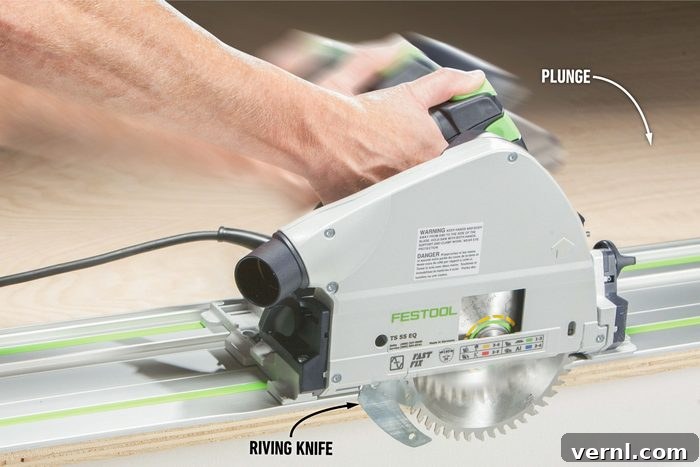
One of the most defining features of a track saw is its innovative plunge-cut mechanism. Unlike a conventional circular saw, which often requires you to wrestle with a clumsy spring-loaded blade guard, a track saw’s blade is retracted into the saw’s body and plunges into the material only when you’re ready to make the cut. This design not only enhances safety by keeping the blade covered until operation but also allows for precise internal cuts without needing to start from the edge of the material.
Models from leading brands like DeWalt and Festool further incorporate a riving knife that closely follows the blade’s path. This critical safety feature is designed to prevent kickback by keeping the kerf (the cut slot) open, significantly reducing the risk of the blade binding or pinching the material. The result is a smoother, safer cutting experience with a higher degree of control and accuracy, especially when working with sensitive materials.
Unrivaled Precision Guidance System
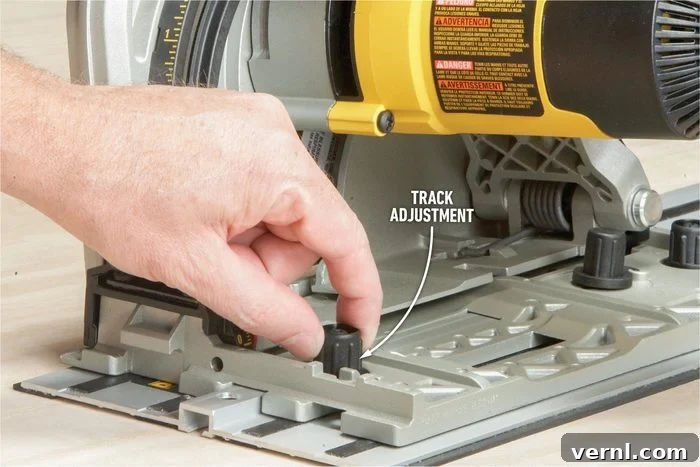
Forget the frustrations of a slipping straightedge. The cornerstone of the track saw’s accuracy lies in its sophisticated guidance system. The saw’s base seamlessly interlocks with an extruded aluminum track, ensuring that the saw cannot veer off course. This intimate connection guarantees a perfectly straight cut every single time, eliminating the imperfections often associated with freehand cutting or less robust guiding methods.
Intelligent adjustment knobs on the saw’s shoe allow you to fine-tune the fit between the saw and the track. This meticulous calibration eliminates any “slop” or play, ensuring zero deviation and absolute precision. Whether you’re breaking down full sheets of plywood, MDF, or solid wood panels, the track saw’s guidance system delivers consistently straight and accurate results that would typically require a much larger, stationary machine.
Accurate and Repeatable Adjustments
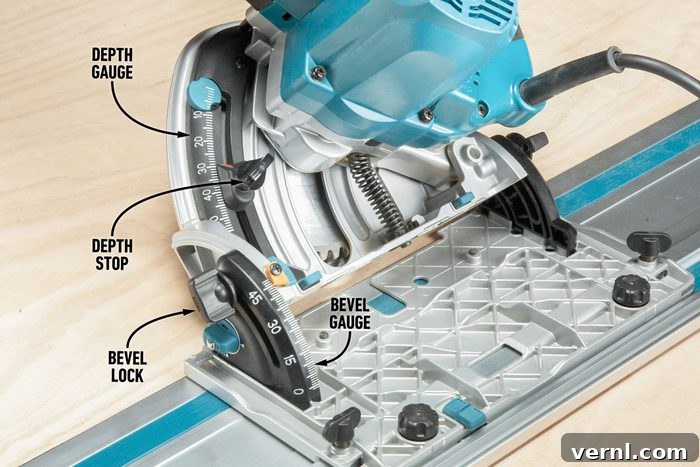
Precision isn’t limited to straight lines; it extends to every aspect of the cut. Track saws are designed with intuitive and highly accurate adjustment mechanisms for depth and bevel. All professional-grade models feature clear, easy-to-read scales, solid depth stops, and robust front and rear bevel locks. This level of engineering stands in stark contrast to the often approximate and less reliable settings found on standard circular saws.
With a track saw, what you set is precisely what you get. This eliminates the guesswork and tedious test cuts common with other portable saws, allowing you to achieve exact depths and perfectly angled bevels on your first attempt. This reliability is crucial for projects demanding tight tolerances, such as cabinet construction, furniture making, or precise joinery, where even minor discrepancies can compromise the final fit and finish.
Secure, No-Slip Track Technology
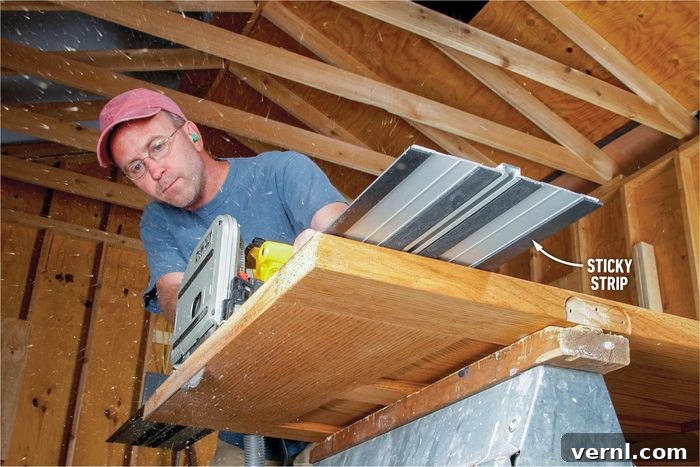
One of the most surprising and time-saving features of a track saw system is its remarkable no-slip track design. The underside of the guide rail is equipped with sticky rubber strips that grip the workpiece firmly, preventing the track from shifting during a cut. This innovative feature means that in most scenarios, you won’t need to waste valuable time clamping the track down, even when performing delicate tasks like trimming doors in place.
While the idea of cutting “clampless” might feel a bit unsettling initially, especially for those accustomed to securing every piece of material, you’ll quickly learn to trust the tenacious grip of these rubber strips. The confidence gained from this secure footing allows for faster setups and more efficient workflow. For those rare instances where extra security is desired or absolutely necessary, specialized clamps are available that integrate seamlessly with the track, providing unparalleled stability.
Superior Dust Collection Capabilities
Dust is an inevitable byproduct of woodworking, but a track saw significantly mitigates this common nuisance. Its blade shroud is not merely a cover; it’s ingeniously designed to fully enclose the blade during operation, creating an highly effective dust trap. When connected to a shop vacuum or dust extractor, a track saw offers dust collection capabilities that are far superior to virtually any other portable saw.
This exceptional dust control transforms your working environment. You can confidently make cuts indoors or in finished spaces without coating everything in a fine layer of sawdust. This not only makes cleanup a breeze but also contributes to a healthier breathing environment, protecting you from airborne particulates. For remodelers or those working on client sites, this feature is invaluable, allowing for clean, professional work with minimal disruption.
Pinpoint Exact Track Alignment
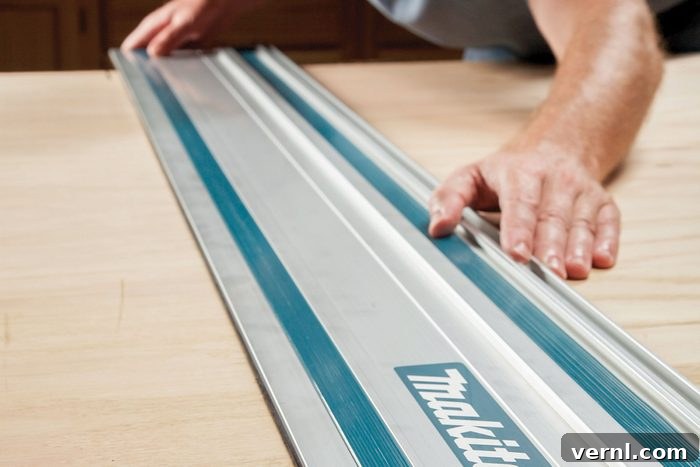
The track saw eliminates guesswork from the cutting process. The plastic splinter guard edge of the track itself serves as your precise cut line indicator. Simply align this edge with your pencil marks on the workpiece, and you’re ready to cut. There’s no need for test cuts, no double-checking measurements, and absolutely no estimation involved.
This direct visual alignment provides an immediate and undeniable advantage in terms of accuracy and speed. Time and again, track saw users echo the same sentiment: “I’ve never screwed up a cut with this saw.” This unwavering confidence stems from the system’s inherent ability to deliver perfectly aligned cuts consistently, saving material, time, and frustration on every project.
Compact Powerhouse for Tight Spaces
One of the track saw’s most underrated attributes is its ability to perform large, precise cuts even in confined spaces. Imagine slicing a full 4×8-foot sheet of plywood with surgical accuracy in a small 8×10-foot room – something utterly impractical, if not impossible, with a traditional table saw. A table saw demands significant infeed and outfeed space, often requiring a dedicated workshop environment.
A track saw, however, brings the precision of a stationary tool to the convenience of a portable one. This makes it an ideal solution for job sites, small workshops, or anyone dealing with space constraints. Its compact footprint also makes it a valuable space saver in your truck or van, freeing up room for other essential tools and materials.
Effortless Portability and Job Site Versatility
While a track saw can accomplish many tasks typically reserved for a table saw, its true advantage in portability cannot be overstated. Moving between different job sites becomes significantly easier and less strenuous. A track saw, along with its track, can be comfortably carried under your arm, a stark contrast to the bulky, heavy nature of even portable table saws.
Beyond the ease of transport, there’s an added layer of safety. Carrying a lighter, more manageable tool reduces the risk of back strain and minimizes the chances of accidentally damaging door casings or other finished surfaces as you navigate a job site. This enhanced portability means you can take precision cutting wherever it’s needed, efficiently adapting to various work environments without compromising on quality.
Unrestricted Long Miter Cuts
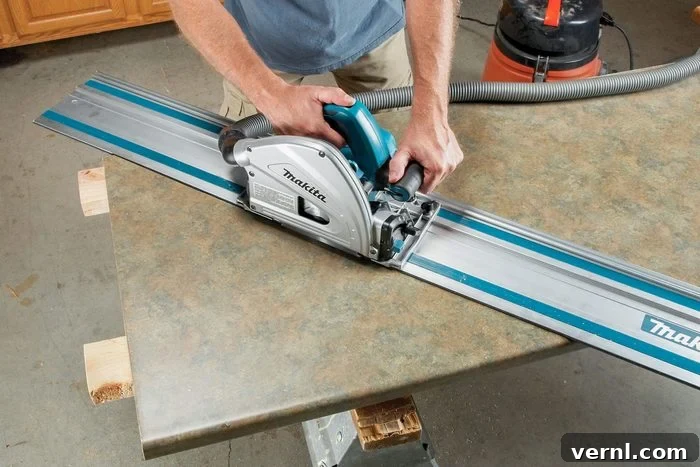
When it comes to cutting long miters, track saws offer a distinct advantage over traditional tools. Miter saws, table saws, and even panel saws are inherently limited by their fence lengths or table sizes, restricting the length and angle of the miter cut you can achieve. A track saw, however, liberates you from these constraints.
You can achieve accurate miters of virtually any length and angle simply by setting the saw’s bevel and positioning the track appropriately. This capability is invaluable for tasks such as cutting long crown molding, wide fascia boards, or large panel edges for angled cabinetry. While it’s true that a track saw doesn’t feature a built-in miter gauge, which can make the initial setup for specific angles a bit slower than on a dedicated miter saw, this minor inconvenience is easily overcome. For those who frequently perform long miter cuts, an aftermarket miter gauge that locks onto the track can be a worthy investment, typically costing between $50 to $100, significantly streamlining the process.
Uncompromising Cut Quality and Tear-Out Prevention
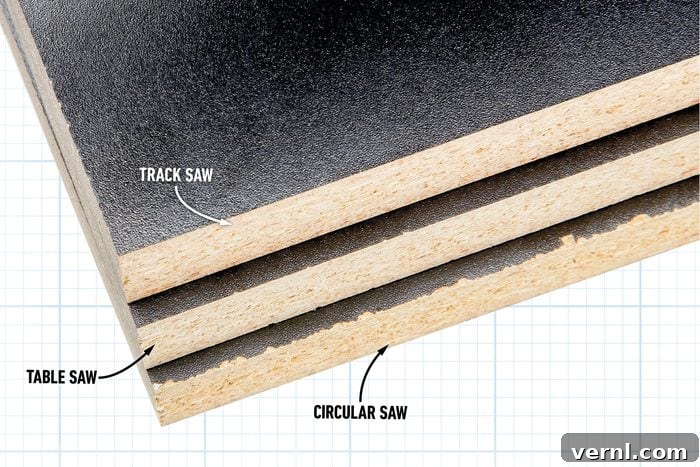
The true measure of any cutting tool is the quality of its finish, and here, the track saw truly shines. In comparative tests, cuts made with track saws consistently rivaled, and often surpassed, the smoothness and cleanliness of those produced by a top-of-the-line cabinet saw. Whether working with solid hardwoods, fragile plywood veneers, or engineered materials like MDF, the track saw delivers edges that require minimal to no additional finishing.
To specifically evaluate tear-out, a common frustration in woodworking, I pitted track saws against a standard circular saw and a cabinet saw, using melamine as the test material. The track saws emerged as the clear winner, producing near-perfect cuts with only a few minuscule chips on the top surface of the waste piece. The cabinet saw, while excellent, still left tiny chips on the face-down side, a common occurrence. The circular saw, predictably, resulted in significant tear-out, underscoring the track saw’s superior design for clean, splinter-free cuts, especially on delicate or laminated materials where precision and aesthetics are paramount.
Achieve a Finished Cut on the First Pass
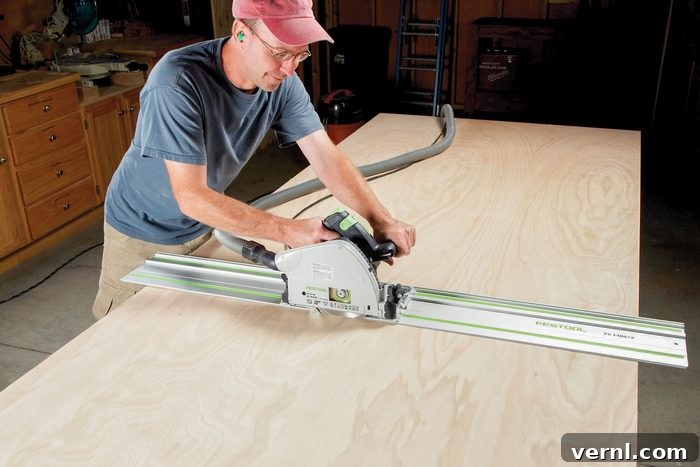
For many woodworkers, processing large, heavy sheets of material often involves a two-stage process: a rough cut with a circular saw to manage the unwieldy size, followed by a more precise, finishing cut on a table saw. This “two-act play” is time-consuming and labor-intensive, often requiring additional setup and material handling.
With a track saw, you can confidently skip the second act entirely. The precision, stability, and superior cut quality of a track saw mean that your initial cuts will be your final cuts. Each pass produces an edge that is every bit as straight, smooth, and accurate as you would expect from a dedicated table saw, ready for joinery, edge banding, or direct assembly. This efficiency not only saves considerable time and effort but also minimizes the risk of errors associated with multiple handling steps.
Unlimited Cutting Length with Connectable Tracks
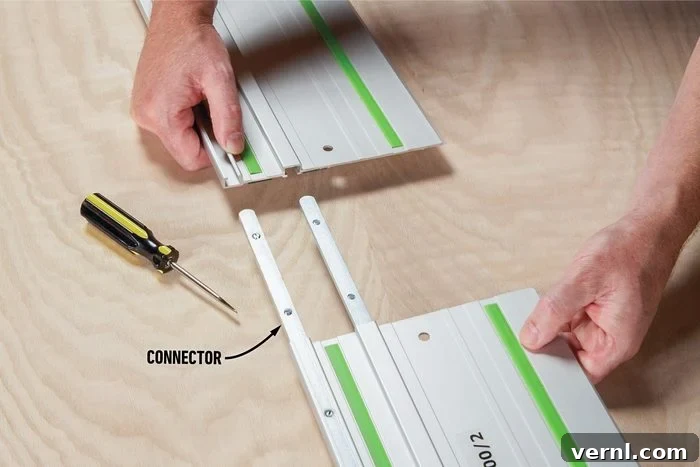
The modular design of track saw guide rails offers an incredible advantage: the ability to connect multiple tracks for super-long, perfectly straight cuts. The ends of these tracks are precisely manufactured to be dead square, allowing them to be joined seamlessly using specialized connectors. This innovation means your cutting length is virtually limitless.
I once heard from a gym-floor installer who regularly laid up to 100 feet of track for a single, expansive cut, a feat unimaginable with any other portable tool. Track connectors typically cost around $17 each, and while one connector can suffice, using two is recommended for optimal rigidity and alignment on longer setups. Most individual rails fall into two general categories: those long enough for a standard 4-foot cut (approximately $100) or longer versions suitable for 8-foot cuts (around $200). This flexibility in track length and the ability to extend it indefinitely makes the track saw an unparalleled tool for large-scale panel processing and long rip cuts.
Beyond the Hype: Understanding Track Saw Limitations
While a track saw is an incredibly powerful and versatile tool, it’s important to have a balanced perspective. It won’t entirely replace every tool in your workshop, nor is it a universal solution for all cutting tasks. Understanding its limitations ensures you integrate it effectively into your workflow.
Can a track saw do everything a table saw can?
The simple answer is no. While your track saw may offer your table saw some well-deserved long vacations, it won’t force it into early retirement. There are specific operations where a table saw remains superior. For instance, cutting very small parts with a track saw can be cumbersome and less efficient due to the nature of the track and the saw’s size. Additionally, most track saw models have a maximum cutting depth of around 2 inches, making deeper cuts impossible.
Furthermore, when it comes to identical, repeatable rip cuts—such as batch-ripping wide boards into consistent cabinet stock or multiple narrow strips—a track saw is a slow and impractical substitute for the speed, ease, and dedicated setup of a table saw’s rip fence. For these high-volume, repetitive tasks, the table saw remains the undisputed champion. A track saw is a specialist, excelling in large sheet goods, long cuts, and precision work where portability is key, complementing rather than fully replacing your table saw.