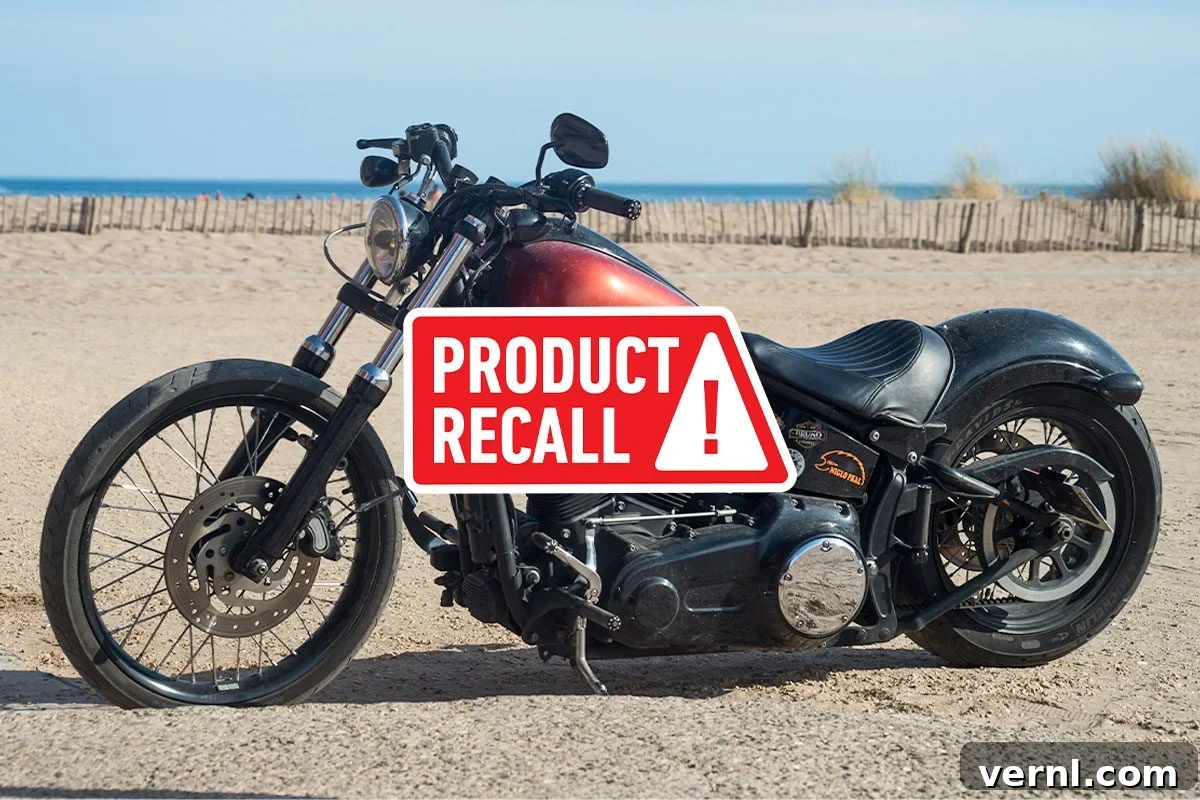
For motorcycle enthusiasts, especially those loyal to the iconic Harley-Davidson brand, safety on the open road is paramount. Unfortunately, recent news from the National Highway Traffic Safety Administration (NHTSA) brings a significant safety concern to light. Over 80,000 Harley-Davidson motorcycles are being recalled due to a critical tire issue that poses a severe risk not only to the rider but also to other motorists sharing the road. This isn’t just a minor inconvenience; it’s a safety imperative that demands immediate attention from affected owners.
If you’re an owner of a Harley-Davidson Softail from recent model years, understanding the specifics of this recall is crucial. This comprehensive guide will help you determine if your motorcycle is affected by this serious defect and, most importantly, provide clear steps on what actions you need to take to ensure your safety and the longevity of your beloved bike. Don’t delay in addressing this potentially life-threatening issue.
Which Harley-Davidson Softail Models Are Included in This Recall?
The NHTSA has confirmed that Harley-Davidson is initiating a large-scale recall impacting over 82,000 vehicles across multiple model years. The recall specifically targets models within the popular Softail series, known for its classic styling and comfortable ride. Owners of the following models should be particularly vigilant:
- 2018 Harley-Davidson Softail
- 2019 Harley-Davidson Softail
- 2020 Harley-Davidson Softail
- 2021 Harley-Davidson Softail
- 2022 Harley-Davidson Softail
- 2023 Harley-Davidson Softail
- 2024 Harley-Davidson Softail
Harley-Davidson is committed to informing affected owners directly. Official owner notification letters are anticipated to be mailed out by mid-June 2025. While waiting for this correspondence, it is highly advisable for all Softail owners from these model years to proactively check their vehicle’s status and prepare for the necessary steps. This proactive approach can significantly enhance your safety and peace of mind.
Understanding the Problem: Why Are So Many Harley-Davidsons Being Recalled?
The root cause of this extensive Harley-Davidson Softail recall lies in a specific mechanical vulnerability that can lead to a sudden and dangerous loss of rear tire pressure. According to the detailed NHTSA brief, the critical component at fault is the “mounting tab on the rear shock pre-load adjuster.” This tab, under certain conditions, may fracture or break. When this occurs, the now unsecured rear shock absorber adjuster can make damaging contact with the rear tire. This impact can cause significant damage to the tire’s structure, leading directly to a rapid loss of tire pressure.
The Dangers of Low Tire Pressure and Blowouts
Loss of tire pressure, especially a sudden one, is extraordinarily dangerous for any vehicle, but it presents a heightened risk for motorcycles. A car’s sophisticated safety systems and four contact points offer a degree of stability that a two-wheeled vehicle simply cannot match. On a motorcycle, maintaining optimal tire pressure is critical for handling, stability, and braking performance. A sudden drop in pressure in the rear tire can drastically alter the bike’s dynamics, leading to:
- Loss of Control: The motorcycle may become unstable, difficult to steer, and prone to wobbling, especially at speed or during turns.
- Increased Stopping Distance: Compromised tire integrity reduces grip, making it harder to brake effectively and increasing the distance required to stop.
- Catastrophic Blowout Risk: Persistent damage or extreme pressure loss can culminate in a tire blowout, which is one of the most terrifying and uncontrollable events a motorcyclist can experience.
- Accident Risk: The NHTSA brief explicitly warns that “a sudden loss of tire pressure increases the risk of a crash.” For motorcyclists, a crash often means severe injuries or, tragically, fatalities.
This is precisely why vehicles are equipped with tire pressure monitoring systems (TPMS) and why maintaining correct tire pressure is a fundamental aspect of vehicle safety. The defect outlined in this recall bypasses routine maintenance by creating an internal mechanical failure that can lead to immediate and severe tire damage.
A Persistent Issue: Addressing a Previous Recall
For those with an exceptional memory, this particular problem might sound unsettlingly familiar. Indeed, there was a previous Harley-Davidson recall (recall number 23V591) that addressed a similar concern regarding the rear shock adjuster and its potential to damage the rear tire. The unfortunate reality is that for some of the vehicles covered under that initial recall, the underlying issues have proven to be persistent, or the previous remedy was not universally effective, necessitating this new, broader recall (recall number 0188).
This highlights the importance of not assuming a past repair completely absolves your vehicle of risk. Even if your Softail was previously serviced under recall 23V591, it is imperative to verify if it falls under the scope of this new recall. Until your motorcycle can be inspected and repaired by a certified dealer, it is strongly advised to regularly check your tire pressure before each ride and minimize the use of the vehicle, especially for long distances or at high speeds. Your vigilance could be the difference between a safe ride and a hazardous incident.
How Will Harley-Davidson Address and Fix This Problem?
Harley-Davidson has outlined a clear and decisive plan to rectify this serious safety defect. Affected owners can expect authorized Harley-Davidson dealers to perform the necessary repairs free of charge. The proposed solution involves the installation of a “new bracket.” This new component is designed to prevent the rear shock pre-load adjuster’s mounting tab from breaking and subsequently damaging the rear tire, providing a robust and lasting solution to the identified defect.
The Repair Process and What to Expect
Once you receive your official notification letter, or if you proactively confirm your vehicle’s eligibility through Harley-Davidson or NHTSA’s recall lookup tools, you should promptly contact your nearest authorized Harley-Davidson dealership to schedule the repair. Due to the significant number of affected vehicles, it’s wise to schedule your appointment as soon as possible to avoid potential delays.
- Free of Charge: All parts and labor associated with this recall repair will be covered by Harley-Davidson. You should not incur any costs.
- Professional Installation: The new bracket will be installed by factory-trained technicians who are familiar with Harley-Davidson motorcycles and the specific requirements of this repair.
- Duration of Repair: While the exact time may vary, typically, these types of structural component replacements can take a few hours. It’s best to confirm the estimated repair time with your dealership when scheduling.
- Verification: Ensure the dealership confirms they are performing the repair under recall number 0188. If your bike was previously involved in recall 23V591, clarify that this new, distinct remedy is being applied.
It cannot be stressed enough: do not delay in scheduling these repairs. Tire pressure problems, particularly those stemming from a mechanical defect, are inherently dangerous for both you and other motorists sharing the road. Disregarding warnings or postponing repairs could lead to catastrophic consequences, as a sudden tire blowout can cause a fatal accident. Your safety, and the safety of others, depends on your prompt action.
Important Information for Owners: What Steps Should You Take?
If you own a Harley-Davidson Softail from the 2018-2024 model years, here’s a clear guide on what you should do:
- Verify Your Motorcycle’s Status: Even before the official letters arrive in mid-June 2025, you can check if your specific vehicle is included in the recall. Visit the NHTSA recalls website and enter your 17-character Vehicle Identification Number (VIN). Alternatively, use Harley-Davidson’s own recall lookup tool on their official website.
- Monitor Your Mailbox: Keep an eye out for the official recall notification letter from Harley-Davidson. This letter will provide detailed instructions and confirmation of your motorcycle’s inclusion in recall number 0188.
- Inspect and Monitor Tires: Until the repair is completed, make it a habit to visually inspect your rear tire for any signs of damage (bulges, cuts, abrasions) before each ride. More importantly, regularly check your tire pressure with a reliable gauge. If you notice unusual pressure drops or any visual damage, do not ride the motorcycle.
- Minimize Usage if Unrepaired: If your motorcycle is confirmed to be part of the recall and has not yet been repaired, consider minimizing its use. Avoid long trips, highway speeds, or conditions where a sudden loss of control would be particularly hazardous.
- Contact Your Dealership: As soon as you confirm your motorcycle is affected, contact your local authorized Harley-Davidson dealership to schedule an appointment for the recall repair. Be sure to mention recall number 0188.
- Retain Documentation: Keep records of all communications with Harley-Davidson and the dealership, including confirmation of your repair appointment and the service invoice detailing the completed recall work.
Should you have any further questions or require additional clarification regarding this recall, you can directly reach out to Harley-Davidson customer service at 1-800-258-2464. When speaking with a representative, explicitly clarify that you are inquiring about recall number 0188. It is also important to mention if your motorcycle was previously covered under recall number 23V591, as some vehicles might have been part of both. Even if you’ve had a repair for the older recall, you might still need to bring your motorcycle in for this current, distinct remedy to ensure complete safety and compliance.
Beyond the Recall: The Importance of Ongoing Motorcycle Tire Maintenance
While this recall specifically addresses a manufacturing defect, it serves as a powerful reminder of the overarching importance of proper tire maintenance for all motorcyclists. Tires are your only contact with the road, and their condition directly impacts every aspect of your ride, from handling and braking to fuel efficiency and, most critically, safety.
- Regular Pressure Checks: Always check your tire pressure before every ride, or at least weekly, using an accurate gauge. Refer to your owner’s manual for the correct cold tire inflation pressures.
- Tire Inspection: Routinely inspect your tires for wear, cuts, punctures, or embedded objects. Look for uneven wear patterns, which could indicate alignment or suspension issues.
- Tread Depth: Ensure your tire tread depth is adequate. Insufficient tread significantly reduces grip, especially in wet conditions.
- Tire Age: Tires degrade over time, regardless of mileage. Consult your owner’s manual or a professional regarding tire replacement recommendations based on age, typically every 5-7 years.
This Harley-Davidson Softail recall underscores that even the most reputable manufacturers can encounter issues. However, their commitment to addressing these problems swiftly, coupled with responsible owner action, ensures the continued safety and enjoyment of motorcycling. By staying informed and acting promptly, you can continue to enjoy the thrill of riding your Harley-Davidson with confidence.
Source of Information
The information regarding this recall has been obtained from the official channels of the National Highway Traffic Safety Administration (NHTSA).
Sudden Loss of Rear Tire Pressure, National Highway Traffic Safety Administration, 2025.